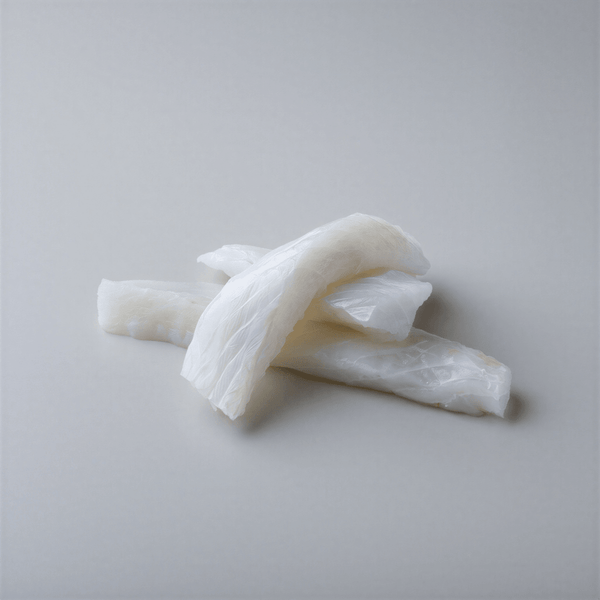
Summary: Cod is one of the fish with the greatest culinary tradition on the Iberian Peninsula, and also one that offers the most possibilities at the fishmonger: loin, belly, cheeks, tail, flakes… But there's one cut that appears on price lists that very few people can identify at first glance: the "falsilla."
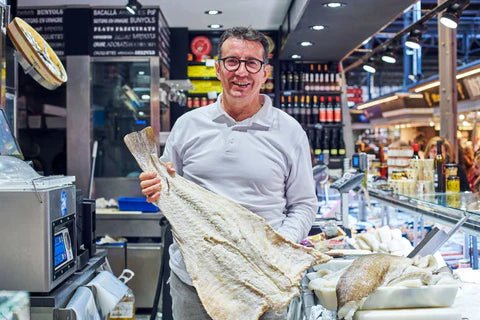
At Bacalalo, in the Mercat del Ninot since 1990, we are frequently asked about the falsilla. This guide explains exactly what it is, where it is located on the fish, its texture and flavor, and what recipes it is most suitable for.
What is cod "falsilla"?
Definition
The "falsilla" is an elongated muscle piece located in the ventral area of the cod, between the dorsal spine and the belly. It is, in a way, a secondary loin: it is "below" the main loin, which is why in some parts of Spain it is also called "falso lomo" (false loin) — and the popular name "falsilla" derives from this.
It is a relatively narrow and flat piece, thinner than the dorsal loin, which runs longitudinally through a good portion of the fish's body. It is not the most visually appealing cut of cod, but among those who know it, it enjoys an excellent reputation for its balance of texture and flavor.
Why is it called "falsilla"?
The name has a clear logic: the "falsilla" simulates a loin without being entirely one. It is a muscle piece with characteristics similar to the loin — firm, with few intermuscular bones in well-cleaned pieces — but in a secondary position in the fish's anatomy. The prefix "false" does not imply inferiority: in many meat cuts, the "false" or "counter" has a specific and recognized culinary value.
In Catalan, it is sometimes known as "falsa llesca" or simply included in the generic category of pieces of salted cod.
Size, weight, and appearance
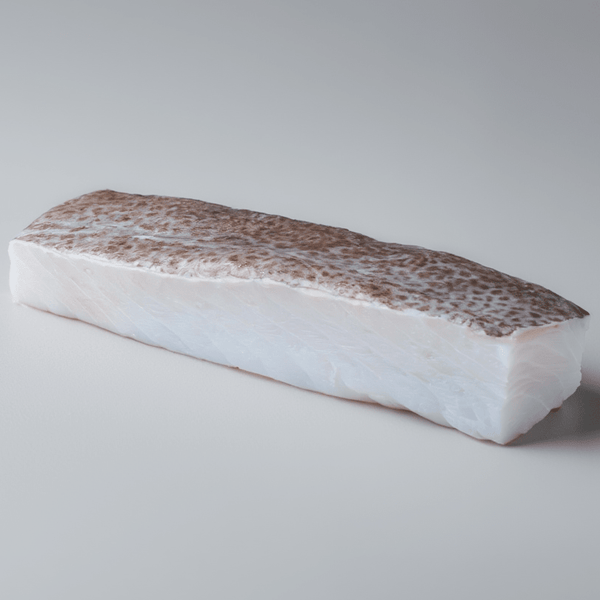
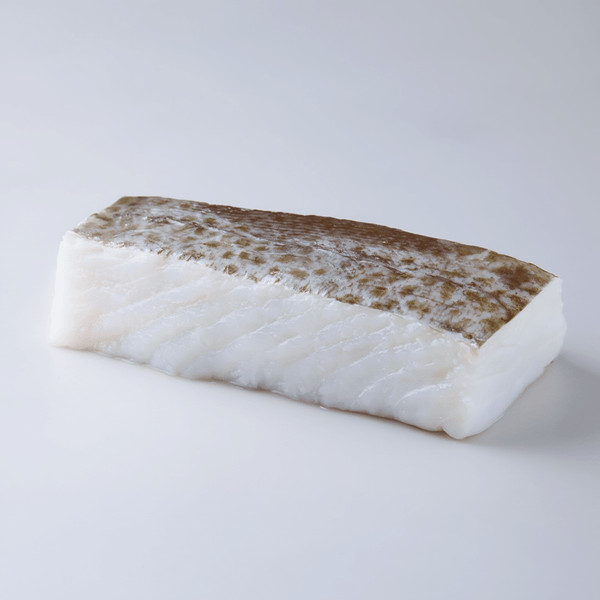
A "falsilla" from a medium-sized cod (2-3 kg fish) can weigh between 80 and 150 grams. It is narrower than the dorsal loin — about 4-6 cm wide at its thickest part — and its thickness varies along the piece: thicker in the central area and thinner towards the tail.
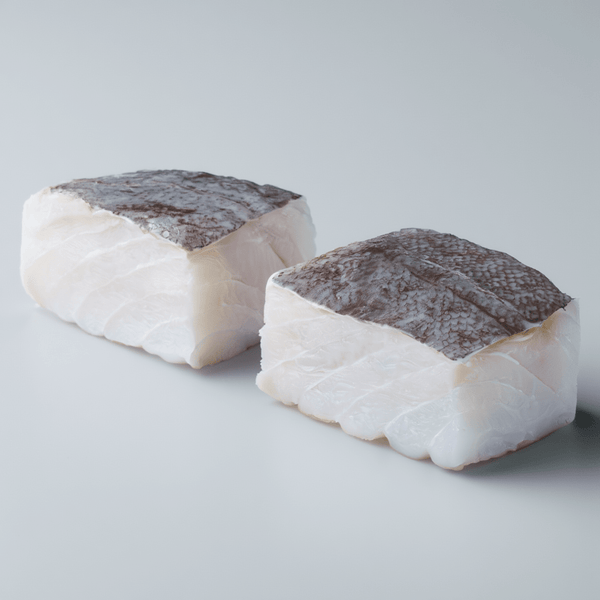
Its appearance when raw (desalted) is slightly more translucent than the loin. When cooked, it acquires a pearly white color and tends to separate into thin flakes, smaller than those of the loin but equally appealing.
Where the "falsilla" is located in cod (anatomy)
The main parts of cod
To understand where the "falsilla" is located, it is helpful to have a clear understanding of the basic anatomy of cured cod:
- Dorsal loin (neck and loin): The most valued piece. It is on the upper part of the fish, on both sides of the dorsal spine. White, compact meat, in large flakes.
- Belly (flank): The abdominal area, fattier and more gelatinous. Highly prized in Basque and Catalan cuisine.
- Tail: The narrowest and most fibrous part. Cheaper, ideal for long stews or brandade.
- "Falsilla": Between the loin and the belly, in a ventrolateral position. It is not always presented as an independent piece in all points of sale.
- Cheeks: The cheeks of the cod. A small, gelatinous, highly valued piece. Discover more about cod cheeks.
"Falsilla" vs. loin vs. belly: position and differences
| Cut | Position | Texture | Fat | Relative Price |
|---|---|---|---|---|
| Dorsal loin | Upper, next to spine | Firm, large flakes | Low-medium | High |
| Belly | Lower abdominal | Soft, gelatinous | High | High |
| "Falsilla" | Between loin and belly | Tender, medium flakes | Medium | Medium |
| Tail | Posterior end | Fibrous, compact | Low | Low |
Characteristics of cod "falsilla"
Texture: tender, with medium flakes
The "falsilla" has a texture that many chefs describe as "more forgiving" than the loin: it is less prone to drying out during cooking, which makes it more tolerant of slight inaccuracies in cooking time. Its muscle fibers separate into medium flakes, smaller than the loin but larger than the tail.
A well-desalted and cooked "falsilla" has a soft bite, without the sometimes excessive firmness that the loin can have if overcooked.
Flavor: concentrated, with gelatinous notes
The flavor of the "falsilla" is more concentrated than that of the loin because it has a higher proportion of connective tissue — collagen — in relation to muscle mass. This collagen, when cooked, provides a gelatinous note and a creamier mouthfeel than that of pure loin.
It does not reach the gelatin level of the belly or cheeks, but the difference from the loin is perceptible, especially in slow or low-temperature cooking.
Color: more translucent when desalted
One of the visual characteristics of the "falsilla" is its slightly more translucent tone when raw compared to the loin. This is due to its collagen and fat composition: the muscle fibers are less dense, which gives it that slightly pearly appearance before cooking.
When cooked, it acquires the characteristic white color of desalted cod, although with a somewhat more "moist" appearance than the loin.
Related Products from Bacalalo


Recommended Products

Natural Cod Liver Foie Gras - 120g | Icelandic Smoked C...
€3.90

CHATKA Wild King Crab 60% Legs 40% Shredded...
€95.00

Smoked Cod Carpaccio Artisan Cut | 1 Pack...
€15.90

Dried Cod Cheeks (1 tray) - 500g
€19.95
Refrigerated shipping 24-48h throughout the Peninsula
What the "falsilla" is used for: best recipes
Ideal uses
The "falsilla" works best in preparations where tenderness and juiciness are valued over the visual spectacularity of large flakes:
- Grilled: One of its best applications. The "falsilla" seared on a hot griddle and cooked to perfection retains all its juiciness. It can be served on a bed of ratatouille, with a mild aioli, or simply with extra virgin olive oil.
- In warm salads: Hot, flaked "falsilla" on a bed of seasonal vegetables, with a lemon and oil dressing, makes for an exquisitely simple dish.
- In brandade: Cod brandade is an emulsion of desalted cod with olive oil and, optionally, garlic and milk. Due to its higher collagen content, the "falsilla" gives brandade an especially creamy texture. Discover more about cod and its uses at Bacalalo.
- In croquettes: Shredded "falsilla" is an excellent base for cod croquettes: more tender than the loin, it integrates perfectly into the béchamel.
- Baked en papillote: Cooking en papillote with vegetables and herbs is ideal for the "falsilla," which retains its moisture and flavor within the packet.
Less recommended uses
- Pil-pil: Pil-pil requires collagen on the surface of the piece to emulsify with the oil when stirring the pan. The dorsal loin from the neck is the ideal cut because it has skin with a lot of surface collagen. The "falsilla," although it has intramuscular collagen, does not have the skin in a favorable position for this process.
- Haute cuisine presentations where appearance is a priority: For dishes where the loin must appear immaculate with large, symmetrical flakes, the dorsal loin remains the correct choice.
Price of "falsilla" vs. other cuts
A piece with excellent value for money
The "falsilla" is usually cheaper than premium loin because:
- It is a smaller and less attractive piece.
- Demand is lower (few people know it).
- It requires more cutting skill to present it well.
This combination of lower price and good culinary characteristics makes the "falsilla" an excellent option for the home cook who wants to enjoy quality cod daily without the cost of premium loin.
As a guide, the "falsilla" can cost between 20% and 40% less than the loin from the same piece of cod, depending on the point of sale and preparation (fresh, desalted, salted).
Who it is ideal for
- Curious cooks who want to explore beyond the loin.
- Those looking for quality cod at a more accessible price.
- Anyone cooking for the family and prioritizing flavor over formal presentation.
🛒 Products mentioned in this article
⭐ 4.9/5 · Cold shipping 24-48h · Since 1990 in Mercat del Ninot
10 Frequently Asked Questions about Cod "Falsilla"
1. Does the "falsilla" have bones?
It depends on how it is prepared. In well-cleaned pieces, the "falsilla" is sold without a central bone. However, it may have some fine intermuscular bones in the area closer to the belly. It is advisable to run your fingers over it before cooking if it is to be served to children or people who are particularly bothered by bones.
2. Is the "falsilla" the same as "ventresca" or "ijada"?
No. "Ventresca" is the abdominal area of the cod, fattier and more gelatinous. The "falsilla" is between the belly and the loin, with intermediate characteristics. They are distinct pieces, though close on the fish.
3. How long should the "falsilla" be desalted?
The desalting time depends on the thickness of the piece and whether it's salted or partially desalted. For a medium-thickness "falsilla" (cod belly flap), salted, it generally takes 24-36 hours in cold water in the refrigerator, changing the water 2-3 times. Being thinner than the loin, it usually desalted faster.
4. Can "falsilla" be bought fresh (not salted)?
Yes. In specialized fishmongers and markets like Mercat del Ninot, you can find fresh cod — which in season usually comes from Iceland or Norway — and ask them to cut the "falsilla" specifically for you. Out of season, the salted or desalted version is the most common.
5. How is "falsilla" distinguished from other cuts at the fishmonger's?
The "falsilla" is an elongated piece, narrower and thinner than the loin, with a more translucent appearance and an irregular cut at the edges. If you have doubts, ask the fishmonger directly: in a specialized fishmonger's, they will always be able to tell you which one it is.
6. Can "falsilla" be used to make bacalao a la vizcaína (cod in Biscayan sauce)?
It works, although the result is not the same as with the loin. In "vizcaína," which is a slow-cooked sauce, the "falsilla" can tend to flake apart more. If you use "falsilla" for this preparation, add it at the end of cooking and carefully so as not to break it up too much.
7. How many "falsillas" does a whole cod have?
A whole cod has two "falsillas," one on each side. Being smaller pieces than the loin, for a generous portion (150-180g per person), one whole "falsilla" or even one and a half per diner may be needed, depending on the size of the fish.
8. Can "falsilla" be frozen once desalted?
Yes. Desalted cod can be frozen if it is not going to be used within 2-3 days. Freeze it well wrapped in film and in an airtight container. Always thaw it in the refrigerator, never at room temperature, to maintain the texture.
9. Is there a quality difference between Norwegian and Icelandic cod "falsilla"?
The origin of the cod (Gadus morhua) slightly influences the flavor profile: Norwegian cod is known for being somewhat saltier and firmer, Icelandic for being milder and having a more delicate texture. These differences affect all cuts, including "falsilla." At Bacalalo, we select based on quality above origin.
10. Where can I buy cod "falsilla" in Barcelona?
At Mercat del Ninot (Barcelona), at the Bacalalo stand, we have been working with all cod cuts since 1990. You can also find "falsilla" in our online store with refrigerated shipping throughout Spain: bacalalo.com.
Discover all cod cuts at Bacalalo
"Falsilla" is just one of the cuts we work with at Bacalalo. If you want to explore other parts of cod and their uses in cooking, we recommend our guides on cod fillets and their varieties and on cod cheeks.
At our stand at Mercat del Ninot and at bacalalo.com, you can order exactly the cut you need for your recipe, with personalized advice and guaranteed cold logistics if you place your order online.
Since 1990, cod has been our specialty. Every cut, perfectly prepared.
Explore all cod cuts at Bacalalo →
Discover more