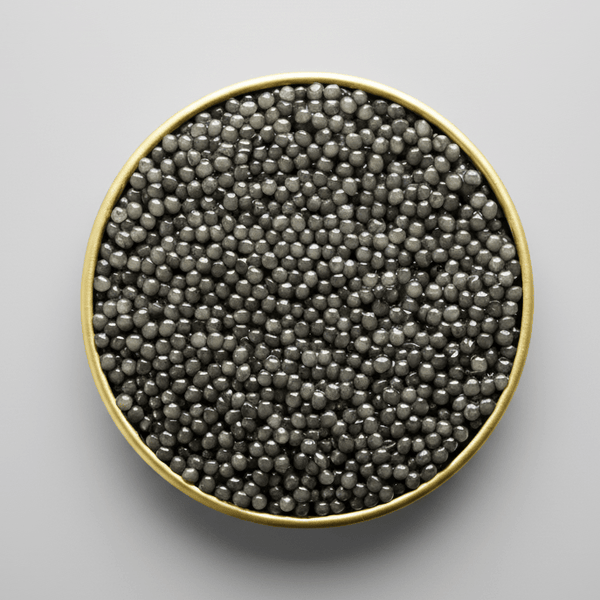


Quick Summary: The three classic Caspian varieties perform as follows: Beluga excels in exclusivity and creamy texture (3-3.5 mm grain, buttery and nutty flavor, €125-200/30g); Osetra wins in flavor complexity (2.5-3 mm grain, hazelnut and sea notes, best value for money, €75-150/30g); Sevruga leads in pure intensity and price (1.5-2 mm grain, distinct salinity and mineral, €100-130/30g). For beginners: Osetra. For exceptional gifts: Beluga. For cooking: Sevruga.

What is Beluga caviar?
Beluga comes from the Huso huso sturgeon, the largest of all sturgeons. In the wild, it can exceed 5 meters and 1,000 kg. The female takes 18 to 25 years to mature to produce roe. This biological slowness is the main reason for its price: producing a kilo of Beluga involves almost two decades of investment per animal.
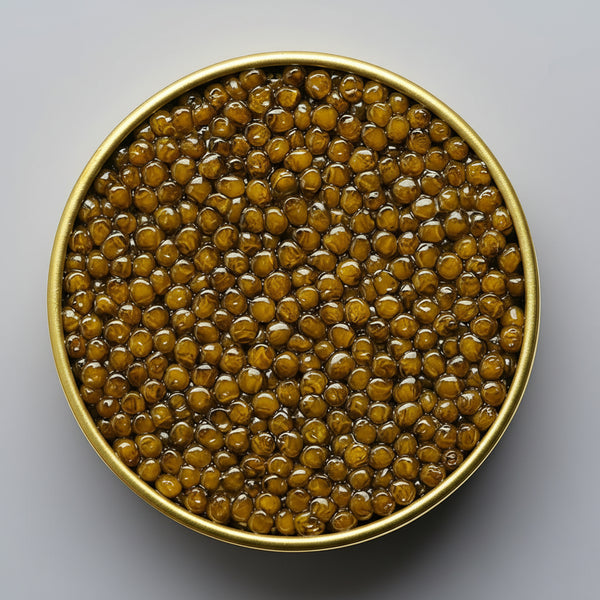
Its roe are the largest on the caviar market: 3 to 3.5 mm in diameter, with a thin skin and a color ranging from pearl gray to dark gray (lighter colors are more valued). When bitten, they don't have the defined "pop" of Osetra: they melt slowly with a buttery texture.
The flavor: creamy, buttery, with nutty notes and an elegant marine undertone. The salinity is discreet. The finish is very long (30-60 seconds) and leaves a unctuous sensation. It is the most "silent" caviar in the mouth: it doesn't shout flavors, it whispers them.
Today, wild Caspian Beluga is practically banned due to overfishing. Beluga sold in Europe comes from controlled aquaculture in Italy (Calvisius), Bulgaria, Iran, or China. To learn more, read our complete guide to Beluga.

What is Osetra caviar?
Osetra (also spelled Oscietra, Asetra, or Oscietre) comes from the Russian sturgeon Acipenser gueldenstaedtii. It is a much more manageable animal: it weighs up to 200 kg and the female matures in 8 to 12 years. This already begins to explain the price difference compared to Beluga.
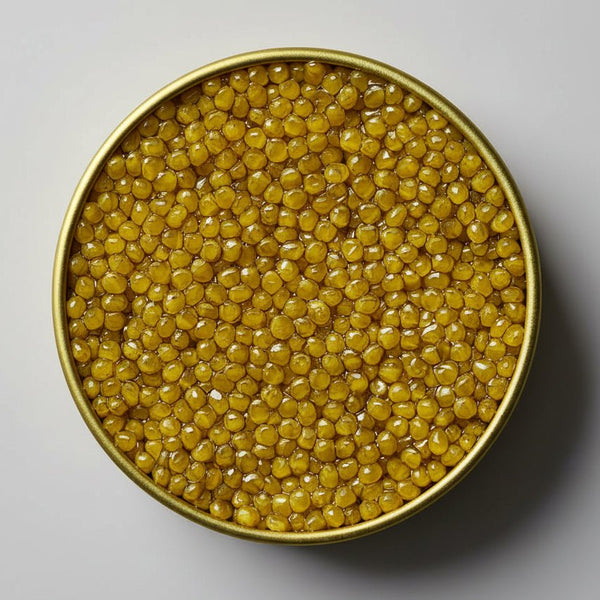
Its roe are medium-large in size (2.5 to 3 mm) and have a slightly thicker skin than Beluga, which produces a more defined "pop" when bitten. But the most distinctive feature of Osetra is its chromatic variability: from intense black to golden amber, passing through all shades of gray and brown. It is the only variety where two tins from the same producer can be visually very different.
The flavor is what chefs love most: the most complex of the three varieties. Notes of walnut, toasted hazelnut, a marine background, and sometimes a subtle sweet hint that no other caviar has. The salinity is medium. The finish is long (15-30 seconds) and, above all, it evolves: the flavor changes between the first and last second in the mouth. That's what a sommelier would call "journey."
It is the most recommended caviar for serious beginners and, paradoxically, also the favorite of many professionals. It passes the test on day one and year ten. Read our Oscietra guide for more details.

What is Sevruga caviar?
Sevruga comes from the stellate sturgeon Acipenser stellatus. It is the smallest of the three Caspian sturgeons: rarely exceeding 25 kg. Its sexual maturity comes earlier than Beluga or Osetra: 7 to 10 years. This relative speed makes it the most accessible caviar of the classic trinity in terms of production cost.
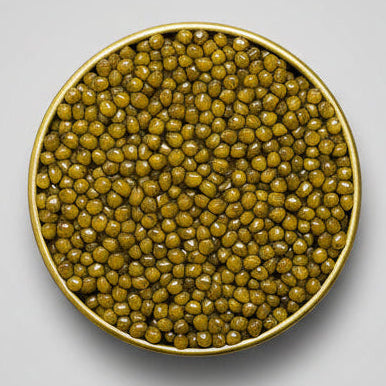
The roe are the smallest: 1.5 to 2 mm. Very dark gray, almost black color. Thin but firm skin. The small grain has historically penalized it in market perception, but that perception is poorly calibrated: grain size does not determine flavor quality.
The flavor of Sevruga is the most intense and marine of the three varieties. Distinct salinity, mineral and iodized notes, a very direct "from the sea" character. It does not have the evolving complexity of Osetra or the creaminess of Beluga: it has strength. The finish is medium (10-15 seconds) but very defined.
In cooking, it is the best variety for preparations where caviar needs to stand out among other ingredients: sauces, tartares, scrambled eggs. If you put it on a blini with creme fraiche, the flavor of Sevruga cuts through those two flavors and remains present. Beluga, in that same bite, takes a backseat.
Comparison Table: 9 Key Differences
The three varieties at a glance:
- Species: Beluga = Huso huso; Osetra = A. gueldenstaedtii; Sevruga = A. stellatus.
- Maturation time: Beluga 18-25 years; Osetra 8-12 years; Sevruga 7-10 years.
- Grain size: Beluga 3-3.5 mm; Osetra 2.5-3 mm; Sevruga 1.5-2 mm.
- Color: Beluga pearl gray to dark gray; Osetra amber to black (the most chromatic variety); Sevruga dark gray to black.
- Texture: Beluga creamy/buttery; Osetra firm with defined "pop"; Sevruga firm and compact.
- Dominant flavor: Beluga butter, nutty, mild; Osetra hazelnut, sea, complexity; Sevruga marine, mineral, intense.
- Persistence on the palate: Beluga 30-60 s; Osetra 15-30 s; Sevruga 10-15 s.
- Approximate price (30g, 2026): Beluga €125-200; Osetra €75-150; Sevruga €100-130.
- Best use: Beluga = pure tasting, gift; Osetra = versatile use, meal with connoisseurs; Sevruga = cooking, bites with other strong flavors.
Flavor: which is more intense, creamy, or complex
This is the heart of the choice. If you put the three varieties on the same plate and taste them in the order Sevruga → Osetra → Beluga, you go from the most intense to the most subtle:
- Sevruga hits like a punch of the sea. Salt, mineral, depth. It doesn't leave you indifferent.
- Osetra comes with a range of evolving notes: first salinity, then walnut, finally a sweet-marine background.
- Beluga enters smoothly, almost like salted butter with nutty notes. The creamy texture dominates over explicit flavor.
Which is "better"? For a trained palate, the most common answer is Osetra, not because it's the most expensive or the largest, but because it's the most intellectually interesting: it has complexity and evolution. Beluga is more a tactile and exclusive experience. Sevruga is for those who want powerful flavor without paying the Beluga premium.

Price and real availability in 2026
Talking about caviar prices without context is misleading. These are real ranges for the European market in 2026, for legal aquaculture with CITES in order:
- Premium Beluga (Italy, Iranian aquaculture): €3,500-€7,000/kg → €125-€200 in a 30g tin.
- Imperial Osetra (Iran, Italy): €1,500-€3,500/kg → €75-€150 in a 30g tin.
- Caspian Sevruga: €2,500-€3,500/kg → €100-€130 in a 30g tin.
Three important caveats:
- Sevruga sometimes costs more per gram than basic Osetra because its production is more limited than that of mass Iranian aquaculture Osetra.
- Very cheap "Beluga" (less than €1,500/kg) is often hybrid Beluga × Sterlet (Bester), not pure Beluga. It's not a scam if properly labeled, but it's not the same thing.
- Osetra has the widest price range: there's entry-level Osetra (€50-€70/tin) and aged Imperial Osetra (€200+). The differences between the two are enormous.
For more on prices, read our caviar price guide 2026.
When to choose each variety?
Choose Beluga if...
- It's an exceptional celebration (big anniversary, New Year's Eve, proposal). Beluga says "tonight is the night."
- You want a pure sensory experience: caviar alone, with a mother-of-pearl spoon, nothing else. Beluga's creamy texture shines in this format.
- The gift matters more than the content. Beluga is still the name that makes the biggest visual and narrative impact.
- You have guests who know and appreciate caviar: they will notice the difference.
Choose Osetra if...
- It's your first serious caviar. Osetra educates you: the flavor is complex but accessible.
- You're looking for the best quality-price-complexity ratio. It's what a professional would order for themselves.
- You're having a dinner with gastronomic conversation: Osetra evolves in the mouth and provides a topic.
- You want a gourmet gift without skyrocketing the budget into high triple digits.
Choose Sevruga if...
- You're going to cook with caviar: scrambled eggs, salmon tartare, blinis with creme fraiche. Sevruga cuts through other flavors.
- You like powerful flavors and the small grain doesn't bother you.
- You're looking for an alternative to Beluga without paying the Beluga premium.
- You're going to do a comparative tasting: Sevruga provides the intense counterpoint next to creamy Beluga.
Honesty: when it DOESN'T matter which you choose
If you're using caviar as a decorative garnish on a heavily seasoned dish (a risotto, a pasta with seafood), the difference between Beluga and Sevruga will be diluted. Here, the honest choice is Sevruga or a good Baeri: the flavor of the dish will dominate anyway.
Pairing: wines, blinis, and accompaniments
Drinks that respect caviar
- Brut nature or extra brut Champagne: the universal classic. The bubbles cleanse the palate between spoonfuls.
- Long-aged brut nature Cava: Spanish alternative to Champagne, with the advantage of price.
- Chilled neutral vodka: traditionally with Russian Beluga. Cleanses the palate and doesn't compete.
- Junmai daiginjo Sake: a modern pairing increasingly popular, especially with Osetra.
- En rama Manzanilla sherry: a daring option for Sevruga; the oxidative salinity balances well.
Drinks to avoid
- Very aromatic young white wines (Sauvignon Blanc, Gewürztraminer): they overpower the caviar.
- Red wines: incompatible with the salinity and oils of caviar.
- Beer: too much carbonation and bitterness.
Accompaniments
- For Beluga: pure caviar, mother-of-pearl spoon. At most, simple blinis.
- For Osetra: warm blinis, creme fraiche or thick cream, chopped hard-boiled egg.
- For Sevruga: swordfish or tuna tartare, scrambled eggs, baked potato with creme fraiche.
If you want a complete guide, read how to properly taste caviar.
Discover our premium selection
Seafood products carefully selected since 1990 at Mercat del Ninot, Barcelona. Refrigerated shipping in 24-48h.
In summary: the honest choice
The three Caspian varieties are not three levels on the same scale. They are three products with distinct personalities:
- Beluga: the tactile experience and the gift factor.
- Osetra: gastronomic intelligence.
- Sevruga: power and cooking.
If we had to recommend ONE for someone starting with caviar and wanting to maximize their satisfaction, it would be Osetra. If you want to give a gift and have the recipient know the cost, Beluga. If you're going to cook with caviar, Sevruga.
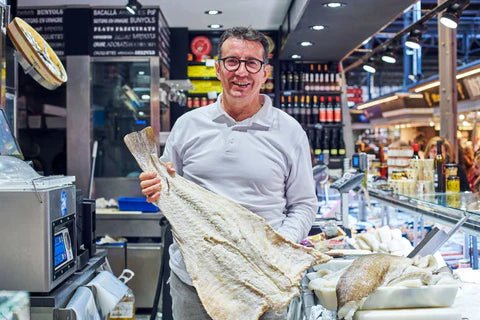
At Bacalalo, we have all three varieties available, with CITES in order and full traceability. We have been selecting caviar from Mercat del Ninot with the same criteria we apply to an anchovy or cod: if we wouldn't buy it for our own table, we don't sell it.
For more in-depth information: Types of Caviar: A Complete Guide, Caviar Prices 2026, Beluga: A Complete Guide, Oscietra: A Guide, How to Eat Caviar.
Frequently Asked Questions
Which caviar is best: Beluga, Osetra, or Sevruga?
There isn't one universally "best" variety. Beluga excels in exclusivity and creamy texture, Osetra in flavor complexity, and Sevruga in pure intensity. For a professional palate, Osetra is often the most interesting choice due to its evolution in the mouth. For an impactful gift, Beluga. For cooking, Sevruga.
Why is Beluga caviar so expensive?
Because the female Beluga sturgeon (Huso huso) takes 18-25 years to mature. That's almost two decades of investment per animal before caviar can be harvested. It's also the largest sturgeon (up to 1,000 kg), but its roe production relative to its size isn't proportionally high. Historical overexploitation has also reduced legal supply almost exclusively to aquaculture.
Is larger grain better or smaller grain?
This is one of the most widespread myths in the caviar world. Grain size does not determine flavor quality. Sevruga has the smallest grain and a more intense flavor than Beluga. What does change is the tactile experience: large grains offer more creaminess, small grains give a more defined "pop" when bitten.
How much caviar is 30g per person?
30g is the standard portion for a serious tasting per person. It is approximately 6-8 small (mother-of-pearl) teaspoons. For a first taste or as a garnish, 15-20g per person is sufficient. For a main event, 50g.
How is it stored once opened?
Once opened, caviar lasts 24-48 hours in refrigeration (0-4°C). After opening, cover with plastic wrap pressed tightly against the surface of the caviar to minimize air contact. Never freeze: freezing breaks the grains and the texture is lost.
What is the difference between Osetra and Oscietra?
Technically none. They are two transliterations of the same Russian name (осетра). "Oscietra" is the form most used by Italian and Iranian producers; "Osetra" is more common in the United States and Spain. "Asetra", "Oscietre", and "Ossetra" also designate the same species (Acipenser gueldenstaedtii).
Is the Beluga premium worth it?
Honestly, it depends. If the cost difference is not an issue, then yes: the texture is unique. If budget matters, a quality aged Osetra Imperial offers superior complexity for less money. For a party where most guests are not caviar experts, Beluga offers more narrative than perceptible additional flavor.
Where to buy Beluga, Osetra, and Sevruga online?
At Bacalalo we have all three varieties with CITES and traceability. Direct selection, refrigerated 24-48h cold shipping, same criteria as Mercat del Ninot. Since 1990 we have been working with premium seafood products.
Lalo González Rodríguez
Specialist in premium seafood products. 30+ years selecting cod, anchovy, and caviar at Mercat del Ninot, Barcelona. Writes without marketing, with discernment.