Summary: Bluefin tuna is one of the most prized fish in Mediterranean cuisine. Its dense, deep red flesh has a texture reminiscent of the finest beef. But cooking it poorly—overcooking it, drying it out, or not respecting its nature—is a costly mistake, both in flavor and ...
Table of Contents
- Why Bluefin Tuna is Cooked Differently from Other Fish
- How to Choose Bluefin Tuna at the Market
- Technique 1: Pan Searing — The Restaurant Classic
- Technique 2: Bluefin Tuna Tataki — Japanese Precision
- Technique 3: Baked Bluefin Tuna — For Large Pieces
- Marinades and Sauces for Bluefin Tuna
- Garnishes that Enhance Bluefin Tuna
- Common Mistakes When Cooking Bluefin Tuna (and How to Avoid Them)
- Canned Bluefin Tuna: Another Way to Enjoy It
- Frequently Asked Questions About Cooking Bluefin Tuna
- Frequently Asked Questions
- Conclusion
Bluefin Tuna: How to Cook It So It Stays Pink and Juicy
Bluefin tuna is one of the most prized fish in Mediterranean cuisine. Its dense, deep red flesh has a texture reminiscent of the finest beef. But cooking it poorly—overcooking it, drying it out, or not respecting its nature—is a costly mistake, both in flavor and in your wallet.
In this guide, we'll teach you the essential techniques for cooking bluefin tuna so it always turns out pink on the inside and juicy. From pan searing to Japanese tataki, and controlled baking. With exact timings, market tips, and the keys that make the difference between mediocre and memorable bluefin tuna.
Why Bluefin Tuna is Cooked Differently from Other Fish
Bluefin tuna (Thunnus thynnus) is not just any fish. Its flesh contains up to 15% intramuscular fat, which gives it a unique richness among fish. This fat is distributed in fine streaks, just like the marbling of a good steak.
This means that bluefin tuna requires a completely different thermal treatment than other fish. While hake or sole are cooked until opaque, bluefin tuna should remain pink—or even red—in the center. Overcooking it destroys precisely what makes it special.
The ideal internal temperature for bluefin tuna ranges between 43°C and 52°C in the center:
- Red (rare): 43-46°C — cold, intense red center, silky texture
- Pink (medium-rare): 47-50°C — warm, pink center, the most popular option
- Medium: 51-55°C — grayish-pink center, starts to lose juiciness
- Well-done: over 55°C — dry, fibrous, loses all its value
If you're interested in learning more about the differences between tunas, check out our guide on the difference between albacore and tuna.
How to Choose Bluefin Tuna at the Market
Before you start cooking, you need a good cut. Here are the keys to choosing fresh bluefin tuna:
- Color: intense, uniform cherry red. Avoid brownish pieces or those with brown spots.
- Texture: firm to the touch, without sinking. The flesh should spring back slightly.
- Sheen: moist and shiny surface, never dull or sticky.
- Smell: clean sea smell. If it smells strongly of fish, it's not fresh.
- Cut: ask for it to be cut into a thick loin (at least 3 cm) so you can cook it pink.
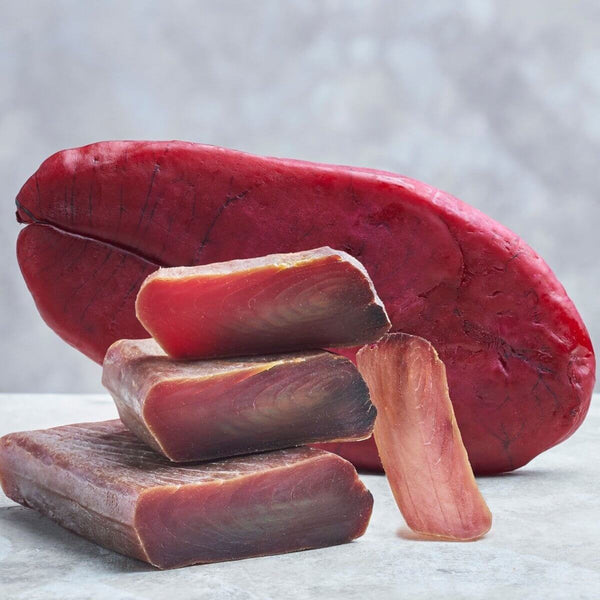
The most prized parts of bluefin tuna are the loin (lean and clean), the descargamento (fattier), and the belly (ventresca) (the belly area, the fattiest and most sought-after).
Technique 1: Pan Searing — The Restaurant Classic
Searing is the most common technique used in restaurants to cook bluefin tuna. It involves searing the surface at a very high temperature for a very short time, creating a crispy crust while the interior remains raw or pink.
Ingredients
- 2 bluefin tuna loins, 200 g each (3-4 cm thick)
- Extra virgin olive oil
- Flaky sea salt (Maldon or similar)
- Freshly ground black pepper
- Optional: black and white sesame seeds
Step-by-step
- Bring to room temperature: take the tuna out of the fridge 20-30 minutes before. The cold center helps prevent overcooking.
- Pat dry: dry the surface with paper towels. Moisture prevents searing.
- Heat the pan: cast iron or stainless steel pan over maximum heat for 2-3 minutes. It should smoke slightly.
- Minimal oil: a thin drizzle of olive oil. Some chefs brush the oil directly onto the tuna.
- Sear: place the loin and do not move it. 45-60 seconds per side for a pink result. 30 seconds if you want it rarer.
- Rest: let it rest for 1 minute on a wooden board before cutting.
- Slice and season: cut into 1 cm slices with a sharp knife. Flaky salt and pepper to serve.
Market tip: if you coat the tuna loin in sesame seeds before searing, you'll get a spectacular crispy crust. Press the seeds firmly to adhere.
Related Products from Bacalalo


Technique 2: Bluefin Tuna Tataki — Japanese Precision
Tataki is the Japanese version of searing, but with an additional step: after searing, the tuna is immediately plunged into ice water to stop the cooking. This ensures that only the outer 2-3 millimeters are cooked and the center remains completely raw.
Ingredients
- 1 bluefin tuna loin, 300-400 g
- 2 tablespoons soy sauce
- 1 tablespoon sesame oil
- 1 tablespoon lemon juice
- Grated fresh ginger
- Thinly julienned scallions
- Toasted sesame seeds
Step-by-step
- Prepare the ice bath: a large bowl with water and plenty of ice cubes.
- Sear the tuna: pan over maximum heat, 20-30 seconds per side (including the edges).
- Cool immediately: immerse the loin in the ice water for 30 seconds.
- Dry: remove and pat dry with paper towels.
- Wrap in cling film: wrap tightly and refrigerate for at least 30 minutes.
- Slice thinly: 5-7 mm slices with a sharp knife.
- Sauce: mix soy, sesame, lemon, and ginger. Pour over the slices.
- Garnish: scallions and sesame seeds on top.
If you want to delve deeper into the tataki technique with a detailed recipe, we recommend our article on step-by-step tuna tataki.
Technique 3: Baked Bluefin Tuna — For Large Pieces
Baking is the best option when you have a large piece of bluefin tuna (500 g or more) and want a uniform result. The key is to use high temperature for a short time.
Ingredients
- 1 piece of bluefin tuna, 500-700 g
- 3 tablespoons extra virgin olive oil
- 2 sliced garlic cloves
- Fresh rosemary
- 1 lemon (juice and zest)
- Salt and pepper
Step-by-step
- Preheat the oven to 220°C (425°F) with top and bottom heat.
- Briefly marinate: oil, garlic, rosemary, lemon zest. Maximum 15 minutes.
- Sear in a pan: 30 seconds per side over maximum heat.
- Bake: transfer to an oven tray and bake for 6-8 minutes for a 500g piece (8-10 for 700g).
- Mandatory rest: wrap in aluminum foil and let rest for 5 minutes.
- Slice and serve: thick slices (1.5-2 cm), drizzle with the resting juices.
Golden rule for baking: 6 minutes per 500g at 220°C (425°F) for a medium-rare result. If you have a meat thermometer, remove at 45°C (113°F) — it will rise to 50°C (122°F) during resting.
Marinades and Sauces for Bluefin Tuna
Bluefin tuna has a powerful flavor that pairs well with both Asian and Mediterranean flavors:
Ponzu marinade (Japanese style)
- 3 tablespoons soy sauce
- 2 tablespoons lemon juice
- 1 tablespoon mirin
- 1 teaspoon wasabi
- Grated ginger to taste
Mediterranean caper sauce
- 4 tablespoons extra virgin olive oil
- 2 tablespoons chopped capers
- 1 tablespoon Sherry vinegar
- Chopped fresh parsley
- Finely diced red onion (brunoise)
Pedro Ximénez reduction
- 150 ml Pedro Ximénez wine
- 1 tablespoon honey
- 1 tablespoon balsamic vinegar
- Reduce over medium heat until it coats the back of a spoon (about 10 minutes)
Garnishes that Enhance Bluefin Tuna
The best garnishes for bluefin tuna are those that provide contrast without stealing the show:
- Sweet potato puree: the natural sweetness of sweet potato complements the umami of tuna.
- Wakame salad: the Japanese tradition with cucumber and sesame.
- Confit Piquillo peppers: the perfect Mediterranean option.
- Sushi rice: to serve tataki as a complete dish.
- Wok-fried vegetables: pak choi, snow peas, and carrots with soy.
Common Mistakes When Cooking Bluefin Tuna (and How to Avoid Them)
These are the mistakes we see most often, even in experienced cooks:
- Too thin a cut: if the loin is less than 2.5 cm, it's impossible to leave it pink. Always ask for a thick cut.
- Pan not hot enough: if it's not smoking, it's not ready. The tuna will boil instead of sear.
- Moving the tuna: place it and don't touch it until it's time to flip. If you move it, you lose the crust.
- Not drying the surface: moisture creates steam, not direct heat. Result: cooking instead of searing.
- Skipping the rest: cutting immediately makes it lose juices. 1-2 minutes of rest is enough.
- Marinating too long: the acid in lemon or vinegar "cooks" the surface. Maximum 15 minutes.
Canned Bluefin Tuna: Another Way to Enjoy It
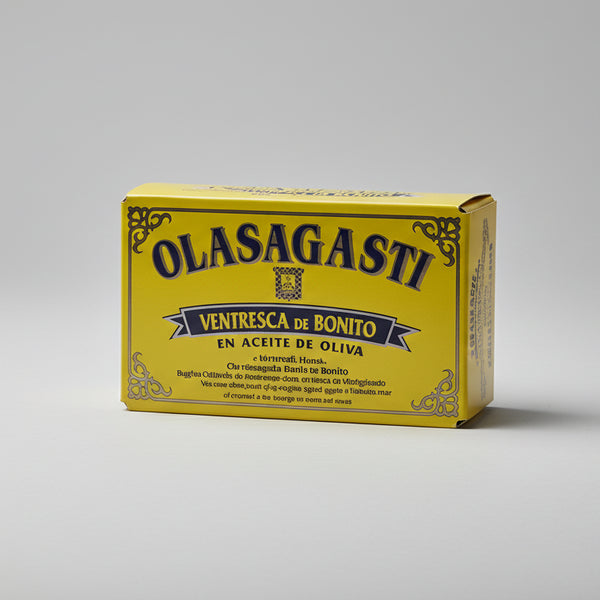
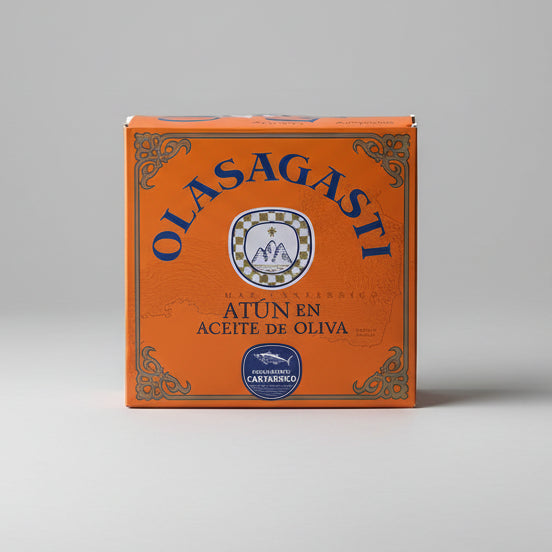
Fresh bluefin tuna isn't always accessible, but quality canned tuna is a worthy alternative for many recipes. A good light tuna loin from Olasagasti (3.95 €) can reliably enhance salads, pastas, and toasts.
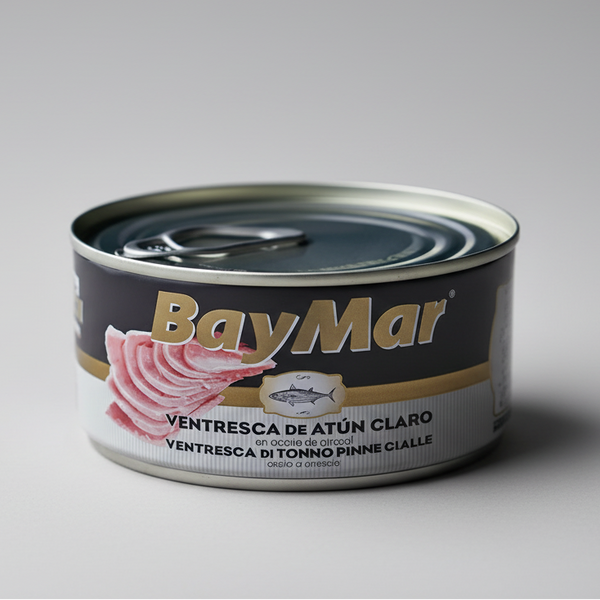
And if you're looking for the fattiest and most flavorful part of canned tuna, albacore tuna belly (12.95 €) is the cannery's jewel: a buttery texture and deep flavor reminiscent of high-quality fresh bluefin tuna. For an experience closer to bluefin tuna, our bluefin tuna belly retains all the richness and intense flavor of the fresh product in a ready-to-enjoy format.
To understand the difference between albacore tuna and light tuna—and when to use each—don't miss our guide on the differences between albacore tuna and light tuna.
Frequently Asked Questions
How long do you cook bluefin tuna in a pan?
For a pink (medium-rare) result, cook bluefin tuna 45-60 seconds per side in a very hot pan. If you prefer it rarer, reduce to 30 seconds per side. The loin should be at least 3 cm thick to allow for proper doneness control.
How do you know if bluefin tuna is done?
The most reliable way is with a meat thermometer: 43-46°C (110-115°F) for rare, 47-50°C (117-122°F) for medium-rare. Without a thermometer, press the center with your finger: it should be firm on the outside but yield slightly in the center, like the base of your thumb when you touch your index finger and thumb together.
Can you eat bluefin tuna raw?
Yes, bluefin tuna is consumed raw in preparations like sashimi, tartare, and carpaccio. To safely consume it raw, it must have been previously frozen to -20°C (-4°F) for at least 24 hours (or 5 days in a home freezer) to eliminate anisakis.
What is the difference between tataki and seared tuna?
Searing cooks the exterior at a high temperature and is served immediately. Tataki adds a key step: after searing, the tuna is plunged into ice water to completely stop the cooking. This ensures that only the outer 2-3 mm are cooked and the center remains completely raw.
Which part of bluefin tuna is best for grilling?
The central loin is the best part for grilling and searing: lean, uniform, and easy to cut into regular slices. The belly (ventresca) is fattier and flakes more easily, ideal for tataki. The descargamento has more fat streaks and works well baked.
How much does fresh bluefin tuna cost in Spain?
The price of fresh bluefin tuna in Spain ranges between 30 and 80 €/kg depending on the season, the part, and the quality. During the almadraba season (May-June), prices drop slightly. The belly is the most expensive part, potentially exceeding 100 €/kg. Clean loin typically ranges from 40-60 €/kg.
Can I freeze bluefin tuna and then grill it?
Yes, but it's important to thaw it slowly in the refrigerator for 12-24 hours, never in the microwave. Dry it very well before cooking. The result will be slightly inferior to fresh (it loses some firmness), but perfectly valid for searing and tataki.
Related Products from Bacalalo
🛒 Products mentioned in this article
⭐ 4.9/5 · 24-48h cold shipping · Since 1990 at Mercat del Ninot
Conclusion
From Mercat del Ninot in Barcelona, we have been selecting the best seafood products for over 35 years. If this guide has been useful to you, explore our catalog at bacalalo.com and receive the same quality we have sold at the market since 1990 at home.
Related guides
- Seafood paella: traditional recipe
- Fish suquet: traditional Catalan recipe
- Fish ceviche: classic recipe
Discover more