

Summary: Natural cockles are one of the jewels of Spanish canning. Inside a seemingly simple can hides a product of extraordinary delicacy: bivalves cooked solely in their own juice, with no additives other than a little salt. That pure, that good.
Natural cockles: a treasure from the Galician estuaries
Natural cockles are one of the jewels of Spanish canning. Inside a seemingly simple can hides a product of extraordinary delicacy: bivalves cooked solely in their own juice, with no additives other than a little salt. That pure, that good.
At Bacalalo, we have been selecting the best seafood preserves at the Mercat del Ninot in Barcelona since 1990. Natural cockles are one of the products we recommend most to our customers, both for appetizers and for elaborate recipes. But not all cockles are the same, and knowing the differences is key to truly enjoying them.
Natural cockles vs. canned cockles: are they the same?
There's a common confusion: many people think that "natural cockles" and "canned cockles" are the same. Technically, natural cockles are a type of preserve, but with an important difference compared to other preparations.
- Natural: the cockle is cooked only in its own juice (constitution water) with salt. It does not contain oil, vinegar, or any other ingredients. The flavor is pure, clean, and intensely marine.
- In escabeche: vinegar, oil, paprika, and spices are added. This completely changes the flavor profile.
- In sauce: variations with tomato, scallop, or other additions.
To appreciate the real quality of the cockle, the natural preparation is the benchmark. It's where nothing can be hidden: if the product is good, it shows. If it's not, that also shows.
Estuary cockles vs. farmed cockles
This is probably the most important distinction you need to know when buying cockles:
| Characteristic | Estuary Cockle | Farmed/Imported Cockle |
|---|---|---|
| Origin | Galician estuaries (Arousa, Noia, Vigo) | Holland, Denmark, farms |
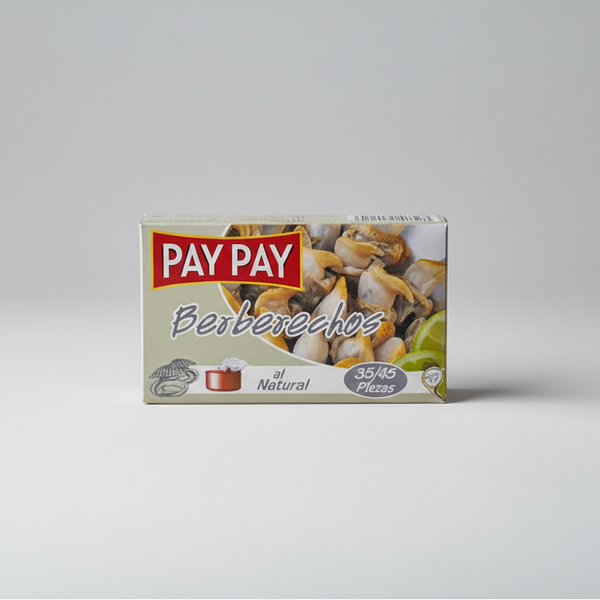
| Size | Variable, often large | More uniform, generally small |
| Flavor | Intense, iodized, sweet | Mild, less concentrated |
| Texture | Firm and fleshy | Softer, watery |
| Price | High (20-40 €/kg in can) | Low (5-12 €/kg in can) |
| Pieces per can | 20-30 (large) | 35-55 (small) |
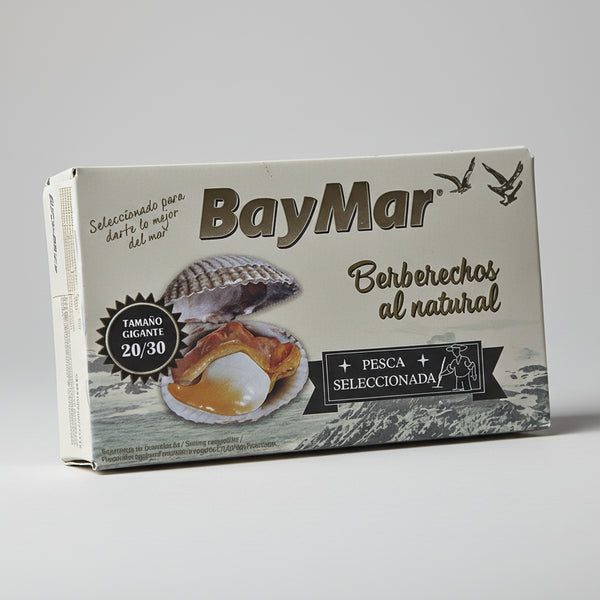
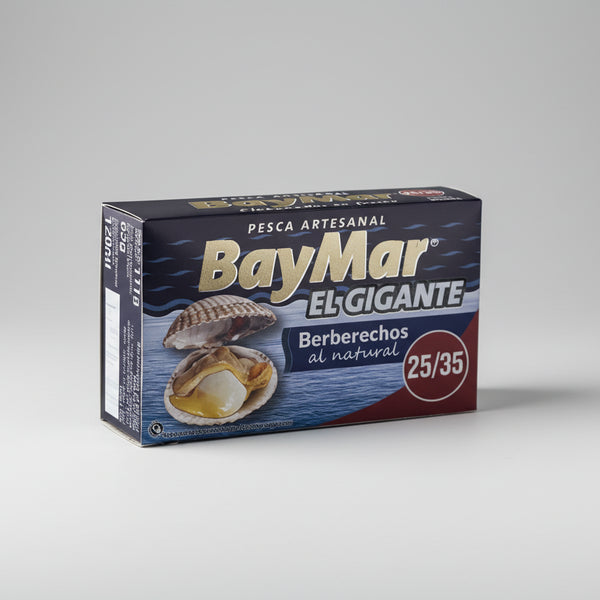
Our large natural cockles come from the Galician estuaries and are selected piece by piece to guarantee a generous size and extraordinary flavor. We also offer Galician estuary cockles in different formats to suit every occasion.
How to read the label
The label gives you more information than you think:
- "Natural": only cockle and salt. No other ingredients.
- Number of pieces: the fewer pieces per can, the larger the size and generally the higher the quality.
- RR (Estuary Reserve) or equivalent: indicates premium selection.
- Origin: look for "Ría de Arousa", "Ría de Noia", or "Galician coast". Be wary if it only says "Product of Spain" without further detail.
How to eat natural cockles
Natural cockles can be enjoyed in many ways, from the simplest to more elaborate preparations. Here are our favorites:
Directly from the can
It's the purest form and the preferred choice of connoisseurs. Open the can, let them warm up for 5 minutes, and eat them with a toothpick or a small fork. The juice in the can is liquid gold: don't throw it away. Dip bread in it or drink it directly.
On an appetizer platter
Natural cockles are essential on any gourmet preserve platter. Combine them with anchovies, sardines, mussels in escabeche and some breadsticks. Add some olives and a good Galician white wine (Albariño, Godello) and you have a first-class appetizer.
On toast
Toast sourdough bread slices, spread a little salted butter or extra virgin olive oil, and top with cockles. A squeeze of lemon and freshly ground black pepper. Simple and spectacular.
Recipes with natural cockles
Pasta with natural cockles and garlic
Ingredients for 2 people:
- 200 g spaghetti or linguine
- 1 can of natural cockles (with their juice)
- 3 cloves of sliced garlic
- 1 dried chili pepper
- Extra virgin olive oil
- Fresh chopped parsley
- White wine (a splash)
Cook the pasta al dente. In a large frying pan, brown the sliced garlic with the chili pepper in olive oil over medium heat. Add the cockle juice and white wine, reduce for 2 minutes. Add the drained pasta and cockles, sauté for 1 minute, and serve with fresh parsley. Total time: 15 minutes.
Warm cockle salad
On a bed of lamb's lettuce and arugula, place natural cockles, sliced cherry tomatoes, thinly sliced red onion, and some Parmesan shavings. Dress with olive oil, sherry vinegar, and a pinch of flake salt. Perfect as a starter or light dinner.
Creamy rice with cockles
Prepare a sofrito of onion, garlic, and green pepper. Add grated tomato and let it poach. Incorporate the rice, sauté, and add hot fish broth (3 parts broth to 1 part rice for creamy rice). Two minutes before finishing, add the cockles with their juice. Let it rest for 5 minutes before serving.
Natural cockles vs. steamed cockles: which to choose?
Another very common question: is "natural" the same as "steamed"? Not exactly, and it's important to be clear about it before buying or cooking:
- Natural cockles (canned): they come already cooked in their own juice inside the can. They are eaten directly, at room temperature, or added to recipes. This is what we cover in this guide.
- Steamed cockles: a cooking technique for fresh cockles, which open with heat and a little liquid in a matter of minutes. If you are looking to prepare fresh cockles at home, check out our 10-minute steamed cockle recipe.
In short: if you have a can, it's "natural"; if you've bought live cockles at the fishmonger, it's "steamed". To choose the right preserve, also check out our guide to choosing the best canned cockles.
Storage and serving
Canned natural cockles have a long shelf life, but there are important nuances:
- Unopened: store in a cool, dry place, away from direct light. They last several years, but many experts agree that between 1 and 3 years is their optimal point.
- Serving temperature: take them out of the pantry 30 minutes before consuming. At room temperature, they develop their full aroma. Never serve them directly from the refrigerator.
- Once opened: consume them immediately. If there are leftovers, transfer them to a glass container, cover them with their juice, and store them in the refrigerator for a maximum of 24 hours.
- The juice: never waste it. It is a concentrated seafood broth perfect for rice dishes, pastas, sauces, and soups.
Why natural cockles are a gourmet product
In recent years, natural cockles have experienced a spectacular revaluation. From being a modest appetizer, they have gone on to appear on the menus of Michelin-starred restaurants. And there are good reasons for this.
A natural Galician estuary cockle concentrates the flavor of the sea in a unique way. Its flesh is sweet and iodized at the same time, with a texture that gently explodes in the mouth, releasing a delicious juice. It is a product without artifice, where the quality of the raw material is everything.
Furthermore, cockles are nutritionally exceptional: rich in iron (more than red meat), high-quality proteins, vitamin B12, and minerals such as zinc and selenium. All this with very few calories and almost no fat.
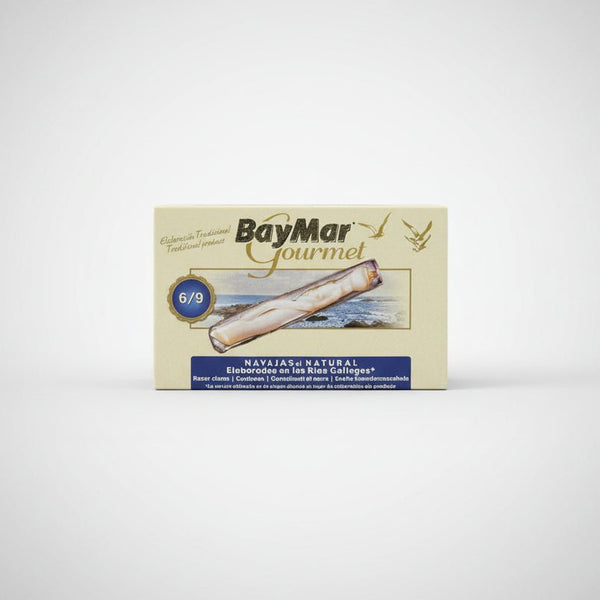
To complete your experience with Galician bivalves and mollusks, also try our natural razor clams, another treasure from the estuaries that surprises with its clean and intense flavor. If you haven't tried good natural cockles yet, we invite you to discover them. It is one of those products that change your perception of what a preserve can be.
Frequently asked questions
How do you eat natural cockles?
Natural cockles can be eaten directly from the can at room temperature, on toast, on appetizer platters, or as an ingredient in pasta, rice, and salads. Let them warm up for 30 minutes before consuming to appreciate their full flavor.
What is the difference between natural and pickled cockles?
Natural cockles are cooked only in their own juice with salt, without any other ingredients. Pickled cockles contain vinegar, oil, paprika, and spices that completely alter the flavor. Natural is the purest way to appreciate the quality of the cockle.
What is the difference between estuary and farmed cockles?
Galician estuary cockles have a more intense, iodized flavor, firmer flesh, and are generally larger. Farmed or imported cockles (Holland, Denmark) are smaller, milder, and more watery. The difference is reflected in the price: estuary cockles cost 2-4 times more.
How many pieces should quality cockles have?
The fewer pieces per can, the larger the size and quality. Good natural estuary cockles have between 20 and 30 large pieces per can. If the can has more than 40-50 pieces, they are generally smaller and of lower quality.
Can natural cockles be cooked or are they only eaten cold?
They can be eaten cold (at room temperature) or used in hot recipes. They are excellent in pasta, creamy rice, warm salads, and fish soups. When using them in hot recipes, add them at the end so they don't get tough.
How long do natural cockles last once opened?
Once opened, they should preferably be consumed immediately. If there are leftovers, transfer them to a glass container covered with their juice and store them in the refrigerator for a maximum of 24 hours. Unopened, they last several years, although their optimal point is between 1 and 3 years.
Is it good to eat canned cockles?
Yes. Natural canned cockles retain almost all their properties: they are rich in iron (more than red meat), vitamin B12, protein, and minerals, with very few calories. Since they are cooked only in their own juice with salt, they contain no additives. A good canned estuary cockle is a healthy and high-quality food.
What is the difference between cockles and clams?
The cockle has a rounder shell with distinct radial grooves, and its flesh is smaller, sweeter, and more iodized. The clam is more elongated or triangular, with a smooth shell and larger, fleshier meat. Both are bivalves from the Galician estuaries, but the cockle has a more intense and concentrated sea flavor.
Are natural cockles eaten raw?
No. Natural canned cockles are already cooked in their own juice, so they are ready to eat without needing further cooking. They are not consumed raw: the only thing advisable is to let them warm up for about 30 minutes outside the refrigerator so they release all their aroma.
Related products from Bacalalo

🛒 Products mentioned in this article
⭐ 4.9/5 · Cold shipping 24-48h · Since 1990 at Mercat del Ninot
Discover our premium selection
Seafood products carefully selected since 1990 at the Mercat del Ninot, Barcelona. Refrigerated shipping in 24-48h.
Conclusion
From the Mercat del Ninot in Barcelona, we have been selecting the best seafood products for over 35 years. If this guide has been useful to you, explore our catalog at bacalalo.com and receive the same quality we have been selling at the market since 1990 at home.
Related guides
- Canned fish: how to choose
- Gourmet cans for gifting
- Easy appetizers with preserves
- Galician seafood: types and season
Discover more