

Summary: Cantabrian anchovies are one of Spain's most prized gastronomic products, but the difference between brands, formats, and prices can be confusing. In this guide, we compare the best brands, explain what distinguishes a premium anchovy from a mediocre one, and help you choose the best option according to your budget and use.
Contents
- What Makes Cantabrian Anchovies Special
- How Anchovies Are Made: From Anchovy to Fillet
- Ranking of the Best Anchovy Brands
- How to Read an Anchovy Can Label
- Anchovies 00 vs 0 vs Standard: Size Classification
- Fair Price: Why They Cost What They Cost
- How to Serve and Store Anchovies Correctly
- Cantabrian vs Mediterranean vs Pickled Anchovies
- Where to Buy Quality Cantabrian Anchovies
- Anchovies in the Kitchen: Uses Beyond Toast
- Nutritional Benefits of Anchovies
- Frequently Asked Questions
What Makes Cantabrian Anchovies Special
The history of Cantabrian anchovies dates back to the late 19th century when Italian families from Sicily arrived in Santoña and brought with them the technique of salting anchovies. That encounter between Mediterranean know-how and the exceptional raw material from the Cantabrian Sea gave rise to an industry that today exports worldwide and maintains artisanal methods that have barely changed in over a century.
The anchovy (Engraulis encrasicolus) caught in the cold waters of the Cantabrian Sea develops a higher proportion of infiltrated fat than its counterparts from warmer waters. This higher fat content is what gives the cured anchovy its unctuous texture, its characteristic pink color, and an intense yet clean flavor, without bitterness or harshness. The Cantabrian towns of Santoña, Laredo, Colindres, and Noja, along with the Basque towns of Ondarroa and Bermeo, concentrate most of the artisanal production.
The designation of origin and protected geographical indications partially protect this product, but it is important to know that not all anchovies labeled "Cantabrian" are made with anchovies caught exclusively in these waters. The difference between an authentic Cantabrian anchovy and one made with raw material from other areas is remarkable in taste.
How Anchovies Are Made: From Anchovy to Fillet
The artisanal production process of anchovies is long, laborious, and requires experience. It all begins with the anchovy season, which is concentrated between April and June, when the fish has a higher fat content after the winter feeding period. The anchovies are selected by size and freshness at the same port.
Once at the factory, they are cleaned, beheaded, and placed in salt barrels in alternating layers: a layer of coarse salt, a layer of anchovies, another layer of salt. These barrels are pressed with weight and left to mature for a period ranging from 6 to 12 months, depending on the brand and the desired quality. Reserve elaborations can reach 14 or even 18 months of curing.
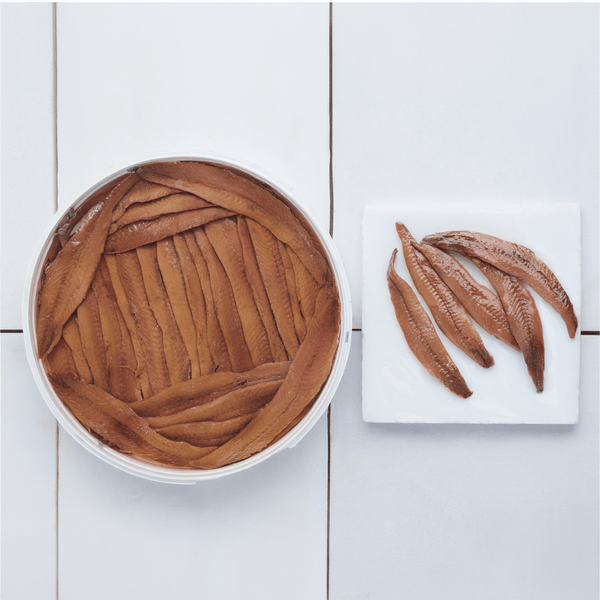
During maturation, the fish's natural enzymes transform the texture and flavor. The protein partially breaks down, creating those complex nuances reminiscent of nuts and cured ham. After maturation, each piece is filleted by hand, the bones are removed, it is cleaned with oil, and packaged in extra virgin olive oil. An experienced filleter can fillet about 2,000 anchovies a day: a precision job that machines have not been able to replicate with the same quality.
Ranking of the Best Anchovy Brands
Selecting the best Cantabrian anchovies is an exercise that combines tastings, manufacturer reputation, consistency in quality, and price relationship. This table summarizes the most prominent brands on the market, ordered by segment.
| Brand | Origin | Star format | Approx. price (€/kg) | Fillet size | Rating |
|---|---|---|---|---|---|
| Don Bocarte | Santoña | Can 48 g / glass jar | 70-90 | 00 (extra large) | Exceptional |
| Conservas Zallo | Bermeo | Glass jar 200 g | 55-70 | 00-0 | Exceptional |
| La Brújula | Santoña | Octavillo can 80 g | 55-65 | 0 | Very high |
| Güeyu Mar | Asturias | Can 80 g (smoked) | 75-95 | 0 | Very high (unique product) |
| Anchoas del Cantábrico "0" Selección Gourmet | Santoña | Can 80 g / catering format | 45-55 | 0 | High |
| Conservas Remo | Santoña | Octavillo can 80 g | 45-55 | 0-1 | High |
| Conservas Codesa | Santoña | Can 80 g | 40-50 | 1 | High |
| Conservas Ortiz | Ondarroa | Octavillo can 95 g | 35-45 | 1 | Good |
| Lorea | Santoña | Can 50 g | 30-40 | 1-2 | Good |
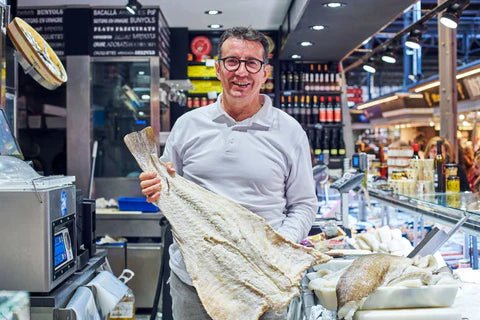
At Bacalalo, we work with the "0" Gourmet Selection from Santoña, a product that offers an unbeatable quality-price ratio: large, fleshy fillets with a maturation that gives them a complex flavor without losing smoothness. These are the anchovies we also serve in our Mercat del Ninot store.
Related Products from Bacalalo


Recommended Products

Cantabrian Anchovies in Olive Oil - 50g...
3,95 €

Cantabrian "Deluxe" Assortment
67,00 €

Artisanal Cantabrian Anchovy Gilda Handmade...
9,90 €

White Tuna Belly in Olive Oil - 190 g |...
16,95 €
Refrigerated shipping 24-48h throughout the Peninsula
How to Read an Anchovy Can Label
The label of an anchovy can contains key information that many consumers overlook. The first thing to look for is the catch area: "Cantábrico" or "FAO zone 27" confirms that the anchovy comes from the North-East Atlantic. If the label indicates "FAO zone 37", the origin is Mediterranean, a product different in flavor and texture.
The type of oil is another fundamental indicator. The best anchovies are packaged in extra virgin olive oil (EVOO). Those that use generic olive oil or vegetable oil reduce costs but also quality. Also, observe the net weight versus the drained weight: the drained weight tells you how much actual anchovy the can contains, excluding the oil.
The production date matters more than the expiration date. A freshly packed anchovy has a fresher profile; one that has been maturing in the can for months develops deeper nuances. Both options are valid, but it is good to know what you are buying. Also look for mentions of salt maturation (6, 10, 12 months) and the fillet size classification.
Anchovies 00 vs 0 vs Standard: Size Classification
The anchovy size classification system uses a numbering that can confuse the uninitiated consumer. The number indicates, in reverse order, the size of the fillet: the smaller the number, the larger the anchovy. It is a system similar to that of olives.
Anchovies 00 (double zero) are the largest and scarcest: fillets of 8-10 centimeters that come from exceptional anchovies. They represent less than 5% of the total production and are destined almost exclusively for the premium segment. Their texture is fleshier and their flavor is more nuanced. Anchovies 0 (zero) are large fillets of 6-8 centimeters: the most demanded category in the gourmet market, with a perfect balance between size, flavor, and availability.
Size 1 anchovies are medium fillets, about 5-6 centimeters, offering good quality at a more accessible price. They are the most common option in hospitality and for regular domestic consumption. Sizes 2 and 3 correspond to small fillets, more economical and appropriate for cooking (pizzas, salads, sauces) where the anchovy is integrated as an ingredient, not as the main component.
Fair Price: Why They Cost What They Cost
The price of Santoña anchovies and Cantabrian anchovies in general responds to objective factors that should be known to distinguish a fair price from an unjustified overprice. Fresh anchovies already have a significant cost at the fish market, and from every kilo of anchovies, only about 200-250 grams of filleted anchovies are obtained. Added to this are months of salt curing, manual filleting, and quality EVOO.
A practical reference for the consumer: below 25 euros per kilo, it is very difficult to find genuine Cantabrian anchovies with an artisanal process. The range of 35 to 55 euros per kilo is where the best quality-price ratio is concentrated. Above 65 euros, we enter limited productions and reserve selections which, while magnificent, offer an increasingly subtle increase in quality relative to the price.
A common mistake is to compare the price per can without considering the drained weight. A 50-gram can at 8 euros and an 80-gram can at 11 euros may seem similar, but the second is significantly more economical per kilo of actual product. Always calculate the price per kilo of drained weight to compare accurately.
How to Serve and Store Anchovies Correctly
Premium Cantabrian anchovies deserve a serving that respects their quality. The ideal consumption temperature is slightly below room temperature: take them out of the fridge about 10-15 minutes before serving so that the oil becomes fluid and the aromas unfold. Never serve them directly from the refrigerator, as extreme cold inhibits the nuances of flavor.
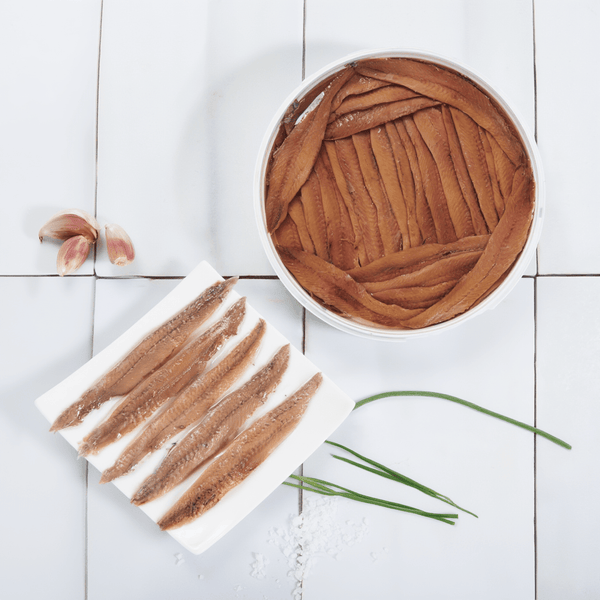
The classic accompaniment is simply quality bread, preferably a slice of crystal bread or a crispy toast lightly rubbed with tomato. Butter, a tradition in Basque pintxos, splendidly complements the anchovy's saltiness. For more elaborate toasts, combine them with piquillo peppers, goat cheese, or a drizzle of honey.
For storage, once the can is opened, transfer any anchovies you won't consume to a glass container, cover them completely with olive oil, and seal it tightly. Stored this way in the refrigerator, they will last 7 to 10 days in optimal conditions. The unopened can should be stored in a cool, dark place (not necessarily in the refrigerator, although it doesn't harm) and has a shelf life of several years, during which they continue to mature slowly.
Cantabrian vs Mediterranean vs Pickled Anchovies
One of the most common confusions is mixing three products that, starting from the same fish, are radically different. This table clarifies the differences.
| Characteristic | Cantabrian Anchovies | Mediterranean Anchovies | Pickled Anchovies (Boquerones en vinagre) |
|---|---|---|---|
| Raw material | Cantabrian anchovy (fattier) | Mediterranean anchovy (leaner) | Fresh anchovy from any origin |
| Process | Salt curing 6-12 months + manual filleting + EVOO | Salt curing 3-6 months + filleting + olive oil | Marinated in vinegar 6-24 hours + oil and garlic |
| Texture | Fleshy, unctuous, melts in the mouth | Firmer and more fibrous, less gelatinous | Firm, slightly raw in the center |
| Flavor | Intense, complex, notes of nuts and ham | Salty, simpler, fewer nuances | Acidic, fresh, direct sea flavor |
| Color | Uniform pink to light brown | Darker brown | Silvery white |
| Average price | 35-90 €/kg | 15-30 €/kg | 12-25 €/kg |
| Main use | Star tapa, toast, gourmet pizza | Cooking, salads, fillings | Bar tapa, informal appetizer |
All three products are magnificent in their context, but they are not interchangeable. A premium Cantabrian anchovy toast is a gastronomic experience; a plate of marinated anchovies (boquerones en vinagre) with garlic and parsley is an irresistible bar classic. They are distinct categories.
Where to buy quality Cantabrian anchovies
The best channels to buy Cantabrian anchovies are specialized stores, both physical and online, that work directly with canneries and guarantee product rotation and adequate storage conditions. In stores like Bacalalo, we select each batch directly with the cannery in Santoña and maintain a controlled cold chain.
Canneries with their own stores in Santoña, Laredo, and Bermeo are another excellent option, especially if you visit the area. Many also offer direct online sales. Food markets with stalls specializing in salted fish and gourmet preserves are another reliable alternative, as the vendors know the product and provide good advice.
It is advisable to be cautious with supermarket private labels. Not all are bad, but price pressure often translates into lower quality anchovy, shorter maturation times, and generic olive oils. For cooking, they may be suitable, but to enjoy anchovies as a main tapa, it is worth investing in a specialized brand.
Anchovies in the kitchen: uses beyond toast
Cantabrian anchovies are an extraordinary flavor enhancer that goes far beyond the classic tapa. In Italian cuisine, they are dissolved in hot oil to create the base for sauces like bagna cauda, putanesca, or Caesar dressing. The deep umami they provide is irreplaceable.
In Basque and Cantabrian cuisine, anchovies are integrated into gourmet preserve recipes ranging from the most creative pintxos to author's dishes. They work wonderfully with roasted piquillo peppers, with broken eggs, on artisan pizzas, or even as an unexpected complement to a cheese board. The key is to use them in moderation: two or three chopped fillets can transform an entire dish.
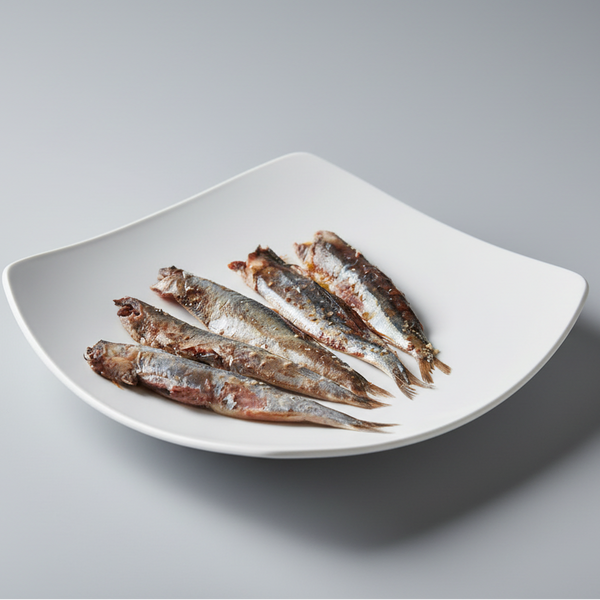
For those looking for pairing ideas with other seafood products, anchovies combine especially well with canned sardines in tasting boards, creating an interesting contrast of flavors and textures within the same family of canned fish.
Nutritional benefits of anchovies
From a nutritional point of view, anchovies are a small treasure. They provide a high concentration of omega-3 fatty acids (EPA and DHA), high-quality biological proteins, calcium, iron, phosphorus, and B vitamins. In just 30 grams of anchovies, you get a significant portion of your recommended daily intake of omega-3.
The only aspect to consider is their sodium content, derived from the salt curing process. For people without medical salt restrictions, regular consumption of 4 to 6 fillets as an appetizer poses no problem. For those monitoring sodium, anchovies can be enjoyed in more moderate quantities, combining them with foods that balance the total daily intake.
🏆 Our selection of anchovies
⭐ 4.9/5 · Cold shipping 24-48h · Since 1990 in the Mercat del Ninot
Frequently Asked Questions
How long do anchovies last once opened?
Covered in olive oil in an airtight glass container, anchovies can be stored for 7 to 10 days in the refrigerator. The key is that the fillets are completely submerged in oil, without contact with air. If you notice the oil becoming cloudy or the edges of the fillet darkening, consume them as soon as possible.
Can Cantabrian anchovies be frozen?
Technically yes, but freezing alters the texture of the fillet: upon thawing, it tends to fall apart and loses some of its characteristic firmness. If you buy a large can and are not going to consume it all, it is preferable to store the leftover fillets in a glass jar with olive oil in the refrigerator. Under these conditions, they will last perfectly for more than a week.
What is the difference between an anchovy and a boquerón?
Anchovy and boquerón come from the same fish, Engraulis encrasicolus, but they refer to completely different preparations. The boquerón is consumed fresh (fried, grilled) or marinated in vinegar. The anchovy is the result of curing the boquerón in salt for months and then filleting it and preserving it in olive oil. The curing process radically transforms the flavor, texture, and color of the product.
Why is there such a price difference between anchovy brands?
The price difference is explained by three main factors: the origin of the anchovy (Cantabrian vs. other areas), the production process (artisan with manual filleting vs. industrialized), and the selection of the fillet (size, integrity, maturation time). An anchovy that costs 80 euros per kilo has undergone a much stricter selection, longer maturation, and more careful filleting than one that costs 25 euros per kilo. Both can be correct, but they are objectively different products.
How many anchovies are estimated per person as an appetizer?
As an appetizer or tapa, the usual reference is 4 to 6 fillets per person, which is equivalent to about 20-30 grams of drained product. If the anchovies are going to be an ingredient in a toast or pintxo, 2 or 3 fillets per unit are usually sufficient. For an informal dinner where anchovies are the protagonists, estimate 8-10 fillets per diner, which is approximately half a quarter-size can.
Is size 00 really better than 0?
Size 00 indicates larger fillets, coming from exceptionally sized anchovies. The flavor and texture are slightly different because the fillet has more mass, more infiltrated fat, and a higher proportion of meat compared to the cured surface. That said, a size 0 fillet from a good brand with long maturation can be equally or more flavorful than a 00 from a mediocre brand. Size matters, but it's not the only quality factor.
Are Cantabrian anchovies healthy?
Anchovies are a very healthy food: rich in omega-3 fatty acids, high-quality proteins, calcium, iron, and B vitamins. Their omega-3 content makes them an excellent complement for cardiovascular health. The only point of attention is their sodium content, derived from salt curing, which people with hypertension or sodium restriction should consider when consuming them.
How do I know if anchovies are spoiled?
Warning signs include a dark brown or yellowish color in the fillet, a strong ammonia or rancid smell, a pasty or mushy texture that does not correspond to the original fillet, and cloudy oil with residue. Good quality anchovies have a uniform pink to light brown color, a pleasant sea and cured smell, and a firm texture that melts gently when eaten. When in doubt, discard the can.
What oil is best for preserving anchovies?
Extra virgin olive oil is the quality standard for premium anchovies. A mild EVOO, such as arbequina, complements without competing with the flavor of the fillet. Some brands use refined olive oil or sunflower oil to reduce costs, but the result is notably inferior. If you transfer anchovies from the can to a jar, always use EVOO to cover them.
Is the can or glass jar better?
The glass jar has the advantage of allowing you to see the product before opening it, and glass is an inert material that does not interfere with the flavor. The can, for its part, better protects from light and has a centuries-old tradition in anchovy preservation. In terms of taste, the difference is minimal if both formats contain the same product. The jar is more elegant for serving at the table or as a gift; the can is more practical for everyday use.
Do canned anchovies mature over time?
Yes, canned anchovies continue a slow and controlled maturation thanks to residual enzymatic activity. A can that has been packaged for 6-12 months may have a more complex and profound flavor profile than a freshly packaged one. However, this process has a limit: after 2-3 years, the texture may begin to deteriorate. Many enthusiasts prefer anchovies with some maturation in the can, similar to how a more aged cheese is appreciated.
Can anchovies be bought directly from the cannery?
Many canneries in Santoña, Laredo, and Bermeo sell directly to the public, both in their physical stores and through their websites. This is an excellent option because you eliminate intermediaries and can access formats or selections that do not reach general distribution. Another alternative are specialized stores like Bacalalo, which work directly with the canneries and guarantee the same freshness with the convenience of home delivery.
Related guides
- Canned sardines: types, brands, and how to choose the best ones
- 12 gourmet canned food recipes for quick dinners
- Smoked salmon toasts: gourmet combinations
- Pickled mussels: homemade recipe step by step
- Caviar in Spain: guide to types, prices, and where to buy
Discover our premium Cantabrian anchovies selected directly from the best canneries in Santoña. Over 30 years of experience in the Mercat del Ninot in Barcelona.