

Summary: Ventresca is considered by many to be the jewel of fish gastronomy. This cut, highly prized by professional chefs and food lovers, is distinguished by its silky texture, incomparable juiciness, and a flavor that is both deep and delicate.
Table of Contents
- What is Ventresca and from what part of the fish is it obtained?
- Types of Ventresca by Fish
- Why Ventresca is the Most Valued Part of the Fish
- How to Differentiate Authentic Ventresca from an Imitation
- How to Cook Fresh Ventresca
- How to Enjoy Canned Ventresca
- Nutritional Value of Ventresca
- Frequently Asked Questions about Ventresca
- Frequently Asked Questions
- Conclusion
Ventresca: What It Is, Which Part of the Fish It Comes From, and Why It's So Highly Valued
Ventresca is considered by many to be the jewel of fish gastronomy. This cut, highly prized by professional chefs and food lovers, is distinguished by its silky texture, incomparable juiciness, and a flavor that is both deep and delicate.
But what exactly is ventresca? What part of the fish is it obtained from? Why is it more expensive than other cuts? In this complete guide, we answer all these questions and explain everything you need to know to enjoy it to the fullest.
What is Ventresca and from what part of the fish is it obtained?
Ventresca is the ventral or abdominal part of the fish, specifically the belly area. It is located just below the spine, protecting the animal's viscera. This is the area where the fish accumulates the most intramuscular fat, which gives it its unique texture: melt-in-your-mouth, smooth, and extraordinarily juicy.
Anatomically, ventresca corresponds to the muscles covering the abdominal cavity. These muscles are less developed than those of the loin (as they are not actively involved in swimming), so they have finer and more delicate fibers. Additionally, as this is where the fish stores its energy reserves, it has a much higher fat infiltration than the rest of the body.
Each fish has two ventrescas (one on each side of the belly), and they represent only between 10% and 15% of the animal's total weight. This relative scarcity, combined with its superior quality, explains its higher price.
Types of Ventresca by Fish
Although the best-known ventresca comes from albacore tuna and bluefin tuna, many other fish also have this cut. Each has its own characteristics.
Albacore Tuna Belly (Bonito del Norte Ventresca)
It is the undisputed queen. Albacore tuna belly (Thunnus alalunga) is characterized by its light, almost white color, with streaks of fat that melt in the mouth. When canned, it achieves a flaky, buttery texture that is unparalleled.
The albacore tuna season in the Cantabrian Sea (June to October) is the peak time. Tuna caught individually with a hook and line produce ventresca of exceptional quality.
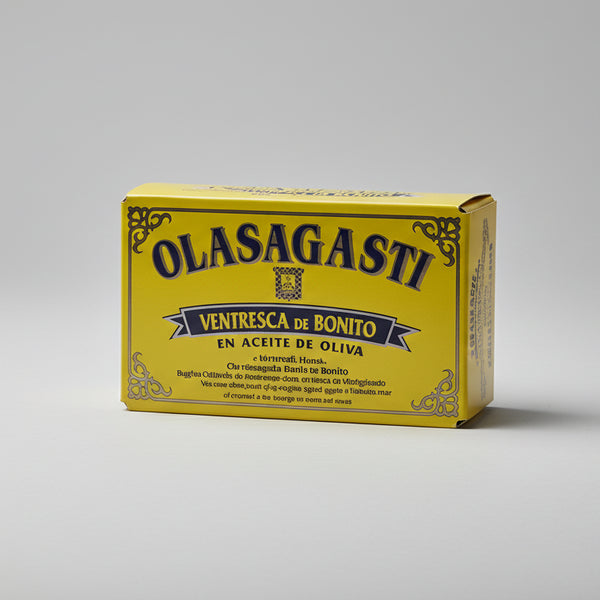
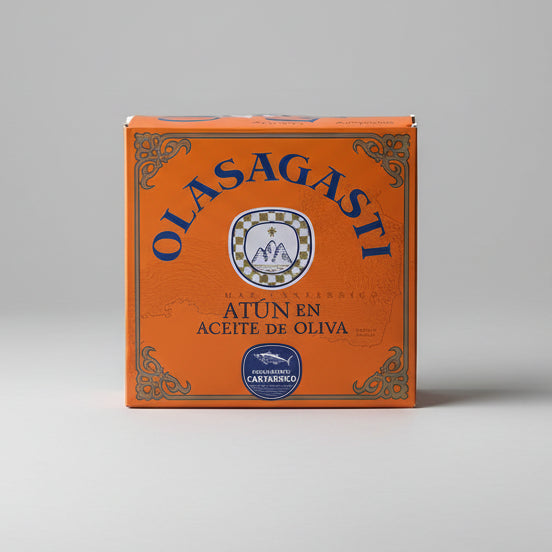
At Bacalalo, we work with Olasagasti ventrescas, an artisanal cannery from the Basque Country that selects the best specimens: 120g albacore tuna belly to enjoy alone or with a partner, and 260g albacore tuna belly to share at the table.
Bluefin Tuna Belly
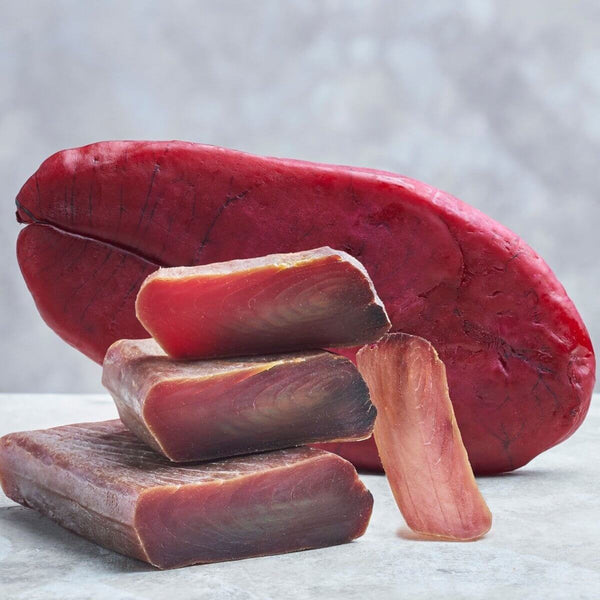
Bluefin tuna belly (Thunnus thynnus) is possibly the most luxurious in the world. In Japanese cuisine, it is known as otoro and is the most prized part of the tuna, reaching astronomical prices at Tsukiji auctions.
It is distinguished by its intense dark red color with streaks of white fat, a texture that literally melts in the mouth, and a deep, complex flavor with almost meaty notes. It is usually enjoyed raw (as sashimi or nigiri) to appreciate all its subtlety.
Yellowfin Tuna Belly
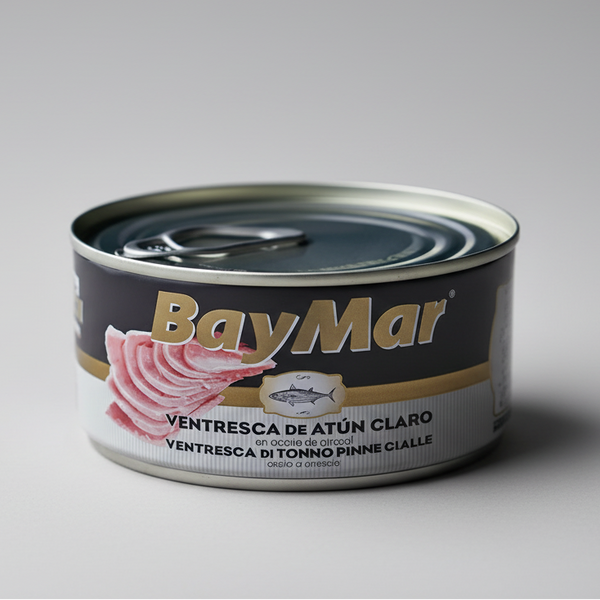
Yellowfin tuna (Thunnus albacares) offers a ventresca that is more accessible in price but equally delicious. It has a more pronounced flavor than albacore and a firm but juicy texture. Canned, it is excellent and very versatile in cooking. Our 1 kg yellowfin tuna belly is perfect for families, restaurants, or anyone who wants to always have this delicacy on hand.
Salmon Belly
Less known but equally spectacular. Salmon belly has a high omega-3 content and a fatty, melt-in-your-mouth texture. It is perfect for grilling, as the fat caramelizes, creating a crispy outer crust while the inside remains creamy.
Cod Belly
Cod belly, also known as kokotxas de bacalao in the jowl area, is a highly prized cut in Basque cuisine. It stands out for its natural gelatin, which, when cooked in sauce, produces the famous pil pil texture. The cod belly itself is thinner than that of tuna but has a delicate flavor and a very characteristic gelatinous texture.
Why Ventresca is the Most Valued Part of the Fish
Ventresca is more expensive than any other fish cut for several fundamental reasons:
- Intramuscular fat: the infiltration of fat between the muscle fibers creates a texture that no other cut can match. It is the equivalent of wagyu in the world of fish.
- Scarcity: each fish only has two ventrescas, which represent 10-15% of its weight. An 8 kg bonito produces barely 800 g-1.2 kg of ventresca.
- Concentrated flavor: fat carries flavor. Ventresca has more taste nuances than the loin, with more complex marine notes and a long aftertaste.
- Unique texture: it flakes into silky layers when eaten. There's no need to chew it: it melts. This textural experience is unique.
- Nutritional value: paradoxically, the fat in ventresca is primarily unsaturated fat, rich in omega-3s (EPA and DHA), which are beneficial for cardiovascular health.
Related Products from Bacalalo


How to Differentiate Authentic Ventresca from an Imitation
Some products on the market are labeled as ventresca without actually being so. Here are the key points to identify authentic ventresca:
- Flaky texture: real ventresca separates into thin, parallel flakes. If you open it and see compact pieces without flakes, it's not ventresca.
- Color: albacore tuna belly is light, almost white, with visible fat streaks. Bluefin tuna belly is dark red with white streaks.
- Price: if you find ventresca at loin price, be suspicious. Authentic ventresca always costs significantly more.
- Labeling: look for the specific denomination on the label. A good cannery will clearly indicate that it is ventresca and the exact species.
How to Cook Fresh Ventresca
If you're lucky enough to get fresh ventresca, these are the best cooking techniques:
Grilled Ventresca
The purest way to enjoy it. Heat a cast-iron griddle or pan to very high heat. Pat the ventresca dry with kitchen paper, season it with coarse salt, and place it on the very hot griddle. Cook 2 minutes per side (it should be pink inside). Serve immediately with a drizzle of extra virgin olive oil and some Maldon salt flakes.
Baked Ventresca
Preheat the oven to 200 °C (390 °F). Place the ventresca on a tray over a bed of vegetables (onion, bell pepper, tomato). Drizzle with olive oil and bake for 12-15 minutes, depending on thickness. The inside should remain juicy.
Ventresca Tataki
Especially recommended for bluefin tuna belly. Sear the piece for 30 seconds on each side in a pan over maximum heat and immediately immerse it in ice water to stop the cooking. Cut it into thin slices and serve with ponzu sauce, sesame, and chives. If you're interested in this technique, check out our step-by-step tuna tataki recipe.
How to Enjoy Canned Ventresca
Canned ventresca is one of the greatest treasures of Spanish gastronomy. The best artisanal canneries in the Cantabrian Sea produce ventrescas that rival any gourmet product in the world.
- Alone, straight from the can: the purest way. Open the can, lightly drain the oil, and enjoy it with good bread. Nothing more.
- On toast: place a slice of ventresca on a piece of toasted bread with rubbed tomato. Simple and spectacular.
- In a salad: crumble the ventresca over a salad of seasonal tomatoes, red onion, and olives. The oil from the preserve serves as a dressing.
- With piquillo peppers: stuff piquillo peppers with crumbled ventresca. A classic pintxo from the Basque Country.
For a complete experience, see our tuna belly guide with detailed recipes.
Nutritional Value of Ventresca
Ventresca is not only delicious, but it is also a food with an exceptional nutritional profile. Per 100g of albacore tuna belly:
- Calories: 180-220 kcal
- Protein: 22-25 g
- Total Fat: 10-14 g (mainly unsaturated)
- Omega 3 (EPA + DHA): 2.5-3.5 g
- Vitamin D: 7-10 µg
- Vitamin B12: 4-5 µg
- Selenium: 50-60 µg
Ventresca is one of the most concentrated sources of long-chain omega-3s available in food. A single 100g serving more than meets the recommended daily needs of EPA and DHA.
Frequently Asked Questions
What is the difference between ventresca and bonito loin?
The loin is the dorsal part of the fish, leaner and with thick fibers. Ventresca is the ventral part (the belly), with more infiltrated fat, a flaky texture, and a more intense flavor. Ventresca is scarcer and therefore more expensive.
How much does albacore tuna belly cost?
The price of canned artisanal premium albacore tuna belly ranges from €8 to €15 per 120g can, although there are more accessible and more exclusive options.
Does ventresca have bones?
Fresh ventresca may have some fine bones, but they are easy to remove. In canned form, the bones soften completely during sterilization and are practically imperceptible.
How many calories does ventresca have?
Albacore tuna belly provides between 180 and 220 kcal per 100g. Although it is more caloric than the loin, it is mostly healthy fats rich in omega-3s.
Can fresh ventresca be frozen?
Yes, it can be frozen at -18 °C (-0.4 °F) for a maximum of 3 months. Wrap it well in plastic wrap and always thaw it in the refrigerator, never at room temperature.
What is the best canned ventresca?
The best canned ventrescas come from artisanal canneries in the Cantabrian Sea that work with hook-and-line caught albacore tuna during the season.
Is ventresca the same as ijada?
Yes, ventresca and ijada are synonyms. In the Basque Country, ijada is used; in Catalonia, sorra (for bluefin tuna); and in Japan, otoro (the fattiest part) and chutoro (intermediate area).
Related Products from Bacalalo
🛒 Products mentioned in this article
⭐ 4.9/5 · 24-48h cold shipping · Since 1990 at Mercat del Ninot
Discover our premium selection
Carefully selected seafood products since 1990 at Mercat del Ninot, Barcelona. Refrigerated shipping in 24-48h.
Conclusion
From Mercat del Ninot in Barcelona, we have been selecting the best seafood products for over 35 years. If this guide has been useful to you, explore our catalog at bacalalo.com and receive the same quality at home that we have been selling at the market since 1990.
Related guides
Discover more