Making uramaki at home seems complicated but it isn't. The difference between a roll that falls apart when cut and one that arrives at the table firm and shiny lies in three very specific details: the seasoning of the rice, the pressure of the mat, and a sharp knife. In this step-by-step guide, we'll teach you how to prepare smoked salmon uramaki following an adapted Japanese technique, with the extra nuance provided by Domínguez cold-smoked salmon.
Quick Summary: Cook Japonica rice and season it with vinegar, sugar, and salt. Spread it over half a sheet of nori, flip it, then fill with smoked salmon, avocado, cucumber, and cream cheese. Roll tightly with the mat, coat in sesame seeds, and cut with a wet knife. Top with salmon roe.
What is uramaki and why is it so popular?
Uramaki (裏巻き) literally means "inside-out roll": the rice is on the outside and the nori seaweed wraps around the filling on the inside. It originated as a Western adaptation of traditional sushi — the famous California Roll of the 1970s — when American diners were put off by seeing the black seaweed first. Today, it is the most popular variety outside of Japan.
Three reasons why uramaki works well at home:
- It handles transportation better than hosomaki: the outer rice protects the filling.
- It allows for creative toppings: salmon roe, sesame seeds, seared salmon, spicy mayonnaise.
- It is forgiving for beginners: if the rice isn't perfectly uniform, the coating hides it.
And an honest fact: smoked salmon does not require mandatory prior freezing (raw salmon does, according to European regulations). For making sushi at home safely and without professional equipment, smoking is the best option.
Ingredients (for 24 pieces · 4 servings)
For the rice
- 300 g Japonica short-grain rice (Yume Nishiki, Sanchi Sushi Rice)
- 360 ml water
- 60 ml rice vinegar
- 30 g white sugar
- 8 g fine salt
For the filling
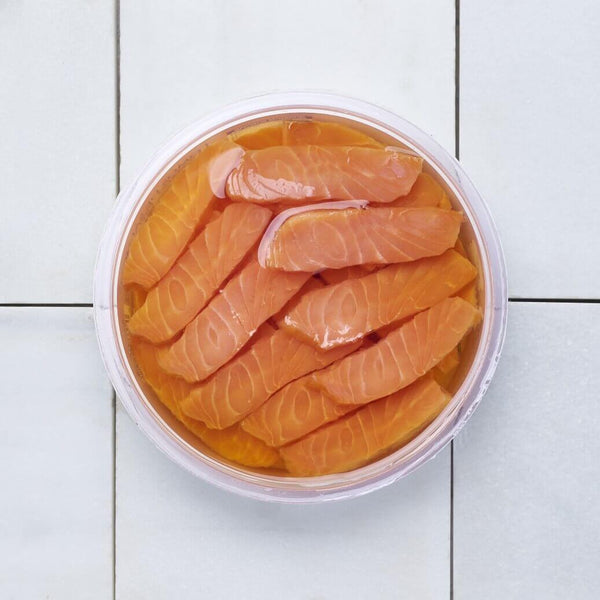
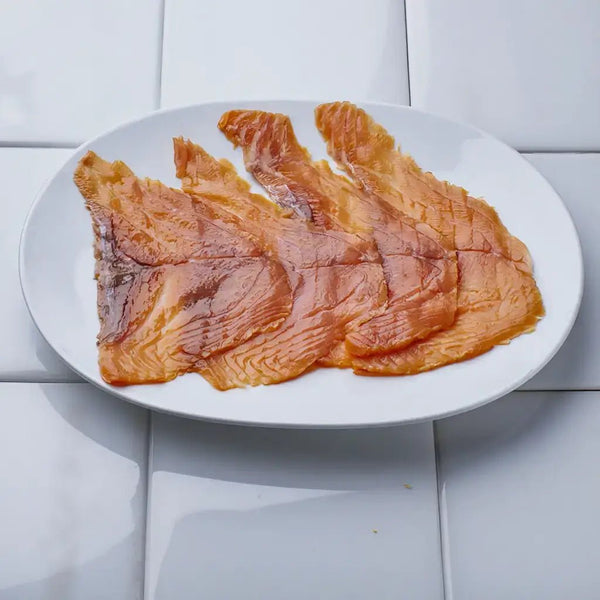
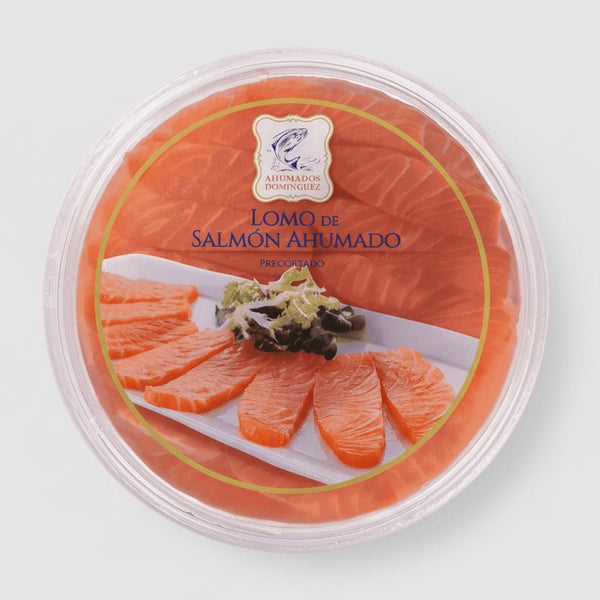
- 120 g Domínguez smoked salmon slices
- 1 ripe but firm Hass avocado
- 1/2 seedless and peeled English cucumber
- 100 g cream cheese (Philadelphia or similar)
- 4 sheets of nori seaweed (cut in half)
For topping and serving
- 30 g TANIT salmon roe (ikura)
- Toasted white sesame seeds
- Low-sodium soy sauce, wasabi, and pickled ginger
Necessary Utensils
- Bamboo rolling mat (makisu) wrapped in plastic wrap.
- Sharp Japanese knife (yanagiba or santoku) or chef's knife with a very fine blade.
- Large glass or wooden bowl (never metal, it reacts with vinegar).
- Wooden paddle (shamoji) or large spoon.
- Fan or rigid cardboard for cooling the rice.
- Bowl with water and a splash of vinegar for moistening hands and knife.
Detailed Step-by-Step Guide
- Wash the rice until the water runs clear. Place the rice in a colander and rinse 4-5 times, rubbing gently. This removes surface starch and prevents it from becoming pasty. Drain for 10 min.
- Cook the rice covered. Put rice and 360 ml of water in a pot with a tight-fitting lid. Bring to a boil, reduce heat to low, and cook for 12 min without uncovering. Turn off the heat and let it rest for another 10 min, also covered.
- Prepare the seasoning (sushi-zu). Heat vinegar, sugar, and salt over low heat (do not boil) until dissolved. Set aside.
- Season the rice. Transfer the hot rice to the large bowl. Pour in the seasoning and mix with the paddle using cutting motions (do not stir) while fanning to cool and make it shiny. Cover with a damp cloth.
- Prepare the filling. Cut avocado and cucumber into 1 cm sticks. Cut the smoked salmon into strips the length of the nori. Put the cream cheese into a piping bag or use a spoon.
- Place the mat with plastic wrap. Cover the rolling mat with plastic wrap (prevents rice from sticking). Place half a sheet of nori, rough side up.
- Spread the rice. With hands moistened in vinegared water, take a ball of rice (about 80 g) and spread it in a thin layer covering the entire surface of the nori, leaving a free edge on only one side.
- Flip it over. Sprinkle sesame seeds over the rice. Carefully flip it over: the nori is now facing up, the rice down on the plastic wrap.
- Fill. 2 cm from the bottom edge of the nori, place strips of salmon, avocado, cucumber, and a line of cream cheese. Don't overfill: if it overflows, it won't close.
- Roll tightly. Lift the bottom edge of the mat and roll it into a cylinder, pressing to compact. Give it another half turn to seal.
- Coat in sesame seeds (optional). Roll the uramaki in a tray with toasted sesame seeds to add texture.
- Cut cleanly. Moisten the knife in vinegared water before each cut. Cut the roll in half, align the halves, and make three more cuts: 6 equal pieces.
- Garnish with roe. Top each piece with a teaspoon of salmon roe. Serve immediately with soy sauce, wasabi, and pickled ginger.
Chef's Tips and Common Mistakes
- Rice too dry: not enough resting time. Cover it for 10 more minutes with a damp cloth.
- Roll that opens when cut: you didn't press enough with the mat, or you put too much filling.
- Salmon that breaks: slices too thin or dry. Domínguez slices have an ideal buttery texture for uramaki.
- Knife dragging: dull or dry blade. Moisten it, and if you have one, use a Japanese knife.
Uramaki Variations
| Variation | Extra Ingredients | Notes |
|---|---|---|
| Philadelphia Roll | Smoked salmon + cream cheese + cucumber | The American classic. No avocado. |
| Dragon Roll | Avocado on top (scales) + eel sauce | Spectacular. Thinly sliced avocado on top of the roll. |
| Spicy Salmon | Salmon + mayonnaise + sriracha + chives | Spicy for heat lovers. |
| Rainbow Roll | On top: salmon, tuna, avocado, shrimp | The full spectrum of fish on top of the roll. |
| Crunchy Roll | Crispy tempura + Japanese mayonnaise | Extra crunchy texture. |
Pairings
- Cold junmai sake: the classic, cleanses the palate between pieces.
- Sencha green tea: non-alcoholic option, balances the smoky flavor.
- Albariño or Txakoli: dry Atlantic whites that stand up to the fat of the salmon and the creaminess of the cheese.
- Japanese beer Asahi or Sapporo: light and fine bubbles.
- Cava brut nature: Spanish alternative, contrasts with the butteriness.
If you want to go beyond uramaki, on the blog you'll find step-by-step smoked salmon nigiri, varied smoked salmon maki and the technique for perfect sushi rice. To better understand the main ingredient, the complete guide to smoked salmon will help you choose the cut and origin.
Looking for inspiration with roe? Check out the salmon roe vs. caviar comparison and the guide to recipes with ikura. If you liked the Japanese format, then try smoked salmon tataki or our homemade ponzu sauce.
Discover our premium selection
Seafood products carefully selected since 1990 at Mercat del Ninot, Barcelona. Refrigerated shipping in 24-48h.
Conclusion
Making uramaki at home is more accessible than it seems if you master three details: warm seasoned rice, a tight mat, and a wet knife. Domínguez smoked salmon slices solve the most delicate part of sushi — safe, high-quality fish — without needing to freeze anything. Start with the classic version with cream cheese and avocado, and once you get comfortable with the mat, venture into variations.
Since 1990, at Mercat del Ninot, we have been selecting seafood products with discernment: for taste, not for slogans. The smoked salmon and roe in this recipe are the same ones we have at our physical stall.