

Quick summary: salmon roe (ikura) are orange-red roe from chum salmon, large pearls (4-7 mm), salty-marine burst in the mouth, €30-60/kg. Caviar is roe from sturgeon (Acipenser), small grey-black pearls (2-3.5 mm), buttery-elegant flavor, €1,500-12,000/kg depending on the species. They are not the same: only real caviar comes from sturgeon and only that can be called "caviar" in the EU. Salmon roe is a distinct product, also delicious, but at a different price point.
"Salmon caviar" is one of the most confusing names in the gourmet world. In Spain and many European countries, this denomination is legally incorrect: caviar is only from sturgeon. Salmon roe is roe, not caviar. The difference is not semantic: it's in species, price, technique, and mouthfeel. This guide explains everything.

Caviar and roe are not the same
European regulation (EC Regulation 104/2000 and CITES) is clear:
- "Caviar" = only roe from fish of the genus Acipenser (sturgeon). Period.
- "Caviar substitute" = roe from other fish (lumpfish, capelin, salmon).
- "Salmon roe" or ikura (in Japanese) = correct name for orange roe.
If you see a jar of "salmon caviar" or "red caviar" on offer for €15/kg, it is not caviar — it is mislabeled salmon roe. That doesn't make it worse; it's simply a different product.
What is real caviar?
True caviar comes from sturgeon, a prehistoric fish from the Caspian Sea and other inland seas. The three historic species are:
- Beluga (Huso huso) — the rarest and most expensive. Large pearl (3-3.5 mm), light grey color, buttery flavor. €5,000-12,000/kg.
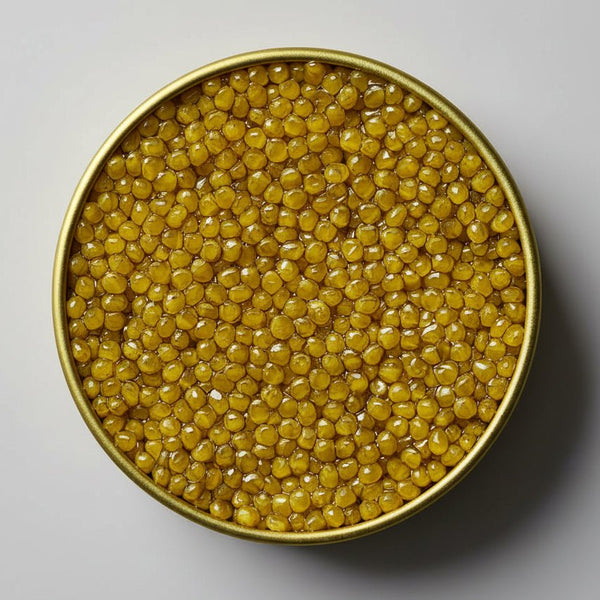
- Osetra (Acipenser gueldenstaedtii) — the most balanced. Medium pearl (2.5-3 mm), golden-brown color, nutty flavor. €2,500-6,000/kg.
- Sevruga (Acipenser stellatus) — the most intense. Small pearl (2-2.5 mm), dark grey color, more marine flavor. €1,500-3,500/kg.
Today, over 95% of the world's caviar comes from aquaculture (Iran, China, Italy, France, Bulgaria) because wild sturgeon has been protected by CITES since 1998. Iranian farmed caviars (Beluga, Imperial Osetra) are the global benchmarks.
Premium Iranian Beluga Caviar 000 Quality
The most prized caviar in the world. Large, light-grey pearls, buttery texture, delicate flavor. Beluga sturgeon (Huso huso) from Iranian aquaculture.
What is salmon roe?
Salmon roe comes from chum salmon (Oncorhynchus keta) or, to a lesser extent, coho and sockeye salmon. It is extracted from mature females during spawning, hand-separated, lightly salted, and packaged.
Characteristics:
- Color: translucent intense orange-red.
- Size: 4-7 mm (much larger than caviar).
- Texture: pops in the mouth when pressed with the tongue.
- Flavor: direct salty-marine, with sweet notes from the salmon.
- Origin: Alaska (Pacific), Japan, Norway, Chile.
- Japanese name: ikura. It is one of the most popular toppings in sushi.
TANIT Premium Keta Salmon Roe 100g
Orange-red roe from keta salmon. Mildly salted. Glass jar ready to serve on blinis, sushi, toast or as a topping for eggs Benedict.
Comparison table
| Characteristic | Caviar (sturgeon) | Salmon roe (ikura) |
|---|---|---|
| Species | Acipenser, Huso (sturgeon) | Oncorhynchus keta (chum salmon) |
| Color | Grey-black, golden, brown | Translucent orange-red |
| Pearl size | 2-3.5 mm | 4-7 mm |
| Texture | Buttery, "soft pop" | Clear burst when pressed |
| Flavor | Buttery, complex, "umami" | Direct salty-marine |
| Origin | Caspian Sea, global aquaculture | Pacific (Alaska, Japan), Norway |
| Price €/kg | €1,500-12,000/kg | €30-60/kg |
| Typical format | 30-125g tin | 50-200g jar |
| Best use | Mother-of-pearl spoon, blinis, alone | Sushi, blinis, eggs Benedict, toast |
Taste and mouthfeel
The difference is enormous:
- Sturgeon caviar: the pearls gently crush against the palate, releasing a buttery texture. The flavor is elegant, complex, with notes of nuts, deep sea, and a long finish. It is eaten alone or on a neutral blini — any strong accompaniment would mask it.
- Salmon roe (ikura): the large pearls burst when pressed with the tongue, releasing a salty-marine liquid. The flavor is more direct and "fishier." It works perfectly with rice, lemon, cream cheese, egg.
Caviar is for quiet tasting. Ikura is for broader dishes where it accompanies, rather than solely starring.
Price €/kg in 2026
- Premium Beluga Caviar: €5,000-12,000/kg.
- Imperial Osetra Caviar: €2,500-6,000/kg.
- Sevruga Caviar: €1,500-3,500/kg.
- Baeri Caviar (Siberian sturgeon, entry to the world of caviar): €800-1,800/kg.
- Premium keta salmon roe: €40-60/kg.
- Standard salmon roe: €25-40/kg.
The price difference between caviar and salmon roe can be 100x or more. This reflects: 1) a sturgeon takes 7-15 years to produce roe, a salmon 3-4 years; 2) sturgeon is a protected species with strict quotas; 3) caviar production requires master artisans who have trained for decades.
Why is only sturgeon legally caviar?
The CITES Convention (Convention on International Trade in Endangered Species) has protected all sturgeon species since 1998. European regulation (EC 104/2000) stipulates that the trade name "caviar" is exclusively reserved for roe of the genus Acipenser.
This means that in the EU:
- "Salmon caviar" → legally incorrect. It should be called "salmon roe" or "ikura."
- "Lumpfish caviar" → incorrect. It should be called "lumpfish roe" or "ersatzkaviar."
- "Grey mullet caviar" → incorrect. It should be called "grey mullet roe" or "bottarga" if dried.
This protection is important: sturgeons are living fossils from 200 million years ago, and overfishing almost led to their extinction. Today, all legal caviar comes from certified aquaculture.
When to choose each?
Choose sturgeon caviar if:
- It's a special celebration (Christmas, anniversary, luxury dinner).
- You're going to taste it alone, with a mother-of-pearl spoon and neutral blini.
- You want the pure "umami" experience of sturgeon.
- It's a premium gastronomic gift.
Choose salmon roe if:
- You're making sushi, makis, gunkan-maki.
- It's a topping for eggs Benedict, toast with cream cheese, blinis with dill.
- You want the orange "color" factor in a visually striking dish.
- You're looking for the burst in the mouth, not the buttery texture.
Honesty: at a mixed table with both, guests usually enjoy salmon roe more (more accessible, more direct flavor) than premium caviar if they've never tried it. Caviar is an acquired taste. To start, it's better to begin with salmon roe or Baeri caviar (Siberian sturgeon), which serves as an "introduction" to the world.
What we sell at Bacalalo
We have both categories because they serve different purposes:
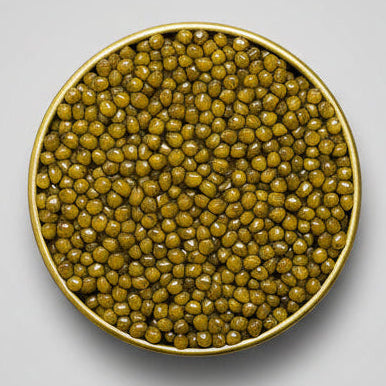
Iranian Imperial Osetra Caviar
The perfect balance between Beluga and Sevruga. Medium pearl, golden-brown color, nutty and marine flavor. CITES certified Iranian aquaculture.
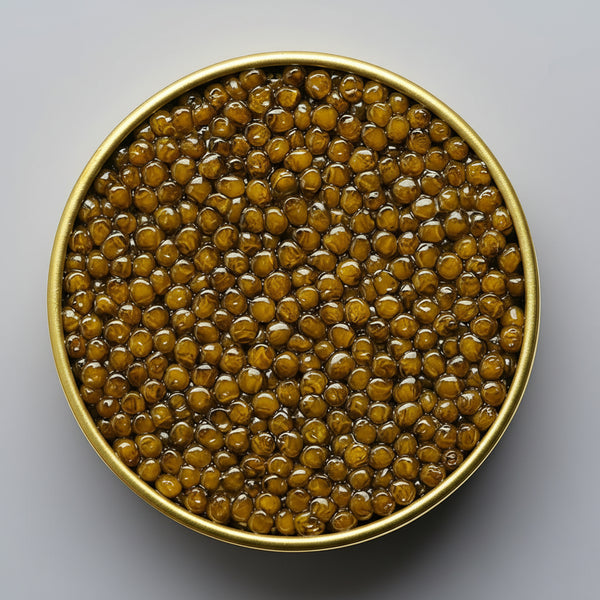
Caspian Sevruga Caviar
The most affordable option among classic caviars. More intense and marine flavor. Small, dark grey pearl.
Caspian Caviar Collection
Beluga, Imperial Osetra, Sevruga, and starter packs. Iranian aquaculture with CITES traceability.
Discover our premium selection
Seafood products selected with expertise since 1990 at Mercat del Ninot, Barcelona. Refrigerated shipping in 24-48h.
Conclusion
Sturgeon caviar and salmon roe are distinct products in species, price, flavor, and use. Caviar is exclusively from sturgeon (Acipenser, Huso), small grey-black pearls, buttery, €1,500-12,000/kg. Salmon roe is from keta salmon, large orange pearls, salty burst, €30-60/kg. The term "salmon caviar" is legally incorrect in the EU. If you've never tried caviar, start with a Baeri or a Sevruga — they are the gateway to the world. And don't confuse them: both are delicious in their category, but at completely different prices and for entirely different uses.
Frequently asked questions
Why is caviar so expensive?
What is "red caviar"?
Is salmon roe healthy?
How long does it last once opened?
Can caviar be eaten with a metal spoon?
What drink pairs well with caviar?
And with salmon roe?
Is it the same as bottarga (mullet roe)?
Is Baeri caviar "real caviar"?
Related articles
- Beluga vs Osetra vs Sevruga Caviar
- Collection: Caspian Caviar
- Norway vs Scotland Salmon
- Collection: Salmon Roe
About the author — Lalo González Rodríguez
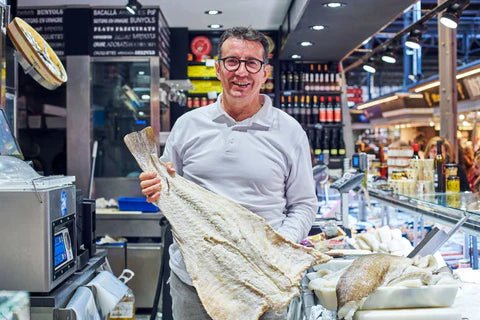
Third generation of Bacalalo at Mercat del Ninot (Barcelona). He has worked with cod since 1990 and personally selects suppliers in Iceland, Norway, Cantabria, and the Caspian Sea. He writes about the identity and true origin of seafood products.