Salmon is, along with hake and cod, one of the fish that appears most often on MasterChef. From sesame-crusted tataki to citrus mi-cuit, the techniques contestants apply to salmon reveal a world of possibilities that goes far beyond grilling or baking. In this article, we review the best salmon recipes inspired by MasterChef, with step-by-step instructions that you can replicate at home.
Salmon on MasterChef: a star every season
There isn't a MasterChef season that doesn't include at least one salmon challenge. And it's no coincidence: salmon is a fish that allows for a wide range of culinary techniques. From the most basic cooking to high-cuisine preparations like mi-cuit or gravlax, salmon tests a contestant's precision, thermal knowledge, and creativity.
On MasterChef Spain, salmon has appeared in outdoor challenges in Michelin-starred restaurants, in mystery boxes, and as the main ingredient in elimination challenges. The judges particularly value the cooking point: overcooked salmon is an unforgivable mistake that can lead to elimination.
What makes salmon so versatile is its fat content. With approximately 13% fat (rich in omega-3), salmon allows for short, high-temperature cooking, long, low-temperature cooking, raw preparations, and curing that would be impossible with leaner fish. This versatility is exactly what the judges look for when they include it in challenges.
The preparations most valued by the judges
Analyzing the different editions of MasterChef, the salmon preparations that receive the highest scores share a common denominator: they respect the product. The judges reward salmon with a pink and juicy interior, with crispy skin when served with skin, and with garnishes that complement without masking its flavor.
Japanese techniques like tataki and sashimi are especially valued because they demonstrate confidence in the product and mastery of cutting. French techniques like mi-cuit demonstrate temperature control. And Nordic techniques like gravlax show patience and an understanding of curing processes.

Key techniques for cooking salmon like on MasterChef
Before diving into the recipes, let's review the fundamental techniques that separate mediocre salmon from MasterChef-level salmon:
Internal temperature control
The ideal internal temperature for salmon depends on the preparation, but as a general rule:
- Tataki: 25-30°C in the center (seared outside, raw inside)
- Mi-cuit: 42-45°C in the center (low-temperature cooking)
- Pan-seared or grilled (medium): 50-55°C in the center (pink and juicy)
- Oven-baked (well-done): 60-65°C in the center (cooked but not dry)
A probe kitchen thermometer is the most undervalued tool in home cooking. MasterChef contestants who use it often get better results than those who "eyeball it."
The cut matters
Salmon is cut differently depending on the preparation. For tataki, you need thick, uniform fillets. For gravlax, large pieces with skin. For pan-searing, individual portions of consistent thickness. An uneven cut means uneven cooking, and that's the first thing judges detect.
Crispy skin: the ultimate technique
Crispy salmon skin is one of MasterChef's obsessions. The technique is simple but requires discipline: pat the skin dry with paper towels, place the salmon skin-side down in a very hot pan with a drizzle of oil, press lightly for the first 30 seconds to prevent curling, and do not touch it for 4-5 minutes. Flip it for only 30 seconds to sear the top. The skin should be golden and crispy like a potato chip.
Salmon Tataki with Sesame and Ponzu Sauce
Tataki is the Japanese technique that appears most often on MasterChef when working with salmon. It involves briefly searing the surface of the fish at high temperatures, leaving the interior completely raw. The result is a spectacular contrast of textures and temperatures.
Ingredients (4 servings)
- 500 g fresh sashimi-grade salmon loin (previously frozen for 72h at -20°C)
- 4 tablespoons sesame seeds (white and black)
- 2 tablespoons toasted sesame oil
- Ponzu sauce (see homemade recipe below)
- Fresh grated ginger
- Spring onion
- Radishes for garnish
For the homemade ponzu sauce
- 4 tablespoons soy sauce
- 2 tablespoons lemon juice
- 1 tablespoon orange juice
- 1 tablespoon mirin
- 1 teaspoon rice vinegar
Step-by-step preparation
- Prepare the ponzu sauce: Mix all sauce ingredients in a bowl and refrigerate.
- Prepare the salmon: Pat the salmon loin dry with paper towels. Brush with sesame oil on all sides. Spread the sesame seeds on a plate and coat the salmon, pressing firmly to adhere.
- Sear the salmon: Heat a pan over very high heat without oil (the salmon already has sesame oil). When the pan is lightly smoking, place the salmon and sear for 20-30 seconds on each side. The interior should remain completely raw.
- Quickly chill: Remove the salmon and wrap it tightly in plastic wrap to maintain its cylindrical shape. Place in the refrigerator for at least 30 minutes or in the freezer for 15 minutes.
- Cut and assemble: With a very sharp knife, cut the salmon into 1 cm thick slices. Arrange them on a plate in a fan shape. Garnish with thinly sliced radishes, chopped spring onion, and grated ginger. Serve the ponzu in a separate bowl or lightly drizzle over the slices.
The MasterChef trick
The difference between good tataki and extraordinary tataki lies in the temperature contrast. The searing must be very quick (maximum 30 seconds per side) and the subsequent cooling immediate. If the heat penetrates too much, you lose the raw-seared contrast that defines tataki.

Salmon Mi-cuit with Citrus and Dill Oil
Mi-cuit (literally "half-cooked" in French) is a low-temperature cooking technique that produces a spectacular result: the salmon has a silky, almost buttery texture that melts in your mouth. It is one of the most valued preparations on MasterChef when a French chef appears as a guest.
Ingredients (4 servings)
- 4 salmon fillets, 150g each, skinless and boneless
- 500 ml mild extra virgin olive oil
- Zest of 1 orange
- Zest of 1 lemon
- 2 sprigs fresh dill
- 1 clove garlic
- Maldon salt
- Pink peppercorns
Step-by-step preparation
- Prepare the aromatic oil: In a saucepan, gently heat the olive oil over very low heat with the citrus zests, dill, and crushed garlic clove. Maintain at 60°C for 30 minutes to infuse the aromas. Strain and set aside.
- Pre-salting: Season the salmon fillets generously with salt on both sides. Let rest for 20 minutes at room temperature, then pat dry with paper towels to remove excess moisture.
- Mi-cuit cooking: Place the salmon fillets in a dish where they fit snugly. Pour the warm aromatic oil (at exactly 50°C) over them until covered. Place the dish in a preheated oven at 50°C and cook for 25-30 minutes. The salmon is ready when the surface changes color but the center remains pink and translucent.
- Sous vide alternative: If you have an immersion circulator, place the fillets in vacuum bags with a tablespoon of aromatic oil and cook at 42°C for 30 minutes.
- Assembly: Carefully remove the fillets from the oil (they are very delicate). Place on a plate, garnish with pink peppercorns, a few drops of the aromatic oil, Maldon salt flakes, and a sprig of fresh dill.
Recommended garnishes
Mi-cuit salmon pairs perfectly with citrus salads (orange and grapefruit supremes), grilled green asparagus, or a very light cauliflower purée. The key is for the garnish to provide freshness and acidity to balance the richness of the salmon.
Beet-Cured Salmon Gravlax
Gravlax is an ancient Nordic preparation that has appeared on MasterChef on several occasions, especially when contestants travel to Scandinavian countries or host Nordic chefs. The salmon is cured with salt, sugar, and dill for 48 hours, and the result is a product with an intense flavor and firm texture, served thinly sliced.
Ingredients
- 1 kg fresh salmon fillet with skin
- 100 g coarse salt
- 80 g sugar
- 1 large bunch fresh dill
- 2 tablespoons crushed black pepper
- 1 grated raw beetroot (for color and flavor)
- Zest of 1 lemon
- 2 tablespoons vodka or aquavit (optional)
For the mustard and dill sauce
- 3 tablespoons Dijon mustard
- 1 tablespoon whole grain mustard
- 2 tablespoons sugar
- 1 tablespoon white wine vinegar
- 4 tablespoons sunflower oil
- 2 tablespoons chopped fresh dill
Step-by-step preparation
- Curing mix: Combine the salt, sugar, crushed pepper, lemon zest, and grated beetroot. If using vodka, add it now.
- Cure the salmon: Spread a generous layer of dill on a tray. Place the salmon skin-side down. Cover the entire surface with the curing mixture, pressing firmly. Add more dill on top. Wrap everything tightly with plastic wrap.
- Pressing and resting: Place a weight on top (a cutting board with canned goods works perfectly) and refrigerate for 48 hours. Every 12 hours, turn the salmon over and drain any liquid released.
- Cleaning: After 48 hours, remove all the curing mixture by scraping with a knife. Rinse briefly under cold water and pat dry with paper towels.
- Mustard and dill sauce: Mix the mustards with the sugar and vinegar. Add the oil in a thin stream while whisking. Incorporate the chopped dill.
- Serving: With a long, flexible knife, slice the gravlax very thinly diagonally, separating the flesh from the skin. Serve with the mustard sauce, toasted rye bread, and capers.
Quality salmon for your MasterChef recipes
The foundation of any great salmon recipe is an exceptionally high-quality product. At Bacalalo.com, we select salmon with the same criteria we apply to our cod: traceable origin, guaranteed freshness, and a cold chain from the very beginning.
Salmon Wellington with Spinach and Crispy Puff Pastry
Wellington is one of MasterChef's most feared challenges. Originally prepared with beef tenderloin, the salmon version is equally spectacular and has appeared in several editions as a technique test. The challenge is to achieve crispy puff pastry without overcooking the salmon.
Ingredients (4 servings)
- 600 g boneless, skinless salmon fillet, in one piece
- 1 sheet of butter puff pastry
- 200 g fresh spinach
- 200 g assorted mushrooms
- 100 g cream cheese
- 1 beaten egg (for brushing)
- Salt, pepper, and nutmeg
- Dijon mustard
Step-by-step preparation
- Prepare the filling: Sauté the spinach until it wilts, drain well, and chop. Finely chop the mushrooms and sauté over high heat until all the water has evaporated and they are dry. Mix spinach, mushrooms, and cream cheese. Season with salt, pepper, and nutmeg.
- Prepare the salmon: Season the salmon with salt and pepper. Brush with Dijon mustard on all sides.
- Assembly: Roll out the puff pastry sheet. Place a layer of the spinach and mushroom filling in the center. Place the salmon on top. Cover with more filling. Wrap the salmon with the puff pastry, sealing the edges well with beaten egg. Place with the seam side down on a baking sheet lined with parchment paper.
- Decoration and brushing: Brush the entire surface with beaten egg. You can make decorations with leftover puff pastry. Make two small cuts on top for steam to escape.
- Baking: Bake at 200°C for 25-30 minutes until the puff pastry is golden and puffed. Let rest for 5 minutes before slicing.
The secret to a perfect Wellington
The biggest mistake is for the puff pastry to become soggy on the bottom. To avoid this, make sure both the spinach and mushrooms are completely dry before assembling. Some MasterChef chefs add a layer of thin crepes between the filling and the puff pastry to create an extra barrier against moisture.
Fatal Errors When Cooking Salmon on MasterChef
These are the errors we've seen penalized most throughout the seasons:
- Overcooked salmon: The number one mistake. Dry, opaque salmon is unforgivable. The center should always be pink and juicy, except in specific preparations that require full cooking.
- Soggy skin: If you choose to serve salmon with skin, it must be crispy. Rubbery, soft skin reveals a lack of technique. If you can't get crispy skin, remove it.
- Not removing bones: Bones are the first thing judges check. Use tweezers and run your fingers over the salmon surface to detect any residual bones.
- Over-seasoning: Quality salmon doesn't need many seasonings. Judges penalize when added flavors mask the fish's taste.
- Unbalanced garnishes: Pairing fatty salmon with heavy butter- or cream-based sauces is a mistake. Salmon needs acidity, freshness, and lightness in its accompaniments.
How to Choose Quality Salmon
The quality of the salmon you buy will determine the outcome of your recipe, regardless of your cooking skill. Here are the criteria you should consider:
Wild vs. farmed salmon
Wild salmon (mainly from Alaska or the Pacific) has firmer, less fatty flesh and a more intense flavor. Farmed salmon (Norway, Scotland, Chile) has more fat, a softer texture, and a more delicate flavor. For tataki and sashimi, premium quality farmed salmon often works best due to its fat content. For grilling or baking, wild salmon may be a better option.
Signs of Freshness
- Color: Should be a vibrant and uniform pink-orange. If it has grayish or brown areas, it's not fresh.
- Texture: The flesh should be firm and elastic. If you press with your finger and the mark remains, the salmon is not at its best.
- Smell: Should smell like clean sea, slightly saline. If it smells strongly fishy or like ammonia, discard it.
- Fat: The white fat streaks should be thin and well-distributed, similar to the marbling of good meat.
For Raw Preparations
If you are going to prepare tataki, sashimi, or gravlax, it is mandatory that the salmon has been previously frozen at -20°C for at least 72 hours (or at -35°C for 15 hours) to eliminate possible parasites like anisakis. Many fishmongers already sell salmon labeled "sushi-grade" or "sashimi quality," which guarantees this process.
Artisan smoked salmon for the most demanding palates
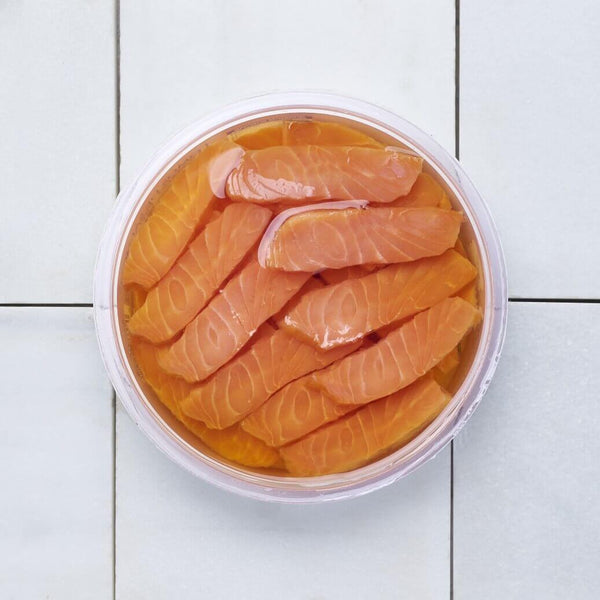
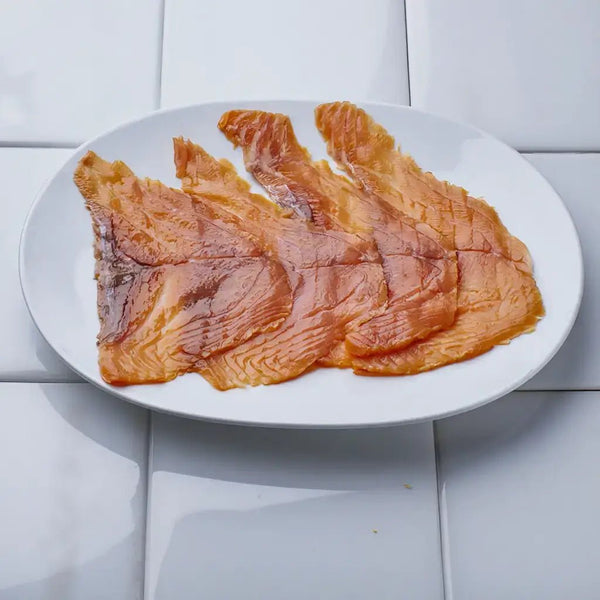
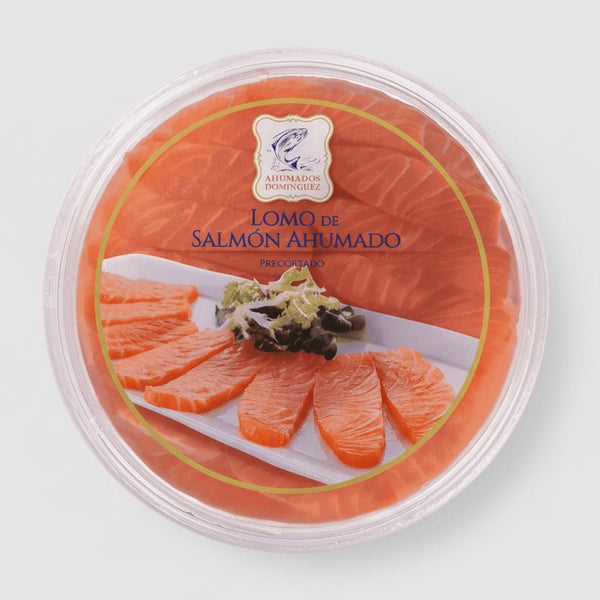
At Bacalalo.com, we don't just offer fresh salmon: our selection of artisan smoked salmon is perfect for appetizers, canapés, or simply to enjoy with a drizzle of olive oil and a few drops of lemon.
Frequently asked questions
What exactly is salmon tataki?
Tataki is a Japanese technique that involves briefly searing the surface of the fish at high temperature (20-30 seconds per side), leaving the inside completely raw. The result is a contrast between the caramelized and slightly crispy exterior and a silky, fresh interior. It is served sliced thinly with ponzu sauce.
Is it safe to eat raw salmon at home?
Yes, as long as the salmon has been previously frozen at -20°C for 72 hours or at -35°C for 15 hours. This process eliminates anisakis and other parasites. Buy salmon labeled "sashimi quality" or freeze it yourself following these guidelines before preparing tataki, ceviche, or gravlax.
How long does it take to make a salmon mi-cuit?
The cooking itself lasts between 25 and 30 minutes at 50°C. With the preparation of the aromatic oil and the prior salting, estimate about 90 minutes in total. If you use a circulator (sous vide), the cooking time is similar, but temperature control is much more precise.
Can gravlax be made with frozen salmon?
In fact, it is highly recommended for food safety. Thaw the salmon slowly in the refrigerator for 24 hours before starting the curing process. The result will be practically identical to fresh salmon. The subsequent 48-hour cure with salt and sugar will complete the transformation.
What is the best part of the salmon for each recipe?
For tataki and mi-cuit, the center of the loin (the thickest and most uniform part). For gravlax, a large piece of loin with skin. For pan-searing, individual portions from the center. For Wellington, the entire skinless loin. The tail, being thinner, is better for soups, creams, or rillettes.
How do I get perfectly crispy salmon skin?
Thoroughly dry the skin with paper towels (this step is crucial). Heat a pan with a drizzle of oil until it lightly smokes. Place the salmon skin-side down and press for the first 30 seconds with a spatula to prevent it from curling. Do not touch it for 4-5 minutes. The skin should be golden and crispy like a potato chip.
Can I substitute salmon with trout in these recipes?
Yes, salmon trout is an excellent alternative. It has a similar, though slightly more delicate and less fatty, flavor. It works especially well for gravlax and pan-searing. For tataki, you will need premium quality farmed trout that has been properly frozen.

Premium Seafood Products — Bacalalo
Since 1990 selecting the best from the sea at Mercat del Ninot, Barcelona. Refrigerated delivery in 24-48h.
View premium smoked salmon →🛒 Products used in this recipe
"Discover Bacalalo" Assortment
Our best-selling pack — ideal for first purchase
€19.90
View product →⭐ 4.9/5 · Cold shipping 24-48h · Since 1990 in Mercat del Ninot
Conclusions
Salmon is much more than a fish for Sunday grilling. As we have seen in countless editions of MasterChef, the possibilities of this ingredient are practically endless: from Japanese tataki with its raw-seared contrast to Nordic gravlax cured for 48 hours, passing through the sophisticated French mi-cuit or the spectacular British Wellington.
The key that unites all these recipes is one: respecting the product. Quality salmon, cooked with the right technique and intelligently accompanied, can turn a home dinner into a restaurant experience. And if MasterChef has taught us anything, it's that the difference between a good dish and an extraordinary one is often a matter of details: the exact cooking point, the perfectly crispy skin, the balance between the fish and its garnish.
From Mercat del Ninot, we have been selecting the best seafood products since 1990. If you need salmon worthy of these recipes, we are here to advise you.