Anchovies are no longer a mere appetizer; they have become a cult ingredient in haute cuisine. Michelin-starred chefs worldwide use Cantabrian anchovies as an umami enhancer, as the star of signature dishes, and as a connecting element between tradition and avant-garde. Discover how the best chefs use them and what makes an anchovy worthy of a Michelin-starred restaurant.
Anchovies in Haute Cuisine: From Tapas to Star Ingredient
For decades, preserved anchovies were exclusively associated with bar tapas, Basque pintxos, or pizza. They were a prized product, yes, but rarely the star. Everything changed when chefs of the new Basque cuisine and pioneers of molecular gastronomy discovered the potential of Cantabrian anchovies as a haute cuisine ingredient.
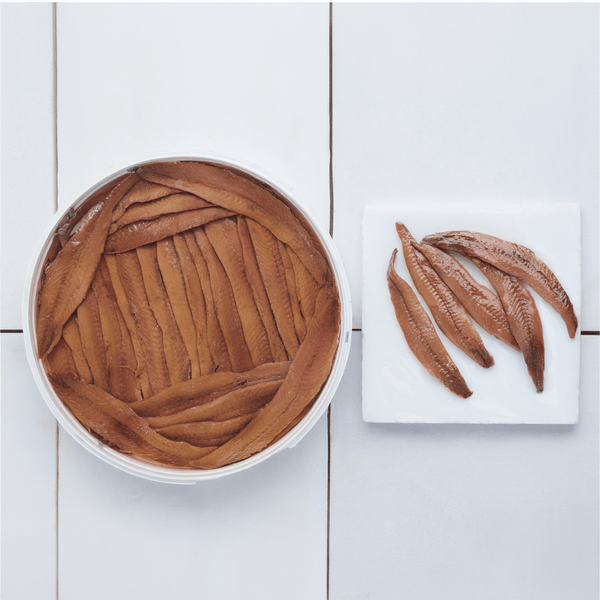
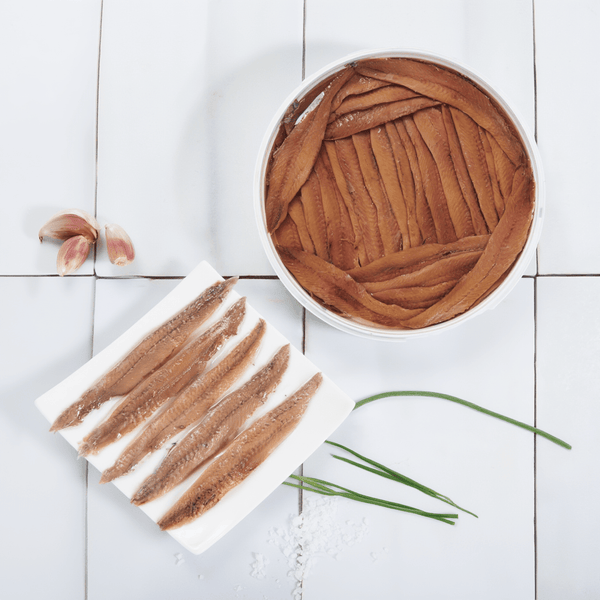
The Cantabrian anchovy is not just any anchovy. Its artisanal curing process, which can last between 6 and 24 months in salt barrels, produces a product of extraordinary gustatory complexity. The result is a fleshy, pinkish-brown fillet with a flavor that combines marine salinity with notes of nuts, butter, and a deep umami reminiscent of cured Iberian ham.
This flavor profile is exactly what chefs look for when they want to add depth to a dish without resorting to complicated techniques. A single quality anchovy can transform a sauce, elevate a meat, or turn a simple vegetable dish into a memorable gastronomic experience.

Michelin-starred Chefs Who Use Anchovies in Their Dishes
Andoni Luis Aduriz (Mugaritz, San Sebastián)
The chef of Mugaritz, with two Michelin stars, has extensively worked with anchovies as an avant-garde ingredient. His preparations include anchovies served with fermented sheep's milk, anchovies with fruit emulsions, and preservation techniques that take the product beyond its traditional form. Aduriz sees anchovy as a concentrated marine flavor that can be integrated into completely unexpected contexts.
Joan Roca (El Celler de Can Roca, Girona)
The three-Michelin-starred restaurant incorporates Cantabrian anchovies into several of its dishes. The Roca brothers use anchovies as a base for sauces, as a complement to red meats, and as the star of appetizers that open their tasting menus. Their approach combines Catalan tradition (where anchovies play a fundamental role) with avant-garde techniques.
Eneko Atxa (Azurmendi, Larrabetzu)
The three-Michelin-starred chef from Biscay uses local Cantabrian anchovies as a connecting element between his avant-garde cuisine and traditional Basque fishing. His anchovy dishes often incorporate elements from the surrounding landscape: wild herbs, edible flowers, and vegetables from his own garden that contrast with the intensity of the anchovy.
Dabiz Muñoz (DiverXO, Madrid)
Spain's most daring chef, with three Michelin stars, is not afraid to take anchovies to completely new territories. At DiverXO, Cantabrian anchovies are combined with Asian ingredients, spicy sauces, and presentations that defy all convention. Muñoz demonstrates that anchovies can work in any culinary context if used intelligently.
Types of Anchovies in Haute Cuisine
Salted Anchovies (Whole)
This is the purest form and preferred by many chefs. Whole anchovies in salt allow the cook to control the entire process: cleaning, filleting, and the degree of desalting. A Michelin-starred chef can spend hours selecting anchovies one by one from a salt barrel, looking for pieces with the perfect size, color, and firmness.
Anchovies in Olive Oil
The most common form in restaurants. Anchovies already filleted and preserved in extra virgin olive oil. Quality varies greatly depending on the manufacturer, raw material, and curing time. The best Cantabrian anchovies in oil are meaty, uniformly colored, without residual bones, and with a perfect balance of salt and flavor.
Smoked Anchovies
A lesser-known variety but increasingly present in haute cuisine. Smoking adds an extra layer of aromatic complexity that works especially well with meats and roasts.
Colatura di Alici
This byproduct of anchovy curing (literally, the liquid they distill during salting) is one of the best-kept secrets of Italian cuisine and has been adopted by Michelin-starred chefs worldwide. It is pure liquid umami: a few drops transform any dish like a magical condiment, similar to Asian fish sauce but with a much more refined profile.

Anchovies as an Umami Enhancer
Umami, the fifth basic taste alongside sweet, salty, sour, and bitter, is the obsession of modern cuisine. And anchovies are one of the most potent sources of umami in Western gastronomy.
During the salt curing process, anchovy proteins break down into free amino acids, especially glutamic acid (the same compound responsible for umami in Parmesan, soy sauce, or Japanese dashi). A well-cured anchovy can contain glutamate concentrations comparable to the best Parmesan Reggiano.
How Chefs Use This Umami
- Invisible Sauces: Many chefs incorporate anchovies melted in butter or oil as a base for meat and vegetable sauces. The anchovy dissolves completely and is not detected as "fish" but as depth of flavor.
- Anchovy Butter: A compound butter with crushed anchovies is a classic resource in French haute cuisine that enhances any protein: from an entrecôte to a roasted chicken.
- Dressings: The original Caesar vinaigrette contains anchovies, and Michelin chefs have expanded this concept to haute cuisine salad vinaigrettes, with anchovy as an umami base.
- Broths and Stocks: An anchovy added to a vegetable or chicken broth provides a dimension of flavor that would be impossible to achieve otherwise.
Haute Cuisine Techniques with Anchovies
Controlled Tempering
Michelin chefs never heat a quality anchovy above 40°C. Excessive heat destroys the subtler notes and makes the anchovy bitter and dry. When incorporated into hot dishes, it is always added at the end, off direct heat.
Anchovy Emulsions
By blending anchovies with olive oil and passing the mixture through a siphon, chefs create anchovy foams and airs that retain all the flavor with an ethereal texture. This technique allows for uniform and visually striking distribution of anchovy flavor.
Dehydration and Anchovy Powder
Dehydrating anchovies at low temperatures and grinding them produces an intensely flavorful powder used as a finishing condiment on meat, fish, and vegetable dishes. It is concentrated umami in spice form.
Extended Maturation
Some chefs work with anchovies cured for over 24 months, where the flavor has concentrated and complexified to extraordinary levels. These long-aged anchovies are served alone, as the absolute protagonist of the dish, with just a drizzle of oil and a touch of quality bread.
3 Haute Cuisine-Inspired Recipes with Anchovies
Recipe 1: Cantabrian Anchovy Toast with Burrata and Confit Tomato
Ingredients (4 servings)
- 12 Cantabrian anchovy fillets in olive oil
- 1 fresh burrata, 250g
- 8 cherry tomatoes
- Crystal bread or quality ciabatta
- Extra virgin olive oil
- Fresh basil
- Freshly ground black pepper
- Maldon sea salt flakes
Preparation
- Confit the cherry tomatoes: halve them, place on a tray with olive oil, salt, and a pinch of sugar. Bake at 120°C for 90 minutes until wrinkled and concentrated.
- Toast the slices of bread with a drizzle of olive oil until crispy on the outside and tender on the inside.
- Open the burrata in the center of each toast, allowing the inner stracciatella to spread.
- Place 3 anchovy fillets on each toast, distributing them elegantly.
- Add the confit tomatoes, fresh basil leaves, black pepper, and a generous drizzle of extra virgin olive oil.
Recipe 2: Beef Tenderloin with Anchovy Butter and Piquillo Peppers
Ingredients (4 servings)
- 4 beef tenderloin medallions, 200g each
- 8 Cantabrian anchovy fillets
- 100g butter at room temperature
- 8 piquillo peppers
- 1 clove garlic
- Fresh parsley
- Extra virgin olive oil
- Salt and pepper
Preparation
- Anchovy butter: crush 4 anchovy fillets with the butter and chopped parsley until a homogeneous paste is obtained. Form a cylinder with cling film and refrigerate for at least 1 hour.
- Piquillo cream: blend the piquillo peppers with the garlic and a dash of olive oil. Heat gently without boiling.
- Cook the beef medallions in a very hot pan with oil, 3 minutes per side for medium doneness. Let rest for 3 minutes.
- Assembly: spread a mirror of piquillo cream on the plate. Place the medallion and top with a slice of anchovy butter that will melt with the heat. Decorate with the remaining 4 anchovy fillets.
Recipe 3: Green Bean Salad with Anchovies, Mollet Egg, and Warm Vinaigrette
Ingredients (4 servings)
- 400g thin green beans
- 12 Cantabrian anchovy fillets
- 4 eggs
- 2 tablespoons Jerez vinegar
- 4 tablespoons extra virgin olive oil
- 1 finely chopped shallot
- Capers
- Black pepper
Preparation
- Boil green beans in salted water for 4 minutes. Chill in ice water to maintain intense green color.
- Prepare mollet eggs: boil in water for exactly 5 minutes and 30 seconds. Chill in ice water and peel carefully. The white should be set and the yolk creamy.
- Warm vinaigrette: heat olive oil with shallot until translucent. Add vinegar off heat. Chop 4 anchovy fillets and incorporate them into the vinaigrette (they will partially dissolve).
- Assembly: arrange green beans on the plate. Place the mollet egg in the center and open it so the yolk spills out. Distribute the remaining 8 anchovy fillets. Drizzle with the warm vinaigrette and decorate with capers.
Cantabrian Anchovies selected with Michelin star criteria
Our anchovies come from the best canneries in Cantabria, cured for a minimum of 12 months in salt. These are the same anchovies you'll find in haute cuisine restaurants: meaty, balanced, and with an umami that needs no embellishment.
Anchovy Pairings in Haute Cuisine
Anchovies are a challenging pairing due to their intense saltiness and powerful umami. These are the pairings that work in the best restaurants:
- Manzanilla de Sanlúcar: The perfect pairing. The natural salinity of Manzanilla harmonizes with the anchovy rather than competing. It is the wine most sommeliers recommend.
- Champagne Blanc de Blancs: The acidity and bubbles cut through the anchovy's salinity. It works especially well with anchovies served on toast with butter.
- Txakoli: The slight effervescence and acidity of Txakoli cleanse the palate between anchovies. Ideal for elaborate pintxos and tapas.
- Dry Vermouth: A dry, aromatic white vermouth is a surprising and elegant accompaniment to anchovies. The herbaceous notes of vermouth complement the anchovy's complexity.
- Cava Brut Nature: Any dry sparkling wine with good acidity works well. Cava adds a festive touch without overshadowing the anchovy.
What Makes a Cantabrian Anchovy Exceptional
Not all anchovies are created equal, and the difference between an industrial anchovy and an artisanal Cantabrian anchovy is comparable to the difference between supermarket ham and acorn-fed Iberian ham.
The Raw Material
Cantabrian anchovies (Engraulis encrasicolus) caught during the spring fishing season (April-June) have the highest fat content of the year, resulting in fleshier, juicier fillets with better flavor. Artisanal canneries in Santoña, Laredo, and other Cantabrian ports select the pieces one by one.
Curing
The salt curing process is what transforms an anchovy (boquerón) into an anchovy (anchoa). This process lasts a minimum of 6 months in the fastest versions, but the best anchovies are cured for 12, 18, or even 24 months. During this time, the fish's natural enzymes break down proteins into amino acids that create the complex, unmistakable flavor of cured anchovies.
Manual Filleting
Artisanal canneries in Cantabria still fillet and clean anchovies by hand, one by one. This process, called "sobado" (rubbing/working), requires skill acquired over years. Expert workers can process hundreds of anchovies a day, removing bones, skin, and dark parts with a precision that no machine can match.
The Anchovy You Deserve
Each tin of our anchovies contains hand-selected fillets, cured for months in Cantabrian salt and preserved in extra virgin olive oil. Simple as that, good as that.
Frequently Asked Questions
Why are Cantabrian anchovies more expensive than others?
For three reasons: the raw material (only anchovies caught in the spring fishing season are used), the curing time (minimum 6-12 months versus weeks for industrial ones), and the manual processing (each fillet is cleaned and packed by hand). All this translates into a product incomparably superior in taste, texture, and quality.
Can Cantabrian anchovies be cooked?
You can, but you shouldn't apply direct heat to a premium quality anchovy. Cantabrian anchovies are best consumed as they come out of the can or, at most, slightly warmed on a hot dish. Reserve direct cooking for more basic anchovies used as a base for sauces or stocks.
How long do anchovies last once opened?
Once the can or jar is opened, anchovies should be consumed within 5-7 days, always refrigerated and covered with olive oil to prevent oxidation. If you notice them darkening or the flavor becoming very strong, it's time to discard them.
What is the difference between anchovies and marinated anchovies (boquerones)?
Both come from the same fish (Engraulis encrasicolus), but the process is completely different. Boquerones are marinated fresh in vinegar for hours. Anchovies are cured in salt for months and then preserved in oil. The result is products with totally different flavors, textures, and culinary uses.
Are anchovies healthy?
Very healthy. They are rich in omega-3, high-quality protein, calcium, iron, and B vitamins. The only point to watch is their salt content, which is relevant for people with high blood pressure. But consumed in moderation (4-6 fillets), they are a nutritionally excellent food.
Discover our premium selection
Seafood products carefully selected since 1990 at Mercat del Ninot, Barcelona. Refrigerated delivery in 24-48 hours.

Premium Seafood — Bacalalo
Since 1990, selecting the best from the sea at Mercat del Ninot, Barcelona. Refrigerated delivery 24-48h.
View Cantabrian anchovies →🛒 Products used in this recipe
Cantabrian Anchovies "00" Gourmet Selection
Premium 00 size, artisanally prepared
38,90€
View product →⭐ 4.9/5 · Cold shipping 24-48h · Since 1990 at Mercat del Ninot
Conclusions
Anchovies have come a long way from being a bar snack to appearing on the tasting menus of three-Michelin-star restaurants. Their power as a source of umami, their versatility in cooking (from compound butters to dehydrated powder), and their ability to elevate any dish have made them an indispensable ingredient in contemporary haute cuisine.
Next time you open a tin of Cantabrian anchovies, remember that you hold in your hands the same ingredient used by the world's best chefs. The difference between a snack and a Michelin-starred dish is not just in technique: it's in the quality of the anchovy and knowing how to treat it with the respect it deserves.
From Mercat del Ninot, we have been professionally selecting anchovies since 1990. We don't sell promises: we sell product. And if a three-Michelin-star chef can use our anchovies, so can you.