

Caviar has been the star of some of MasterChef's most memorable moments. From elimination challenge dishes to creations by Michelin-starred guest chefs, this luxury ingredient appears season after season as a symbol of gastronomic excellence. In this article, we analyze how caviar is used on the show, what techniques contestants apply, and most importantly, we offer you 3 MasterChef-inspired recipes that you can prepare at home with quality caviar.
Table of Contents
- Caviar in MasterChef: A Recurring Ingredient
- Types of Caviar Featured on the Show
- Contestants' Caviar Techniques
- Common Mistakes When Cooking with Caviar in MasterChef
- Recipe 1: Blinis with Crème Fraîche and Caviar
- Recipe 2: Low-Temperature Egg with Caviar and Potato Foam
- Recipe 3: Salmon Tartare with Caviar and Avocado
- Pairing: What to Drink with Caviar
- How to Choose Quality Caviar for Your Recipes
- Frequently Asked Questions
- Conclusion
Caviar in MasterChef: A Recurring Ingredient
If there's one ingredient that instantly commands respect among MasterChef contestants, it's caviar. Since the early seasons of the show, both in its Spanish version and MasterChef Celebrity, caviar has appeared in elimination challenges, outdoor high-cuisine restaurant challenges, and as a star ingredient in mystery boxes.
The reason is simple: caviar tests a contestant's technique, delicacy, and gastronomic knowledge. You cannot cook with caviar as you would with any other ingredient. It requires specific treatment, controlled temperature, and an aesthetic sense that separates amateur cooks from those who truly understand high-level cuisine.
In MasterChef Spain, we have seen caviar feature in unforgettable moments. Guest chefs like Quique Dacosta, Martín Berasategui, and Dabiz Muñoz have presented dishes where caviar plays a central role, whether as a luxurious garnish, a salty contrast element, or the absolute star of the dish.
Iconic Caviar Moments in MasterChef
Among the most memorable moments are challenges where contestants had to replicate dishes from three-Michelin-starred restaurants that incorporated Beluga caviar or Osetra caviar. The pressure of working with an ingredient that can cost over 2,000 euros per kilogram creates tense situations that have made for prime television.
We've also seen how the judges use caviar as an evaluation criterion: if a contestant overheats it, mixes it with overly potent ingredients, or simply places it meaninglessly on the plate, the score plummets. Caviar demands culinary consistency.

Types of Caviar Featured on the Show
Not all caviar is the same, and different varieties have been used in MasterChef depending on the challenge and the show's budget. These are the most common types:
Beluga Caviar (Huso huso)
The most exclusive and expensive in the world. Its roe are the largest, with a diameter of 3 to 4 mm, ranging from light gray to dark gray. Its flavor is smooth, buttery, with a long aftertaste reminiscent of the sea without being aggressively salty. In MasterChef, it appears in special challenges, usually when there is a top-level guest chef.
Osetra Caviar (Acipenser gueldenstaedtii)
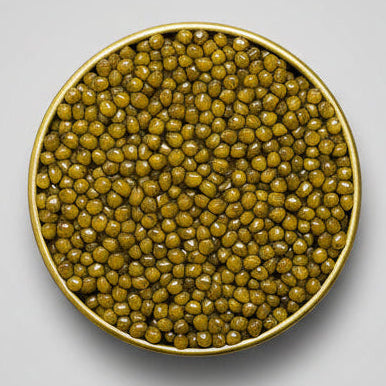
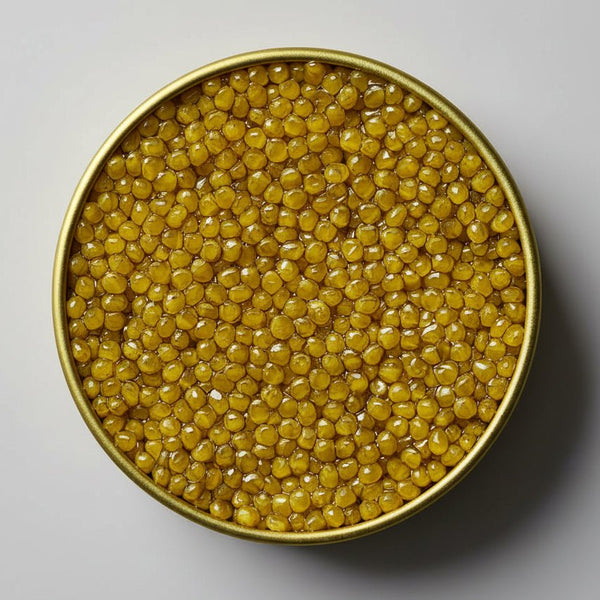
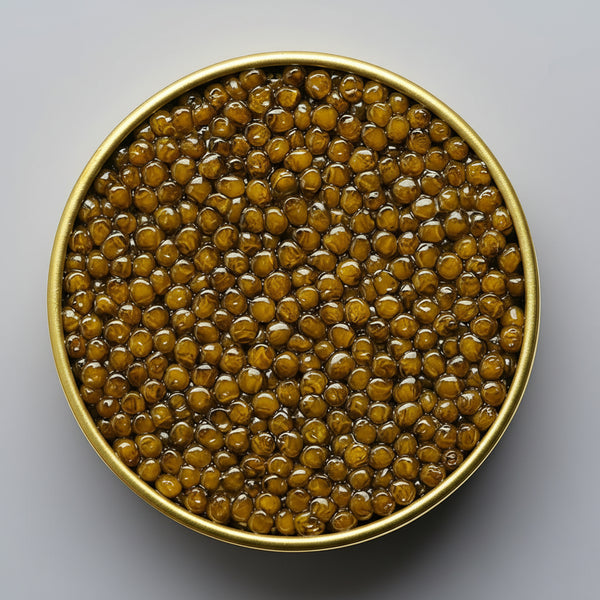
A favorite of many professional chefs. Its roe are medium-sized, with shades ranging from golden to dark brown. It has a more complex flavor than Beluga, with nutty notes and a mineral hint. It is the type of caviar most used in MasterChef challenges because it offers a perfect balance between quality and price.
Baerii Caviar (Acipenser baerii)
The most accessible of quality caviars. It has small, dark roe with an intense, marine flavor. It is the caviar that contestants use when they have freedom to choose ingredients and a limited budget. It is also the most common in mid-to-high-end Spanish restaurants.
Substitutes and Alternative Roe
In some MasterChef challenges, trout roe, salmon roe (ikura), or even yuzu pearls that visually mimic caviar also appear. It is important to distinguish: authentic caviar comes exclusively from sturgeon. Everything else is roe or substitutes, however good they may be.
Contestants' Caviar Techniques
Observing the different seasons of MasterChef, we can identify the most repeated techniques when contestants work with caviar:
- Cold service on a neutral base: The most classic technique. Caviar is placed on blinis, boiled potato, hard-boiled egg, or crème fraîche. The base should not compete with the flavor of the caviar.
- Fish dish complement: Caviar as a finishing touch on a turbot loin, tuna belly, or sea bass tartare. The key is to add it at the end, never cook it.
- Contrast in egg dishes: Egg and caviar are a legendary combination. Low-temperature eggs, thin French omelets, or simply a poached egg with a generous spoonful of caviar on top.
- Emulsions and sauces: Some more daring contestants incorporate caviar into white butter sauces or champagne sauces. The technique requires adding the caviar off the heat so it doesn't cook.
- Decorative element with discernment: It's not enough to just put three scattered roe on the plate. MasterChef judges value a generous amount of caviar and its placement making gustatory sense, not just aesthetic.

Common Mistakes When Cooking with Caviar in MasterChef
Throughout the seasons, we have seen certain errors repeated that judges harshly penalize:
1. Cooking the caviar
The most serious and, surprisingly, the most frequent mistake. Caviar is never cooked. It is served cold or at room temperature. If you put it in a pan, oven, or hot sauce, the roe hardens, loses its creamy texture, and the flavor becomes bitter and metallic. In MasterChef, this error usually means direct elimination.
2. Combining it with overly strong flavors
Caviar has a delicate and complex flavor that is destroyed if combined with raw garlic, spicy chilies, aggressive vinegars, or dominant spices. Contestants who try to be "creative" by mixing caviar with potent ingredients often receive a reprimand from the judges.
3. Using insufficient quantity
Putting three roe of caviar on a plate is almost worse than putting none. If you're going to use caviar, use an amount that can be appreciated both visually and gustatorily. In haute cuisine, the minimum portion per person is usually 10 to 15 grams.
4. Not controlling serving temperature
Caviar should be served between 0 and 4 degrees Celsius. Taking it out of the refrigerator and leaving it on the counter while preparing the rest of the dish causes it to warm up and lose freshness. Professionals use containers over crushed ice.
Recipe 1: Blinis with Crème Fraîche and Caviar
This is the most classic presentation of caviar and the one that best allows you to appreciate its flavor. Inspired by MasterChef's technical challenges, this recipe is surprisingly simple yet requires precision.
Ingredients (4 servings)
- 30 g Osetra or Baerii caviar
- 150 g wheat flour
- 50 g buckwheat flour
- 200 ml whole milk
- 2 eggs
- 10 g fresh yeast
- 100 ml crème fraîche
- 20 g butter
- A pinch of salt
Step-by-step preparation
- Prepare the blini batter: Dissolve the yeast in lukewarm milk (not hot). Mix both flours with salt. Add the egg yolks and the milk with yeast. Mix until a smooth, lump-free batter is obtained.
- Rest: Cover the batter with plastic wrap and let it rest in a warm place for 1 hour until it doubles in volume.
- Whip the egg whites: Beat the egg whites until stiff peaks form and gently fold them into the batter to maintain airiness.
- Cook the blinis: In a non-stick pan with a little butter, pour small portions of batter (about 5 cm in diameter). Cook over medium heat for 2 minutes on each side until golden brown.
- Assemble: Place the blinis on a plate, add a teaspoon of crème fraîche on each, and top with a generous spoonful of caviar. Serve immediately.
Chef's tips
Do not use a metal spoon to serve caviar: metal can alter its flavor. Use a mother-of-pearl, bone, or wooden spoon. This seemingly minor detail makes a noticeable difference and is one of the tricks that MasterChef's guest chefs always mention.
Recipe 2: Low-Temperature Egg with Caviar and Potato Foam
This recipe is inspired by the technical dishes that appear in MasterChef's elimination challenges. It combines the creaminess of a low-temperature egg with the saline explosion of caviar and the smoothness of a potato foam.
Ingredients (4 servings)
- 4 fresh free-range eggs
- 20 g Osetra caviar
- 300 g potato
- 100 ml liquid cream for cooking (35% fat)
- 50 g butter
- Fresh chives
- Salt and white pepper
Step-by-step preparation
- Low-temperature egg: Heat water to exactly 63°C using a kitchen thermometer or a sous vide machine. Introduce the eggs and maintain the constant temperature for 45 minutes. The egg white will be barely set, and the yolk creamy and shiny.
- Potato foam: Boil the peeled potatoes in salted water until tender (about 25 minutes). Drain and pass through a fine potato ricer. Add the butter and hot cream. Mix until a very smooth purée is obtained. Season with salt and white pepper. If you have a siphon, load the purée into the siphon with two gas charges.
- Assembly: In a deep plate, place a base of potato foam or purée. Carefully open the low-temperature egg and place it on the foam. Top with a generous spoonful of caviar and some thin strips of chives.
The key to this recipe
The contrast of temperatures and textures is fundamental. The egg should be warm, the foam hot, and the caviar cold. This combination creates a sensory experience with each spoonful reminiscent of the dishes prepared in the Michelin-starred restaurants visited on MasterChef.
Recipe 3: Salmon Tartare with Caviar and Avocado
A fresh, elegant dish that impresses at any dinner party. This recipe is inspired by MasterChef's creative challenges where contestants must present a professional-level appetizer in 30 minutes.
Ingredients (4 servings)
- 400 g fresh sashimi-grade salmon (previously frozen for 72h at -20°C)
- 20 g Baerii caviar
- 2 ripe avocados
- 1 lime
- 1 tablespoon soy sauce
- 1 teaspoon sesame oil
- Fresh chives
- Toasted black sesame seeds
- Maldon salt
Step-by-step preparation
- Cut the salmon: With a very sharp knife, cut the salmon into cubes of approximately 1 cm. Place in a cold bowl and season with soy sauce, sesame oil, and the juice of half a lime. Mix gently and refrigerate.
- Prepare the avocado: Peel and cut the avocados into cubes similar to the salmon. Dress with lime juice, a pinch of salt, and a drop of extra virgin olive oil.
- Assemble with a ring mold: Using a plating ring, first place a layer of avocado at the base, pressing lightly. On top, arrange the layer of salmon tartare. Carefully remove the ring.
- Finishing touch: Top with a spoonful of caviar, a few flakes of Maldon salt, black sesame seeds, and finely chopped chives.
This dish is served immediately after assembling. The contrast between the soft fat of the avocado, the freshness of the marinated salmon, and the saline explosion of the caviar is simply spectacular.
Pairing: What to Drink with Caviar
Caviar pairing is a topic that frequently appears in MasterChef, especially when contestants visit high-end restaurants or prepare tasting menus.
The best options
- Brut Nature or Extra Brut Champagne: The acidity and bubbles cleanse the palate between bites. Avoid sweet or semi-dry champagnes.
- Iced premium vodka: The traditional Russian option. A quality vodka served at -18°C has no aroma or flavor that competes with caviar.
- Brut Nature Gran Reserva Cava: An excellent Spanish alternative. The best long-aged cavas have the necessary complexity and acidity.
- Dry and mineral white wine: A Chablis, a quality Albariño, or a Muscadet can work well if they don't have too much fruit.
What you should never serve with caviar
Avoid red wines (tannins clash with salinity), sweet wines (sugar masks everything), bitter beers, and any drink with a lot of carbonation or strong flavors. The drink should be a discreet accompaniment, not the main attraction.
How to Choose Quality Caviar for Your Recipes
If you're going to invest in caviar to recreate these recipes at home, it's essential to know what to buy. Not everything sold as "caviar" deserves that name, and the difference between good caviar and mediocre caviar is abysmal.
Quality criteria
- Certified origin: Look for caviar with full traceability. The best European producers are in France (Aquitaine), Italy (Brescia), and Spain (Riofrío, Granada). Each tin must have a CITES code that guarantees its legal origin.
- Freshness: Fresh caviar should have separate, shiny, and firm roe. If they are crushed, opaque, or smell strongly of fish, the product is not in good condition.
- Salt: The best caviar uses the "malossol" technique (little salt, in Russian). The salt content should not exceed 3-4%. Overly salty caviar is usually of inferior quality.
- Storage: Fresh caviar is stored between 0 and 4°C and has a short shelf life (4-6 weeks once the original tin is opened). Once opened, consume within 2-3 days.
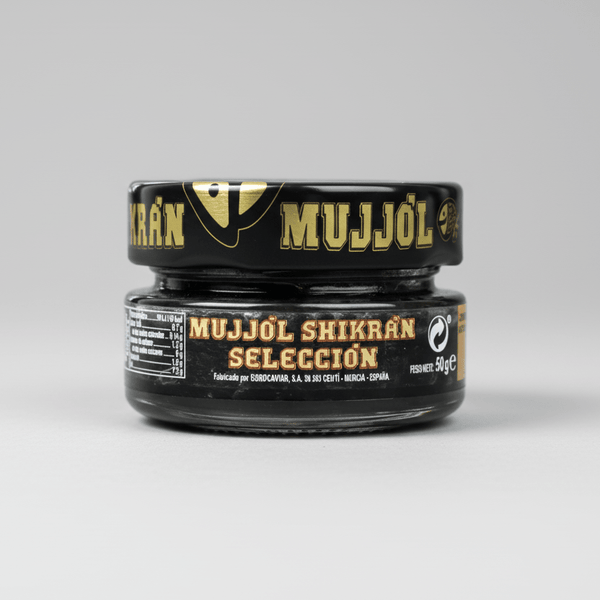
In our caviar selection, we work with producers who meet all these standards. Since 1990 at Mercat del Ninot, we have seen how the caviar market has evolved, and today we can offer sustainably farmed products that are just as good as the wild Caspian caviar of decades past.
Frequently Asked Questions
Can caviar be cooked?
No. Caviar is never cooked. It is served cold or at room temperature as a finishing touch to a dish. Heat destroys its creamy texture and turns the roe into hard, bitter pellets. If you see a recipe that says "add caviar to the pan," discard it immediately.
How much caviar do I need per person?
As an appetizer or starter, estimate between 10 and 15 grams per person. For a dish where caviar is the star (like blinis), you can go up to 20-30 grams. Less than 5 grams per person is pointless: it won't be seen or appreciated.
What is the difference between caviar and salmon roe?
Caviar comes exclusively from sturgeon. Salmon roe (ikura) is a distinct product: larger, deep orange in color, and with a more pronounced flavor. Both are excellent, but they are not interchangeable in recipes. Caviar has a more subtle, buttery, and complex flavor.
Why shouldn't a metal spoon be used with caviar?
Reactive metals like steel or silver can transfer a metallic taste to the caviar, altering its delicate flavor profile. That's why mother-of-pearl, bone, wood, or even plastic spoons are used. Gold, being a non-reactive metal, can also be used.
How long does caviar last once opened?
Once opened, caviar should be consumed within a maximum of 2-3 days, always refrigerated between 0 and 4°C and covered with plastic wrap in direct contact with the roe to prevent oxidation. Ideally, it should be consumed immediately.
What is the best caviar to start with?
Baerii caviar is the best option to start with. It has an intense but balanced flavor, a more accessible price than Beluga or Osetra, and is perfect for the recipes we have presented in this article. Once you get familiar with it, you can explore Osetra and its more complex nuances.
Can caviar be frozen?
Technically yes, but it is not recommended. Freezing breaks the membranes of the roe, and upon thawing, the caviar loses its texture and turns into a paste. Always buy the amount you are going to consume and store it in the coldest part of the refrigerator.