Smoked Salmon and Pregnancy: Can You Eat It? Safety Guide
Cold-smoked salmon is a risky food during pregnancy due to the danger of Listeria. Hot-smoked salmon and cooked salmon are safe. This guide, based on data from AESAN and EFSA, explains which types of salmon you can eat, which you should avoid, and why — with practical alternatives so you don't have to give up flavor during gestation.
Quick answer
Updated March 2026. What we tell you here comes from serving thousands of customers in Barcelona.
The answer depends on the type of smoking:
| Type of salmon | Safe in pregnancy | Reason |
|---|---|---|
| Cold-smoked salmon (most common, thin slices) | Not recommended | Risk of Listeria. Does not reach sufficient temperature during the process. |
| Hot-smoked salmon (flaky texture) | Yes | Temperature >60 °C during the process. Eliminates pathogens. |
| Cooked salmon (oven, grill, steam) | Yes | Fully cooked. No microbiological risk. |
| Canned smoked salmon (sealed can/jar) | Yes | Industrially sterilized. Safe. |
| Cooked smoked salmon (in quiche, pasta, pizza) | Yes | Subsequent cooking eliminates Listeria. |
| Salmon sashimi | No | Risk of anisakis and bacteria. Avoid. |
Practical rule: if smoked salmon has been cooked after smoking (in the oven, in a quiche, in hot pasta), it is safe. If eaten as is, straight from the package, that's where the risk lies.
The real risks: Listeria and Anisakis
There's a lot of confusion about the risks of fish during pregnancy. Let's clarify which ones are real and which are exaggerated:
Risk 1: Listeria (the main one)
Listeria monocytogenes is a bacterium that can grow at refrigerator temperatures (4-5 °C). In healthy people, it causes mild symptoms, but in pregnant women, it can lead to miscarriage, premature birth, or severe neonatal infection. Cold-smoked salmon is one of the foods with the highest risk of Listeria contamination because:
- The cold smoking process does not exceed 30 °C — insufficient to kill Listeria.
- It is kept refrigerated for weeks.
- Listeria can multiply at refrigerator temperatures.
Risk 2: Anisakis
Anisakis is a parasite present in raw fish. Cold-smoked salmon can contain viable larvae if the fish has not been previously frozen at -20 °C for 72 hours. European regulations require this prior freezing, but not all producers comply.
Risk 3: Mercury (minimal in salmon)
Salmon has very low levels of mercury (0.05 mg/kg on average). It is not a significant concern. The risk of mercury is for large predatory fish: bluefin tuna, swordfish, shark.
Types of salmon and safety in detail
Cold-smoked salmon
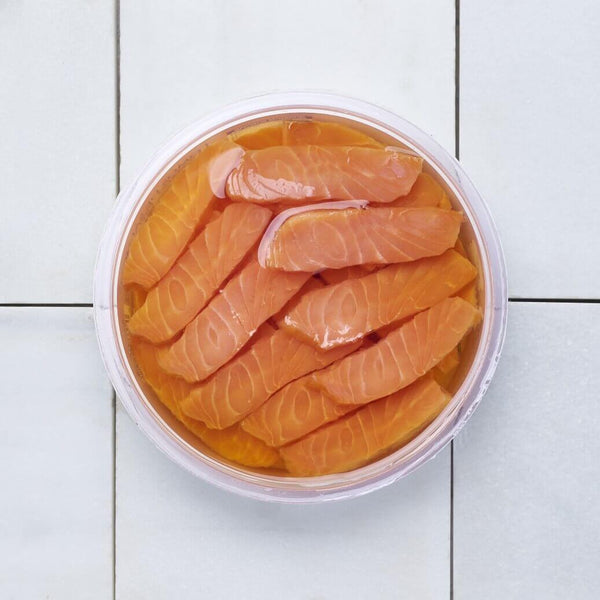
This is the smoked salmon you find in any supermarket: thin slices, intense orange color, silky texture. The process involves salting the salmon for 12-24 hours and then smoking it at temperatures between 20 °C and 30 °C for hours. This temperature is not sufficient to eliminate Listeria or to coagulate the fish proteins — which is why it maintains its raw texture.
Recommendation for pregnant women: avoid direct consumption. It can be eaten if subsequently cooked at >70 °C (in a quiche, baked pasta, pizza).
Hot-smoked salmon
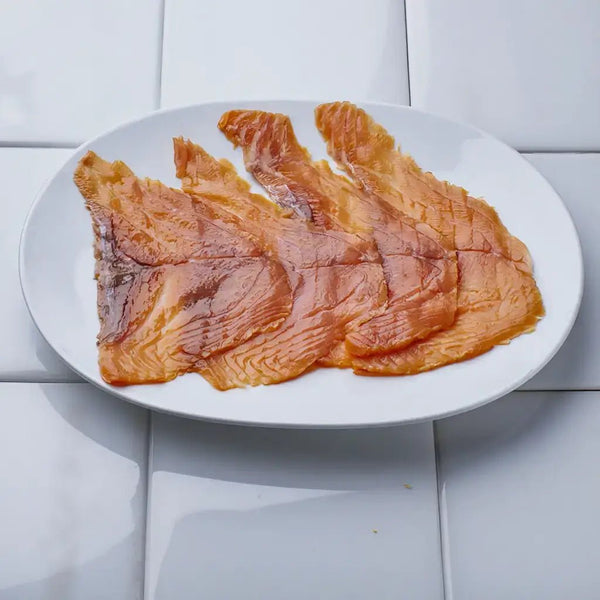
Less common but safer. The fish is smoked at temperatures of 60-80 °C for several hours. The result is salmon with a flaky texture (similar to cooked), not raw. The process is sufficient to eliminate Listeria and Anisakis.
Recommendation for pregnant women: safe for direct consumption.
How to differentiate them?
- Cold-smoked: silky texture, translucent, can be cut into thin slices. The label usually says "smoked salmon" without specifying.
- Hot-smoked: flaky texture, opaque, falls apart in pieces. The label may say "hot smoked".
Listeria: what it is and why it's dangerous in pregnancy
Listeriosis is a rare but serious infection. In Spain, about 50-80 cases are reported annually, but pregnant women have a 10 times higher risk than the general population of contracting the infection.
Symptoms in pregnant women
- Fever, chills, muscle pain (similar to the flu)
- May appear between 1 and 70 days after consumption
- In severe cases: meningitis, septicemia
Risks to the fetus
- Spontaneous abortion (first trimester)
- Premature birth
- Neonatal infection (meningitis, sepsis)
- Intrauterine fetal death (severe cases)
Risky foods for Listeria (avoid during pregnancy)
- Cold-smoked salmon and other cold-smoked fish
- Unpasteurized soft cheeses (brie, camembert, artisanal fresh cheese)
- Refrigerated pâtés
- Cured meats (fuet, longaniza)
- Pre-packaged salads
- Unpasteurized milk
Mercury in salmon: real data
| Fish | Average mercury (mg/kg) | AESAN classification |
|---|---|---|
| Swordfish | 0.97 | Avoid in pregnancy |
| Bluefin tuna | 0.63 | Avoid in pregnancy |
| Light tuna (canned) | 0.19 | Moderate (3-4 cans/week max) |
| Salmon | 0.05 | Safe — regular consumption |
| Anchovy | 0.04 | Safe — regular consumption |
| Sardine | 0.03 | Safe — regular consumption |
Salmon is one of the fish with the least mercury. AESAN classifies it as safe for pregnant women with a consumption of 3-4 servings per week. The concern with salmon is not mercury — it's the preparation method (raw vs cooked).
Nutritional benefits of salmon in pregnancy
Salmon is one of the most beneficial foods during pregnancy. There's no need to give it up — you just need to choose the right preparation.
- Omega 3 (DHA): essential for fetal brain and visual development. EFSA recommends 250 mg/day of DHA during pregnancy. A serving of salmon (150 g) provides 1,500-2,000 mg.
- Protein: 20 g per 100 g. Complete protein with high bioavailability.
- Vitamin D: essential for calcium absorption and fetal bone formation. Salmon is one of the best food sources.
- Vitamin B12: necessary for the formation of the fetal nervous system.
- Iodine: essential for maternal and fetal thyroid function.
Studies such as ALSPAC (Hibbeln et al., The Lancet 2007) show that women who consume omega-3-rich fish during pregnancy have children with better cognitive development measured at 3 and 7 years of age.

Smoked Salmon Crepes (2 units) - 400g
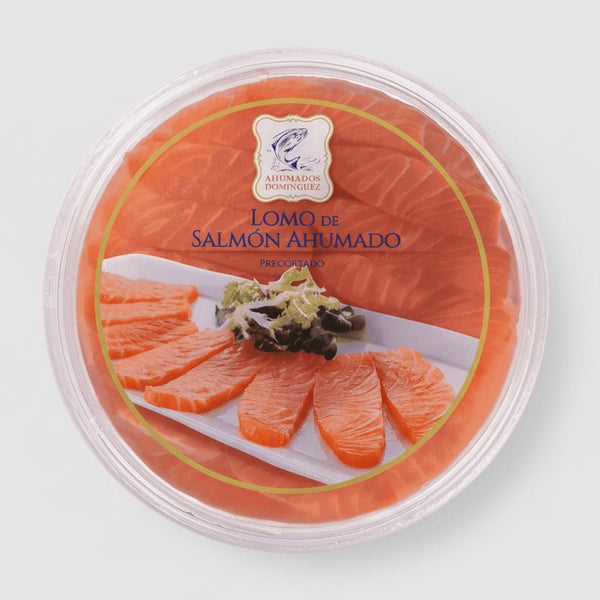
Our smoked salmon is selected with strict quality and traceability criteria. For pregnant women, we recommend consuming it cooked (in quiche, pasta, pizza). For others, straight from the package is a gourmet experience.
Safe alternatives to smoked salmon
If you crave the taste of smoked salmon during pregnancy, here are some safe options:
Cooked options with smoked salmon
- Smoked salmon quiche: smoked salmon cooked in the oven at >180 °C is completely safe.
- Pasta with smoked salmon and cream: cooking the pasta hot (>70 °C) eliminates Listeria.
- Pizza with smoked salmon: if the salmon goes into the oven with the pizza, it is safe.
- Baked smoked salmon rolls: gratinated with cream cheese.
Alternatives without smoked salmon
- Fresh salmon baked or grilled: all the safety and all the nutritional benefits.
- Canned anchovies: safe during pregnancy. Rich in omega 3.
- Canned light tuna: safe and practical. Moderate due to mercury (3-4/week).
- Hot-smoked trout: similar texture to smoked salmon, safe process.
Frequently Asked Questions
Can I eat smoked salmon if I am a few weeks pregnant?
The risk of Listeria is present throughout pregnancy, but it is especially serious during the first trimester (risk of miscarriage). The recommendation is to avoid cold-smoked salmon throughout pregnancy. If you have already eaten it unknowingly, don't worry: the probability of contamination is low. Consult your doctor if you have fever or discomfort.
What if I cook smoked salmon, is it safe?
Yes. If you heat smoked salmon to more than 70 °C for at least 2 minutes (in the oven, in a quiche, in hot pasta, on pizza), Listeria is destroyed. Cooked smoked salmon is completely safe during pregnancy.
Is supermarket smoked salmon safer than artisanal?
Not necessarily. Both industrial and artisanal smoked salmon can contain Listeria if they are cold-smoked. The key is not the producer but the method: cold-smoked = risk; hot-smoked or subsequently cooked = safe.
Can I eat salmon sushi during pregnancy?
It is not recommended. Raw salmon in sushi can contain anisakis (if it has not been previously frozen) and bacteria. During pregnancy, opt for sushi with cooked fish, vegetable sushi, or sushi with hot-smoked salmon.
How many times a week can I eat cooked salmon during pregnancy?
AESAN recommends 3-4 servings of fish per week, combining species. Cooked salmon (baked, grilled, steamed) can be consumed 2-3 times a week without any problem. It is one of the best sources of omega 3 and vitamin D for pregnancy.
Is hot-smoked salmon easy to find?
It is less common than cold-smoked in Spanish supermarkets, but it can be found in gourmet stores and online. Look for the label "hot smoked." The texture is different (flaky, not silky) but the flavor is excellent and it is completely safe.
Smoked Salmon Crepes (2 units) - 400g
Cantabrian anchovies, tuna, albacore, ventresca. All our preserves are safe during pregnancy: sterilized or cured for months. Gourmet pleasure without compromises.
Conclusion
Cold-smoked salmon is the only format you should avoid during pregnancy, due to the risk of Listeria. Cooked salmon, hot-smoked salmon, and smoked salmon incorporated into cooked dishes are completely safe — and highly recommended for their nutritional benefits, especially DHA omega 3 for fetal development.
Don't give up salmon during pregnancy. Change the format: from straight-from-the-package to quiche, hot pasta, or baked salmon. Same benefits, zero risks.
Related articles
🛒 Recommended products in this guide
⭐ 4.9/5 · Cold shipping 24-48h · Since 1990 at Mercat del Ninot
Variations and additional tips
Below we compile variations and nuances from previous versions of this guide, merged into a single reference.
Cold vs. Hot Smoking: Key Differences
| Characteristic | Cold Smoking | Hot Smoking |
|---|---|---|
| Process Temperature | 15-30°C | 70-85°C |
| Texture | Raw, silky, thin slices | Cooked, flaky, firmer |
| Listeria eliminated | ❌ No (insufficient temp) | ✅ Yes (70°C+ kills Listeria) |
| During pregnancy | ⚠️ Not recommended | ✅ Safe |
| Most common in stores | Yes (the usual sliced kind) | Less common |
The real risk of Listeria
Listeria monocytogenes is a bacterium that can cause listeriosis, a serious infection during pregnancy that can lead to miscarriage, premature birth, or severe neonatal infection. The bacteria survive at refrigeration temperatures and multiply slowly even in the refrigerator.
The absolute risk is low (listeriosis is rare), but the consequences when it occurs are severe. That is why health authorities (AESAN in Spain, EFSA in Europe) recommend avoiding cold-smoked salmon during pregnancy.
Safety table by product type
| Product | During pregnancy | Reason |
|---|---|---|
| Cold-smoked salmon (sliced) | ⚠️ Not recommended | Listeria risk |
| Hot-smoked salmon | ✅ Safe | Temperature eliminates pathogens |
| Cooked cold-smoked salmon | ✅ Safe | Cooking eliminates Listeria |
| Cooked fresh salmon (70°C) | ✅ Safe | Safe temperature |
| Canned salmon | ✅ Safe | Sterilized during processing |
| Salmon sushi/sashimi | ⚠️ Not recommended | Raw, parasite risk |
Safe alternatives during pregnancy
- Baked salmon: at 70°C in the center, completely safe.
- Salmon en papillote: steamed in its own juices. Easy and safe.
- Desalted cod: salting eliminates pathogens. Completely safe when cooked. See desalted cod.
- Canned fish: tuna, sardines, canned bonito are completely safe. The sterilization process eliminates any pathogens.
Cooked smoked salmon: the solution
If you love smoked salmon and are pregnant, the solution is to cook it. Cold-smoked salmon cooked in a hot pan for 2-3 minutes (70°C in the center) eliminates Listeria and retains much of the smoky flavor. Ideal for scrambles, pasta, or as a pizza topping.
Bacalalo — Quality smoked salmon
Artisanal smoked salmon from the best canneries. For the occasions when you can enjoy it 100%.
View products →🛒 Products mentioned in this article
⭐ 4.9/5 · Cold shipping 24-48h · Since 1990 at Mercat del Ninot
Quick Answer
Most health authorities recommend avoiding cold-smoked salmon during pregnancy due to the risk of Listeria monocytogenes. However, hot-smoked salmon (cooked) and cold-smoked salmon that is cooked in a dish (quiche, baked pasta) are considered safe. The actual risk is low, but the consequences of a listeria infection during pregnancy can be serious, which is why the precautionary principle is applied.

In this article, we explain exactly what the risks are, what health authorities in different countries say, and what alternatives you have to continue enjoying the taste of salmon during pregnancy.
What is the real risk?
The main risk of cold-smoked salmon during pregnancy is listeriosis, an infection caused by the bacterium Listeria monocytogenes. This bacterium can be present in refrigerated ready-to-eat foods that do not require additional cooking, such as cold-smoked salmon, unpasteurized soft cheeses, or cured meats.
It is important to contextualize the risk. The incidence of listeriosis in Spain is approximately 0.5-1 cases per 100,000 inhabitants per year (according to the ISCIII). Of these, only a fraction is related to smoked salmon. Pregnant women have a 10-20 times higher risk of contracting listeriosis than the general population, but even so, the absolute probability of getting sick from eating smoked salmon is very low.
That said, listeriosis in pregnant women can cause serious complications (miscarriage, premature birth, neonatal infection), which is why all official guidelines recommend extreme caution with high-risk foods during gestation.
Listeria: what it is and why it matters
Listeria monocytogenes is a ubiquitous bacterium in the environment (soil, water, vegetation). What makes it especially dangerous is that it can grow at refrigeration temperatures (0-4 °C), where most bacteria do not reproduce. This means that a contaminated product can increase its bacterial load even when properly refrigerated.

Symptoms of listeriosis
- Fever, muscle aches, nausea, diarrhea
- Can be confused with a common flu
- Long incubation period: 3-70 days (average 21 days)
- In pregnant women: may be asymptomatic or have mild symptoms, but affect the fetus
How listeria is eliminated
Listeria is destroyed by heat: 70 °C for 2 minutes is sufficient. That is why hot-smoked salmon (processed at 60-80 °C) and any dish cooked with smoked salmon are safe. The problem is cold-smoked salmon, which is processed at less than 30 °C and therefore not cooked.
Related products from Bacalalo


Cold vs. Hot Smoking: Different Risk
- Cold Smoking (20-30 °C): the salmon is NOT cooked. It is technically raw, although it is cured. Not recommended during pregnancy due to listeria risk.
- Hot Smoking (60-80 °C): the salmon IS cooked during the process. The temperature is sufficient to eliminate listeria. Considered safe during pregnancy.
- Cold smoked salmon cooked in a dish: if you incorporate cold smoked salmon into a quiche, baked pasta, gratin, or hot scrambled eggs that reach 70 °C or more, cooking eliminates the risk. Safe.
The key is simple: if the smoked salmon has been exposed to a temperature of 70 °C or more at some point (either during smoking or during cooking of the dish), the risk of listeria is eliminated.
Spain (AESAN)
The Spanish Agency for Food Safety and Nutrition recommends that pregnant women avoid refrigerated smoked fish (such as smoked salmon, trout, or mackerel) unless they are canned or cooked to 70 °C or higher.

United Kingdom (NHS)
The British NHS has softened its stance: it currently considers smoked salmon to be safe during pregnancy if it comes from a reputable manufacturer, is properly refrigerated, and is consumed before its expiration date. However, it acknowledges that there is a "small risk" of listeria.
United States (FDA)
The American FDA recommends that pregnant women avoid refrigerated smoked fish (labeled "smoked," "nova," or "lox") unless they are cooked. Canned or shelf-stable smoked fish are considered safe.
France (ANSES)
The French agency is stricter: it recommends that pregnant women completely avoid smoked salmon, surimi, tarama, and other uncooked fish products.
Safe alternatives to smoked salmon
If you are pregnant and miss smoked salmon, you have several safe alternatives:
- Hot-smoked salmon: similar flavor, different texture (firmer and flakier), but completely safe. Look for "hot smoked salmon" on the label.
- Cooked smoked salmon: incorporate cold-smoked salmon into a quiche, baked pasta, gratin, or very hot scramble. Cooking eliminates the risk.
- Cooked fresh salmon: grilled, baked, or steamed salmon. It doesn't have the smoked flavor, but provides the same omega-3s and protein.
- Canned salmon: canned salmon has already been sterilized and is completely safe.
- Canned smoked salmon: processed at high temperature, free of listeria risk.
Omega-3 in pregnancy: why it matters
Salmon (smoked or not) is one of the best sources of omega-3 fatty acids (EPA and DHA), which are essential during pregnancy for fetal brain and visual development. Health authorities recommend consuming 200-300 mg of DHA daily during pregnancy.

Not giving up salmon during pregnancy is important. The key is to choose safe preparation methods:
- Cooked fresh salmon (grilled, baked, steamed): 2-3 servings per week
- Hot-smoked salmon: 1-2 servings per week
- Canned salmon: when convenient
- Omega-3 (DHA) supplements: if your doctor recommends it
Fish during pregnancy is highly beneficial. The guidelines are simple: avoid raw or undercooked fish (sushi, ceviche, carpaccio, cold-smoked), avoid fish high in mercury (swordfish, large bluefin tuna, shark), and enjoy the rest cooked properly. Cod, for example, is a low-mercury fish and excellent during pregnancy when cooked in any way.
Golden rules for safe consumption
- Check the method: "hot smoked" = safe. Generic "smoked" = likely cold, avoid.
- Cook it: if you want cold-smoked salmon, cook it first (quiche, baked pasta, very hot scrambled eggs).
- Do not consume after the expiration date: Listeria grows over time even in the refrigerator.
- Once opened, consume quickly: maximum 2 days in the refrigerator.
- Cold chain: transport smoked salmon from the supermarket to your refrigerator without interrupting the cold chain.
- When in doubt, cook: heat (70 °C, 2 min) completely eliminates listeria.
These food hygiene rules apply to all ready-to-eat refrigerated foods, not just smoked salmon. The same principles apply to soft cheeses, cured meats, pâtés, and prepared salads bought refrigerated.
Context: pregnancy and seafood
Fish and seafood during pregnancy raise many questions, but the reality is that fish is one of the most beneficial foods during gestation: it provides high-quality protein, essential omega-3s for fetal development, and vitamin D. Health authorities do not recommend eliminating fish, but rather choosing carefully how it is consumed.
The main risks of fish during pregnancy are three: listeria (in raw or undercooked products), anisakiasis (in raw fish not previously frozen), and mercury (in large, long-lived fish such as swordfish, bluefin tuna, or shark). Salmon is a low-mercury fish, which makes it an excellent option during pregnancy as long as it is cooked.
Cod is another exceptional option during pregnancy: very low in mercury, rich in protein, and versatile in cooking. Dishes like baked cod or stewed cod are completely safe and very nutritious for pregnant women.
The key during pregnancy is simple: eat fish 2-3 times a week, varying species, always well-cooked (minimum 70 °C in the center), and avoid raw fish (sushi, ceviche, carpaccio) and uncooked cold-smoked products. With these basic precautions, fish is your ally, not your enemy.