

Content
Same fish, different name
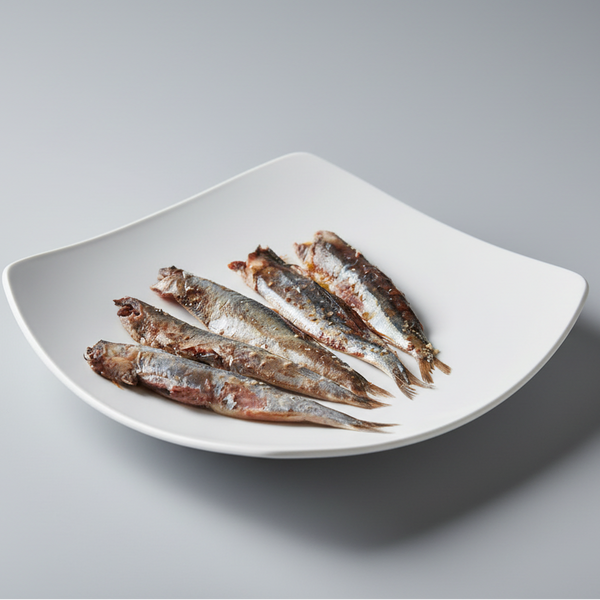
The confusion between anchoa (anchovy) and boquerón (anchovy) is the most frequently asked gastronomic question in Spain. And the answer is simpler than it seems: they are exactly the same animal. The species is Engraulis encrasicolus, a small pelagic oily fish measuring 10-20 cm that lives in huge schools along the Atlantic and Mediterranean coasts.
What changes is not the fish — it's what is done with it after catching it. When consumed fresh, fried, or marinated in vinegar, we call it boquerón. When it is cured in salt for months and packed in olive oil, we call it anchoa. It's the same relationship that exists between grapes and wine, or between fresh milk and aged cheese. Same starting point, radically different processes, final products that do not compete with each other.
In other languages, the distinction does not exist: in Italian, acciuga is both the fish and the cured product. In English, anchovy covers everything. Spain has the advantage of having two words for two different gastronomic realities — and it's worth taking advantage of it.
What changes everything: the preparation
Boquerón: vinegar and speed
Boquerones in vinegar are a quickly prepared product. The fresh fish is cleaned (head, bones, and guts removed), filleted, and submerged in vinegar for 6-12 hours. The acetic acid in the vinegar "cooks" the fish protein (acid denaturation) — the flesh goes from translucent to opaque white, firm, and with that acidic, fresh taste that defines the quintessential Spanish appetizer.
The result is a fresh, light product, consumed refrigerated within a few days. It is not a preserve — it is a pickle that requires a cold chain.
Anchovy: salt and time
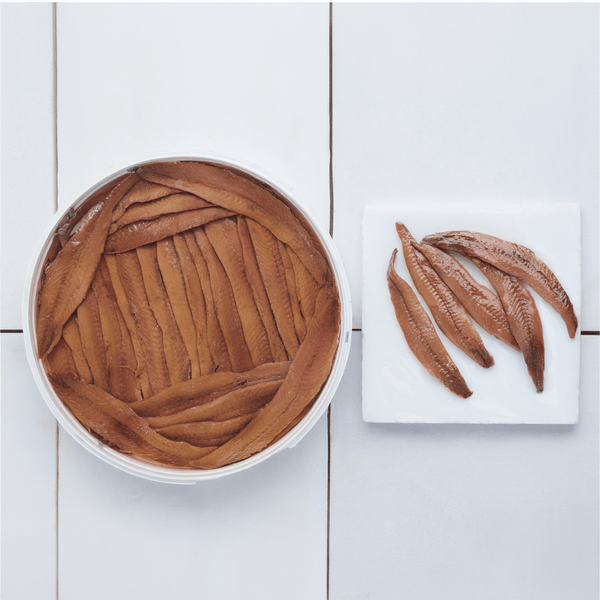
Salt-cured anchovy is the opposite. The fresh boquerón is gutted and placed in barrels, alternating layers of fish and coarse sea salt, under constant pressure. It remains there for 8 to 18 months — in artisanal canneries in the Cantabrian Sea, never less than 10.
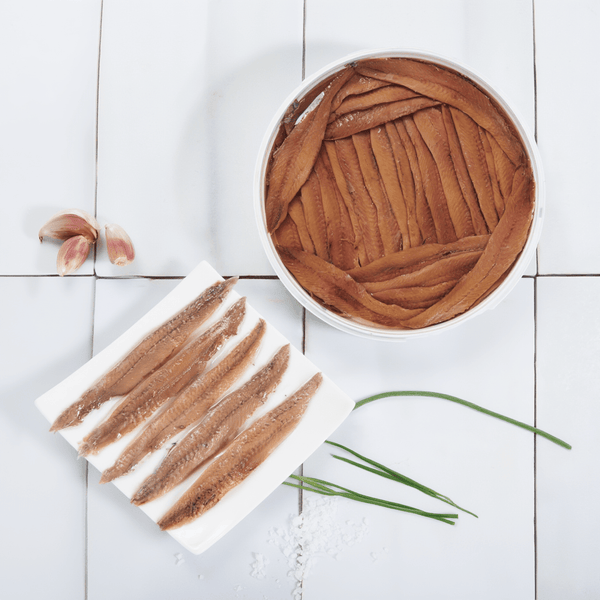
During these months, the fish's natural enzymes (proteases and lipases) transform proteins into free amino acids — including glutamate, directly responsible for umami — and fats into complex aromatic compounds. The result is a coppery-pink fillet, melt-in-your-mouth, with a deep and intense flavor that has nothing to do with the original product.
To understand the complete anchovy production process, we have a definitive guide to Cantabrian anchovies that explains it step by step.
Complete comparative table
| Characteristic | Boquerón | Anchovy |
|---|---|---|
| Species | Engraulis encrasicolus | Engraulis encrasicolus |
| Preparation | Fresh, fried, or marinated in vinegar | Cured in salt 8-18 months + olive oil |
| Preparation time | 6-12 hours (vinegar) | 8-18 months (salting) |
| Color | Opaque white (vinegar) / silvery (fresh) | Coppery pink |
| Texture | Firm, juicy | Melt-in-your-mouth, buttery |
| Dominant flavor | Acidic, fresh, light | Umami, salty, complex |
| Preservation | Refrigerator, 3-5 days | Sealed can: 2-3 years |
| Indicative price | 5-12 €/kg (fresh) | 80-200 €/kg (premium) |
| Main use | Tapa, appetizer, fried | Toast, gilda, pizza, sauces |
Taste and texture: the real differences
The taste difference between boquerones in vinegar and salt-cured anchovies is so great that it's hard to believe they come from the same fish. It's not a difference of degree — it's a difference of nature.
Boquerones in vinegar
Fresh, acidic, clean taste. The vinegar dominates the experience: it's the first thing you perceive. Beneath it, there's a subtle, mild oily fish note, without intensity. The texture is firm and juicy — the fillet has body, it's chewy. It's a refreshing appetizer that stimulates the appetite. It naturally pairs with olive oil, garlic, and parsley — the classic dressing everyone knows.
Salt-cured anchovies
Umami, deep, complex flavor. The salt and months of curing have transformed the proteins into amino acids that produce that addictive flavor which is difficult to describe and easy to recognize. The texture is melt-in-your-mouth — the fillet dissolves in the mouth without chewing, like salty butter with a soul of the sea. A single quality anchovy can be the most intense gastronomic experience of an entire dish.
For those who haven't tried both consecutively: imagine the difference between a green olive (fresh, acidic, crunchy) and a black Aragón olive cured for months (deep, earthy, soft). Same fruit, different processes, incomparable experiences.
Nutritional comparison
Both are oily fish rich in protein and omega-3, but processing creates relevant nutritional differences.
| Nutrient (per 100 g) | Boquerón in vinegar | Anchovy in olive oil |
|---|---|---|
| Calories | ~130 kcal | ~210 kcal |
| Proteins | 20 g | 25-29 g |
| Fats | 5-7 g | 10-12 g (includes oil) |
| Omega-3 | 1.5-2 g | 1.5-2 g |
| Sodium | ~500 mg | ~3,500 mg |
The most significant difference is sodium. Salt-cured anchovies have a very high salt content — it is inherent to the curing process. This is not a problem if consumed in usual amounts (2-4 fillets as an appetizer), but it is relevant for people with hypertension or sodium restrictions. Boquerones in vinegar, not undergoing salting, have a much more moderate sodium content.
As for omega-3, both products are excellent sources. Engraulis encrasicolus is one of the oily fish with the highest concentration of EPA and DHA per serving — whether you eat it in vinegar or salt-cured.
Why do anchovies cost 10 times more?
The price of fresh boquerones is around €5-12/kg. A premium Cantabrian anchovy can exceed €200/kg. The difference seems absurd until you understand the real factors:
- Select raw material: not all boquerones are suitable for anchovies. Only those caught in season (April-June), with the exact fat content, and of adequate size pass the selection.
- Curing for 8-18 months: the capital invested in raw material remains immobilized for months. Barrels occupy space in a controlled chamber. The risk of loss exists.
- Manual filleting: an experienced "sobadora" (anchovy processor) fillets 4-6 kg per day. Each fillet is individually inspected, the central bone and skin are removed by hand. This process is what makes the product more expensive.
- Shrinkage: from one kg of fresh boquerón, approximately 200-250 g of filleted anchovy is obtained. The yield is 20-25%.
- Extra virgin olive oil: in premium ranges, the covering oil is not just any oil — it is EVOO, which has its own cost.
Boquerones in vinegar, on the other hand, are prepared in hours, do not require curing, filleting is less demanding (fresh fish is easier to handle), and shrinkage is less. Hence the price difference.
When to use each
Choose boquerones in vinegar when...
- You want a fresh, light appetizer that stimulates the appetite.
- You're looking for a classic bar tapa — with its oil, garlic, and parsley.
- You need a quick, economical, and uncomplicated dish.
- The context is informal: vermouth, a beer, a beach bar, a bar counter.
Choose salt-cured anchovies when...
- You want an intense umami flavor to be the star of the dish.
- You're preparing a toast, gilda, pizza, or salad that needs powerful flavor.
- You're cooking sauces (anchovy dissolved in oil is a spectacular flavor enhancer).
- The context is more gastronomic: dinner with guests, wine pairing, premium appetizer platter.
They are not interchangeable. Putting anchovies where you need boquerones (or vice versa) is like putting aged cheese where you need mozzarella — technically possible, gastronomically a mistake.
If you want to delve deeper into the world of anchovies, our Cantabrian anchovy guide covers everything. And for the universe of boquerones, the complete boquerones guide is your reference. You might also be interested in the comparison between anchovies and sardines, which is another common confusion but with a fundamental difference: there, they are indeed different fish.
Discover our premium selection
Seafood products carefully selected since 1990 at Mercat del Ninot, Barcelona. Refrigerated shipping in 24-48h.
Conclusion
Anchovy and boquerón are the same fish prepared in radically different ways. Boquerón is freshness, acidity, and simplicity — the quintessential Spanish appetizer. Anchovy is umami, depth, and months of artisanal transformation — one of the most valued gastronomic products in the Mediterranean pantry.
There isn't one better than the other. There's one more suitable for each moment. Understanding the difference between them is the first step to enjoying each in its correct context — and to not be misled at the fishmonger, in the store, or in a restaurant.
Frequently asked questions
Are anchovies and boquerones the same fish?
Yes, exactly the same: Engraulis encrasicolus. The difference is exclusively the process after fishing. Boquerón is consumed fresh or in vinegar; anchovy is that boquerón cured in salt for months and packed in olive oil.
Why do anchovies cost so much more than boquerones?
Three main factors: curing takes 8-18 months (immobilized capital), filleting is 100% manual (one "sobadora" processes 4-6 kg per day), and the loss is 75-80% (from 1 kg of boquerones, only 200-250 g of filleted anchovies are produced). These costs do not exist in the preparation of boquerones in vinegar.
Can anchovies be substituted with boquerones in a recipe?
Not directly. The flavor, texture, and culinary function are completely different. A recipe that calls for anchovies (like puttanesca sauce or gilda) seeks the umami and saltiness of salted fish. Substituting with boquerones in vinegar would result in an acidic and shallow flavor. And vice versa: using anchovies where boquerones in vinegar are requested would provide excessive saltiness.
Which of the two is healthier?
Both are excellent sources of protein, omega-3 (EPA and DHA), and B vitamins. The main difference is sodium: salted anchovies contain approximately 3,500 mg of sodium per 100 g, while boquerones in vinegar are around 500 mg. For people with hypertension, boquerones in vinegar are the more suitable option. In normal consumption quantities (2-4 fillets), both are healthy.
Are Cantabrian boquerones better than Mediterranean ones?
They are the same fish (Engraulis encrasicolus) in different waters. Cantabrian anchovies tend to have a more balanced fat profile due to the cold Atlantic waters, making them more suitable for salting into anchovies. For boquerones in vinegar or frying, Mediterranean ones are just as good. The difference is measurable but not dramatic for fresh consumption.
Why do some regions call the fresh fish "anchoa"?
It's a regional and linguistic matter. In Hispanic America, Italy, and Catalan ("anxova"), the term anchoa/acciuga/anxova is used for both the fish and the cured product. In standard Peninsular Spanish, the distinction between boquerón (fresh) and anchoa (cured) is well-established, but not universal. If you have doubts, ask the seller how the product is prepared.
Lalo González Rodríguez
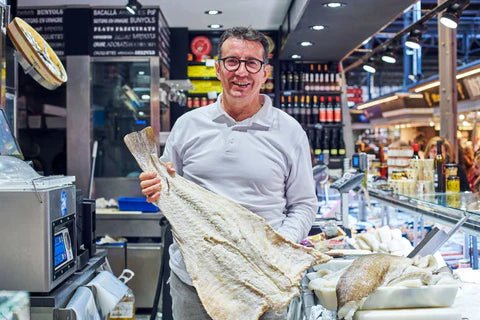
Specialist in seafood and premium preserves. Contributor to Bacalalo from Mercat del Ninot in Barcelona, where the González family has been selecting cod, anchovies, caviar, and gourmet seafood products since 1990. Each article reflects decades of experience buying, tasting, and selling the best products to customers who demand real quality.