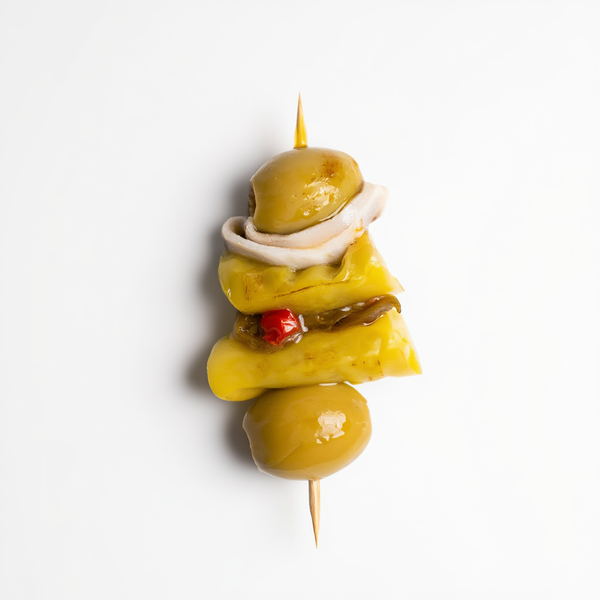
Summary: The boquerón and anchovy are the same fish — Engraulis encrasicolus — but with very different preparations. The boquerón is consumed fresh or marinated in vinegar; the anchovy is the same fish cured in salt for months. In this complete guide, we explain the types of preparation, the optimal catch season (spring-summer), the differences between Cantabrian and Mediterranean boquerones, how to choose quality fresh boquerones, and why boquerones in vinegar are the quintessential Spanish appetizer.
Contents
- What are Boquerones?
- The Great Confusion: Anchovy vs. Boquerón
- Types of Boquerón Preparation
- Boquerón Season: When It's at Its Best
- Cantabrian vs. Mediterranean Boquerones
- How to Choose Quality Fresh Boquerones
- Boquerones in Vinegar: The Quintessential Spanish Appetizer
- Nutritional Value and Benefits of Boquerón
- Conclusion
- Frequently Asked Questions
What are Boquerones?
The boquerón is a small pelagic fish of the species Engraulis encrasicolus, also known as bocarte in northern Spain and aladroc in Catalonia. It measures between 10 and 20 cm, has an elongated, silvery body with a greenish-blue back, and lives in huge schools that migrate along the Atlantic and Mediterranean coasts.
It is one of the most consumed fish in Spain and one that generates the most confusion. Because this fish has two completely different gastronomic lives depending on how it is prepared — and each receives a different name. When consumed fresh or marinated in vinegar, we call it boquerón. When cured in salt for months, we call it anchovy. Same animal, different product. Understanding this distinction is key to navigating the fish market.
Engraulis encrasicolus belongs to the Engraulidae family, which includes more than 140 species of anchovies found in all oceans of the planet. But the European variety — the one that swims between the Cantabrian Sea, the northeastern Atlantic, and the Mediterranean — is the one that has generated one of the richest gastronomic traditions in southern Europe: from boquerones in vinegar in Madrid to anchovies from Santoña, from pissaladière in Nice to bagna cauda in Piedmont.
The Great Confusion: Anchovy vs. Boquerón
This is probably the most frequently asked gastronomic question in Spain: what is the difference between an anchovy and a boquerón? The answer is simple and often poorly explained even by industry professionals.
They are the same fish. Exactly the same species: Engraulis encrasicolus. There is no biological, genetic, or taxonomic difference. What changes is the process it undergoes after being caught.
| Characteristic | Boquerón | Anchovy |
|---|---|---|
| Species | Engraulis encrasicolus | Engraulis encrasicolus |
| Preparation | Fresh, fried, or marinated in vinegar | Cured in salt for 8-18 months |
| Color | White-silver (vinegar) or gray (fresh) | Coppery brown-pink |
| Texture | Firm, juicy | Melting, buttery |
| Flavor | Fresh, acidic (vinegar), mild | Intense umami, salty, complex |
| Preservation | Refrigerated (2-3 days fresh, 5-7 in vinegar) | Sealed can: 2+ years. Opened: 5-7 days |
| Price | €5-12/kg (fresh) | €80-200/kg (artisanal premium) |
In Latin America, the confusion is amplified because in many countries they call the live fish "anchovy" and also the cured product "anchovy," without distinguishing names. Something similar happens in Italy: acciuga is the fish and also the salted fillet. In Spain, at least, we are fortunate to have two words for two products: boquerón (fresh/vinegar) and anchovy (salted).
If you are interested in delving deeper into the world of salted anchovies — sizes, brands, production process —, we have a complete guide to Cantabrian anchovies that covers the topic in detail.
Types of Boquerón Preparation
From the same fish come three radically different gastronomic products. What defines each one is the process after capture.
Fresh Boquerón
Fresh boquerón is the fish as it comes from the sea, unprocessed. It is a small, economical, and extraordinarily versatile oily fish in cooking. The most common preparations are fried (especially in Andalusia, where "fried boquerones" are almost emblematic), grilled, battered, pickled, or baked.
Fresh boquerón has a short consumption window: 1-2 days from capture if the cold chain is kept intact. It is a fish that degrades quickly, which explains why preservation methods like vinegar and salt were historically invented.
Boquerón in Vinegar
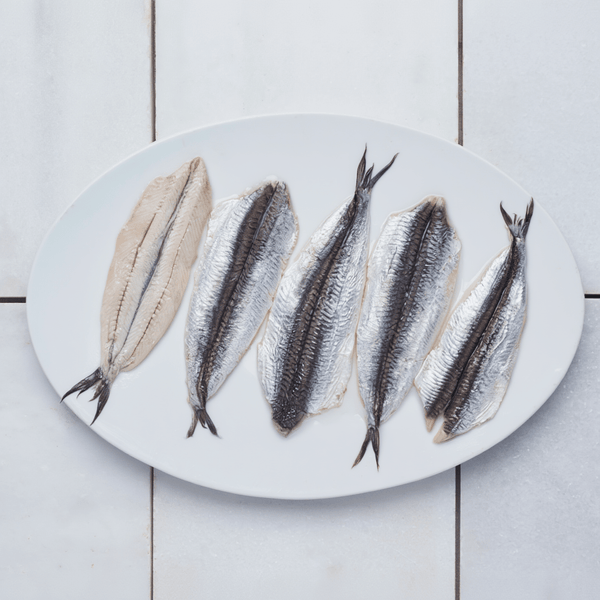
Boquerones in vinegar are perhaps the most representative tapa of Spanish gastronomy. They are made by marinating raw boquerón fillets in a mixture of white wine vinegar, garlic, parsley, and extra virgin olive oil. The acid from the vinegar "cooks" the fish protein (acid denaturation), transforming the texture from raw to firm and whitish, without the need for heat.
It is a product consumed chilled, as an appetizer or tapa, and has a shelf life of 5-7 days in the refrigerator. It is essential that the boquerón has been previously frozen at -20 °C for at least 48 hours to eliminate the risk of anisakis — a common parasite in raw or semi-raw fish that can cause serious digestive problems.
Salted Boquerón → Anchovy
When the boquerón is gutted, placed in barrels alternating layers of fish and coarse salt, and left to mature for 8 to 18 months, the result is what we call anchovy. The fish's natural enzymes (proteases and lipases) slowly break down proteins and fats during this period, generating the deep umami flavor, melting texture, and characteristic coppery color.
This transformation process is the same one practiced by artisanal canneries in Santoña, Laredo, and Bermeo for over a century, inherited from the Sicilian masters who arrived in the Cantabrian Sea in the 19th century.
Boquerón Season: When It's at Its Best
The boquerón is a migratory fish that follows very marked seasonal patterns. Knowing its cycle is fundamental both for buying quality fresh boquerones and for understanding why artisanal anchovies are a seasonal product.
Spring and Summer: High Season
The best time to consume fresh boquerón is from April to September, with the optimal peak between May and July. During these months, boquerón schools migrate towards the Cantabrian and Mediterranean coasts, and the fish is at its maximum fat content — just before spawning. This accumulation of intramuscular fat is what gives fresh boquerón its most intense flavor and juiciest texture.
In the Cantabrian Sea, the so-called "bocarte season" occurs between April and June. This is the window when canneries buy all the raw material they will cure for the next 8-18 months to produce anchovies. Fishermen work with purse seine nets, catching schools on the surface at night.
Autumn and Winter: Low Season
In the colder months, the boquerón moves away from the coast and migrates to deeper waters. There is less availability at the fish market, and the specimens are usually smaller and less fatty. It's not that winter boquerón is bad — it's simply not at its optimal point. If you are looking for fresh boquerón to make in vinegar, the difference between a June boquerón and a January one is noticeable.
| Period | Availability | Quality | Recommended Use |
|---|---|---|---|
| April - July | High | Optimal (maximum fat) | Fresh, in vinegar, fried |
| August - September | Medium-High | Very good | Fresh, in vinegar |
| October - November | Medium | Good | Fried, pickled |
| December - March | Low | Variable | Canned, cooked |
Cantabrian vs. Mediterranean Boquerones
Not all boquerones are equal. Although they belong to the same species (Engraulis encrasicolus), the sea conditions where they grow produce specimens with distinct characteristics. The two main fishing areas in Spain — the Cantabrian Sea and the Mediterranean Sea — generate boquerones with different profiles.
Cantabrian Boquerones
The Cantabrian Sea offers cold waters (12-18 °C), rich in plankton, and with Atlantic currents that maintain very high biodiversity. Boquerones from these waters tend to be larger, fattier, and with a more complex lipid profile. This is why the anchovy industry of Santoña, Laredo, and Bermeo settled here: the raw material is superior for salting.
Cantabrian bocarte can reach 15-18 cm in a good season, with thick and fleshy fillets. Its higher fat content gives it an advantage for both salting (more flavor complexity after curing) and frying (more juiciness).
Mediterranean Boquerones
The Mediterranean Sea has warmer waters (15-26 °C), lower plankton productivity, and higher salinity. Mediterranean boquerones are usually smaller, leaner, and have firmer flesh. They are not worse — they are different. For boquerones in vinegar, many professionals prefer the Mediterranean ones because their lower fat content produces a firmer fillet with better texture when marinated.
The fish markets of Malaga, Almeria, Valencia, and Barcelona handle a huge volume of Mediterranean boquerón, mainly destined for fresh consumption and frying. The famous "Cantabrian anchovies" sought by gourmets come exclusively from the north — the Mediterranean does not produce salted anchovies of the same quality because the fish's lipid profile does not develop the same complexity during curing.
And Outside Spain: Morocco, Argentina, Chile
Some of the boquerones marketed in Spain as "anchovy" come from other latitudes: Moroccan, Argentine, or Chilean coasts. It is Engraulis encrasicolus (or related species like Engraulis ringens), but raised in waters with different temperatures, salinity, and plankton diets. The result after curing is a product with less flavor complexity. That's why the designation of origin is relevant: a genuine Cantabrian anchovy cannot be made with boquerones of any origin.
How to Choose Quality Fresh Boquerones
If you buy fresh boquerones at a fishmonger or market, there are five signs that will help you distinguish real quality from apparent quality.
1. Bright and Transparent Eyes
The eye of a fresh boquerón is convex, bright, and transparent. A sunken, opaque, or whitish eye indicates that the fish has been out of the water for too long. It is the quickest and most reliable sign.
2. Silvery Skin with Metallic Sheen
The skin of a fresh boquerón has an almost metallic sheen, as if covered with small silver scales. When it loses freshness, the sheen dulls, and the skin becomes matte, with yellowish tones.
3. Firm and Elastic Flesh
When pressed lightly with a finger, the flesh should immediately return to its shape. If the finger mark remains, the boquerón is not fresh. A quality boquerón has firm flesh, never soft.
4. Smell of Clean Sea
Fresh boquerón smells of the sea, of salty breeze, of algae. It should never smell of ammonia, rancid, or have a strong, unpleasant odor. Smell is the indicator that professionals use first: a boquerón that smells bad cannot be fixed with vinegar or frying.
5. Intact Belly
The belly of the boquerón must be intact, without tears or signs of decomposition. A torn or soft belly indicates that the entrails have begun to deteriorate — which quickly affects the surrounding flesh.
Boquerones in Vinegar: The Quintessential Spanish Appetizer
Boquerones in vinegar are probably the most universal tapa in Spain. They are served in bars in Malaga and San Sebastian, in taverns in Madrid and beach bars in Cadiz. They are simple, economical, healthy, and have a flavor that hooks you from the first bite.
The basic process is simple in concept but requires attention in execution:
- Pre-freezing: Boquerones must be frozen at -20 °C for at least 48 hours to eliminate anisakis. This is mandatory by health regulations in Spain since 2006.
- Cleaning: Head, central bone, and entrails are removed. Two clean fillets are obtained per boquerón.
- Marinating in vinegar: The fillets are submerged in white wine vinegar for 4-8 hours (depending on thickness and personal taste). The acid denatures the proteins and "cooks" the fish without heat.
- Final dressing: They are drained, dressed with extra virgin olive oil, sliced garlic, and chopped parsley. Some add chili, paprika, or spring onion.
The difference between mediocre boquerones in vinegar and exceptional ones lies in three variables: the freshness of the boquerón (the fresher, the better the final texture), the quality of the vinegar (a good one enhances rather than masks), and the marinating time (too long produces a rubbery and excessively acidic fillet; too short leaves the center raw).
If you want specific step-by-step recipes, we have articles dedicated to boquerones in vinegar: perfect homemade recipe with all the professional tips and timings.
Nutritional Value and Benefits of Boquerón
The boquerón is one of the oily fish with the best nutritional profile, especially considering its price — it is the most economical oily fish on the Spanish market.
| Nutrient | Per 100 g (fresh) | Benefit |
|---|---|---|
| Calories | 131 kcal | Low caloric value for an oily fish |
| Proteins | 20 g | High bioavailability, essential amino acids |
| Total Fats | 5-6 g | Mainly unsaturated |
| Omega-3 (EPA + DHA) | 1.5-2 g | Anti-inflammatory, cardiovascular, brain health |
| Vitamin D | 7 µg (46% DV) | Bone health, immunity |
| Vitamin B12 | 5 µg (208% DV) | Nervous system, red blood cell formation |
| Selenium | 37 µg (67% DV) | Antioxidant, thyroid function |
| Calcium | 148 mg (if consumed with bone) | Bone health |
Three benefits worth highlighting:
- Low-cost Omega-3: Anchovies offer one of the best omega-3 to cost ratios on the market. To get the same amount of EPA and DHA, you would need to spend 3-4 times more on salmon or tuna.
- Low in mercury: As a small fish with a short life cycle, anchovies accumulate much less mercury than large predators (tuna, swordfish, shark). AESAN recommends them for pregnant women and children.
- Calcium with bone: When anchovies are consumed fried whole — as in the Andalusian tradition — the bones provide highly bioavailable calcium. 100g of fried anchovies with bones provide almost 15% of the recommended daily calcium intake.

Discover our premium selection
Carefully selected seafood products since 1990 at Mercat del Ninot, Barcelona. Refrigerated shipping in 24-48h.
Conclusion
Anchovy is one of those products that prove that gastronomy does not need expensive ingredients to be extraordinary. The same fish — Engraulis encrasicolus — gives rise to three radically different products: fresh anchovies (fried, grilled), pickled anchovies (the most democratic tapa in Spain), and salted anchovies (the gourmet product that can cost over €150/kg in premium sizes).
What distinguishes quality is not only the origin — although the Cantabrian Sea produces the best specimens due to their lipid profile — but also the time of capture (spring-summer), the freshness of the raw material, and, in the case of anchovies, the curing time and technique.
At Bacalalo, we have been selecting seafood products at Mercat del Ninot in Barcelona for over 35 years. We know the producers, we test each batch, and we only offer what passes our quality filter. If you are looking for Cantabrian anchovies with the guarantee of professional selection, we invite you to explore our collection.
Frequently Asked Questions
Are boquerón and anchovy the same fish?
Yes. Boquerón and anchovy are the same fish: Engraulis encrasicolus. The difference is in the preparation. When consumed fresh or pickled, it is called boquerón. When cured in salt for 8-18 months, it is called anchovy. It is a culinary distinction, not a biological one.
What is the best time to buy fresh anchovies?
The optimal season runs from April to September, with peak quality between May and July. During these months, anchovies are at their maximum fat content before spawning, which gives them the best flavor and texture. In winter, there is less availability, and the specimens are usually smaller and leaner.
Is it safe to eat pickled anchovies? What about Anisakis?
Pickled anchovies are safe provided the fish has been previously frozen at -20 °C for at least 48 hours. Vinegar alone does not kill Anisakis. Spanish health regulations require this prior freezing for fish consumed raw or semi-raw. In the hospitality industry, compliance is mandatory; at home, it is your responsibility to ensure proper freezing.
What is the difference between Cantabrian and Mediterranean anchovies?
Although they belong to the same species, Cantabrian anchovies tend to be larger and fattier thanks to the cold, plankton-rich waters of the north. Mediterranean anchovies are smaller and leaner, with firmer flesh. For salting (anchovies), the Cantabrian is superior. For pickling, many professionals prefer the Mediterranean for its texture.
How long do pickled anchovies last in the refrigerator?
Well-prepared pickled anchovies last 5-7 days in the refrigerator, in a closed container and covered with olive oil. After that time, the texture deteriorates (they become rubbery) and the flavor becomes excessively acidic. Ideally, they should be consumed within the first 3-4 days.
Why are Cantabrian anchovies so expensive if they come from the same fish as boquerones?
Because the transformation process is long and artisanal. A quality anchovy needs 8-18 months of salt curing, manual filleting (one "sobadora" fillets 4-6 kg/day), individual selection by size, and extra virgin olive oil. Added to this is the fact that the anchovy season lasts only 10-12 weeks a year, and large sizes (00, 000) are scarce. The price reflects the time, limited raw material, and manual labor.