Summary: Desalted cod is cod ready to cook: no waiting, no 48-hour soaking, no mistakes with the salt level. In this buying guide, we explain the 5 main cuts (snout, loins, belly flap, tail, and shredded), what recipe to use for each, why Icelandic cod (Gadus morhua) is the highest quality, how to recognize good desalted cod, how much to buy per person, and the real advantages over desalting at home. With 35 years of experience selecting cod at Mercat del Ninot in Barcelona.
Contents
- What is desalted cod and why choose it
- Origin: why Icelandic cod is the best
- The 5 cuts of desalted cod and what recipe to use each for
- How to choose quality desalted cod
- Storing desalted cod at home
- How much desalted cod to buy per person
- Desalted cod vs. desalting at home
- Conclusions
- Frequently asked questions
What is desalted cod and why choose it
Desalted cod is cod that has been previously salted and cured (the traditional preservation process practiced for centuries) and from which the salt has then been removed through a controlled soaking process. The result: a piece of cod ready to cook directly, with just the right amount of salt, without you having to spend 24-48 hours desalting it yourself.
The difference with dried or salted cod is practical and fundamental. Dried cod requires a desalting process at home that, if not done correctly, ruins the final result: too salty if you don't soak it enough, bland if you soak it too much, with a rubbery texture if you change the water at the wrong time. Desalted cod eliminates that variable. You come home, open it, cook it.
Some consider desalting at home "the traditional way" and buying already desalted cod a shortcut. But the reality is that the best restaurants in Spain work with professionally desalted cod: the salt control, the hydration of the fiber, and the final texture are more consistent when the process is done by someone who desalt hundreds of kilos a week, not once a month.
At Bacalalo, we have been selecting cod at Mercat del Ninot in Barcelona since 1990. Our collection of desalted cod includes all the main cuts, sourced from Gadus morhua from Iceland, with the desalting point we have perfected over more than three decades.
Origin: why Icelandic cod is the best
Not all cod is created equal. The species, origin, and water conditions determine the final quality of the piece in a way that cannot be compensated for by any subsequent process.
The species: Gadus morhua, the Atlantic cod
Atlantic cod, Gadus morhua, is the premium species in the world market. It is the cod that has been consumed in the Iberian Peninsula for more than 500 years and the one that produces the classic preparations of Spanish and Portuguese cuisine: pil-pil, baked cod, brandade, fritters. Its flesh has a long fiber structure, thick flakes, and a collagen content that, when cooked, produces that gelatinous, melting texture that defines good cod.
Do not confuse it with other species sold as "cod" but which are not. Pollock, ling, or haddock are white fish of the same family, but with a different muscle structure: shorter fiber, less collagen, drier texture. In the supermarket, you will find them cheaper and sometimes ambiguously labeled. The difference on the plate is evident.
Iceland: cold waters, slow growth, superior quality
Icelandic cod grows in the coldest waters of the North Atlantic, between 0 °C and 5 °C. This temperature forces the fish to develop slowly for 4-7 years before reaching catch size. Slow growth produces denser meat, with a higher concentration of protein per cubic centimeter of muscle and a low but perfectly distributed intramuscular fat content.
The practical result: the flakes of Icelandic cod are thicker and more defined, the texture when cooked is firmer without being dry, and the gelatinization of collagen during cooking produces that dense and unctuous pil-pil that is impossible to achieve with cod from warmer waters.
Iceland also manages its fishing grounds with one of the strictest quota systems in the world. Sustainability is not a slogan—it is a verifiable fact. The biomass of Icelandic cod has remained stable or grown in the last two decades, something that cannot be said of many other Gadus morhua fisheries.
Other origins: Norway, Faroe Islands, Canada
Norway and the Faroe Islands produce cod of comparable quality in many respects. Norwegian Skrei cod (which migrates from the Barents Sea to Lofoten to spawn) is an exceptional, albeit seasonal, product. Faroese cod, caught in equally cold waters, has good structure but availability is more limited.
Pacific cod (Gadus macrocephalus), which comes mainly from Alaska, is a different species with shorter fiber and less collagen. It is more economical and functional for industrial use, but does not produce the same result in classic Spanish recipes.
The 5 cuts of desalted cod and what recipe to use each for
A whole desalted cod has areas with very different characteristics. Each cut has a thickness, a proportion of collagen and gelatin, and a texture that makes it ideal for some recipes and not for others. Choosing the correct cut is as important as choosing good starting cod.
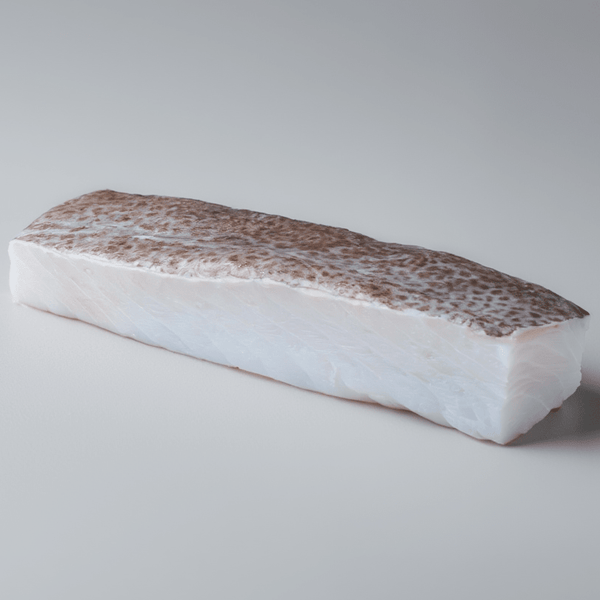
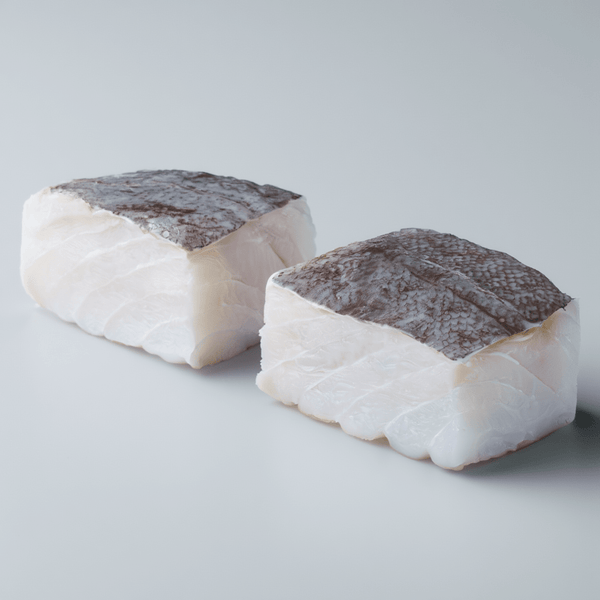
1. Snout (or upper loin): the king cut
The snout is the thickest part of the cod, the area near the head. It is the cut with the greatest flake thickness (3-5 cm), the highest proportion of lean meat, and a structure that, when cooked, breaks into large, defined flakes.
Best for: pil-pil cod, baked cod, confit at low temperature, cod a la vizcaína. Any recipe where cod is the absolute star and you need a piece that maintains its shape during cooking.
Price: it is the most expensive cut because the proportion of snout in each cod is small. You pay more per kilo, but the yield is very high: practically everything is usable meat, without thick bones or trimmings.
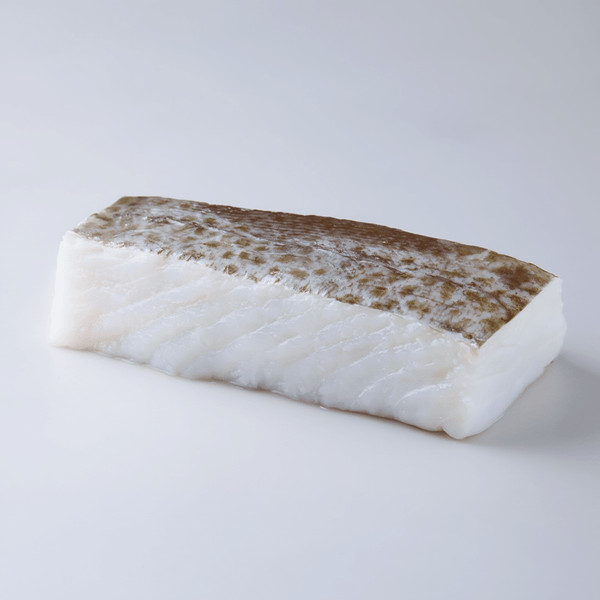
2. Loin (or center): versatile and balanced
The loin is the central part of the cod, between the snout and the tail. It has a medium thickness (2-4 cm), good flake structure, and a balanced proportion of meat and collagen. It is the most versatile cut and, along with the snout, the most in demand.
Best for: baked cod, grilled, in green sauce, gratinated, al club ranero. It also works perfectly for pil-pil if the piece has good thickness. It is the all-rounder cut: if you can only buy one type of cut, the loin covers 80% of recipes.
3. Belly flap (or ventresca): the collagen jewel
The belly flap is the ventral area of the cod, the part that covers the entrails. It is thinner than the loin and snout, but has a concentration of collagen and gelatin that no other cut can match. When cooked, this gelatin melts and produces an unctuous, almost creamy texture, which is the base of the best pil-pil.
Best for: pil-pil (the belly flap produces more gelatin than the snout, which facilitates emulsion), battered and fried (fried belly flap is crispy on the outside and melting on the inside), cod in sauce. It is the cut most appreciated by experienced chefs.
Price: historically it has been the cheapest cut because it was the "discard" from the snout and loin. Today the belly flap has been revalued, but it is still more economical than the snout and, for many recipes, produces a superior result.
4. Tail: concentrated flavor, reduced size
The tail is the final part of the cod, the narrowest and thinnest area. It has less meat per piece and more bones, but a concentrated flavor and a texture that crumbles easily when cooked.
Best for: cod soups, stews, casseroles, broths. The tail adds intense flavor to the broth and the meat integrates naturally into preparations where it is mixed with other ingredients. It also works for quick cod recipes like scrambled eggs or stir-fries.
Price: it is the most economical cut, ideal for everyday cooking without spending on snout or loin.
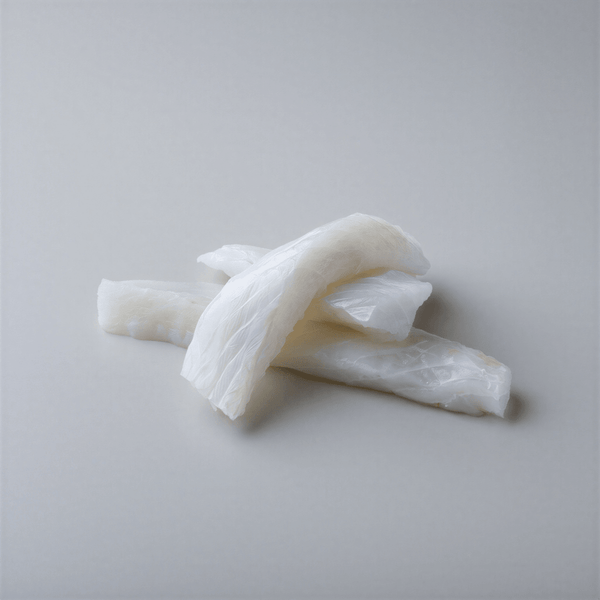
5. Shredded: ready to use
Shredded cod is exactly what it sounds like: desalted cod already flaked into irregular pieces. It can come from trimmings of snout and loin, or from pieces that are not sold as a whole cut.
Best for: cod fritters, cod croquettes, esqueixada (Catalan cod salad), empanadas, fillings, brandade. Any recipe where the cod is shredded from the beginning.
Advantage: it saves you the step of shredding and guarantees a homogeneous result. It is the most practical format and, along with the tail, the most economical.
| Cut | Thickness | Main texture | Ideal recipes | Relative price |
|---|---|---|---|---|
| Snout / Upper loin | 3-5 cm | Thick flakes, firm, breaks into layers | Pil-pil, baked, confit, vizcaína | High |
| Loin / Center | 2-4 cm | Balanced, good flakes, versatile | Baked, grilled, green sauce, gratinated | Medium-high |
| Belly flap / Ventresca | 1-2 cm | Gelatinous, melting, creamy when cooked | Pil-pil, battered, fried, sauce | Medium |
| Tail | 1-2 cm | Concentrated flavor, crumbles easily | Soups, stews, casseroles, scrambled eggs | Low |
| Shredded | Flakes | Irregular, ready to mix | Fritters, croquettes, esqueixada, brandade | Low |
How to choose quality desalted cod
Not all desalted cod you find on the market is the same. The quality of the raw material, the previous salting process, and the desalting itself make enormous differences in the final result. These are the indicators we use at Mercat del Ninot to select what we sell.
Color: pearly white, never yellowish
Quality desalted cod has a slightly translucent pearly white color. If the piece is yellowish, it may indicate fat oxidation (the cod has been exposed to air or inadequate temperatures for too long) or a deficient salting process. If it is grayish, it may be cod that has been desalted for too long and has begun to deteriorate.
Texture: firm but elastic
When pressed with a finger, the flesh should yield slightly and regain its shape. If the finger mark remains, the cod is over-desalted or not fresh. If the flesh is hard and rigid, it probably retains too much salt. The perfect piece has a firmness reminiscent of a fresh white fish fillet, but with a slightly higher density.
Flakes: defined and visible
Good desalted cod shows well-defined flakes (the muscle fibers of the fish) when you cut or separate it. The flakes should be thick, white, and separate into clean layers. If the flakes are thin, blurry, or the flesh breaks down into mush, the species is probably not Gadus morhua or the piece does not have the necessary quality.
Smell: clean sea, nothing more
Fresh desalted cod smells of clean sea, slightly saline, without any ammoniacal, acidic, or rancid nuances. If it smells strong, do not buy it. An unpleasant odor indicates bacterial deterioration and no cooking process will fix it.
Label: clear species and origin
The label or seller should be able to tell you the species (Gadus morhua) and the origin (Iceland, Norway, Faroe Islands). If the species is not listed or only says "cod" without further detail, be suspicious. If the origin is "Pacific" or not specified, it is probably not Gadus morhua.

Storing desalted cod at home
Desalted cod is a perishable product. Unlike dried salted cod, which can last for months at room temperature, desalted cod has reabsorbed the water it lost during salting and, therefore, has the same shelf life as fresh fish.
In the refrigerator: 2-3 days maximum
Store desalted cod in the coldest part of the refrigerator (0-4 °C), covered with film or in an airtight container. Consume within a maximum of 2-3 days from purchase. If you buy it vacuum-packed, respect the expiration date on the package, which is usually more generous (5-7 days).
Freezing: yes, but with nuances
Desalted cod can be frozen without problems. Wrap it well in food film or a freezer bag, removing as much air as possible. In the freezer at -18 °C, it will keep for 2-3 months without significant loss of quality.
Important: always defrost in the refrigerator, never at room temperature or in the microwave. Slow thawing (12-24 hours in the refrigerator) preserves the structure of the flakes and prevents the piece from releasing excessive water during cooking.
A practical tip: if you buy desalted cod in bulk, freeze it in individual portions. This way, you can take out exactly what you need for each recipe without thawing and refreezing, which deteriorates the texture of any fish.
How much desalted cod to buy per person
The amount of desalted cod per person depends on the cut and the type of recipe. As a general reference, we calculate between 150 and 250 grams per diner for a main course. But the cut matters because the yield varies.
| Cut | Grams per person (main course) | Typical recipe | Notes |
|---|---|---|---|
| Snout / Upper loin | 180-220 g | Pil-pil, baked | High yield: almost all meat |
| Loin / Center | 200-250 g | Grilled, green sauce | Some central bone, deduct 10-15% |
| Belly flap | 200-250 g | Fried, battered, pil-pil | Loses volume when cooked (gelatin melts) |
| Tail | 250-300 g | Stew, soup | More bone, lower yield: buy more |
| Shredded | 100-150 g | Fritters, croquettes | Mixed with other ingredients, not the main component alone |
For a dinner for 4 people with pil-pil cod: calculate 800-900 g of snout or loin. For a batch of cod fritters for 6 people, 500-600 g of shredded cod is enough.
Desalted cod vs. desalting at home: advantages and disadvantages
This is the question we receive most often at the Mercat del Ninot counter. The answer depends on your level of experience, your available time, and the result you expect.
If you want to learn the complete process of desalting cod at home step-by-step, we have a dedicated guide: how to desalt cod at home.
| Factor | Desalted Cod (purchased) | Desalting at home |
|---|---|---|
| Time | 0 hours — ready to cook | 24-48 hours of soaking with water changes |
| Consistency of salt level | Very high — controlled professional process | Variable — depends on experience |
| Risk of error | Low | High if you don't have practice |
| Price per kilo | Higher (includes desalting process) | Lower (you buy cheaper dried cod) |
| Shelf life before cooking | 2-3 days in the fridge | Months if kept salted and dry |
| Control of flake thickness | Depends on the supplier | Total control if you select the dried cod well |
| Availability | Immediate if you buy online | Requires having dried cod at home |
Our recommendation: if you cook cod once or twice a month and have no desalting experience, buy desalted. The time savings and consistency of the result far outweigh the price difference. If you cook cod several times a week, have experience, and enjoy the process, desalting at home with quality dried cod can be a good option.
What we never recommend: buying desalted cod from the supermarket of unspecified origin, frozen for months, or of dubious species. In that case, it is better to buy good quality dried cod and desalt it yourself. The problem is not the desalting process — it is the raw material.
Conclusions
Buying quality desalted cod comes down to three correct decisions: the species (Gadus morhua from the North Atlantic, preferably from Iceland), the appropriate cut for your recipe (snout for pil-pil, steak for frying, shredded for fritters), and a supplier who controls the desalting process to guarantee the correct salt level.
What we have covered in this guide:
- What desalted cod is and why it is the most practical option for most cooks.
- Why Icelandic cod (Gadus morhua) is the highest quality for Spanish recipes.
- The 5 main cuts (snout, loin, steak, tail, shredded) and which recipe to use for each.
- How to recognize quality desalted cod: color, texture, flakes, smell, and label.
- Correct storage (2-3 days in the fridge, freezable for up to 3 months).
- How much to buy per person according to the cut and recipe.
- When to buy desalted and when to desalt at home.
At Bacalalo, we have been selecting cod since 1990 in Mercat del Ninot in Barcelona. All our desalted cod is Gadus morhua from Iceland, professionally desalted and shipped refrigerated so that it arrives at your home with the same freshness it has on our market counter.
View the entire desalted cod collection
And if you want to keep learning about cod, these guides will interest you:
Frequently Asked Questions
What exactly is desalted cod?
Desalted cod is cod that has been previously salted and cured using the traditional preservation process, and from which the salt has then been removed through controlled soaking. The result is a piece of cod ready to cook directly, with the right salt point, without the need to desalt it at home (which requires 24-48 hours of soaking with water changes). It is the most convenient option for cooking classic cod recipes such as pil-pil, baked cod, or fritters.
What is the best cut of desalted cod for pil-pil?
For pil-pil, the two best cuts are the snout (or upper loin) and the steak. The snout is the thickest cut, with large flakes that break into defined layers — it produces a visually spectacular pil-pil. The steak has more collagen and gelatin, which facilitates the emulsion of the pil-pil and produces a denser, creamier sauce. Experienced chefs often prefer the steak for its gelatin contribution. If you are starting with pil-pil, the snout is "easier" because it maintains its shape better during cooking.
How much desalted cod do I need per person?
For a main course, calculate between 180 and 250 grams per person depending on the cut. The snout and upper loin have a high yield (almost all meat), with 180-220 g being sufficient. The tail has more bone and lower yield; you will need 250-300 g. For recipes where cod is mixed with other ingredients (fritters, croquettes, esqueixada), 100-150 g of shredded cod per person is adequate.
Can desalted cod be frozen?
Yes. Wrap it well in cling film or in a freezer bag, removing the air. In a freezer at -18 °C, it keeps for 2-3 months without significant loss of quality. Always thaw in the refrigerator (12-24 hours), never at room temperature or in the microwave. Tip: freeze in individual portions so you don't have to thaw and refreeze.
How many days does desalted cod last in the fridge?
Fresh desalted cod lasts 2-3 days in the coldest part of the refrigerator (0-4 °C), covered with film or in an airtight container. If vacuum-packed, the shelf life extends to 5-7 days (respect the date on the packaging). If you are not going to consume it within that period, freeze it on the day of purchase to preserve its quality.
What is the difference between desalted cod and fresh cod?
Desalted cod has undergone a previous salting and curing process that modifies its muscle structure: salt denatures proteins and compacts the muscle fiber, producing the thick, defined flakes that characterize salt cod. Fresh cod has not undergone this process — it has a looser, more delicate texture, without marked flakes. Salting and subsequent desalting concentrate the flavor and create a texture that fresh cod cannot replicate. Classic Spanish recipes (pil-pil, vizcaína, brandada) were developed specifically for salt cod, not fresh.
Why is Icelandic cod better than cod from other origins?
Icelandic cod (Gadus morhua) grows in waters between 0 and 5 °C, which forces slow growth of 4-7 years. This development produces denser meat, with a higher concentration of protein and collagen that, when cooked, generates the gelatinous and melting texture that defines good cod. The flakes are thicker and more defined, and the Icelandic fishery is managed with a quota system that guarantees the sustainability of the resource.
Is it worth buying desalted cod online?
Yes, as long as the supplier guarantees refrigerated shipping and specifies species (Gadus morhua) and origin (Iceland, Norway or similar). At Bacalalo, we ship refrigerated within 24-48h throughout the Peninsula, with the same cod we serve at Mercat del Ninot. The advantage over the supermarket: you can choose a specific cut, you know the exact origin, and you don't risk with substitute species or massive industrial desalting.