Summary: The confusion between anchovies and sardines in preserves is more common than it seems and has practical consequences: they are products with completely different flavor profiles, different culinary uses, and nutritional values with relevant nuances. In this comparative guide, we explain the biological differences between the two species, how their preserves are made, how they differ in taste and texture, which one provides more nutritional value in each context, and when to choose one over the other. Without simplifications.
Biological Difference: Not Close Relatives
Updated March 2026. Based on our over 30 years of experience at Mercat del Ninot, this is what we recommend.
Anchovy and sardine are two distinct fish that do not belong to the same zoological family, although both are small, pelagic (living in open waters near the surface), and caught in the same maritime areas of the Atlantic and Mediterranean.
The Cantabrian anchovy is the European anchovy, Engraulis encrasicolus, from the family Engraulidae. It is an elongated fish, about 12-20 cm long in adulthood, with a pointed snout and a large mouth that opens almost to below the eye. Anchovies have fattier flesh during fishing season (April-June) and leaner flesh outside of it — this seasonal variation is what makes the Cantabrian spring fishing season so prized.
The sardine is Sardina pilchardus, from the family Clupeidae. It is a fish with a wider, more rounded body, more visible scales, and a smaller mouth. Sardines have a high fat content throughout the year, with less dramatic variations than anchovies. European sardines mainly come from the North Atlantic and the Mediterranean.
Both species share the fact that they are oily fish rich in omega-3s, but that's where their relevant nutritional and gastronomic similarities end. Fresh anchovies and fresh sardines are more similar than their preserved versions — the difference in preserves is what matters most to the consumer.
Preparation: Why the Process Changes Everything
The most important difference between a preserved anchovy and a preserved sardine is not biological — it's the preparation process. The two products have completely different processes that produce equally distinct results.
Anchovy: Salt Curing for Months
Anchovy fillets spend between 8 and 18 months in salt cure before being filleted and packed in oil. During this time, the fish's natural enzymes transform proteins and fats into compounds responsible for umami, a melting texture, and the characteristic coppery color. Canned anchovy is not "simply salted" anchovy — it is a product transformed by enzymatic fermentation that has as little to do with fresh anchovy as wine has to do with grapes.
Sardine: Cooking and Packing in Oil
Canned sardines, in their standard version, are cooked (usually steamed or by direct cooking) and packed in oil without undergoing a prolonged curing process. The result is a fish with the taste of cooked sardine — milder, fattier, more "fishy" in the literal sense — preserved in oil. High-quality canned sardines (such as Portuguese or artisanal Galician ones) have their own very appreciable nuances, but they are fundamentally different from those of anchovy.
There are exceptions: some canneries produce sardine anchovies (sardines cured in salt using a process similar to that of anchovy). The result is interesting but different from anchovy made from European anchovy.
Taste and Texture: The Real Differences
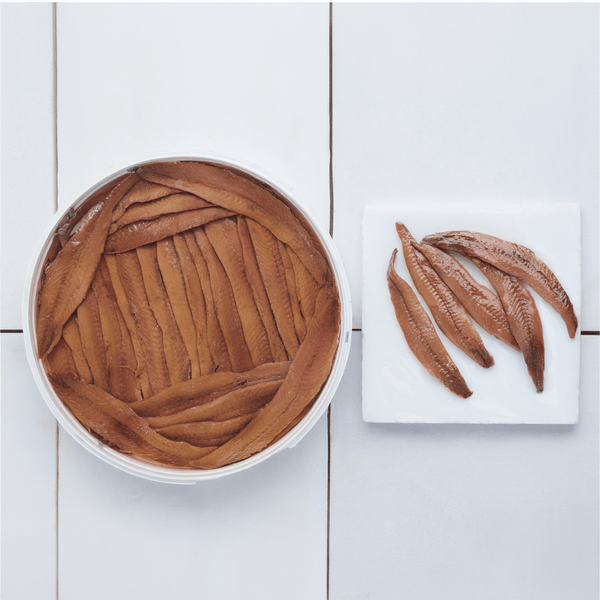
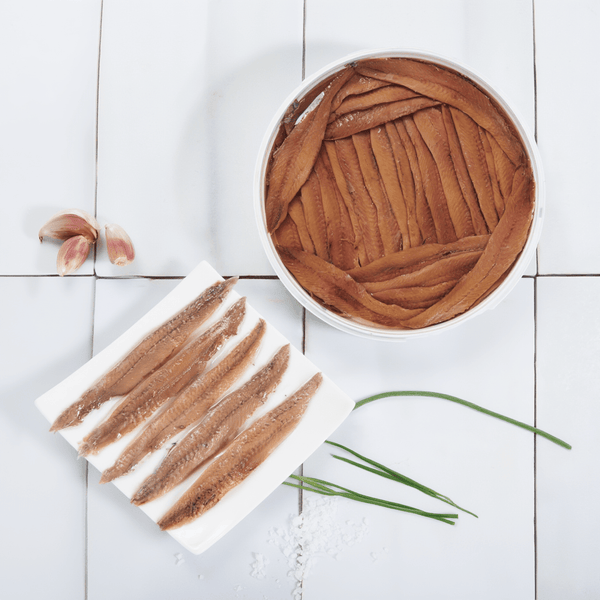
Artisanal Cantabrian anchovies have a deep, complex, umami flavor with buttery and saline notes that reveal themselves in layers on the palate. The texture is melting — the fillet slowly dissolves with hardly any chewing required. The color is coppery, with tones ranging from golden-brown to dark pink depending on the curing time and the cannery. The flavor lingers for several seconds after swallowing.
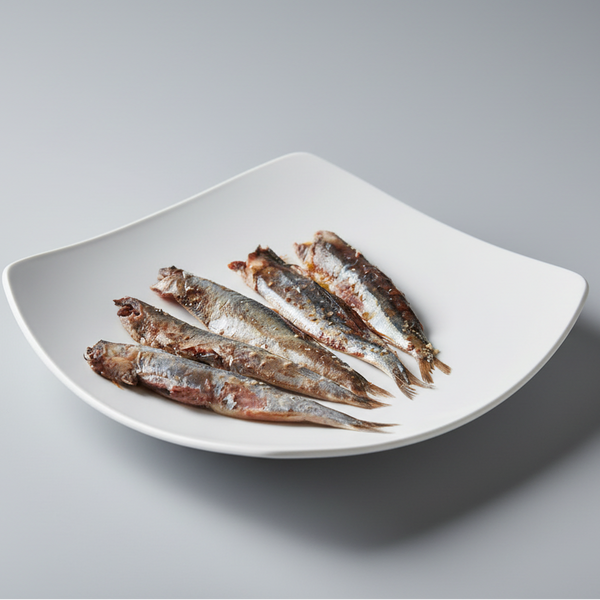
Canned sardines have a more immediate flavor, fattier in the sense of fresh cooked oily fish. The texture is firmer and closer to cooked fish: it can be flaked with a fork and has more body than anchovy. The color is silver-gray if fresh or grayish-beige if canned. The flavor is less persistent than that of artisanal anchovy.
In summary: anchovy is more intense, more complex, more melting. Sardine is milder, firmer, more directly "fishy." There isn't one product that's better than the other — they are different products that cater to different tastes and uses.
Comparative Nutrition: Anchovy vs. Sardine
Comparing anchovy in olive oil with sardine in olive oil, the nutritional values per 100 g are approximately as follows:
| Nutrient | Anchovy in Oil (100 g) | Sardine in Oil (100 g) |
|---|---|---|
| Calories | 210-230 kcal | 200-220 kcal |
| Protein | 29-32 g | 22-25 g |
| Total Fat | 12-14 g | 12-15 g |
| Omega-3 (EPA+DHA) | 1.5-2.0 g | 1.8-2.5 g |
| Sodium | 1,300-2,000 mg | 400-600 mg |
| Calcium | 150-200 mg | 350-450 mg |
| Vitamin D | 1.7 µg | 4.8 µg |
| Iron | 4.6 mg | 2.9 mg |
It should be noted that these values vary depending on the brand, the production process, and the packing oil. The data are indicative, based on averages of standard quality products.
Omega-3s and Fats: What Each Provides
Both are excellent sources of long-chain omega-3 fatty acids (EPA and DHA), which are the omega-3s with documented cardioprotective and anti-inflammatory effects. Sardines generally have a slightly higher content of omega-3s per 100 g of drained fish, but the difference is not clinically relevant — both are very good sources.
What matters more in practice is the amount consumed in a real serving. A serving of anchovies (3-4 fillets, about 15-20 g) provides much less omega-3 than a serving of sardines (half a can, about 50-60 g). This is simply because typical serving sizes are different — anchovies are eaten in smaller quantities due to their intense flavor.
If the goal is omega-3 intake, sardines are more efficient in terms of quantity consumed per serving. If the goal is gastronomy and flavor, artisanal Cantabrian anchovies are unrivaled.
Sodium: The Most Legitimate Concern
The sodium difference is the most significant between the two products and the one that matters most for people with dietary restrictions.
Anchovies in oil have a very high sodium content as a direct consequence of their salt curing process. Depending on the brand and curing time, 100 g of anchovies in oil can have between 1,300 and 2,000 mg of sodium — between 65% and 100% of the maximum daily recommended intake for adults. But it's important to remember that a serving of anchovies is 15-20 g, not 100 g. In that serving, the actual sodium consumed is 200-400 mg, perfectly manageable for most people.
Canned sardines have a much lower sodium content, although it is also variable. A processed sardine without added salt can have only 300-400 mg of sodium per 100 g.
For people with hypertension or severe sodium restriction, anchovies should be consumed in small quantities or avoided. Sardines are a more flexible alternative from a sodium perspective. For pregnancy and children, the situation is different — see our article on anchovies for children: when to give them and how to introduce them.
When to Choose Anchovy
Cantabrian anchovies are the right choice in the following contexts:
When you're looking for intense, umami flavor in small quantities. Two anchovy fillets on a toast, in a pasta dish, or on an egg add a dimension of flavor that would require a whole sardine to achieve a similar level. Anchovy is the high-concentration ingredient par excellence.
When you want a quality appetizer that requires no preparation. Anchovies in olive oil are served directly from the can or jar, with bread, no cooking needed. Their presentation is immediately gourmet if the product quality is right.
When cooking with Mediterranean influence: pasta with anchovies, Neapolitan pizza, bagna cauda, romesco sauce, tempura vegetables with anchovies. In these contexts, the flavor of cured anchovy is part of the expected result.
When looking for an impactful gourmet gift. A can of artisanal Cantabrian anchovies of calibre 00 is a gift with much more history and sophistication than any canned sardine. At Bacalalo, we have been selecting anchovies that serve precisely this purpose for 35 years at Mercat del Ninot in Barcelona.
When to Choose Sardine
Canned sardines are the right choice when:
You are looking for a source of omega-3 and calcium in more generous servings. Sardines are eaten in larger quantities and provide more calcium (thanks to the bones that soften in the canning process) than anchovies. For diets focused on nutrition with sodium restriction, sardines are more versatile.
You want a milder fish flavor. Quality sardines in olive oil have an appreciable flavor but are more accessible for those not accustomed to the intense umami of cured anchovies. It is a good introduction to the world of quality canned fish.
You are cooking dishes where you need more fish. In a salad, in a fish pâté, on rice — if you need ingredient volume, sardines are more economical and more convenient per serving.
Quality Within Each Category Matters More Than the Category Itself
The anchovy vs. sardine comparison is useful to a certain extent. What truly determines the product experience is the quality within each category. A high-quality Portuguese sardine, from an artisanal cannery with a careful process, is infinitely superior to an industrial anchovy with accelerated curing.
For anchovies, the determining quality factors are the origin of the anchovy (Cantabrian, during the spring fishing season), the curing time (minimum 10 months, optimal 12-18 months), the filleting process (manual, not mechanical), and the packing oil (extra virgin, not refined). To understand how to identify a truly quality anchovy, see our guide on Cantabrian anchovies: complete guide to brands and sizes.
Premium Seafood Products — Bacalalo
Since 1990, selecting the best from the sea at Mercat del Ninot, Barcelona. Refrigerated shipping 24-48h.
View Cantabrian anchovies →🛒 Products mentioned in this article
⭐ 4.9/5 · Cold shipping 24-48h · Since 1990 at Mercat del Ninot
Frequently Asked Questions about Anchovies vs. Sardines
Are anchovy and boquerón the same thing?
It is the same species (Engraulis encrasicolus) in different forms of preparation. Boquerón is the fresh fish or marinated in vinegar. Anchovy is the boquerón transformed by salt curing for months. They are the same fish with radically different flavor profiles.
Which is healthier, anchovy or sardine?
It depends on the nutrient you prioritize. For omega-3s per serving consumed: sardines. For protein per gram of product: anchovies. For calcium: sardines (thanks to the soft bones). For low sodium: sardines. For use as a flavor enhancer in small quantities: anchovies. There is no absolute winner — they are distinct dietary tools.
Can children eat anchovies?
In moderation and after a certain age, yes, with special attention to high sodium. See the full article on anchovies for children: when and how to introduce them.
Are supermarket anchovies comparable to artisanal Cantabrian ones?
No. Standard supermarket anchovies are usually anchovies of non-Cantabrian origin (Morocco, Argentina) with 4-6 months of curing and sunflower oil. The flavor profile is completely different from that of artisanal Cantabrian anchovies. The comparison is misleading if made under the same name.
Which recipe best connects anchovies and sardines in the same dish?
A summer tomato salad with both is one of the best examples. Tomato accepts both flavors, and the combination of the anchovy's intensity with the sardine's body produces a more complex result than either alone. A drizzle of olive oil, oregano, and toasted bread complete the dish.