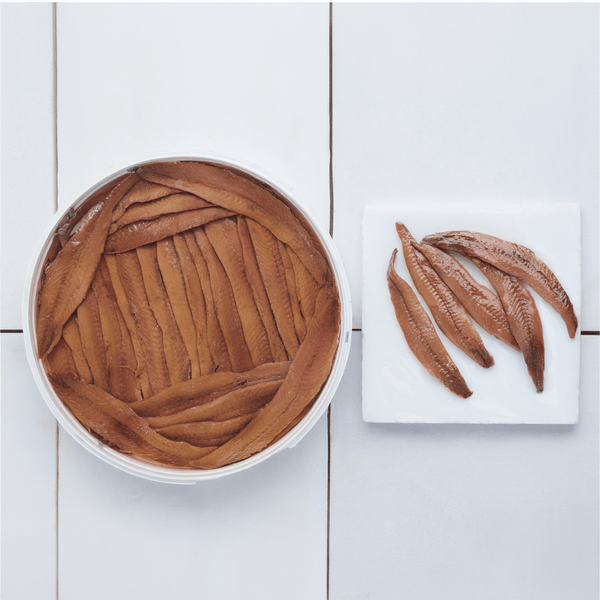
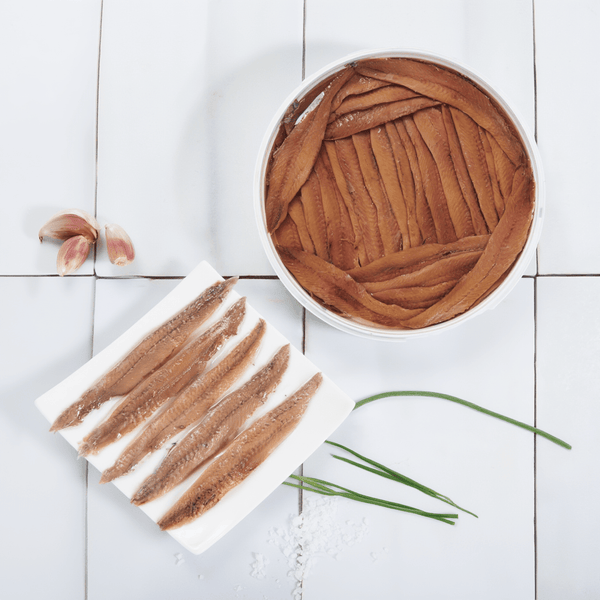
Quick answer: An unopened tin of anchovies lasts 18-24 months in a cool, dry, dark place. After opening: transfer the fillets to a glass container, cover completely with extra virgin olive oil, seal, and refrigerate. They will last 3-4 weeks. Never leave the open metal tin in the fridge — contact with air oxidizes the fillets and the metal imparts a metallic taste. If you buy anchovies in salt "for cleaning," they will last up to 5 years in their own brine.
Why preservation is key
Properly preserving anchovies is not a minor detail: it determines whether a good tin remains good on the second day or becomes a disposable product. Salt-cured anchovies are stable for months thanks to three factors: high salinity, low water activity, and oil that prevents contact with oxygen. If you alter any of these three, deterioration dramatically accelerates.
You pay €15-40 for a premium tin and then leave it open in the fridge. Three days later it smells off, the fillets darken, and the oil has a metallic taste. It's not the product — it's the storage. The good news is that proper preservation is very simple if you understand what to avoid.
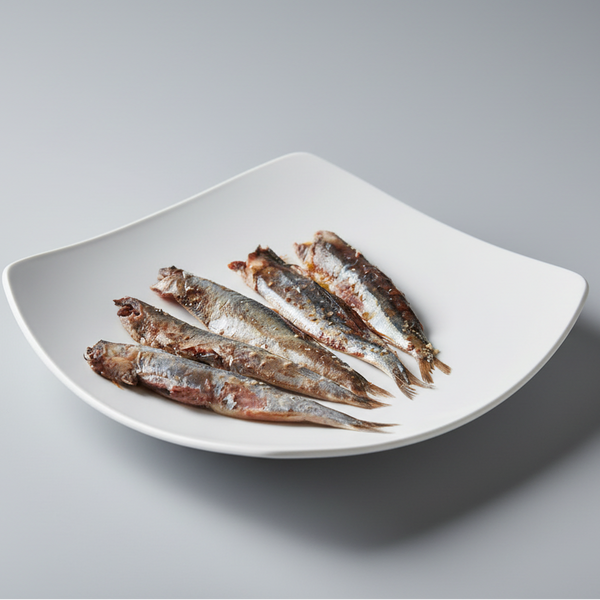
Before opening: unopened tin
A hermetically sealed tin of anchovies is very resilient. Optimal conditions:
- Temperature: between 12 and 18°C. Ideally a cool pantry. Some purists refrigerate them at 4°C; it's not necessary but doesn't harm either.
- Light: darkness. Direct light can oxidize the oil through transparency (in glass jars).
- Humidity: low. Metal tins can externally oxidize in humid places. Exterior oxidation does not affect the content, but it aesthetically spoils it.
- Position: horizontal preferred. Keeps the fillets covered by oil at all times.
- Duration: 12-24 months from packing. Check the best-before date. Some preserves improve during the first year.
A properly stored tin can last perfectly until the end of its best-before date. Some canneries (Codesa, La Cántabra) even certify longer periods under controlled conditions.
After opening the tin: step-by-step
This is where 90% of mistakes are made. The rule is radical: once the tin is opened, all fillets must be transferred to a glass container.
- Prepare a clean glass jar with an airtight lid. Appropriate size for the remaining fillets — there should be as little air as possible.
- Place the remaining fillets one by one in the jar. If you wish, intersperse a bay leaf or a raw garlic clove.
- Cover completely with EVOO. No fillet should be exposed. The oil should be at least 0.5 cm above the last layer.
- Seal, label with the date, and refrigerate between 2 and 8°C.
- Consume within 3-4 weeks. When removing fillets to use, ensure the remaining ones are still covered with oil.
You can use the oil from the original tin: add it to the jar or use it for cooking (mix with fresh EVOO to extend). If it was olive oil or EVOO, it is perfumed by the anchovy and is excellent for finishing dishes.
Leonardo Anchovies in olive oil 50g
Small format ideal for occasional consumption. Saves you from transferring — open and eat within a few days. €3.95.
Anchovies in salt "for cleaning": long-term preservation
Anchovies "in brine" or "for cleaning" are those that come whole (not filleted), covered in dry salt, sold in large tins or in bulk. They are the professional format used by restaurants and enthusiasts who want to clean the product before eating.
Their preservation is radically different from anchovies in oil:
- Duration: 3-5 years (yes, years) if kept covered in salt.
- Storage: in their original tin or jar. Cool and dry place. DO NOT refrigerate (the humidity of the refrigerator can liquefy the salt and degrade the product).
- If the salt level drops: add more coarse sea salt until they are covered again.
- Before eating: wash, remove skin, central bone, side bones, and preserve in EVOO in the fridge for 3-7 days, or consume immediately.
This is the professional way to buy anchovies: they last a long time, you prepare them yourself to your liking, and you ensure they are perfectly cured.
Can they be frozen?
Technically yes, but it is not recommended. Salt-cured anchovies do not need freezing for preservation, and freezing introduces problems:
- Fats crystallize and upon thawing, the fillet loses texture.
- The oil changes state and can separate.
- The flavor loses aromatic nuances.
Exception: anchovy compound butter does freeze well (form into rolls in film and freeze for up to 3 months). And homemade marinated anchovies (boquerones en vinagre) can be frozen for 24-48 hours to eliminate anisakis before marinating, but that is a food safety case, not preservation.
8 mistakes that ruin good anchovies
- Leaving the metal tin open in the fridge. The metal of the container oxidizes the fillet on contact. A metallic taste appears within 24 hours.
- Not completely covering the fillets with oil. The part exposed to air oxidizes and dries out.
- Using refined or sunflower oil for preservation. Only EVOO or olive oil. Sunflower oil does not preserve as well and provides a neutral flavor.
- Plastic jar. Only glass. Plastic absorbs odors and can release microplastics in hot oil.
- Handling with unwashed fingers. Introduces bacteria and shortens shelf life. Always use clean tongs or a fork.
- Mixing batches in the same jar. Each purchase can have different saltiness and curing. Mixing shortens shelf life and unbalances the flavor.
- Refrigerating anchovies in salt. The humidity of the refrigerator damages dry preservation.
- Storing an open tin for more than 1 hour at room temperature. Dairy products or anchovies in oil are not as delicate as fresh fish, but heat accelerates oxidation.
Signs they are spoiled
- Smell: intense fishy, sour, ammoniacal. A good anchovy smells like "cured cheese," not fish.
- Color: very marked darkening (grey-greenish) instead of the characteristic reddish-brown color.
- Texture: disintegrated, soft fillet that breaks upon touching.
- Oil: cloudy, thick oil or with white sediment.
- Taste: metallic, rancid, bitter taste. A good anchovy is salty + umami. Period.
- Bubbles or pressure in the tin: never consume. Indicates bacterial fermentation. Discard.
When in doubt, discard. Food poisoning from fish is not worth saving a tin.
Preserving homemade anchovies
If you have bought anchovies in salt "for cleaning" and filleted them yourself:
- Wash briefly under cold water to remove excess external salt.
- Dry with a clean cotton cloth. Important: dry fillet before oil.
- Transfer to a glass jar, layering the fillets.
- Cover with EVOO until it surpasses the last fillet.
- Optionally add aromatics: bay leaf, garlic, peppercorns. Don't overdo it.
- Seal and refrigerate.
- Wait 24-48 hours before consuming. The oil penetrates and softens the fillet.
- Duration: 2-3 weeks in the fridge.
Cantabrian Anchovies for cleaning
Caliber 10/11 in pure salt. For those who want to clean them at home and enjoy perfect fillets in their own oil. €5.95.
Frequently asked questions
How long do anchovies in oil last after opening?
3-4 weeks in the fridge if you transfer them to a glass container and cover them completely with EVOO. If you leave them in the open tin, 2-3 days maximum (and with the risk of metallic taste).
What oil to use for preservation?
EVOO (extra virgin olive oil) is the best option: it adds flavor, preserves well, and does not oxidize. Refined olive oil also works but adds less. Never sunflower or vegetable oil — they kill the flavor.
Can they be preserved in coconut oil or other oils?
It makes no gastronomic sense. EVOO is the historical medium for preserving anchovies and the only one that combines well with their flavor. Coconut oil would mask the umami and solidify in the fridge.
Is it safe to consume anchovies after the best-before date?
"Best-before" is not "expiration." After the date, they may lose flavor quality, but if the tin is not bulging and the appearance is normal, they are generally safe. Anchovies are not a microbiologically delicate product — salt is a very powerful natural preservative.
Why do some anchovies have a metallic taste?
Due to contact of the fillet with the open tin. The metal reacts with acids and salts from the fish. This is the main reason why they should be transferred to glass immediately after opening.
Can anchovies be left out of the fridge after opening?
No. Although salt is a preservative, once the container is opened, oxygen enters and alters the balance. Always refrigerate after opening. At room temperature: maximum 1-2 hours for serving.
Can other containers be used besides glass?
Glass is ideal: inert, does not absorb odors, does not react with salts or acids. Stainless steel also works if it is food-grade. Avoid plastic, aluminum, and unglazed ceramic.
Why do some anchovies turn greenish?
Due to fat oxidation. It is a clear sign of poor preservation or advanced deterioration of the product. A good anchovy maintains its reddish-brown color throughout its useful life. If they look greenish, discard them.
Discover our premium selection
Seafood products selected with care since 1990 at Mercat del Ninot, Barcelona. Refrigerated shipping in 24-48h.
Conclusion
Properly preserving anchovies is ridiculously simple: glass jar, EVOO completely covering the fillets, airtight lid, and fridge. If you do that, a premium tin lasts a month in perfect condition and you make the most of every fillet. If you leave the open tin in the fridge, you're not preserving — you're letting it slowly spoil.
And a final tip: buy the format you will consume. If you open a 50g tin, you'll eat it in 2-3 days without transferring. If you open a 200g tin and won't finish it in 3 weeks, two smaller tins are better. Formats are designed for different consumption patterns.
— Maria José Sáez Pastor
Cook with Catalan and Cantabrian tradition. Has been cooking with Cantabrian anchovies for 30 years.