Abstract: Cooking octopus seems simple until you try it and it turns out rubbery, tough, or mushy. Cooking octopus has its rules, and knowing them makes the difference between a perfect octopus—tender inside, with intact skin, and a slightly firm bite—and a textural disaster. In this guide, we will...
Cooking octopus seems simple until you try it and it turns out rubbery, tough, or mushy. Cooking octopus has its rules, and knowing them makes the difference between a perfect octopus—tender inside, with intact skin, and a slightly firm bite—and a textural disaster. In this guide, we will explain exactly how to cook octopus step-by-step, with precise times according to weight and all the tricks we have learned in more than thirty years working with seafood in the Mercat del Ninot.
If you are looking for the complete Galician-style octopus recipe with all its accompaniments, we have a Galician-style octopus "a feira" guide with a step-by-step recipe. Here we focus exclusively on the cooking technique: the water, the heat, the times, and the tricks to get it just right.
Before Cooking: Fresh or Frozen Octopus?
The first important decision is whether you are going to cook fresh or frozen octopus, because the preliminary process changes.
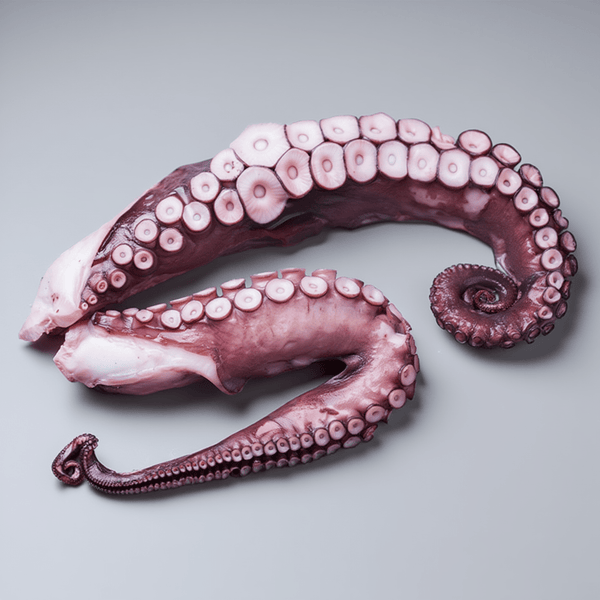
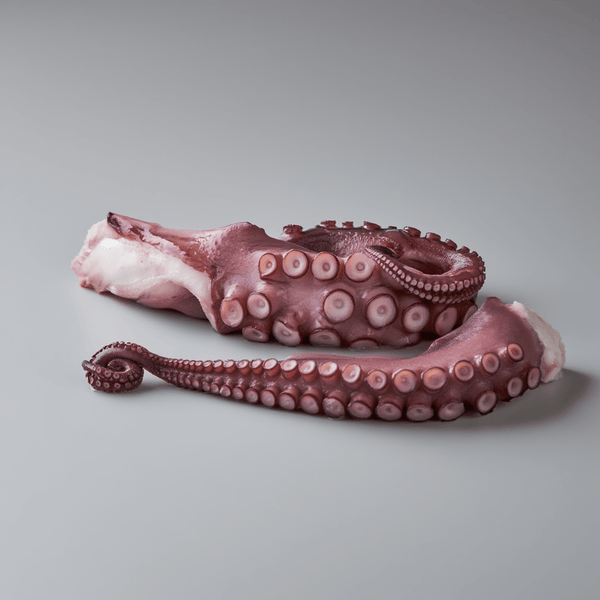
Frozen Octopus: The Most Practical Option
Freezing breaks down the muscle fibers of the octopus, which naturally tenderizes it. It's the mechanical equivalent of beating the octopus against rocks, but without the effort. That's why, paradoxically, a properly defrosted frozen octopus often turns out more tender than a poorly treated fresh one.
To properly thaw octopus, move it from the freezer to the refrigerator 24 to 36 hours before cooking. Never thaw it at room temperature or in the microwave: thawing should be slow and even so that the fibers relax uniformly. If you buy cooked Galician octopus, this step is already done because it comes ready to serve.
Fresh Octopus: Needs Preparation
If you are working with fresh octopus (not previously frozen), you have two options to tenderize it before cooking:
- Freeze it yourself: Put it in the freezer for at least 48 hours. Then, thaw it slowly in the refrigerator. This is the most reliable method.
- Beat it: Galician tradition dictates beating the octopus against a hard surface (stone, marble countertop) about 30-40 times. It is effective but laborious, and requires some practice to avoid destroying the tentacles.
Our advice: unless you have access to freshly caught octopus on the same day, always work with octopus that has been frozen. The result is more predictable and the texture is more uniform.
The Cooking Water: Quantity, Salt, and Temperature
The cooking medium is as important as the time. A mistake in the water can ruin an octopus that would have been perfect with the correct cooking.
How Much Water Do You Need?
The pot should be large enough for the octopus to be completely submerged with room to spare. The rule is to use at least 4-5 liters of water per kilo of octopus. With less water, the temperature drops too much when the octopus is introduced, and the cooking gets out of control.
With or without salt?
There are two schools of thought:
- Without salt (Galician tradition): Galician octopus vendors cook octopus in unsalted water. The argument is that salt hardens the octopus skin during cooking. Salt is added later, when serving.
- With salt (Mediterranean tradition): In Catalonia and the Mediterranean, salt is added to the water so that the octopus absorbs some of the flavor during cooking. The result is a more flavorful octopus but with slightly firmer skin.
Both methods work. If it's your first time, try without salt: it's harder to over-salt and the result is easier to control.
Cold water or boiling water?
The octopus is always introduced into water that is already vigorously boiling. Never in cold water. The reason is that the thermal shock of boiling water quickly contracts the octopus's skin, sealing it and preventing it from detaching during cooking. If you put the octopus in cold water and slowly bring it to a boil, the skin separates, and the result is a peeled octopus with a messy appearance.
The Three Scare Technique
This is the best-known step in cooking octopus and the one that generates the most questions. The three scares (or "tres asustadas") consist of submerging the octopus in boiling water and taking it out three times before leaving it in definitively.
How to Do the Three Scares Step-by-Step
- With the water at a strong boil, grasp the octopus by the head and submerge it in the water for 3-4 seconds. Take it out and wait for the water to boil again (about 10-15 seconds).
- Repeat: submerge it for another 3-4 seconds and take it out. Wait for it to boil again.
- Submerge it a third time and, this time, leave it in. Lower the heat to maintain a gentle simmer.
What are the three scares for?
The purpose is twofold:
- Controlled contraction: Each brief immersion gradually contracts the tentacles. If you submerge the octopus all at once, the tentacles curl unevenly and cooking is not uniform.
- Maintain temperature: By removing the octopus between immersions, you allow the water to return to a boil. This ensures that cooking begins at the correct temperature.
If your pot is very large and the octopus is small (less than a kilo), you can reduce the scares to two. If the octopus is large (more than three kilos), keep all three and even add a fourth if you notice the temperature drops too much.
Related products from Bacalalo

Octopus Cooking Times Table
Cooking time depends on the weight of the octopus and whether it was frozen or fresh. These times are for previously frozen and thawed octopus, which is the most common case. For fresh octopus never frozen, add an additional 3-5 minutes.
| Octopus Weight | Cooking Time | Resting in Water |
|---|---|---|
| 500 g - 800 g | 15 - 18 minutes | 10 minutes |
| 800 g - 1.2 kg | 18 - 22 minutes | 10 minutes |
| 1.2 kg - 1.5 kg | 22 - 25 minutes | 15 minutes |
| 1.5 kg - 2 kg | 25 - 30 minutes | 15 minutes |
| 2 kg - 2.5 kg | 30 - 35 minutes | 20 minutes |
| 2.5 kg - 3 kg | 35 - 40 minutes | 20 minutes |
| More than 3 kg | 40 - 50 minutes | 20 - 25 minutes |
Important: these times count from when the octopus is finally submerged (after the three scares) and the water gently boils again. Cooking should be over medium-low heat, with the water simmering gently, never at a rolling boil. A violent boil hardens the exterior before the interior is cooked.
Resting: The Step Almost No One Does
Once the cooking time has elapsed, do not remove the octopus immediately. Turn off the heat and let the octopus rest in the hot water for the time indicated in the table. This resting period is crucial because:
- Residual cooking finishes tenderizing the center of the thicker tentacles.
- Gradual cooling relaxes the fibers and achieves a more uniform texture.
- The skin adheres better to the meat, improving the final presentation.
If you remove the octopus directly from the boiling water, the fibers contract due to the abrupt change in temperature, and the result is a tougher octopus than necessary. Resting is the difference between a good octopus and a perfect octopus.
How to Check if the Octopus is Cooked
The most reliable indicator is to prick the thickest part of a tentacle with a toothpick or a thin knife. If it enters easily but with slight resistance—as if you were piercing firm butter—the octopus is perfectly cooked. If the toothpick enters without any resistance, the octopus is overcooked. If it's hard to pierce, it needs more time.
Another test: cut a small piece from the tip of a tentacle and taste it. The texture should be tender but with a bite, never rubbery or mushy.
Tips for Perfect Cooking
The cork trick: does it work?
Tradition says that adding a wine cork to the cooking water tenderizes the octopus. The reality is that there is no scientific evidence that the cork has any effect on the texture of the octopus. What is true is that many Galician cooks do it, and their octopus turns out perfect. But the reason is not the cork: it's that they master the timing and temperature.
That said, adding a cork doesn't hurt. If it gives you confidence, go for it. But it doesn't replace good cooking technique.
Add Bay Leaf and Onion
Two bay leaves and half an onion in the cooking water subtly flavor the octopus. It's not essential, but bay leaf adds a pleasant herbal note that pairs well with any subsequent preparation. The onion adds sweetness to the water.
Copper Pot
Galician tradition uses copper pots to cook octopus. Copper is an excellent heat conductor, ensuring a more uniform temperature throughout the pot. If you have a copper pot, use it. If not, a large stainless steel pot works perfectly.
Do Not Prick the Octopus to Check
Every time you prick the octopus to check if it's cooked, you create a hole through which some of the internal juices escape. One or two checks are fine, but if you continuously prick it, you'll end up with a dry octopus. Trust the times in the table and limit checks to a minimum.
What to Do After Cooking the Octopus
Once cooked and rested, the octopus is ready to serve or to incorporate into any recipe. The most common options:
- Pulpo a feira (Galician style): cut it with scissors into one-centimeter slices, arrange on a wooden plate, dress with extra virgin olive oil, sweet and hot paprika, and coarse salt. See our complete recipe for Galician-style octopus.
- Grilled octopus: once cooked, sear the octopus on a very hot grill or griddle for 30-60 seconds per side to achieve a lightly crispy exterior.
- Octopus salad: warm or cold octopus with boiled potato, red onion, green pepper, olive oil, and cider vinegar. If you like surf and turf combinations, add some scallops in scallop sauce on top for a gourmet homemade dish.
- Octopus in vinaigrette: slices of cooked octopus dressed with a vinaigrette of paprika, garlic, parsley, and Sherry vinegar.
If you are not going to consume the octopus immediately, you can store it in the refrigerator for up to 3 days in a closed container with a little of its cooking water to prevent it from drying out.
If You Prefer Not to Complicate Things: Pre-cooked Octopus
There isn't always time or desire to cook octopus from scratch. Our cooked Galician octopus with large legs comes ready to serve: perfectly cooked, with a tender texture and a clean sea flavor. You just need to take it out, cut it, and season it. It is the perfect option to enjoy perfect octopus without worrying about times or temperatures.
Frequently Asked Questions
Can octopus be cooked without freezing it first?
Yes, but the result is less predictable. Fresh octopus that hasn't been frozen needs to be beaten to tenderize the fibers (30-40 blows against a hard surface) or have its cooking time increased by an additional 3 to 5 minutes. Pre-freezing is the most reliable method to achieve a tender and uniform texture.
Does the cork trick really work?
There is no scientific evidence that a cork tenderizes octopus. Its effect, if any, is minimal compared to a good cooking technique (three scares, controlled temperature, resting). It doesn't hurt to add it, but it doesn't replace mastering the times and temperature.
How much water do I need to cook octopus?
At least 4-5 liters per kilo of octopus. The octopus should be completely submerged with ample space. If the pot is small and there is not enough water, the temperature drops too much when the octopus is introduced, and cooking becomes uncontrolled.
Can I cook octopus in a pressure cooker?
Yes. A pressure cooker reduces cooking times to approximately one-third: a 1.5 kg octopus that needs 25 minutes in a normal pot will cook in 8-10 minutes in a pressure cooker. The disadvantage is that you have less control over the exact doneness and cannot check during cooking.
How do I know if the octopus is overcooked?
An overcooked octopus falls apart when cut: the tentacles lose structure, the skin separates, and the texture is soft and watery. If a thick tentacle offers no resistance when pricked with a toothpick, it's overcooked. It's better to undercook it slightly and let the resting in hot water finish the job.
Can octopus be cooked and then frozen?
Yes. Cooked octopus can be frozen in portions for up to 3 months without significant loss of quality. Wrap it tightly in plastic wrap or freezer bags, removing as much air as possible. To thaw, transfer it to the refrigerator 12-24 hours before use.
Why "frighten" the octopus three times and not two or four?
Three is the number that tradition and practice have established as optimal for medium-sized octopuses (1-2 kg). With two "frights," the contraction may be insufficient for large octopuses. With four, temperature is unnecessarily lost. For small octopuses, two may be sufficient, and for very large ones, a fourth may be beneficial.
Does octopus shrink a lot when cooked?
Yes. Octopus loses between 30% and 40% of its weight during cooking. A 2 kg raw octopus will end up weighing approximately 1.2-1.4 kg once cooked. For 4 people as a main course, you need a raw octopus of at least 2 kg.
Related Bacalalo Products
🛒 Products mentioned in this article
⭐ 4.9/5 · Cold shipping 24-48h · Since 1990 at Mercat del Ninot
Conclusion
From Mercat del Ninot in Barcelona, we have been selecting the best seafood products for over 35 years. If this guide has been useful to you, explore our catalog at bacalalo.com and receive the same quality at home that we have been selling at the market since 1990.
Related guides
Discover more