Table of Contents
- What Mercadona offers in frozen fish
- Origin of their fish: where it really comes from
- Frozen cod vs. salted cod: different worlds
- Product and price table
- When Mercadona's frozen fish is worth it
- Premium alternatives: a different league
- Does Mercadona freeze fish or sell thawed fish?
- How to cook frozen hake (and which day to buy)
- Frequently asked questions
What Mercadona offers in frozen fish
Mercadona has one of the widest frozen fish catalogs in Spanish retail. Its strategy is clear: offer volume at an accessible price under its private label Hacendado, with a few branded products for specific references.
The frozen fish aisle in an average Mercadona includes:
- White fish: Cod fillets and loins, hake slices and fillets, pangasius, Nile perch, rosada
- Oily fish: Salmon loins and slices, mackerel
- Seafood: Prawns (various sizes), peeled shrimp, garlic prawns, Norway lobster tails, mussels, squid rings, cuttlefish, octopus
- Prepared foods: Hake sticks, fish nuggets, croquettes, surimi, crab sticks
Rotation is high — Mercadona moves 85% of its sales under the Hacendado brand and frequently changes suppliers based on price and availability. This means the same product can vary in quality from one quarter to another.
Origin of their fish: where it really comes from
This is where things get interesting. Legislation requires the origin to be indicated on the label, but many consumers don't read it.
Cod: Mainly from the Northeast Atlantic (Norway, Iceland) — FAO area 27. It's Gadus morhua, the correct species. So far so good. The problem: it's cod frozen on board (industrial capture) and then processed and re-frozen as fillets. The cold chain is long.
Hake: Mix of origins. European hake (Merluccius merluccius, FAO 27) coexists with Cape hake (Merluccius capensis, South Africa, FAO 47) and Argentine hake (Merluccius hubbsi, FAO 41). These are different species with distinct flavors and textures. European is superior; Cape and Argentine are cheaper and more watery.
Prawns: Argentina (Pleoticus muelleri) and Ecuador (Litopenaeus vannamei, aquaculture). Argentine prawns are wild and have an intense flavor. Ecuadorian are farmed, softer and more neutral. Argentine prawns are usually more expensive.
Salmon: Norway, aquaculture (Salmo salar). This is the industry standard. The problem with farmed salmon is well-known: use of antibiotics, dyes in feed (synthetic astaxanthin for pink color), and cage density. It's not that it's bad — it's just not comparable to wild salmon.
Pangasius and Nile perch: Vietnam and Lake Victoria, respectively. These are the cheap proteins on the shelf. Pangasius (Pangasianodon hypophthalmus) has been criticized for the level of contaminants in the Mekong waters. Perch (Lates niloticus) has a better profile but is an invasive species that has destroyed ecosystems.
Frozen cod vs. salted cod: different worlds
This is the point where 35 years of experience with cod give me the authority to be direct: frozen cod and salted cod are completely different products.
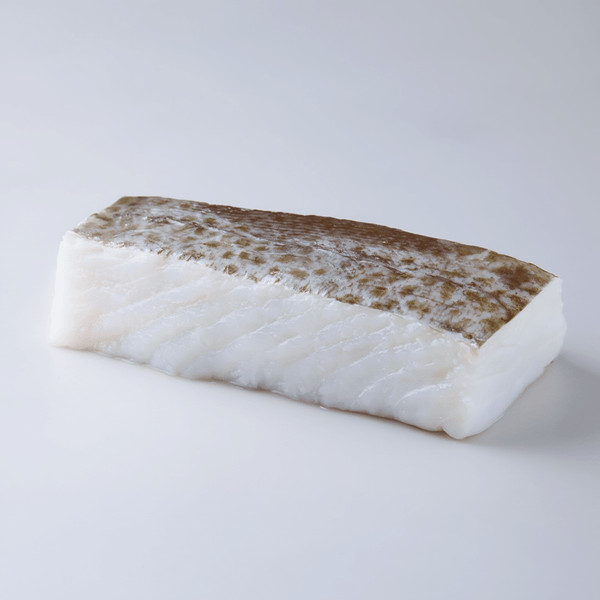
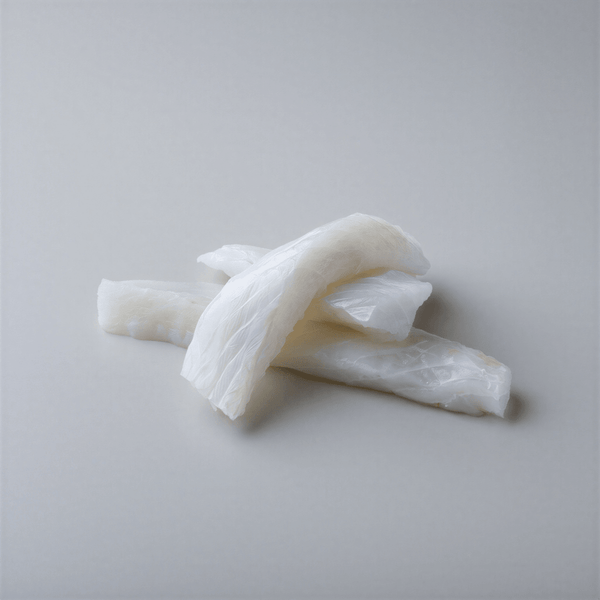
Mercadona's frozen cod is fish caught, processed into fillets, blast-frozen to -30/-40 °C, and maintained in a cold chain. When you thaw and cook it, you get a decent fish, somewhat watery, with a mild flavor. It's cod, yes — but it lacks depth.
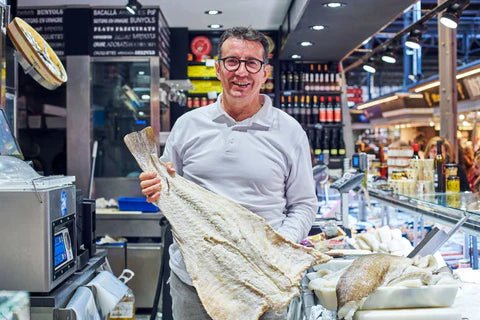
Salted cod (dry-salted) goes through a 3-6 month curing process with salt. During this process, proteins are partially denatured, the texture firms up, free amino acids increase (more umami), and aromatic compounds develop that do not exist in fresh fish. When desalted correctly (48-72 hours in cold water, changing 3-4 times), you get an incomparable texture and flavor.
| Characteristic | Frozen Cod (Mercadona) | Artisan Desalted Cod |
|---|---|---|
| Price per kg | 8-14 €/kg | 18-30 €/kg |
| Texture | Soft, somewhat watery | Firm, flaky, gelatinous |
| Flavor | Mild, neutral | Deep, umami, complex |
| For pil-pil | Does not work (does not gel) | Perfect — skin gelatin emulsifies |
| For fritters | Acceptable | Superior — more flavor |
| Water content | 80-82% | 65-72% |
| Shelf life | 12-18 months frozen | 3-5 days in fridge (desalted) |
Key fact: Bacalao al pil-pil ONLY works with salted cod. The gelatin from the skin of cured cod is what emulsifies with the oil to create the sauce. With frozen cod, there isn't enough denatured collagen, and the sauce doesn't bind. If you've tried to make pil-pil with frozen cod and it didn't work, now you know why.
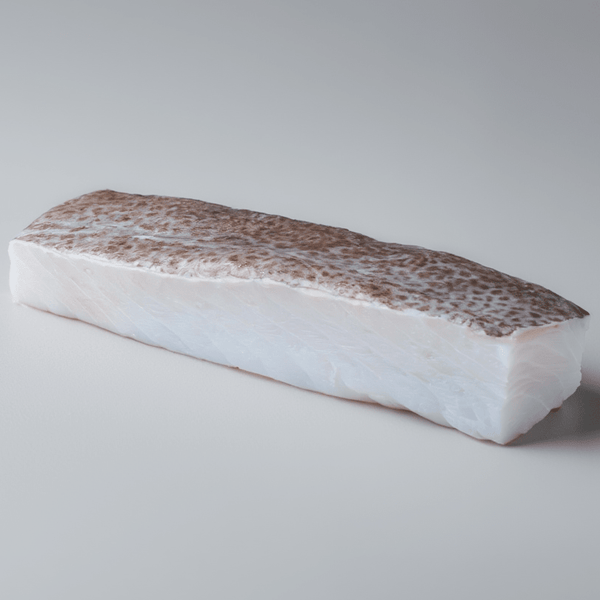
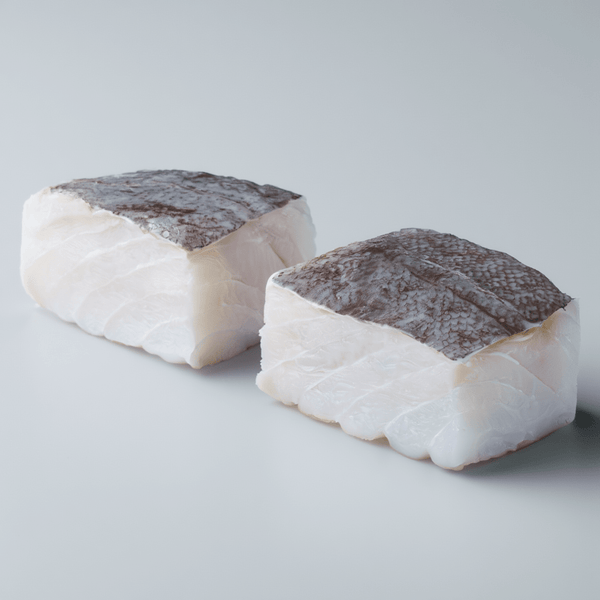
For traditional recipes like pil-pil, brandade, bacalao a la vizcaína, or fritters, you need salted cod. Our artisan desalted cod comes from Iceland, is slowly desalted, and arrives ready to cook. And if you prefer dry cod to desalt yourself: dry cod from Iceland.
Product and approximate price table
| Mercadona Product | Weight | Approx. Price | Actual €/kg | Quality |
|---|---|---|---|---|
| Frozen cod loins | 400 g | €5.50 | €13.75 | Correct |
| Hake fillets | 400 g | €3.80 | €9.50 | Variable by origin |
| Salmon loins | 400 g | €5.90 | €14.75 | Standard aquaculture |
| Argentine prawns | 800 g | €8.90 | €11.12 | Good (wild) |
| Ecuadorian prawns | 800 g | €6.50 | €8.12 | Medium (aquaculture) |
| Peeled shrimp | 400 g | €5.20 | €13.00 | Correct |
| Squid rings | 500 g | €3.50 | €7.00 | Correct |
| Cooked octopus | 500 g | €8.90 | €17.80 | Variable |
| Pangasius fillets | 400 g | €2.80 | €7.00 | Low |
Approximate prices at the beginning of 2026. They vary by store and season.
When Mercadona's frozen fish is worth it
I'm not anti-Mercadona. It's an efficient supermarket that serves a purpose. But you have to know when it's a good option and when it's not:
It's worth it:
- Argentine prawns: Probably the best product in its frozen lineup. Wild, good size, intense flavor. The quality-price ratio is excellent.
- Squid rings: For quick frying, they work well. They are pota (Dosidicus gigas), not rod-caught squid, but for breading, it's sufficient.
- Hake for stews: If the hake is going to be cooked in green sauce or similar, frozen works well — the sauce provides the flavor the fish lacks initially.
- Unpretentious daily meals: For a quick Tuesday dinner, a grilled hake fillet with salad is honest and nutritious.
It's not worth it:
- Cod for traditional recipes: Already explained — without salting, there's no pil-pil, no decent brandade, and no characterful fritters.
- Salmon for sashimi or tataki: Frozen farmed salmon doesn't have the fat or texture for quality raw consumption.
- Pangasius: It's cheap protein, but nutritionally poor (low in omega-3, possible contamination) and gastronomically sad.
- Any fish as a main course for an important dinner: If you're cooking to impress, you need fresh or quality cured product.
Premium alternatives: a different product league
Premium quality fish does not compete with Mercadona on price — it competes on experience. These are different categories, like a table wine versus a reserve.
Icelandic salted cod: The world's best raw material for cod. Iceland's cold waters produce cod (Gadus morhua) with more fat and gelatin than from other origins. Artisan desalted for 48-72 hours, it's a different product.
Gourmet preserves: A can of northern white tuna in extra virgin olive oil from a Cantabrian cannery can cost €8-15 for 120g. It seems expensive until you taste it and understand that those whole, pink, firm loins have nothing to do with shredded tuna in sunflower oil.
Artisan smoked fish: Artisan smoked salmon (salt-cured, oak-smoked for 8-12 hours) versus industrial smoked salmon (liquid smoke injection, 30 minutes) is the difference between listening to live music and through a mobile phone speaker.
If you want to make the jump from industrial frozen to artisan product, start here: Icelandic cod — raw material from the best origin in the North Atlantic, with full traceability from the fish market.
Keep exploring
More about Mercadona frozen products: frozen prawns · frozen clams · crab sticks (surimi) · frozen kokotxas vs artisan · frozen cod vs fresh vs salted
How to desalt cod correctly · Artisan desalted cod · Gourmet preserves · Smoked salmon
Does Mercadona freeze fish or sell thawed fresh fish?
One of the most common questions about Mercadona's frozen fish is whether what they sell in the frozen aisle is blast-frozen on board or if it's fresh fish that the chain freezes later. The correct answer for almost all of their frozen catalog is the former: it is blast-frozen at the source, usually on board the ship or at the processing plant, at -30/-40 °C shortly after capture. That's why, paradoxically, a good product blast-frozen at the source can retain its properties better than "fresh" fish that has been on display for days.
It's a different matter for fish at the fresh counter: some of what is sold as fresh has been previously frozen and thawed for sale (the label must indicate this with the mention "thawed"). If you plan to freeze it again at home, you should not refreeze fish that has already been thawed. Therefore, when your plan is to freeze, it is usually safer to buy the already blast-frozen product directly.
How to cook Mercadona's frozen hake (and which day to buy)
Mercadona's frozen hake is one of its best-selling products, and "how to cook it" is one of the most common searches. The most common mistake is cooking it while it still has water from thawing: it becomes watery and bland. Three rules that make a difference:
- Thaw in the refrigerator, on a rack, and never at room temperature: 8-12 hours. Then pat it dry thoroughly with paper towels before cooking.
- For stews and green sauce, frozen works well: the sauce provides the flavor and juiciness that the fish initially lacks.
- When pan-frying or baking, sear over high heat and don't overcook it: Cape hake (the most common in Mercadona) releases water easily.
Regarding which day to buy fish at Mercadona: at the fresh counter, the days with the most restocking are usually Tuesdays and Thursdays, so turnover is better first thing in the morning on those days. For frozen goods, the day doesn't matter — what's important is to check that the packaging doesn't have internal frost or ice blocks, which indicates a broken cold chain.
Frequently asked questions
Is Mercadona's frozen cod good?
It's fine for daily use — the species (Gadus morhua) and origin (North Atlantic) are good. But for recipes where cod is the star (pil-pil, brandade, fritters), you need salted cod. Frozen cod doesn't have the necessary texture, flavor, or gelatin.
Where does Mercadona's frozen fish come from?
It varies by product: cod from Norway/Iceland, hake from South Africa/Argentina/Europe, salmon from Norway (aquaculture), prawns from Argentina/Ecuador, pangasius from Vietnam. The exact origin appears on the label — always read it.
Is Mercadona's frozen fish safe?
Yes. It complies with all Spanish and European health regulations. Industrial blast-freezing (-30/-40 °C) eliminates the risk of anisakis and guarantees the cold chain. The problem is not safety — it's organoleptic quality.
Why does frozen cod release so much water?
Frozen cod has a water content of 80-82%. When thawed, some of that water (which was in the form of ice crystals within the fibers) is released. Salted cod, after curing and desalting, has 65-72% water and a firmer muscle structure that retains juices better.
Does Mercadona sell desalted cod?
Mercadona sells frozen cod in fillets and loins. It does not sell salted cod or artisan desalted cod. These are products of another category that you will find in market fishmongers, specialty stores, or online stores like ours.
Which Mercadona frozen product do experts recommend?
Argentine prawns are probably the best frozen product in their lineup: wild, good size, and competitive price. Squid rings for frying also work well. In general, Mercadona's frozen seafood yields better results than its white fish.