Table of contents
Types of clams available at Mercadona
Mercadona works with several clam species, although the labeling doesn't always make it clear to the average consumer.
Japanese or Manila clam (Ruditapes philippinarum): This is the most common type you'll find in the frozen and fresh aisles. It's not a Galician or native clam — it was introduced to Europe from Asia in the 1970s for aquaculture. Today, it dominates the market due to its competitive price and good adaptation to cultivation farms. Mild flavor, good texture.
Grooved carpet shell or fine clam (Venerupis corrugata): Occasionally appears in the fresh aisle. It is native and of higher quality than the Japanese clam. More expensive, more flavorful, with a more pronounced iodine taste.
Frozen clams (bag): Usually Chilean clams (Venus antiqua) or Vietnamese clams. These are the cheapest but also release the most water when cooked. They come pre-cooked and frozen — already open inside the bag.
| Type | Species | Origin | Approx. price | Quality |
|---|---|---|---|---|
| Frozen (bag) | Venus antiqua / mixed | Chile, Vietnam | 6-9 €/kg | Low-medium |
| Fresh Japanese | Ruditapes philippinarum | Galicia, Portugal | 10-15 €/kg | Medium |
| Fresh Fine | Venerupis corrugata | Galicia | 18-30 €/kg | High |
| Carril (reference) | Ruditapes decussatus | Ría de Arousa | 30-50 €/kg | Premium |
Fresh vs. frozen: the difference that matters
Fresh and frozen clams offer completely different gastronomic experiences. Understanding the difference will save you from disappointment:
Fresh clams:
- Alive when you buy them (shells should be closed or close when touched)
- Release their juices during cooking — this liquid is gold for sauces
- Firm, slightly elastic texture
- Concentrated sea flavor
- Open when cooked (those that don't open should be discarded)
Frozen clams:
- Pre-cooked and already open — you just need to heat them
- Release a lot of water when thawed (glaze water + process water)
- Softer texture, sometimes rubbery if overcooked
- Muted flavor — industrial washing removes some of the iodine
- You can't use the "rule of those that don't open" because they are already open
The verdict: For a marinara or steamed clams where the clam is the star, you need fresh. No debate. For rice, fideuá, or a sauce where the clam provides background flavor, frozen works. The price difference (6-9 €/kg vs 15-30 €/kg) explains when each option makes sense.
How to thaw frozen clams without ruining them
Frozen clams come pre-cooked, so the goal of thawing is not to "prepare them" — it's to remove excess water without overcooking them.
Method 1 — Refrigerator (recommended): Place frozen clams in a colander over a bowl in the refrigerator. Leave for 6-8 hours. The glaze water and any water they release will drip into the bowl. The result: thawed clams with minimal texture loss.
Method 2 — Direct to pan: This works if you're adding them to a stew, rice, or hot sauce. Add frozen clams directly to the hot liquid. The extra water will incorporate into the broth. Be careful: it will lower the stew's temperature, so momentarily increase the heat.
Method 3 — Cold water (quick): Place the closed bag in a bowl of cold water for 30 minutes. Drain well before using.
NEVER: Thaw in the microwave. Clams cook unevenly — some become rubbery while others remain frozen. Also, do not let them thaw at room temperature for more than 2 hours — seafood is one of the foods with the highest risk of bacterial growth.
Recipe: Clams à la marinera (with frozen or fresh)
Ingredients (4 servings):
- 1 kg clams (purged fresh or thawed frozen)
- 4 cloves garlic, thinly sliced
- 1 dried chili (or half if you don't want it spicy)
- 150 ml dry white wine
- 3 tablespoons EVOO
- 1 tablespoon flour (optional, for thickening)
- Fresh parsley, chopped
- Salt (in moderation — clams are already salty)
With fresh clams:
- Heat EVOO over medium heat in a wide pot. Sauté sliced garlic with chili for 1 minute (do not burn).
- Increase to high heat. Add clams and white wine. Cover.
- In 3-5 minutes, the clams will open. Remove opened clams to a plate.
- Reduce the liquid for 2 more minutes. If you want a thicker sauce, add flour dissolved in a little broth.
- Return clams to the pot, sprinkle with parsley, and serve immediately with bread for dipping.
With frozen clams:
- Follow steps for fresh clams until garlic and chili.
- Add wine and reduce for 1 minute.
- Add thawed and drained clams. Heat for 2-3 minutes over medium heat — no longer. They are already cooked and only need to be warmed through.
- Parsley and serve. If the sauce is watery (frozen clams release liquid), reduce over high heat for 1 minute before adding the clams.
Cooking time chart by preparation
| Preparation | Fresh clams | Frozen clams | Notes |
|---|---|---|---|
| À la marinera | 3-5 min (until open) | 2-3 min (just heat) | High heat, covered |
| Steamed | 4-6 min | Not recommended | Only fresh for this technique |
| In rice / paella | Last 5 min | Last 3 min | Add at the end to avoid overcooking |
| In fideuá | Last 5 min | Last 3 min | On the surface, covered |
| In green sauce | 5-7 min in sauce | 3 min in sauce | Do not boil — meat will toughen |
| Pan-fried with garlic | 3-4 min | 2 min | High heat, uncovered |
Golden rule: Frozen clams are already cooked. Every extra second of heat overcooks them. If clams are rubbery or chewy, it's because you've cooked them too much. Always add them at the end of preparation.
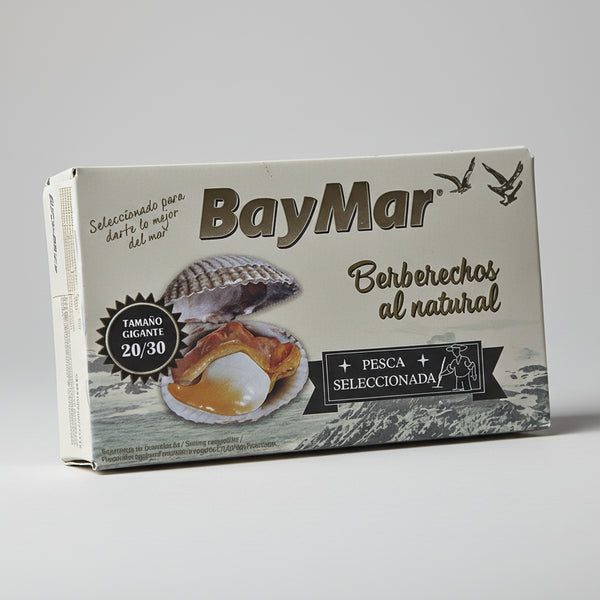
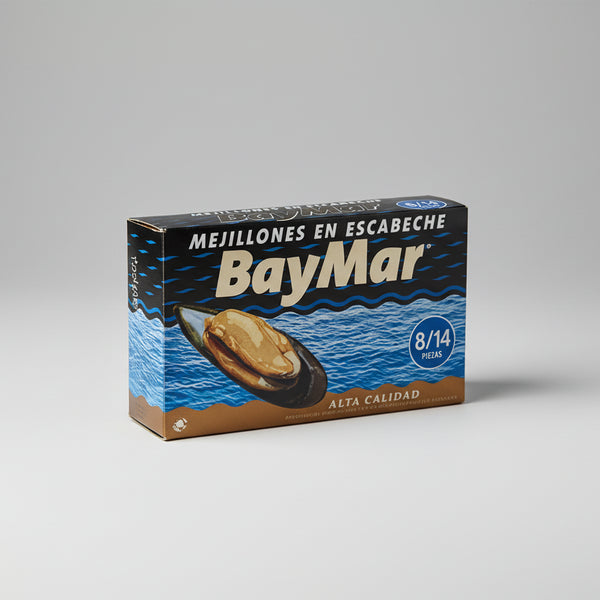
If you're looking for quality seafood for your recipes without the hassle of clams, explore our gourmet preserves collection: natural cockles, pickled mussels, and more — ready to enjoy, caught in season.
Purging clams: necessary or not?
There's a lot of confusion here. Let's clarify:
Fresh clams: YES, they need purging. Live clams filter water and accumulate sand inside their shells. If you don't purge them, your marinara will have a sandy crunch. Method: Submerge them in cold saltwater (35 g salt per liter — simulates seawater) for 2-4 hours in a cool place. The clams will spit out the sand and replace it with clean water. Change the water 2-3 times.
Frozen clams: NO need to purge. They are already industrially processed — washed, pre-cooked, and frozen. The sand has been removed at the factory. Purging frozen clams is unnecessary and counterproductive (they reabsorb water and lose flavor).
Flour trick: Some recipes suggest adding a tablespoon of flour to the purging water. The theory is that flour irritates the clams and makes them expel more sand. The reality is that there's no solid scientific evidence that it works better than saltwater alone. It doesn't harm, but probably doesn't help either.
Keep exploring
Properties of mussels · Frozen fish at Mercadona · Canned cockles · Gourmet preserves
Frequently asked questions
Do Mercadona's frozen clams need to be purged?
No. Frozen clams are already industrially washed and pre-cooked. They do not contain sand. Purging them is unnecessary and causes them to reabsorb water, diluting their flavor.
Can frozen clams be eaten directly?
Frozen clams are pre-cooked, so they are technically safe. But eating them cold is not pleasant — the texture is rubbery. Heat them briefly (2-3 minutes) in a pan or by adding them to a hot dish.
Why do frozen clams release so much water?
Due to glazing (protective ice layer) and because freezing breaks muscle cells, releasing intracellular water upon thawing. This is normal. Drain well before cooking or incorporate that water into the broth if you are making rice.
How many clams do I need per person?
As a starter or tapa: 250 g of clams in shell per person. As an ingredient in rice or fideuá: 150-200 g per person. Keep in mind that the shell accounts for 60-70% of the weight — the actual edible meat is only 30-40%.
Are frozen clams suitable for making rice?
Yes, they work well in rice dishes and fideuás. Add them in the last 3 minutes of cooking; they are already cooked and only need to be warmed. The liquid they release will incorporate into the rice broth.
How do I know if a fresh clam is bad?
A bad fresh clam: the shell is open and does not close when tapped, it smells of ammonia, or the meat is brownish/blackish. A fresh clam should be closed (or close when touched), smell of the sea, and have white-cream colored meat. After cooking, discard any that have not opened.