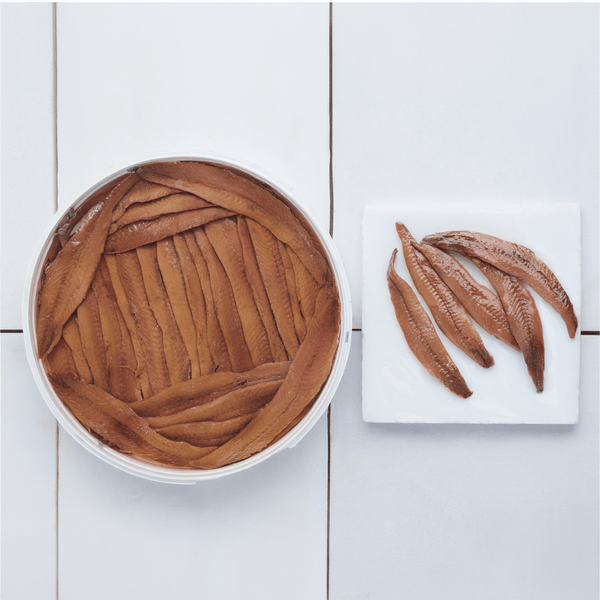
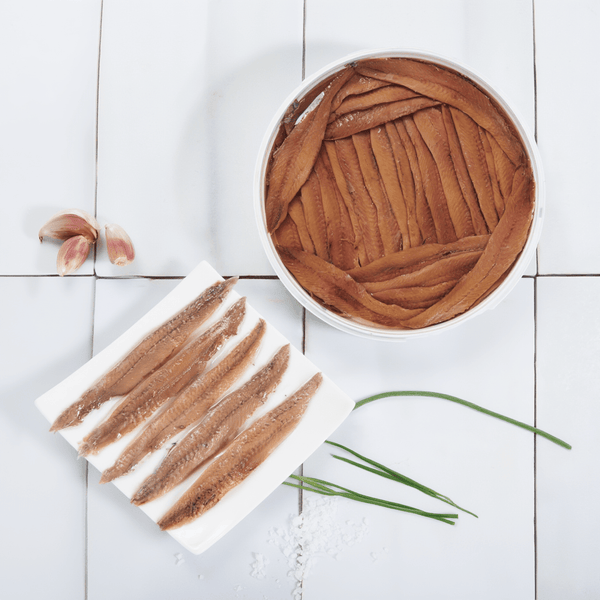
Summary: Anchovy pasta is one of the most underrated dishes in Italian cuisine. With simple ingredients and 20 minutes of preparation, it yields results that defy much more complex elaborations. In this article, we present 5 Italian anchovy pasta recipes — from the classic aglio, olio e peperoncino with anchovies to pasta alla puttanesca and the version with toasted breadcrumbs from the Sicilian tradition — with precise instructions, technical explanations of why each combination works, and criteria for choosing the right anchovy.
Why Anchovies Make Pasta Better
Updated March 2026. Based on our 30+ years of experience at Mercat del Ninot, this is what we recommend.
Pasta with anchovies produces one of those culinary results where the whole is much greater than the sum of its parts. It's not about the pasta tasting like anchovy — it's about the anchovy, when it dissolves in hot oil, releasing the glutamate and fatty acids from its curing, and these compounds act as flavor enhancers for everything else in the dish.
Italian cooks talk about the "fondo" of a sauce — the depth of flavor that turns something simple into something complex. In Southern Italian cuisine, especially in Campania, Sicily, and Puglia, anchovies are the ultimate "fondo." A golden garlic clove in oil with two dissolved anchovies creates a flavor base that would require hours of broth reduction to achieve a similar level.
At Bacalalo, we have been selecting anchovies for 35 years at Mercat del Ninot in Barcelona. The recipes presented here are representative of Italian culinary tradition and have been adapted taking into account the availability of ingredients in Spain.
How to Choose the Right Anchovy for Pasta
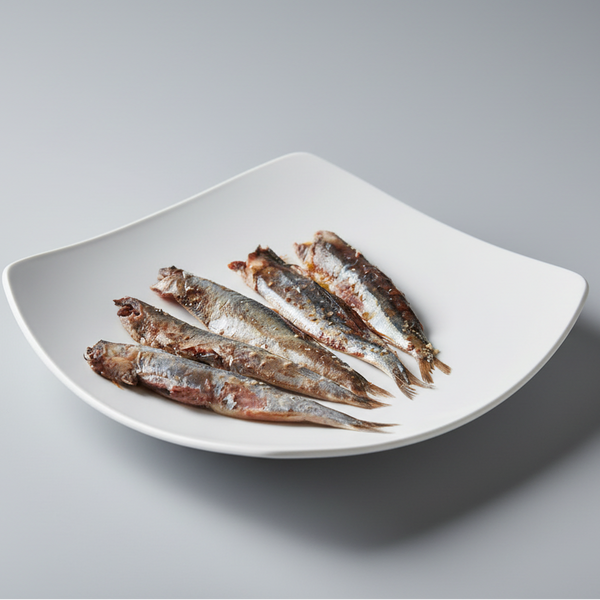
For cooking pasta, you don't need the largest or most expensive anchovies on the menu. Anchovies used in hot cooking serve a different purpose than anchovies for appetizers: their job is to dissolve in the oil and add flavor, not to be a visual protagonist.
The most suitable formats for pasta are menu-sized anchovies (small and mixed fillets), size 0, or size 1. If you have a jar of Gourmet Selection at home that you use for appetizers, you can perfectly take two or three fillets for pasta without a problem — quality equally benefits the culinary result. But for intensive use in the kitchen, more economical formats are reasonable.
Anchovies for pasta should be in olive oil (not sunflower) and cured for at least 8-10 months. Industrial anchovies with short curing times and high sodium produce excessively salty sauces without the complexity that comes from long curing.
Recipe 1: Spaghetti Aglio, Olio, Peperoncino e Alici
The base recipe for Neapolitan late-night pasta, enriched with anchovies. In Naples, this is the dish made at two in the morning when the kitchen is empty but hunger is not. The anchovy version is what professional chefs make at home — it's what they crave after service.
Ingredients for 2 people:
- 180 g spaghetti (No. 5, good quality durum wheat pasta)
- 4 tablespoons extra virgin olive oil
- 3 cloves garlic, sliced
- 1 dried chili (or half a teaspoon of chili flakes)
- 4 Cantabrian anchovy fillets
- Fresh chopped parsley
- Pasta cooking water (reserve one glass)
Preparation: Cook the pasta in plenty of salted water (the water should taste like the sea). In a large skillet, heat the olive oil over medium heat. Add the sliced garlic and chili. When the garlic begins to brown (do not burn), add the anchovy fillets and press them with a wooden spoon until they completely dissolve in the oil — 2-3 minutes. The oil becomes aromatic and intense. Drain the pasta al dente, reserving a glass of the cooking water. Add the pasta to the skillet with the oil, add a splash of the cooking water, and sauté for 1-2 minutes so the pasta soaks up the flavored oil. Off the heat, add the parsley.
The trick that makes it different: the starchy pasta cooking water acts as an emulsifier between the oil and water. Adding it allows the oil to form a kind of light creaminess that coats each strand of pasta. Without the cooking water, the pasta would be oily and separated.
Recipe 2: Pasta alla Puttanesca
Puttanesca is the most flavorful Italian sauce in the repertoire and also the one that generates the most historical debate. Originating in Naples (though Rome also claims it), it has a combination of ingredients that seems deliberately designed to maximize umami: tomato, capers, black olives, garlic, and anchovies.
Ingredients for 4 people:
- 400 g spaghetti or penne rigate
- 400 g canned peeled tomatoes (good quality)
- 5-6 Cantabrian anchovy fillets
- 100 g pitted Kalamata black olives
- 2 tablespoons drained capers
- 3 cloves garlic, minced
- 1 chili pepper
- 5 tablespoons extra virgin olive oil
- Dried oregano
Preparation: In a large skillet, heat the oil with the garlic and chili over medium heat. When the garlic begins to color, add the anchovy fillets and dissolve them. Add the tomatoes (crush them by hand for irregular pieces, do not use finely crushed tomatoes). Let simmer for 15 minutes over medium heat. Add the capers and olives, cook for 5 more minutes. Do not add salt — the capers, olives, and anchovies have enough sodium. Cook the pasta al dente, drain, reserving cooking water, mix with the sauce. Oregano at the end.
Puttanesca does not contain cheese. In Southern Italian tradition, pasta with fish or seafood is not combined with cheese. The reason has gastronomic coherence: cheese has its own tannins and proteins that compete with the flavor of fish. Without cheese, the flavor of anchovies and capers comes through cleaner and more directly.
Recipe 3: Sicilian Anchovy Pasta (with Breadcrumbs and Raisins)
This is the most unusual recipe on the list for the Spanish palate, and the most revealing about the complexity of Sicilian cuisine. The combination of anchovies with raisins and breadcrumbs is an Arab heritage — Arabs dominated Sicily for two centuries in the Middle Ages and left a taste for sweet-and-savory in the island's cuisine.
Ingredients for 4 people:
- 400 g bucatini or spaghetti
- 6-8 Cantabrian anchovy fillets
- 50 g sultana raisins (soaked 15 minutes in warm water)
- 50 g pine nuts
- 4 tablespoons coarse breadcrumbs
- 4 tablespoons extra virgin olive oil
- 2 cloves garlic
- Saffron threads (optional but authentic)
Preparation: Toast the breadcrumbs dry in a skillet until golden and crispy. Set aside. In the same skillet, heat the oil, brown the garlic, dissolve the anchovies. Add the pine nuts and lightly brown. Add the drained raisins and the saffron dissolved in a tablespoon of hot water. Cook the pasta, drain, mix with the sauce. Serve with plenty of toasted breadcrumbs on top — in Sicily, breadcrumbs ("muddica") are the "cheese" of the south, the humble people's answer to the Pecorino pastas of the north.
Recipe 4: Pasta with Anchovy Butter and Lemon
The most elegant version on the list. Anchovy butter is described in detail in our article on anchovies in butter: the perfect appetizer recipe. Used in pasta, it produces a dish that lies between Italian simplicity and the elegance of French cuisine.
Ingredients for 2 people:
- 180 g tagliolini or linguine
- 3 tablespoons anchovy butter (prepared beforehand)
- Zest of one lemon
- Juice of half a lemon
- Grated Parmesan (in this recipe, exceptionally, cheese works)
- Parsley or chives
Preparation: Cook the pasta al dente. Reserve a glass of cooking water. In a large bowl or in the skillet off the heat, place the cold anchovy butter cut into pieces. Add the hot pasta on top. Mix quickly with the cooking water until the butter melts and forms a cream that coats the pasta. Add the lemon zest and juice. Parmesan to serve.
Lemon is the acidic counterpoint that balances the richness of the butter and enhances the marine flavor of the anchovy. Without lemon, the dish is heavier. With it, it has freshness.
Recipe 5: Pasta with Anchovies, Broccoli, and Garlic
The most nutritious and everyday version on the list. Broccoli has a slightly bitter taste that contrasts well with the saltiness of the anchovy, and its texture when lightly cooked adds body to the dish without the need for any elaborate sauce.
Ingredients for 4 people:
- 400 g orecchiette or penne
- 1 medium broccoli, separated into florets
- 6 Cantabrian anchovy fillets
- 4 cloves garlic, sliced
- Chili flakes
- 5 tablespoons extra virgin olive oil
- Pecorino or Parmesan cheese for serving
Preparation: Cook the broccoli in the same water where you will cook the pasta, for 3-4 minutes. Remove with a slotted spoon and set aside. Cook the pasta in the same water (the water absorbs the flavor of the broccoli, which adds complexity). In a skillet, heat oil, brown garlic, dissolve anchovies. Add the broccoli and sauté for 2-3 minutes, crushing some florets so they integrate with the sauce. Mix with the pasta, add cooking water if necessary to bind. Serve with cheese and chili.