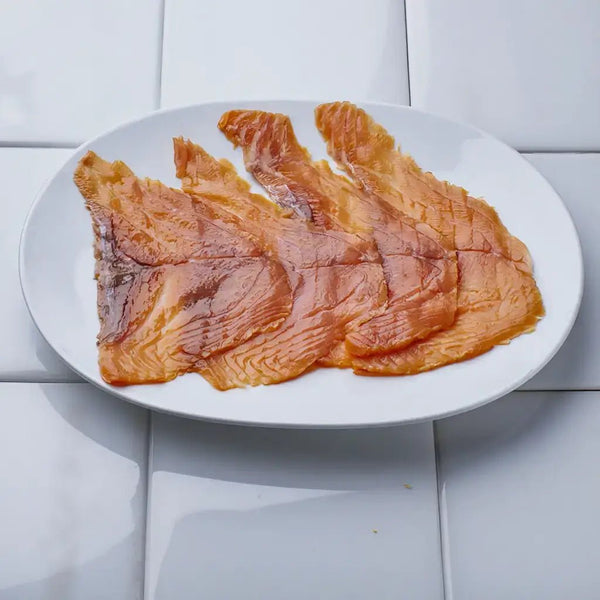


Smoked Fish: Types, Production Process, and How to Choose the Best
Smoked fish is one of the most prized ingredients in the gourmet pantry, but also one of the most misunderstood. The difference between exceptional smoked fish and mediocre smoked fish is vast, and it's not always easy to identify it on the supermarket shelf or in an online product description. This guide explains everything you need to know: what types of smoked fish exist, how the smoking process works (and why it matters), what signs to look for to choose a quality product, and how to use each type in cooking.
What is smoking and what is it used for?
Updated March 2026. After decades of working with seafood, we've learned that quality makes all the difference.
Smoking is one of the oldest food preservation and preparation techniques known to humanity. It involves exposing food, previously cured in salt or brine, to smoke generated by the slow combustion of wood and aromatic plants. Smoke provides three things to the product: flavor and aroma, antibacterial action (the phenolic compounds in smoke inhibit microbial growth), and, in the case of hot smoking, heat treatment that extends the product's shelf life.
In fish, smoking has an additional effect: the compounds in the smoke interact with the fish's proteins and fats, creating new aromatic molecules that do not exist in raw fish or fish cooked in other ways. That's what makes smoked salmon taste different from pan-seared salmon even if both come from the same fish: smoking creates a genuinely new flavor profile.
The two fundamental types of smoking: cold and hot
The most important distinction in fish smoking is between cold smoking and hot smoking. These are two distinct processes that produce completely different results.
Cold smoking
In cold smoking, the fish is exposed to smoke at a temperature between 20 and 30 degrees Celsius, never exceeding 35 degrees. At these temperatures, the fish proteins do not denature (the fish does not "cook"), and the product retains a raw, soft, and moist texture.
Cold-smoked salmon is the most common and prized example of this process. The thin slices of cold-smoked salmon we know as a typical appetizer and brunch ingredient are all made by cold smoking. The process typically lasts between 12 and 24 hours, with the fish exposed to smoke in a chamber where the temperature is precisely controlled.
Cold smoking requires top-quality raw material because there is no heat treatment to "correct" fish defects. A second-quality salmon cold-smoked remains so after the process. An exceptional salmon cold-smoked yields an exceptional product.
Hot smoking
In hot smoking, the fish is exposed to smoke at temperatures between 70 and 120 degrees. At these temperatures, the fish cooks completely while being smoked. The resulting texture is similar to that of cooked fish: flaky, without the laminar smoothness of cold smoking.
Hot-smoked trout, hot-smoked mackerel, and smoked herring (kipper) are common examples of hot smoking. These products have a longer shelf life than cold-smoked products and are used differently in cooking: to crumble over salads, to incorporate into pâtés and creams, or to cook in pasta.
The most important types of smoked fish
Smoked salmon
The undisputed king of smoked fish. Atlantic salmon (Salmo salar) of Norwegian, Scottish, or Irish origin is most frequently used for cold smoking. Its high intramuscular fat content (between 10 and 15% of its weight) makes it the ideal fish for cold smoking: the fat acts as a vehicle for the aromatic compounds of the smoke and as protection during the process, preventing the fish from drying out.
The differences between quality smoked salmon and industrial smoked salmon are considerable:
- Quality: Premium salmon uses fish raised in cold, low-density waters, with quality feed. Industrial salmon uses fish from intensive farms with a higher percentage of water and a lower percentage of fat.
- Smoking: Artisan smoking uses noble wood chips (oak, alder, beech) for 12-24 hours. Industrial smoking can use liquid smoke (a chemical extract), which is faster and cheaper but results in a superficial and artificial smoke flavor.
- Cut: Artisan salmon is sliced by hand or with controlled-blade knives. Industrial salmon is machine-cut into uniform slices but with more breakage.
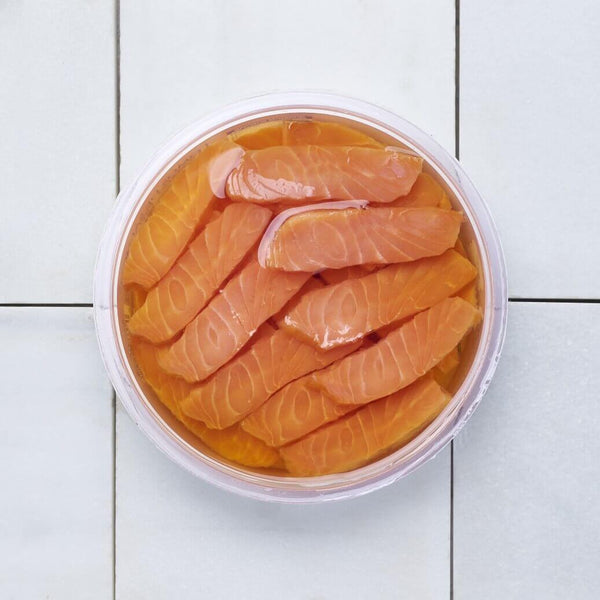
At Bacalalo, you will find premium smoked salmon fillets and practical 100g Dominguez smoked salmon slices for everyday use. For sushi or tartare preparations, the 150g smoked salmon sashimi comes in the perfect thickness.
Smoked trout
Smoked rainbow trout (Oncorhynchus mykiss) is the second most common smoked fish in the Spanish pantry. It is mainly hot-smoked, which yields a flaky product with a milder, less fatty taste than salmon. Hot-smoked trout is classically used in pâtés, spreads, scrambled eggs, and salads where cold-smoked salmon would not work well due to its texture.
Smoked mackerel
Hot-smoked mackerel (Scomber scombrus) is a product of great gastronomic value that is underutilized in Spanish cuisine. With an omega-3 content higher than salmon, smoked mackerel has an intense, marine flavor that can be dominant for unaccustomed palates, but in the right context (salads with acidic and fresh elements, on bread with mustard and gherkin) it is extraordinary. It is one of the most nutritious and lowest-cost products in the world of smoked fish.
Smoked herring (kipper)
Smoked herring or kipper is a classic British and Irish breakfast staple that has a marginal presence in Spanish gastronomy but deserves more attention. Herring is smoked cold or with a combination of cold and hot smoking, resulting in a product with an intermediate texture. Its flavor is intense, salty, and with characteristic smoky notes that make kipper an ingredient with a distinct personality. With scrambled eggs and toasted butter, it's a combination that the British have known well for centuries.
Smoked eel
Hot-smoked European eel (Anguilla anguilla) is considered by many leading chefs to be the best smoked fish in the world. Its exceptionally high fat content (between 20 and 30%) makes it extraordinarily juicy even after the smoking process, and its flavor is incomparably rich and complex. Smoked eel is common in the Netherlands, northern Germany, and Japan (where it is known as unagi and is one of the most prized ingredients in sushi). In Spain, it is difficult to find but not impossible in specialized stores.
Smoked salmon from other species
In addition to Atlantic salmon, there are smoked salmon versions from other Pacific species:
- Chum salmon (keta): less fatty than Atlantic, with a milder flavor. Its roe (the premium Keta roe) is the most prized on the market.
- Chinook salmon (king): the fattest and largest. Its cold smoking produces the product with the richest flavor but also the highest price.
- Pink salmon: the least fatty and lowest priced. Its smoking yields a drier and less flavorful product than Atlantic.
Smoking woods: how fuel changes flavor
The type of wood used to generate smoke is one of the factors that most influences the final profile of smoked fish, although it is one of the least known by the non-specialized consumer.
- Alder: the classic Scottish and Irish wood for smoked salmon. It produces a mild, slightly sweet smoke with nutty notes. It is the historical reference for quality Scottish smoked salmon.
- Oak: more intense and complex smoke, with vanilla and tannin notes. Widely used in meat smoking and for some fatty fish. With salmon, it creates a more powerful and "old world" profile than alder.
- Beech: balanced and neutral smoke, widely used in Central European smoking traditions. It produces a clean smoke without dominant specific notes.
- Cherry or fruit wood: sweet and slightly fruity smoke. It gives the fish a more delicate and aromatic profile. Less common but highly appreciated in artisanal smoking.
- Liquid smoke: Not a wood but a chemical extract of smoke. Its use indicates low-cost industrial production. It produces a superficial smoke with a simplified aromatic profile that cannot compare to natural chamber smoking.
How to choose quality smoked fish: the practical guide
When buying smoked fish, these are the factors to evaluate:
The smell: the first sign
Good smoked fish smells of natural smoke: wood, home, something with body and roundness. Industrial smoked fish smells of "chemical smoke": a flat, pungent, artificial note that lacks the complexity of real smoke. If the first scent you perceive is chemical or artificial, it's an indicator of low quality.
The color: natural vs. artificially colored
Quality smoked salmon has a natural orange-pink color, with variations between pieces and clearly visible streaks of white fat. Industrial salmon tends to have a uniform and bright orange-red color that reveals the use of food colorings (excess synthetic astaxanthin). Homogeneous color is suspicious: natural salmon has variations.
The texture: firm, not sticky
A slice of quality smoked salmon has a certain firmness: it maintains its shape when lifted, it doesn't flop limply or fall apart into fibers. The surface should be slightly moist but not sticky. A sticky texture can indicate excess moisture (lower quality salmon with higher water content) or spoilage.
Label ingredients
The label of good smoked salmon should have few ingredients: Atlantic salmon, salt, and possibly a small amount of sugar for curing. The best artisanal smoked products literally have two or three ingredients. If the ingredient list includes several additives (E-xxx), multiple preservatives, or "smoke flavor," it is an industrial product of lower quality.
Origin of the salmon
Norwegian, Scottish, and Irish salmon are the reference origins for quality smoked salmon. Chilean salmon is from larger industrial production and generally of lower quality in fat and flavor for smoking. Organic or clean, cold-water aquaculture salmon yields a superior product to that from intensive farms.
How to store smoked fish at home
Smoked fish is a semi-perishable product that requires refrigeration. Basic guidelines:
- Unopened, in the refrigerator between 0 and 4 degrees Celsius, until the indicated expiration date.
- Once opened, consume within 2-3 days. Smoked salmon exposed to air begins to oxidize and lose its aromatic smoke notes.
- Do not leave smoked salmon at room temperature for more than 2 hours (general rule for seafood products).
- Unopened cold-smoked salmon can be frozen for up to 2-3 months if the manufacturer indicates it. Always thaw in the refrigerator, never at room temperature.
Smoked fish in the kitchen: uses by type
Each type of smoked fish has its optimal uses according to its texture and flavor profile:
- Cold-smoked salmon: canapés, toasts, cold salads, tartares, carpaccios, cold pasta, brunch.
- Hot-smoked trout: pâtés, spreads, scrambled eggs, hot pasta, quiches.
- Hot-smoked mackerel: salads with acidic elements (citrus vinaigrette), on dark bread with mustard, crumbled in stews.
- Smoked herring (kipper): Scottish or British breakfast with eggs, in creamed potato casseroles.
- Smoked eel: in sushi and sashimi, on toast with coarse-grain mustard, in warm potato salad.
🛒 Our premium alternative
⭐ 4.9/5 · Cold delivery 24-48h · Since 1990 in Mercat del Ninot
Frequently asked questions about smoked fish
Is smoked fish raw fish?
It depends on the type. Cold-smoked salmon (the usual type of appetizer slices) is technically not cooked: its proteins have not been denatured by heat. However, the combination of salt and smoke makes it microbiologically safe for most people. Immunocompromised individuals, pregnant women, or people with risk conditions should consult their doctor. Hot smoking does involve complete cooking and is equivalent to cooked fish.
Why does smoked salmon sometimes "sweat" water in the package?
The liquid that appears in the package is normal: it is part of the cellular fluid of the salmon that is released during storage. Excess liquid can indicate salmon with higher water content (lower quality) or that the product has been subjected to temperature changes. A little liquid is normal; a lot of liquid is a sign of low-quality industrial product.
Does smoked salmon have more calories than fresh salmon?
Cold-smoked salmon has a caloric profile similar to fresh salmon: approximately 160-180 kcal per 100g. The smoking process does not add significant calories. What it does add is sodium: the curing prior to smoking notably raises the salt content compared to fresh salmon.
How long does smoked salmon last once opened?
2-3 days in the refrigerator, well wrapped. The spoilage of smoked salmon is not always visible: the first indicator is the smell (it loses the smoky notes and acquires an acidic or rancid smell) and the texture (it becomes sticky or very soft). If you have doubts about whether the salmon is still in good condition, discard it.
Find the best smoked fish at Bacalalo
At Bacalalo, since 1990, we have been selecting smoked fish with the same criteria that we apply to all our products: verified origin, artisanal or semi-artisanal production, no artificial additives, and a flavor profile that justifies the purchase.
Explore our smoked salmon collection with formats that best suit each use: the whole loin for recipes and upscale platters, the 100g slices for everyday use, and the 150g sashimi for preparations like tartare or sushi. And complete the experience with premium Keta salmon roe for that final touch of luxury many dishes deserve.