

Summary
Quality canned goods are the smartest resource for Easter. They don't need refrigeration, are served in minutes, and their gastronomic level can rival that of fresh seafood. In this guide: Gourmet Canned Goods: The Pantry That Saves Easter, Cantabrian Anchovies: The Jewel of Canned Goods, Canned Mussels: escabeche, scallop sauce, and natural.
Gourmet canned goods: the pantry that saves Easter
Quality canned goods are the smartest resource for Easter. They don't need refrigeration, are served in minutes, and their gastronomic level can rival that of fresh seafood. A good can of Cantabrian anchovies with crystal bread is an appetizer that competes with any elaborate dish.
The difference between supermarket canned goods and gourmet canned goods is abysmal. The product, the oil, the production process, and the maturation time create flavors that are nothing alike. Here we explain what to look for in each type of canned good and how to get the most out of them.
Cantabrian Anchovies: the jewel of canned goods
Cantabrian anchovies are the gourmet canned good par excellence in Spain. They are made with anchovies (Engraulis encrasicolus) fished in the Cantabrian Sea between April and June, when the fish has a higher fat content. The process is slow: they are salted, pressed, matured for 6-12 months, and finally cleaned and packed by hand in olive oil.
How to recognize quality anchovies:
- Uniform pinkish-brown color. Gray or dark red anchovies are over-matured.
- Firm texture that melts when chewed. If they are hard or tough, the raw material was not good.
- Intense sea flavor with a balanced salt point. They should not be excessively salty.
- Whole, wide, and thick fillets. Broken or frayed fillets indicate poor handling.
How to serve them:
- On crystal bread with tomato: Lightly toast it, spread with grated tomato, and place 2-3 fillets. A drizzle of olive oil. Nothing more.
- With piquillo peppers: Place an anchovy fillet on half a roasted piquillo pepper. Perfect sweet-salty contrast.
- With butter: Basque tradition. Untoasted bread spread with unsalted butter and anchovy on top. The fat from the butter softens the saltiness of the anchovy.
- In salad: On a salad of ripe tomato, spring onion, and arbequina olive oil.
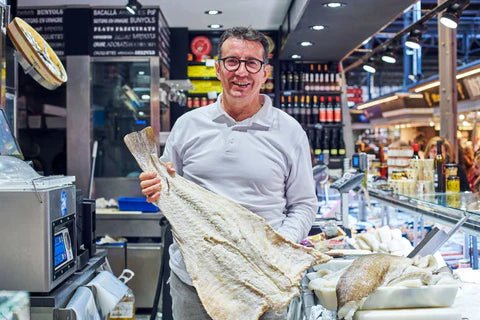
At Bacalalo, we work with artisanally produced Cantabrian anchovies. Hand-selected fillets, matured between 8 and 12 months. We serve them at our stand in Mercat del Ninot and ship them throughout the peninsula.
Canned mussels: escabeche, scallop sauce, and natural
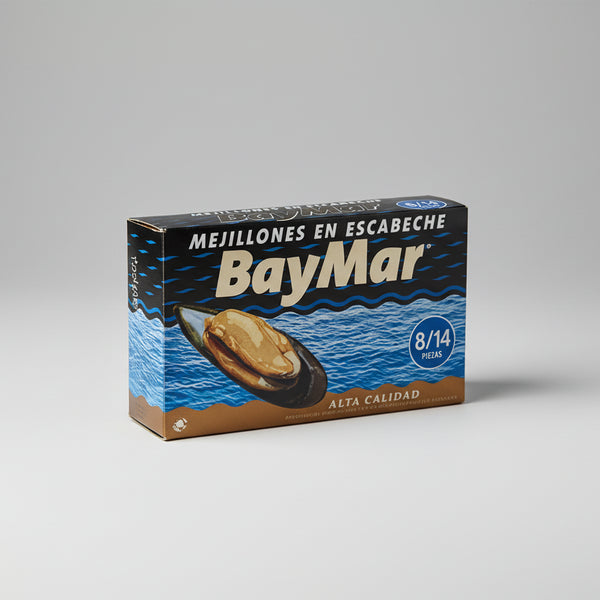
Galician canned mussels are a delicacy that few countries in the world can match. They are made with raft-farmed mussels (Mytilus galloprovincialis), steamed and packed in different sauces.
Types of canned mussels:
- In escabeche: The classic preparation. Vinegar, paprika, bay leaf, and olive oil. Intense and slightly acidic flavor. The best ones have a mild escabeche that enhances the mussel without overpowering it.
- In scallop sauce (Galician sauce): Onion, tomato, pepper, and white wine. Milder than escabeche. Perfect for those who don't want as much acidity.
- Natural: Only mussel and its juice. The purest flavor. Ideal for adding to salads, pasta, or rice dishes.
How to choose: Look for large mussels (8-12 pieces per can is a sign of good size). The color should be intense orange. The meat should be firm and full, not shrunken or hollow. The best Galician brands pack in RR-120 format cans (the classic oval one) or in glass jars.
How to serve them: Directly from the can to a nice plate, with toothpicks. Accompany them with bread for dipping in the sauce. They also work well on a mixed platter of canned goods alongside anchovies and cockles.
Cockles: the treasure of the rías
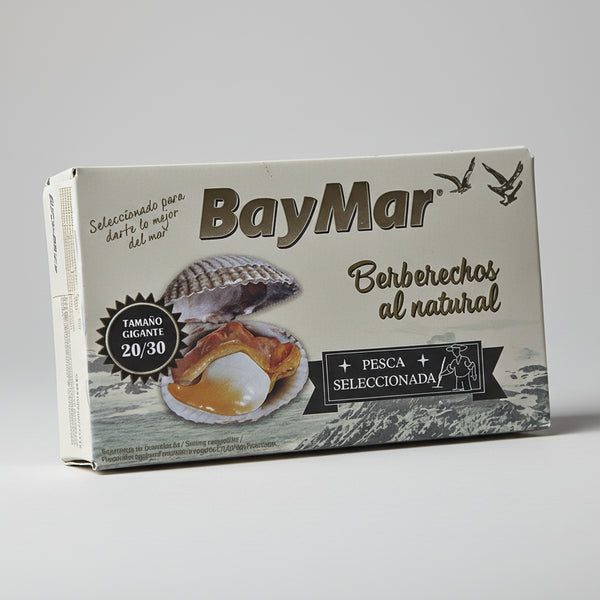
Galician cockles from the Rías Baixas are the most prized in the world. They are hand-harvested by shellfish gatherers on the beaches of Carril, Noia, and Cambados. Natural cockles retain all the flavor of the sea: iodine, salt, and a subtle sweetness.
Size classification:
- 20-25 pieces: Large size, premium. Each cockle is a complete bite. They are the most expensive and the best.
- 30-40 pieces: Medium size, good value for money. Perfect for serving as a tapa.
- 45-55 pieces: Small size. More economical, ideal for salads and rice dishes.
How to serve them: Natural cockles are served cold or lukewarm, with a few drops of lemon. They don't need anything else. You can also briefly sauté them in a pan with garlic and parsley (30 seconds, no more).
Canned sardines: the underrated preserve
Canned sardines are the forgotten heroes of Spanish gourmet gastronomy. Good canned sardines can rival any other preserve. And they have an advantage: they improve with age. A can of sardines aged 3-5 years has a complex, smooth, and deep flavor that a freshly canned one doesn't achieve.
Types of canned sardines:
- In olive oil: The most versatile. Olive oil protects the sardine and makes it smoother. The best ones use extra virgin olive oil.
- In tomato: Homemade tomato sauce that combines with the intense flavor of the sardine. Popular in Portugal and Galicia.
- In escabeche: Vinegar, onion, and carrot. More intense than oil-packed. Good as a tapa with bread.
- Smoked sardine: Smoked before canning. Deep flavor with smoky notes. Works well on toast with cream cheese.
The secret of vintage sardines: Store cans horizontally in a cool, dark place. Flip them every 6 months to redistribute the oil. A can of 2021 sardines served in 2026 is a different gastronomic experience: the meat has been confited in its own oil and the flavor is well-rounded and smooth.
How to prepare a canned goods platter for Easter
A well-prepared canned goods platter is a spectacular appetizer with minimal effort. Here's what you need:
- Choose 3-4 different canned goods: anchovies, mussels in escabeche, natural cockles, and sardines in oil. The variety of flavors and textures is what makes the platter interesting.
- Bread: Crystal bread or ciabatta, lightly toasted. Cut into slices that can be easily picked up.
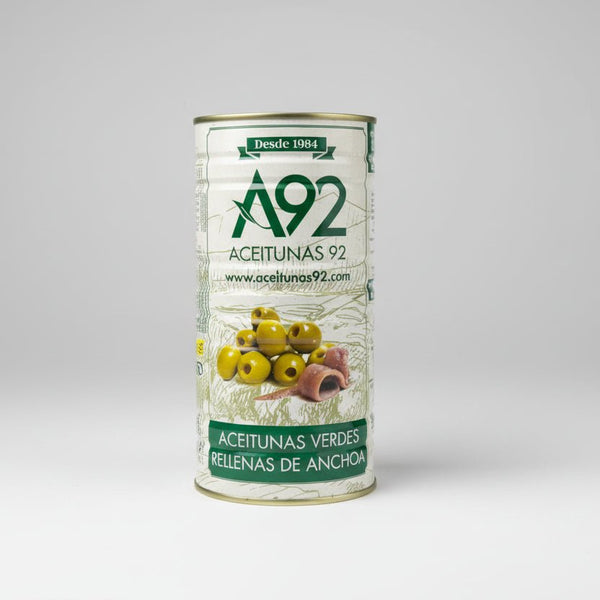
- Accompaniments: Piquillo peppers, Gordal olives, grated tomato, lemon cut into wedges, and unsalted butter (for the anchovies).
- Presentation: Remove the canned goods from the can and arrange them on ceramic or slate plates. The oil from the canned goods is part of the dish: pour it over the bread or into a small bowl for dipping.
- Quantity: For 4 people as an appetizer, calculate 1 can of anchovies (10-12 fillets), 1 can of mussels, 1 can of cockles, and 1 can of sardines.
At Bacalalo, we have a selection of gourmet canned goods: Cantabrian anchovies, mussels, cockles, tuna belly, and premium sardines. We ship them throughout the peninsula with a freshness guarantee.
Canned goods and cod: the complete Lent menu
Canned goods are the perfect complement for an Easter focused on cod. A typical menu:
- Appetizer: Canned goods platter with crystal bread
- Starter: Cod salad (Catalan esqueixada)
- Main: Cod al pil pil or in green sauce
- Dessert: Homemade torrijas or fried milk
Everything can be prepared with pantry and fridge items, without needing to go to the fish market on the same day. Canned goods don't need refrigeration, desalted cod lasts 3-4 days in the fridge, and torrijas can be made the day before.
Premium Seafood Products — Bacalalo
Since 1990, selecting the best from the sea at Mercat del Ninot, Barcelona. Refrigerated shipping 24-48h.
See gourmet preserves →🛒 Products mentioned in this article
⭐ 4.9/5 · Cold shipping 24-48h · Since 1990 at Mercat del Ninot
Frequently asked questions about gourmet preserves
How long do gourmet preserves last?
The best-before date is usually 4-6 years from manufacturing. But many preserves (especially sardines and anchovies) improve with age. Once opened, consume the contents within 24-48 hours, storing them in the refrigerator in a sealed container (not in the can).
How do I distinguish a gourmet preserve from an industrial one?
Read the label. Gourmet preserves specify the product's origin (e.g., "mussels from the Rías Baixas"), the type of oil ("extra virgin olive oil"), and often the production method ("hand-cleaned"). Industrial ones use generic terms. Price also guides: a can of gourmet anchovies costs 8-15 euros, an industrial one 3-4 euros.
Are preserves healthy?
Yes. Canned fish are rich in protein, omega-3, and minerals. The preservation process retains almost all nutrients. Anchovies are rich in calcium (you eat the bones). Mussels provide iron and zinc. Sardines are one of the best sources of vitamin D.
Do preserves need to be heated before serving?
It is not necessary. Most are served at room temperature or slightly chilled (taken out of the fridge 15 minutes before). If you heat them, do so gently and briefly: 1 minute maximum. Excessive heat dries out the fish and changes its texture.
Can I give gourmet preserves as a gift for Easter?
Gourmet preserves make an excellent gift. They don't need refrigeration, are light to transport, and the recipient can consume them whenever they want. A box with 3-4 cans of anchovies, mussels, and cockles is an elegant detail that is always appreciated.
Discover more