![Conservas Gourmet: Guía para Reconocer la Calidad Real [2026]](http://bacalalo.com/cdn/shop/articles/surtido-despensa-gourmet-2688318_23f25f29-aecd-49ae-b3d5-48f5287ced88.png?v=1774815860&width=480)
Summary: The term "gourmet" is unregulated. Any canned food can be called gourmet without meeting any requirements. In this guide, we teach you exactly what to look for on the label, what to ask the manufacturer, and what signs betray a mediocre product with pretty packaging. With discernment, not slogans.
Table of Contents
- What does "gourmet" really mean in canned goods?
- What the label tells you (if you know how to read it)
- The oil: the first filter of quality
- Artisanal vs. industrial process: real differences
- The main categories of gourmet canned goods
- Why does one canned good cost €3 and another €30?
- 5 mistakes when buying gourmet canned goods
- How to store and serve correctly
- Frequently asked questions
What does "gourmet" really mean in canned goods?
Nothing. Legally, nothing. Unlike terms such as "Protected Designation of Origin," "Protected Geographical Indication," or "Organic Production," the word "gourmet" has no official definition, is not regulated by any public body, and does not require any certification. Any manufacturer can print "gourmet" on their label tomorrow without changing absolutely anything about the product.
This does not mean that there are no exceptionally high-quality canned goods. It means that the term "gourmet" is not a reliable indicator. The reliable indicators are others: the type of oil, the drained weight, the origin of the fish, the production process, and the manufacturer's transparency about all of the above.
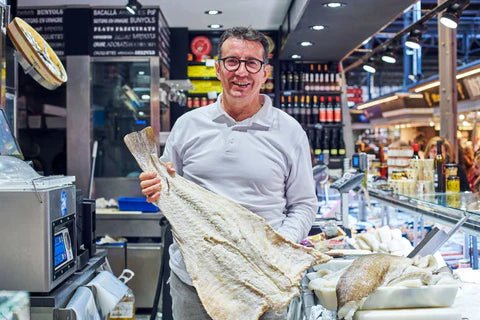
At Mercat del Ninot, we have been selling canned seafood since 1990. We have seen how the term "gourmet" has gone from being an honest description of exceptional products to becoming a marketing tool that allows the price of mediocre products to be multiplied. In this guide, we give you the tools to distinguish one from the other.

What the label tells you (if you know how to read it)
The label of a canned good is legally required to include information that, when properly interpreted, tells you almost everything you need to know about the product. The problem is that most consumers don't know what to look for.
Product name
The legal name must indicate the exact species of fish. "Cantabrian anchovies" should mean Engraulis encrasicolus caught in the Cantabrian Sea. But beware: "Cantabrian style" or "Cantabrian type" do not guarantee origin. The same applies to "sardines from the Galician Rías," "light tuna," or "bonito del norte." Look for the species and the FAO catch area, not the commercial name.
FAO areas are official fishing areas. The Cantabrian Sea is FAO area 27 (sub-area VIIIc). The Western Mediterranean is FAO area 37.1. If the can says "Cantabrian" but the FAO area is 37.1, someone is lying.
List of ingredients
In a quality canned good, the ingredient list should be short: fish, oil, salt. Period. If flavor enhancers (monosodium glutamate E621), thickeners, colorings, or added flavors appear, you are looking at an industrial product that tries to make up for what it lacks in raw material with chemistry.
The order of ingredients matters: they go from largest to smallest quantity. If the oil appears before the fish, you have more oil than product in the can.
Net weight vs. drained weight
This is the figure that really matters and the one that many manufacturers try to conceal. Net weight includes the covering liquid (oil, escabeche). Drained weight is the weight of the fish alone. A can of 120g net can have 80g of drained fish or 50g. The real price difference per gram of product can be 60%.
Always do the math: can price divided by grams of drained weight. That is the real cost of the product you are buying.
Production date vs. expiration date
Many canned goods —especially anchovies, sardines, and bonito— improve with age, like a good wine. The salting process continues to develop aromatic complexity during the first two years. A freshly made canned good can be good; the same canned good with 18 months of curing in the can can be exceptional. Look for the production date, not just the expiration date.
Gourmet Canned Goods — Artisanal Selection
Anchovies, sardines, bonito del norte, ventresca. Selected by experts since 1990.
View Canned Goods →The oil: the first filter of quality
The type of oil used is, probably, the quickest and most reliable indicator of the quality of a canned good. Manufacturers who invest in quality raw materials do not cover them with cheap oil.
Extra virgin olive oil (EVOO)
It is the standard for premium canned goods. EVOO provides its own flavor —fruity, with a bitter and spicy note— that complements the fish without masking it. It is the most expensive of edible oils and its use indicates that the manufacturer has made a conscious quality decision in all components.
Olive oil (without "virgin" or "extra")
It is refined olive oil, subjected to chemical processes that remove flavor, color, and aroma. It is a neutral oil, technically correct but without personality. Its presence in a canned good sold as "gourmet" is a contradiction: if the manufacturer saves on the oil, they probably save on everything else.
Sunflower oil
It is the cheapest oil and the one with the least contribution to flavor. In a canned good that says "gourmet" on the label, sunflower oil is a fraud of expectations. There is no high-quality canned good in sunflower oil. None.
Escabeche (pickled sauce)
Escabeche (oil + vinegar + spices) is a legitimate and traditional covering medium with its own personality. A well-made escabeche can be as good as an extra virgin olive oil. The key is the quality of the vinegar (wine, not synthetic) and the proportion of spices. Quality canned goods in escabeche always specify the type of vinegar and spices used.
Artisanal vs. industrial process: real differences
The word "artisanal" is as devalued as "gourmet," but the differences between a careful production process and an accelerated industrial one are real and are noticeable in the final product.
Curing time
Quality anchovies require a minimum of 6 months of salting, ideally 12 or more. Industrial anchovies can be cured in 3-4 months using maturation accelerators. The result is a less complex fillet, saltier and with less flavor depth.
The same applies to bonito del norte or tuna: the resting time in the can allows the fish and oil to integrate, developing flavors that do not exist in a freshly canned product.
Raw material selection
Serious artisanal manufacturers select fish piece by piece, discarding specimens that do not meet size, freshness, or condition criteria. Industrial ones process in batches without individual selection. A rejection of 15-20% of the raw material is common among the best producers. This cost is reflected in the final price, but also in the consistency of the product.
Manual vs. mechanical processing
Manual filleting of anchovies by expert hands produces cleaner fillets, with fewer residual bones and better presentation than mechanical filleting. Manual packaging allows the fillets to be placed neatly, without bending or breaking them. These details are not aesthetic: a broken anchovy has lost oil and has a different texture than an intact one.
The main categories of gourmet canned goods
The world of quality canned goods is vast. Each category has its own evaluation criteria.
Cantabrian anchovies
The reigning category of Spanish canned goods. The key criteria are: caliber (00 or higher for high-end), extra virgin olive oil, minimum salting of 6 months, high drained weight, and verifiable origin in the Cantabrian Sea. At Bacalalo, we work with "0" and "00" Gourmet Selection anchovies from directly selected producers in Santoña.
Canned sardines
Gourmet sardines are distinguished by size (large sardines, not sprats), type of preparation (smoked, in oil, in escabeche), and the age of the harvest. Smoked sardines represent a little-known premium segment with enormous gastronomic potential.
Bonito del norte and tuna
Bonito del norte (Thunnus alalunga) is a different species from light tuna (Thunnus albacares). The difference in taste and texture is remarkable: bonito del norte has whiter, firmer, and more delicate meat. Do not accept "light tuna" sold as bonito del norte; they are different products at different prices.
Caviar and roe
Sturgeon caviar is the premium product par excellence. Roe substitutes from other fish (lumpfish, salmon, trout) are not caviar, no matter how much the label plays with ambiguity. For caviar, the origin (Beluga, Osetra, Sevruga) and the production method (responsible aquaculture) are the fundamental criteria.
Mussels, cockles, and razor clams
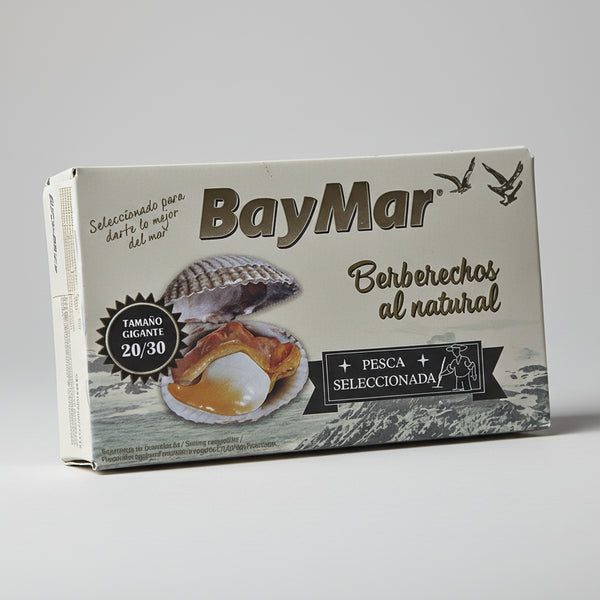
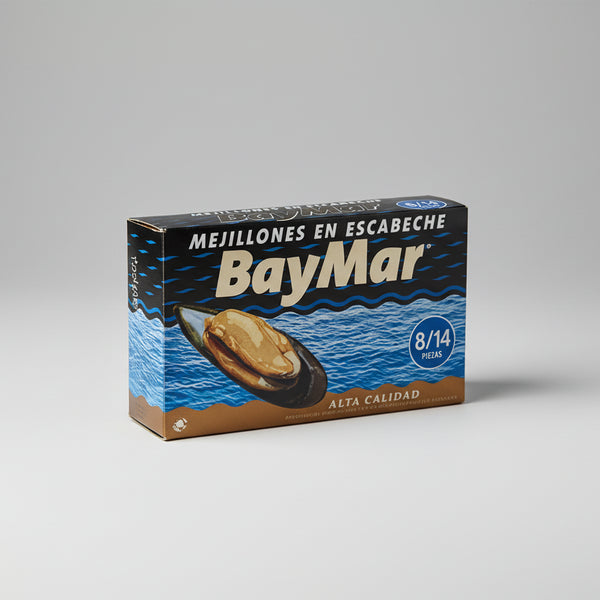
For canned mollusks, size matters: cockles of 25-30 pieces per can are high-end; 45-65 pieces are mid-range. Mussels in Galician escabeche are an exceptionally high-quality canning tradition when done well. Quality canned seafood always specifies the caliber and origin.

Why does one canned good cost €3 and another €30?
The price difference between cheap and premium canned goods is not just marketing. There are real and measurable cost factors.
Raw material
A Cantabrian seasonal anchovy, caliber 00, costs the manufacturer between 3 and 5 times more than an anchovy of Moroccan origin of standard caliber. Bonito del norte caught by pole-and-line fishing costs twice as much as those caught with purse-seine nets. These differences in raw material cost are directly transferred to the final price.
Yield
Manual filleting of anchovies generates a yield of 40-50% of the weight of the salted fish. Caliber selection further reduces that yield: of the total filleted, only 60-70% meets the criteria for caliber 00 or higher. The result is that for every kilo of salted anchovy, barely 250-350 grams reach the can as a premium product.
Curing time
Each additional month of salting means one more month of occupied cold storage space, immobilized capital, and risk of loss. A 12-month cure costs twice as much as a 6-month cure in financial costs, even if the raw material is the same.
Oil
Extra virgin olive oil costs between 5 and 8 euros per liter; sunflower oil, less than 2 euros. In a can with 30-40g of oil, the difference is cents. But multiplied by thousands of cans, the impact on margin is significant.
Packaging and presentation
Lithographed cans with custom designs, glass jars, and gift boxes cost more than generic cans. This cost is pure marketing and does not affect the product. An honest manufacturer invests first in raw material and process, and then in packaging.
5 mistakes when buying gourmet canned goods
1. Being guided by the packaging. A beautiful design does not guarantee a good product. There are exceptional canned goods in simple cans and mediocre products in luxury boxes. Read the label, not the design.
2. Comparing by can price, not by drained gram price. An €8 can with 80g of drained fish (10 cents/gram) is cheaper than a €6 can with 40g drained (15 cents/gram). Always do the math.
3. Trusting "Cantabrian" as an absolute guarantee. The term indicates geographical origin but not process quality. There are mediocre canned goods from the Cantabrian Sea and excellent ones from the Mediterranean. Origin matters, but it is not the only factor.
4. Serving canned goods cold from the fridge. Canned fish in oil should be served at room temperature so that the fat is fluid and the aromas can express themselves. Take them out 15-20 minutes before consuming.
5. Not tasting before buying in quantity. Gourmet canned goods are an investment. Buy a can, try it calmly, evaluate if the quality justifies the price. Then buy the box. At Bacalalo, we advise you at the Ninot counter or by phone before you make a large purchase.

How to store and serve correctly
A gourmet canned good deserves appropriate treatment. These are the basic principles:
Storage: cool, dry place, away from direct light. It is not necessary to store unopened canned goods in the refrigerator unless the manufacturer indicates it. The ideal temperature is between 15 and 20°C.
Once opened: transfer the contents to a glass container with a lid. The fish should be covered with oil. Consume within 3-5 days maximum. Never leave an open can in the refrigerator: the metal can transmit metallic flavors to the product.
Serving temperature: always room temperature (18-22°C). In winter, take the canned good out 20-25 minutes before. In summer, 10-15 minutes are enough.
Presentation: quality canned goods deserve a plate, not the can. Arrange the fillets or pieces carefully, drizzle them with their own oil, and accompany them with quality bread. The experience improves when the product is treated with respect.
If you are looking for verified quality gourmet canned goods, visit our canned goods collection or stop by the Mercat del Ninot counter. We have been selecting the best of the sea since 1990. It's not marketing — there are verifiable factors.
Gourmet Canned Goods — Artisanal Selection
Anchovies, sardines, bonito del norte, ventresca. Selected by experts since 1990.
View Canned Goods →🛒 Recommended products in this guide
⭐ 4.9/5 · Chilled delivery 24-48h · Since 1990 at Mercat del Ninot
Frequently Asked Questions
What is the difference between a gourmet preserve and a regular preserve?
There is no legal definition of "gourmet." The real difference lies in the quality of the raw material (species, origin, size), the type of oil (extra virgin vs. refined vs. sunflower), the production process (curing times, manual selection), and the actual drained weight. A high-quality preserve has better ingredients, fewer additives, and more product per can.
How do you know if a preserve is good quality without opening it?
Check the label: extra virgin olive oil, specified drained weight, specific origin (not generic), short ingredient list (fish, oil, salt), visible production date. If the manufacturer is transparent on the label, it is likely they are also transparent in the process.
Do gourmet preserves expire?
All preserves have a best-before date. However, many quality preserves — especially anchovies, sardines, and bonito — improve during the first 2-3 years, similar to wine aging in a barrel. After the best-before date, they are not dangerous if the can is intact, but they may lose texture and flavor.
Is it worth paying more for gourmet preserves?
It depends on what you value. If you consume preserves regularly and appreciate the differences in taste and texture, the investment is noticeable in every bite. If preserves are a secondary ingredient in a recipe with many other flavors, a mid-range product may suffice. What is never worth it is paying gourmet prices for a product that only has gourmet packaging.
Where can I buy reliable gourmet preserves?
In specialty stores where the salesperson knows the product and can advise you. Avoid buying "gourmet" preserves in supermarkets based solely on the packaging. At Bacalalo, we select every product we sell and can explain exactly why it is in our catalog. Since 1990 at Mercat del Ninot, Barcelona.
Which gourmet preserves are the most versatile to have at home?
Three preserves cover almost any situation: good Cantabrian anchovies (appetizers, toasts, sauce enhancer), Northern white tuna in oil (salads, sandwiches, main dishes), and smoked sardines (elegant appetizers, preserve boards). With these three, you can handle any occasion.
Related articles:
Discover our premium selection
Carefully selected seafood products since 1990 at Mercat del Ninot, Barcelona. Chilled delivery within 24-48h.