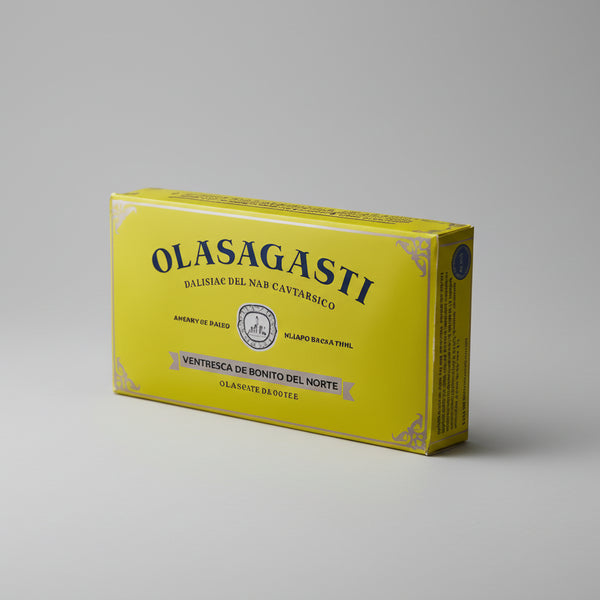
Quick summary: Bonito del norte (Thunnus alalunga) is the white tuna of the Cantabrian Sea — it is caught between June and October with a pole-and-line one-by-one method in the Bay of Biscay, and is the raw material for the most emblematic recipes of the Basque Country and Cantabria. The 7 essential traditional recipes: marmitako (Basque stew with potatoes and pepper), Cantabrian salad (with piquillo peppers), escabeche, tuna empanada, grilled belly tuna, tuna salpicón, and tuna with tomato. All are made with quality canned bonito (Olasagasti, Ortiz, Serrats) or with fresh bonito in season.
Bonito del norte is one of the few fish in Spain that has almost its own cultural identity. In Bermeo, Ondárroa, Santoña, Laredo, and Getaria, the bonito season between June and October structures village life — pole-and-line boats set out at dawn and return with 5 to 12 kg catches that are auctioned at the market, cooked the same day, and either preserved or sold fresh for dinner.
The recipes below are the classics passed down from grandmother to granddaughter in the Cantabrian region. They are not "chef's recipes" — they are home cooking. At Bacalalo, we work directly with Olasagasti (Getaria), Ortiz (Ondárroa), and BayMar (Cantabria), which is why I recommend which bonito format to use for each dish without marketing — only with good judgment.

What is bonito del norte (species, season, fishing)
Bonito del norte (Thunnus alalunga), also called white tuna or albacore, is the finest and lightest-fleshed tuna species commercially caught. What distinguishes it from the rest:
- Species: Thunnus alalunga (NOT Thunnus albacares, which is skipjack tuna or yellowfin).
- Season: June to October, "bonito season." Out of season, only available canned.
- Fishing area: Bay of Biscay, northeast Atlantic, Cantabrian coast.
- Fishing method: pole-and-line one-by-one (artisanal, selective) or live bait. NOT industrial.
- Meat: white-ivory, buttery, delicate flavor. The fat is responsible for the flavor.
This is why it costs what it costs (60-110 €/kg in a premium jar): because fishing is slow, selective, respects sizes and animal welfare, and the preservation process in extra virgin olive oil requires artisanal low-temperature cooking.
Belly vs. loin of bonito: what to use in each recipe
A piece of bonito del norte yields several parts with different uses:
- Belly (ventresca): ventral area, the fattiest part. Buttery, melts in the mouth. For appetizers with just EVOO, grilling, or premium salads.
- Loin (lomo): dorsal area, lean and fibrous. For stews (marmitako), empanadas, escabeche, salpicón.
- Whole loin (tronco): entire cut of the loin. For dishes where you want a "visible piece" (casseroles, main courses).
- Flakes / shredded (migas / desmigado): broken pieces. For fillings, croquettes, rustic salads.
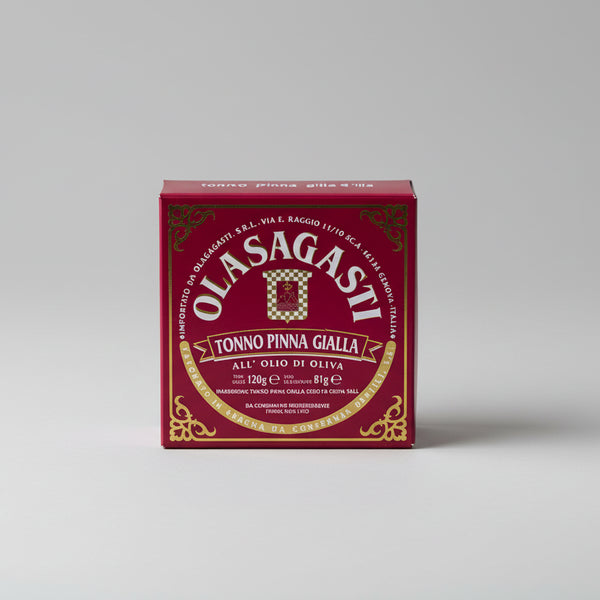
Olasagasti Bonito del Norte Loins 315g
Whole loins preserved in a glass jar with olive oil. For empanadas, marmitako, and all recipes where the piece should be visible.
Quick rule: for stews and empanadas → loins. For grilling and appetizers → belly. For salad → indifferent, depends on the budget.
Recipe 1: Marmitako (Basque stew)
Traditional Marmitako for 4 people
Time: 1h 15min | Origin: Basque Country (Bizkaia, Gipuzkoa) | Bonito: Olasagasti Loins or fresh bonito
Ingredients
- 500 g bonito del norte loins (Olasagasti 315g + a small jar or 600g fresh bonito)
- 800 g old potatoes (Kennebec or Monalisa)
- 2 Italian green peppers
- 1 red pepper
- 1 large onion
- 4 cloves garlic
- 2 ripe grated tomatoes
- 2 ñoras or choricero peppers (flesh)
- 1 liter fish stock (or water + cube)
- 1 teaspoon sweet paprika from La Vera
- 125 ml white wine (txakoli or albariño)
- 6 tablespoons extra virgin olive oil
- Salt and pepper
Steps
- 1Break the potatoes. Peel the potatoes and "break" them — stick the knife in and break them, don't cut them cleanly. This way they release more starch and thicken the broth.
- 2Sauté. In a wide, shallow pot, sauté onion, peppers, and garlic for 15 minutes over medium heat until tender.
- 3Tomato and choricero. Add grated tomato and ñora pepper flesh. Sauté for 8 more minutes until the water evaporates.
- 4Paprika and wine. Turn off the heat for a second. Add paprika, stir quickly (don't burn it), add white wine. Increase heat, evaporate for 2 minutes.
- 5Potatoes and broth. Add the broken potatoes. Cover with hot fish stock. Cook for 25-30 minutes over medium-low heat until the potatoes are tender.
- 6Add the bonito. In the last 3-5 minutes, add the bonito (if canned, just drained; if fresh, in 3cm cubes). The bonito should NOT be cooked — only heated through.
- 7Rest. Turn off the heat and let rest covered for 10 minutes before serving. Taste for salt.
Tip: if using fresh bonito, don't add it at the beginning — it will dry out. If using canned, drain the oil well. A good marmitako has JUICY, not fibrous, bonito.
Recipe 2: Cantabrian salad with piquillo peppers
Cantabrian bonito salad with piquillo peppers
Time: 15 min | Origin: Cantabria, Navarre | Bonito: Olasagasti Ventresca 190g or 260g
Ingredients (4 servings)
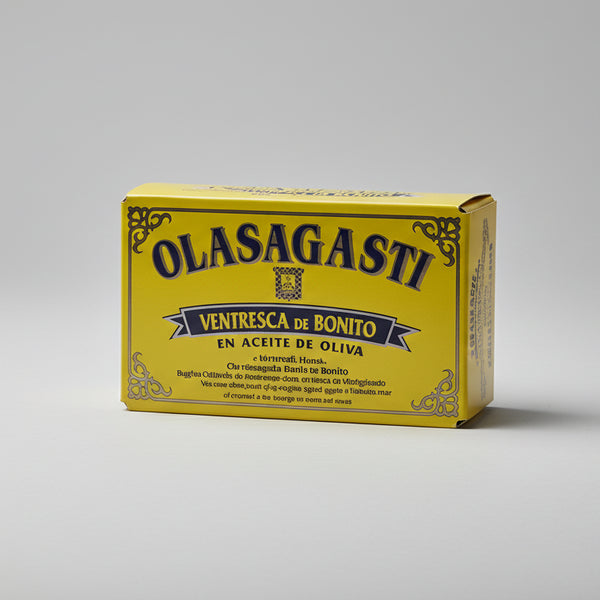
- 1 jar Olasagasti bonito belly (ventresca) 260g
- 12 roasted piquillo peppers (Lodosa jar, PDO)
- 2 hard-boiled eggs
- 1/2 very thinly sliced sweet onion (from Fuentes or Tudela)
- 8 green Manzanilla olives with pits
- 6 tablespoons Arbequina EVOO
- 1 tablespoon Jerez vinegar
- Pinch of flaky sea salt (Maldon or fleur de sel)
- Freshly ground black pepper
Steps
- 1Arrange the bonito belly. Open the jar. Remove the whole pieces and arrange them on a deep plate or platter. Reserve the oil from the jar — it will be used for the vinaigrette.
- 2Peppers and egg. Cut the piquillo peppers into wide strips. Quarter the hard-boiled eggs.
- 3Vinaigrette. Mix the EVOO with 1 tablespoon of oil from the bonito belly jar + Jerez vinegar + a pinch of salt. Whisk with a fork.
- 4Assemble. On top of the bonito belly, arrange the piquillo peppers in strips. Thinly sliced sweet onion. Egg quarters. Olives around.
- 5Dress and serve. Drizzle with the vinaigrette. Flaky salt and black pepper. Serve at room temperature with toasted rustic bread.
Navarrese variant: add a couple of Cantabrian 00 anchovies among the peppers. An outstanding pairing.
Olasagasti Bonito del Norte Belly 260g
The sharing size, ideal for this Cantabrian salad. Same artisanal process as the 190g, better price per kilo.
Recipe 3: Bonito in escabeche
Traditional bonito del norte in escabeche
Time: 35 min + 24h rest | Origin: All along the Cantabrian coast | Bonito: Olasagasti Whole Loin 270g or fresh bonito
Ingredients (for 2 small jars)
- 500 g bonito loin (fresh in 4cm cubes, or Olasagasti whole loin 270g cut into chunks)
- 1 large onion, julienned
- 1 carrot, thinly sliced
- 4 cloves garlic
- 200 ml extra virgin olive oil
- 150 ml white wine vinegar
- 150 ml dry white wine
- 2 bay leaves
- 8 black peppercorns
- 1 teaspoon sweet paprika
- Salt
Steps
- 1Sear the bonito (if fresh). In a pan with a drizzle of oil, sear the bonito cubes for 30 seconds per side. Just brown, don't cook through. Set aside.
- 2Sauté. In a pot, sauté onion and carrot with halved garlic cloves for 10 minutes over medium heat.
- 3Liquids and spices. Add wine, vinegar, bay leaves, peppercorns, paprika, and salt. Bring to a gentle boil for 5 minutes.
- 4Oil and bonito. Add the EVOO. Heat for 2 more minutes. Turn off the heat and add the bonito cubes (seared if fresh, or as is if canned).
- 5Rest in cold. Transfer to a clean glass jar. Cover and refrigerate for 24 hours before consuming. Keeps for 7-10 days in the fridge.
Serve: cold on rustic toast with piparra (pickled Basque chili pepper) on top. A birthday appetizer in Cantabria.
Recipe 4: Tuna empanada (Basque-Cantabrian)
Basque-Cantabrian Tuna Empanada
Time: 1h 30min | Origin: French Basque Country, Cantabria | Tuna: Olasagasti Tuna Loins 315g or trunk
Ingredients (1 empanada, 6-8 servings)
- 2 sheets of empanada dough (Galician, puff pastry, or homemade)
- 400 g Olasagasti tuna loins (1 jar) or fresh tuna
- 2 large onions, julienned
- 2 roasted red peppers (jarred)
- 4 ripe tomatoes, peeled
- 4 cloves garlic, minced
- 50 g pitted black Aragon olives
- 2 hard-boiled eggs, sliced
- 1 teaspoon sweet paprika
- 6 tablespoons EVOO
- 1 egg yolk for brushing
- Salt, pepper
Steps
- 1Sofrito. In a large pan, sauté onions and garlic for 20 minutes over low heat until caramelized (dark golden color).
- 2Tomato and pepper. Add diced peeled tomatoes and sliced red peppers. Cook for 15 more minutes until liquid evaporates.
- 3Paprika and tuna. Turn off the heat. Add paprika, salt, pepper. Stir in the flaked tuna, olives and mix. Let cool.
- 4Assemble empanada. On a baking sheet with parchment paper, spread one sheet of dough. Distribute the cooled filling. Add the sliced hard-boiled eggs. Cover with the second sheet and seal the edges with a fork.
- 5Brush and bake. Brush with beaten egg yolk. Make a small hole in the center (for ventilation). Bake at 180°C for 35-40 minutes until golden brown.
- 6Rest. Let rest for 15 minutes before cutting. It can be eaten warm or cold — it gains flavor the next day.
Recipe 5: Grilled Tuna Belly
Grilled Tuna Belly (Bermeo style)
Time: 10 min | Origin: Bermeo, Bizkaia | Tuna: Fresh seasonal tuna belly (Jun-Oct)
Ingredients (4 people)
- 600 g FRESH tuna belly (order from fishmonger, seasonal only)
- 4 cloves garlic, sliced
- 1 cayenne pepper
- 5 tablespoons EVOO
- 1 tablespoon cider vinegar
- Flaky salt
- Fresh parsley
Steps
- 1Bring tuna belly to room temperature. Take the tuna belly out of the fridge 30 minutes beforehand. Pat dry with kitchen paper. Salt to taste.
- 2Garlic and chili. In a small pan, brown the sliced garlic with the chili in 4 tablespoons of EVOO over low heat. When the garlic is golden, remove from heat and add the vinegar. Keep warm.
- 3Hot griddle. Heat a griddle or heavy-bottomed pan over VERY high heat. Brush with the remaining tablespoon of oil.
- 4Sear. 2 minutes per side for pieces 2cm thick. The tuna belly should be golden brown on the outside and pink on the inside — NEVER dry.
- 5Serve. Arrange on a plate. Pour the garlic refrito over it. Sprinkle with flaky salt and chopped parsley. Serve immediately.
If not in season: DO NOT use canned tuna belly for grilling — it loses its magic. Use frozen fresh tuna loins and cook for 1 minute per side.
Recipe 6: Tuna Salpicón
Laredo-style Tuna Salpicón
Time: 20 min | Origin: Laredo, Cantabria | Tuna: Olasagasti Tuna Trunk 270g or light tuna
Ingredients (4 people)
- 300 g flaked tuna trunk (drained Olasagasti 270g) or BayMar light tuna belly
- 1 red pepper, brunoise
- 1 green pepper, brunoise
- 1/2 red onion, very finely diced
- 1 ripe tomato, peeled and brunoise
- 1 hard-boiled egg, chopped
- 6 tablespoons EVOO
- 2 tablespoons sherry vinegar
- Salt and pepper
Steps
- 1Fine dicing. Cut all vegetables into brunoise (3-4mm cubes). It is critical that they are all the same size so that each bite has everything.
- 2Tuna. Drain the tuna and flake it into large pieces with a fork. DO NOT mash — salpicón should have chunks.
- 3Mix. In a large bowl, mix vegetables, tuna, and hard-boiled egg. Dress with EVOO, vinegar, salt, and pepper. Mix gently.
- 4Rest. Refrigerate for 30 minutes before serving. Can be prepared 4-5 hours in advance.
Serve: in individual glasses as an appetizer, or on toasted rustic bread. For this recipe, BayMar 1kg light tuna belly works perfectly — its strong flavor stands up to the vinegar.
BayMar Light Tuna Belly 1 kg
For salpicones, salads, and empanadillas with vinaigrette. Strong flavor, large format, honest value for money.
Recipe 7: Tuna with Tomato Sauce
Santoña-style Tuna with Tomato
Time: 45 min | Origin: Cantabria | Tuna: Olasagasti Tuna Trunk 270g
Ingredients (4 people)
- 500 g tuna trunk (Olasagasti 270g + a small jar) or fresh tuna in cubes
- 1 kg ripe plum tomatoes
- 2 medium onions
- 4 cloves garlic
- 1 bay leaf
- 1 teaspoon sugar (to correct acidity)
- 5 tablespoons EVOO
- Salt, pepper
Steps
- 1Peel tomatoes. Make a cross at the base of each tomato. Blanch for 30 seconds in boiling water. Peel and chop.
- 2Long sofrito. In a casserole, sauté chopped onion and garlic for 15 minutes over low heat until very soft and golden.
- 3Tomato. Add chopped tomatoes, bay leaf, and sugar. Cook over medium-low heat for 30 minutes until the tomato has reduced and darkened.
- 4Pass through a food mill. Remove the bay leaf. Pass the sauce through a food mill or blend and strain — it should be smooth and shiny.
- 5Add the tuna. Return the sauce to the casserole. Add the drained tuna in large pieces (or fresh in cubes). Cook gently for 3-5 minutes to integrate flavors. DO NOT boil vigorously — the tuna will dry out.
- 6Serve. Serve with french fries or white rice. Rustic bread for dipping in the sauce.
Table: what tuna to buy for each recipe
| Recipe | Recommended format | Why | Cost for 4 people |
|---|---|---|---|
| Marmitako | Olasagasti Tuna Loins 315g | Defined piece in the stew | ~€18 |
| Cantabrian salad | Olasagasti Tuna Belly 260g | Large visible pieces | ~€22 |
| Escabeche | Olasagasti Tuna Trunk 270g | Withstands vinegar | ~€16 |
| Empanada | Olasagasti Tuna Loins 315g | Concentrated flavor when baked | ~€18 |
| Grilled | FRESH Tuna Belly (seasonal) | Fresh is essential | ~€30 |
| Salpicón | BayMar Light Tuna Belly 1kg | Strong flavor with vinegar | ~€8 (quarter jar) |
| Tuna with tomato | Olasagasti Tuna Trunk 270g x2 | Generous piece in sauce | ~€26 |
Pairings with Cantabrian cuisine
- Basque Txakoli: perfect acidity for stews and salads. Goes with everything.
- Albariño: for empanada, grilled tuna belly, and tuna with tomato.
- Natural Asturian cider: for escabeche and salpicón.
- Rosado de Navarra: for Cantabrian salad with piquillo peppers.
- Vermouth with piparra: perfect appetizer before any of these dishes.
- Non-alcoholic: sparkling water with lemon, or tinto de verano with light red wine.
Bacalalo Products
Cantabrian Tuna Loin Olasagasti 270g
Whole tuna loin in olive oil. The piece required for any recipe where "the tuna needs to be seen".
Whole Collection of Canned Tuna and Bonito
Bellies, loins, trunks, small and catering formats. Olasagasti, BayMar, Dardo.
Discover our premium selection
Carefully selected seafood products since 1990 at Mercat del Ninot, Barcelona. Refrigerated shipping in 24-48h.
Conclusion
Albacore tuna (bonito del norte) is one of the most iconic products of the Cantabrian coast — it underpins seven traditional recipes that have been made since before the concept of "regional gastronomy" existed. Marmitako, Cantabrian salad, escabeche, empanada, grilled, salpicón, and tuna with tomato are the foundations. Any of these seven will turn out well if you respect two principles: do not boil the tuna (only heat it) and choose the correct format (loins for stews, belly for appetizers, trunk for versatility). At Bacalalo, we work directly with Olasagasti, BayMar, and Dardo from Mercat del Ninot — all the formats we recommend above are in our collection. The fresh albacore season is June-October, but quality preserves allow these seven recipes to be made twelve months a year without sacrificing anything.
Frequently Asked Questions
When is the albacore tuna season?
Are albacore tuna (bonito del norte) and skipjack tuna the same?
What tuna should I buy for marmitako?
Can I freeze fresh albacore tuna?
How many servings come from an Olasagasti 315g jar?
Is there a difference between bonito and albacore?
What is the best brand of albacore tuna?
Can marmitako be made without pimiento choricero?
Is tuna belly suitable for frying or breading?
What is the origin of marmitako?
>Related Articles
- Difference between Albacore Tuna and Skipjack Tuna
- Tuna Belly: What it is and How to Cook it, Recipes
- Canned Albacore Tuna: How to Choose
- Tuna Belly vs Albacore Belly: Differences, Which is Better
- Albacore Tuna vs Skipjack Tuna: Price and Differences
- Tuna Empanada: Galician Recipe, Homemade Dough
- Mojama de Atún: Complete Guide
- Collection: Canned Tuna and Bonito
About the Author — Lalo González Rodríguez
Third generation of Bacalalo at Mercat del Ninot (Barcelona). He has worked with cod and preserves since 1990 and personally selects suppliers in Iceland, Norway, Cantabria, and the Caspian Sea. He writes about the identity and real origin of seafood products.