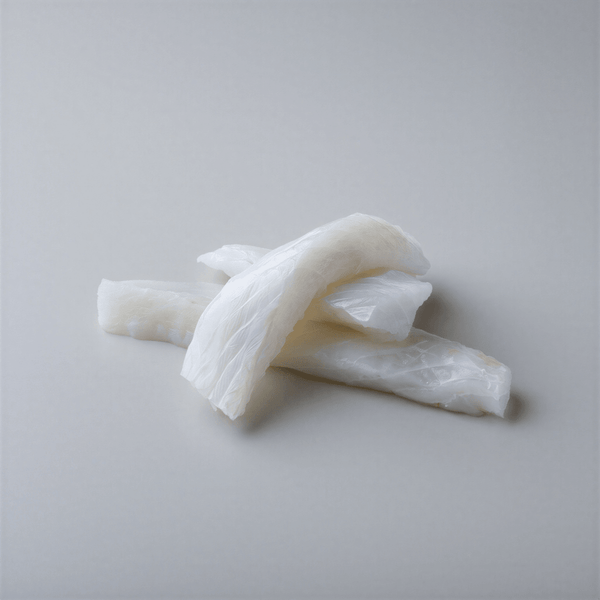
Quick Answer: The garfish or needlefish (Belone belone) is an economical oily fish with an elongated body and a needle-shaped jaw. Price: €3-7/kg at fishmongers. Rich in omega-3 (0.8-1.2g/100g), low in mercury, perfect for grilling, pickling, or frying. Its bones are green due to biliverdin — completely harmless. Season: May-October. If you can't find it, premium alternative: Cantabrian anchovy "00".
In this article
- What is garfish or needlefish
- Species (common garfish, blue needlefish, Pacific saury)
- Differences with sardines, anchovies, and boquerones
- Nutritional properties
- How to cook it (grilled, pickled, fried)
- Where to buy it and seasonality
- Sustainability and fair price
- Premium alternatives if you can't find it
- Common mistakes when cooking it
- Frequently asked questions
What is garfish or needlefish
The garfish (Belone belone) is a pelagic fish from the Belonidae family. Its technical name comes from the Greek belone (needle), due to its characteristic elongated, beak-like jaw. In Spain, it is known by various regional names — aguja, espetón, agulla, paparda, orenat — which sometimes makes it difficult to find at the fishmonger if you don't know the local name.
It is a fish with a cylindrical and very elongated body: adult specimens measure between 40 and 70 cm, with a prominent head and a pointed jaw. It lives in temperate waters of the Eastern Atlantic (from Norway to Morocco) and throughout the Mediterranean. In Spain, it is mainly caught on the Cantabrian, Galician, and Mediterranean coasts, using purse seine or surface longline fishing methods.
It is an oily fish in every sense: fat content exceeding 5% and rich in omega-3 fatty acids. Its flesh is white-pink, firm, with an intense but not aggressive flavor — more similar to a large sardine than a mackerel. And, once cooked, it is surprisingly not "greasy" to the palate.
Species: common garfish, blue needlefish, and Pacific saury
Although sold as "garfish" or "needlefish" interchangeably at the fishmonger, there are several species that reach the Spanish market:
| Species | Common name | Size | Origin |
|---|---|---|---|
| Belone belone | European garfish / needlefish | 40-70 cm | Atlantic and Mediterranean |
| Belone svetovidovi | Mediterranean needlefish | 30-50 cm | Eastern Mediterranean |
| Cololabis saira | Pacific saury | 30-40 cm | North Pacific (Japan, Russia) |
| Strongylura marina | Atlantic needlefish (American) | 40-60 cm | Western Atlantic (rare in Spain) |
In Spain, the most common on the counter is Belone belone. Pacific saury arrives mainly canned ("saury" in English, "sanma" in Japanese) and is very popular in Japan grilled with salt.
Differences with sardines, anchovies, and boquerones
Garfish belongs to the group of small to medium-sized oily fish, but it has clear differences from its more well-known "cousins":
| Fish | Size | Fat | Best cooking method | Price (kg) |
|---|---|---|---|---|
| Garfish / needlefish | 40-60 cm | Medium (4-6%) | Grilled, pickled | €3-7 |
| Sardine | 15-25 cm | High (8-12%) | Grilled over coals, skewered, canned | €4-8 |
| Boquerón / fresh anchovy | 10-15 cm | Medium (5-7%) | Fried, pickled in vinegar | €5-12 |
| Mackerel | 25-35 cm | High (10-15%) | Grilled, pickled | €4-9 |
| Horse mackerel / chicharro | 20-40 cm | Medium (6-9%) | Grilled, pickled, canned | €3-6 |
Garfish is more similar to horse mackerel or young mackerel than to sardine in terms of texture. And, compared to Cantabrian anchovy "00", they are completely different products: anchovy is a premium preparation cured in salt for 6-12 months; garfish is a fresh product for cooking.
It's not marketing — there are verifiable factors. Since 1990, we have sold seafood with integrity. When we recommend a fish or a supplier, it's because it's at the Mercat del Ninot stall and because we've tried it. If it doesn't convince us, it doesn't go into the catalog.
Nutritional properties
Per 100g of steamed garfish meat (USDA SR Legacy + INE data):
| Nutrient | Amount per 100g | % RDI adult |
|---|---|---|
| Energy | 117 kcal | ~6% |
| Proteins | 21 g | 42% |
| Total fats | 3.5 g | 5% |
| Omega-3 (EPA + DHA) | 0.8-1.2 g | 80-120% |
| Vitamin B12 | 3.5 µg | 140% |
| Vitamin D | 4-6 µg | 20-30% |
| Selenium | 30 µg | 55% |
| Iodine | 20 µg | 13% |
| Mercury | < 0.1 mg | Low |
It is an excellent fish for balanced diets: high protein, heart-healthy omega-3, plenty of vitamin B12 (essential for the nervous system) and low mercury (suitable for pregnant women and children without restrictions). Compared to a large bluefin tuna or swordfish, its environmental and nutritional profile is clearly better.
How to cook garfish: 5 proven ways
Garfish is rewarding in the kitchen because it is easy to clean (few bones), has a firm texture and holds up well to both quick techniques and slow cooking. The five most common ways:
1. Grilled (the fastest)
The star method at home. 4 minutes per side, coarse salt, oil, and a touch of garlic + parsley + lemon at the end. Clean, fast, no invasive odor. Details below in HowTo format.
Recipe: grilled garfish in 15 minutes
For 2 people. 15 minutes total.
- Clean: eviscerate 2 medium garfish (~250g/each) with scissors. Wash and dry thoroughly with paper towels.
- Season: coarse salt inside and out. A drizzle of olive oil on the skin.
- Grill: 4 minutes on the skin side over high heat, without touching.
- Flip: 3 minutes on the other side. If it's larger, +1 minute.
- Dress: garlic + parsley + juice of half a lemon + oil mash in the last minute.
- Serve: with tomato salad and rustic bread. Chilled white wine.
2. Pickled (the most versatile)
Pickling is the traditional way to preserve garfish for up to a week in the refrigerator. It is lightly fried, covered with hot pickling liquid (oil + vinegar + bay leaf + pepper + garlic) and left to rest for 24-48 hours before eating. As a cold tapa, it is exceptional — the meat softens and absorbs the aromas.
3. Fried in slices
Cut into 4-5 cm pieces, floured, and fried over high heat for 2 minutes per side. Ideal for "pescaíto frito" Andalusian-style portions, with lemon and salt. The skin becomes crispy and the flesh juicy. Many people who don't know garfish try it this way first.
4. Marinated in lemon (ceviche style)
Thin fillets marinated in lime juice for 20-30 minutes with red onion, chili, and cilantro. The acidity "cooks" the fish. Modern version, ideal in summer. Caution: use only very fresh or previously frozen garfish (anisakis).
5. Baked with vegetables
Over a bed of roasted potatoes and peppers, 12-15 minutes at 200°C. A complete, easy, and low-cost dish.
If your fishmonger doesn't have fresh garfish
A premium alternative in cured oily fish: Cantabrian anchovy "00" Gourmet Selection Bacalalo. Traditionally processed for 8-12 months in Santoña. €24.90.
View Cantabrian Anchovies "00" →Where to buy garfish and seasonality
Fresh garfish is found in market fishmongers between May and October, peaking in July-September. In large supermarkets, it usually appears frozen all year round, but with lower quality. To identify a fresh one, look at:
- Eyes: bright, bulging, transparent. If they are sunken or cloudy, it has been days.
- Gills: vivid red, not brown or grayish.
- Skin: taut, shiny, with scales attached. Without dark spots.
- Smell: fresh sea, never ammonia or stale fish.
- Body: firm to the touch, recovers its shape when pressed gently.
At the Mercat del Ninot in Barcelona (where Bacalalo has been since 1990), garfish arrives from May to October from the fish markets of Vilanova i la Geltrú and Roses. Other reference markets: Bonpreu, Mercabarna, central markets of Madrid (Mercamadrid) and Vigo.
Sustainability and fair price
Garfish is one of the most sustainable catches in the European Atlantic:
- Species not included in the IUCN risk list (status "Least Concern").
- Caught with selective gear (purse seine, surface longline) without harming seabeds.
- Stable population according to ICES (International Council for the Exploration of the Sea).
- No significant presence in intensive farming — most of it is wild.
- Low carbon footprint due to being nearshore coastal fishing.
The low price does not reflect lower quality but rather that it is an abundant and little-known fish. The main reason for its low price is commercial: many consumers don't know it exists or how to cook it, so demand is lower than for sardines or bonito.
Premium alternatives if you can't find garfish
If you can't get fresh garfish at your usual fishmonger, there are several alternatives in gourmet/prepared format that offer a similar profile (oily fish rich in omega-3) with a higher level of quality:
| Alternative | Type | Why it works | Price |
|---|---|---|---|
| Cantabrian Anchovy "00" | Cured | Oily fish cured 8-12 months, maximum intensity | €24.90 |
| Fresh coastal sardines | Fresh | Oily fish with a similar profile, fattier | €2.95 |
| Smoked sardine fillets | Smoked | Also oily fish, in ready-to-serve format | €9.90 |
| 120g smoked sardine loins | Smoked | Convenient individual format | €8.75 |
| Pickled anchovy fillets | Marinated | Small oily fish in vinegar, ready to eat | €13.90 |
| Bonito del Norte belly (ventresca) | Canned | Another oily fish option, most flavorful part | €16.95 |
Garfish is an honest oily fish — cheap, tasty, rich in omega-3, sustainable. But if you're looking for verifiable superior quality, Bacalalo's Cantabrian anchovy "00" Gourmet Selection is the best bet. Processed artisanally for 8-12 months in Santoña, it's a premium product with verifiable factors: town of origin, 00 caliber, documented process.
Verifiable quality oily fish
If garfish seems "too basic" to you, Bacalalo's Cantabrian Anchovy collection gathers the premium references in cured oily fish. Direct selection from the producer.
View Cantabrian Anchovies →Common mistakes when cooking garfish
- Not drying before grilling: if the fish is wet, the skin sticks and doesn't sear. Always use paper towels first.
- Being scared of green bones: it's natural biliverdin, completely harmless. The meat is perfectly fine.
- Overcooking: garfish dries out quickly. 4+3 minutes on the grill is enough for a medium specimen. More, and it becomes dense.
- Not freezing before ceviche: as it is fresh oily fish, it must be frozen for 48 hours beforehand at -20°C if it is to be consumed raw or almost raw (RD 1420/2006, anisakis).
- Seasoning while cooking: salting before cooking draws out water and makes searing difficult. Salt just before serving or only the inside (not the skin).
- Buying it out of season: between November and April, it is rare to find good fresh garfish. It's better to resort to cured or smoked alternatives.
In summary
The garfish or needlefish is one of the great secrets of Spanish fishmongers: an abundant, sustainable, omega-3 rich, easy-to-cook, and very economical oily fish (€3-7/kg). If you find it fresh between May and October, it's an excellent purchase for quick grilled dinners, homemade escabeches, or "pescaíto" style frying.
Its green bones are normal (biliverdin), its mercury content is low, its season is spring-summer, and its main regional names are aguja, agulla, espetón, and paparda. If your fishmonger doesn't have it, quality cured or smoked oily fish alternatives — Cantabrian anchovy "00", smoked sardines, bonito belly — offer a similar profile with the difference of being ready to serve.
For more premium gourmet oily fish options, visit Bacalalo's Cantabrian Anchovy collection and Gourmet Canned Goods collection.
Frequently asked questions
What is garfish or needlefish?
Garfish (Belone belone) — also called aguja, espetón, or paparda in some areas — is an elongated oily fish, with a cylindrical body and a prominent needle-shaped jaw. It lives in the waters of the Eastern Atlantic, Mediterranean, and North Sea. It is caught between spring and autumn, and its flesh is white-pink, tasty, and rich in omega-3. It is one of the cheapest oily fish on the market (€3-7/kg at fishmongers).
Is garfish the same fish as saury?
In most Spanish fish markets, yes. "Aguja" and "relanzón" are local names for the same fish from the Belonidae family. However, there are subspecies: common garfish (Belone belone), Mediterranean garfish (Belone svetovidovi, more Mediterranean), and Pacific saury (Cololabis saira, imported). All are cooked the same way. What is NOT saury is swordfish (Xiphias gladius), although they are sometimes confused due to the name.
Why does saury have green bones?
It's the classic question from customers seeing it for the first time. Saury bones contain biliverdin, a natural, completely harmless pigment derived from their diet. It is NOT a sign of spoilage or anything negative about the fish. It's simply a characteristic of the species. The meat is still perfectly edible and tasty.
How much does saury cost?
Between €3 and €7/kg in market fishmongers. It is one of the cheapest oily fish on the market, along with sardines, mackerel, and horse mackerel. The price depends heavily on the season and region — on the coast, it can drop to €2.50/kg in mid-summer. In inland areas, it rarely drops below €5/kg. Compared to bluefin tuna (€40-90/kg) or wild salmon (€25-35/kg), it is one of the best value-for-money oily fish.
How do you clean saury?
Make a longitudinal cut along the belly from the tail to the head with fish shears. Remove the guts, wash under the tap. If you are going to eat it whole (fried or grilled), just gut it and leave the head on. If you are going to fillet it: cut off the head, lift the fillet with a flexible knife following the central spine. It is an easy fish to clean because it has few fine bones, mainly the central spine.
Does saury contain mercury?
It is a small to medium-sized oily fish (30-60 cm normally), so its mercury level is low. The AESAN (Spanish Agency for Food Safety) does not include it in the list of fish with high mercury content. Pregnant women and children can consume it without special restrictions. For comparison: swordfish and large bluefin tuna do have high levels and are recommended in moderation.
What are its nutritional properties?
Per 100g of meat: 117 kcal, 21g protein, 3.5g total fat, 0.8-1.2g omega-3 (EPA + DHA), good source of vitamin B12, selenium, and iodine. It is a healthy oily fish, with a good omega-3/calorie ratio. The fat is also "good" (polyunsaturated) — beneficial for the cardiovascular system and brain.
When is saury season in Spain?
The main season runs from May to October, peaking in July-September. In winter it is less common and is usually imported or frozen. If you buy it fresh, look for shiny eyes, bright red gills, firm skin, and a sea smell (never ammonia). Out-of-season saury is usually of lower quality.
What is saury called in other parts of Spain?
In Galicia, it is called "agulla" or "aguja". In the Basque Country, "akula" or "aguja". In Catalonia, "agulla de mar" or "orenat". In Andalusia, "espetón" or "aguja". In the Canary Islands, "aguja" or "paparda". It is very common for young fishmongers not to know all the regional names — if you ask for "aguja" and they don't understand, try "relanzón" or show them a picture.
Is saury the same as Pacific saury?
Not exactly, but they are cousins. Pacific saury (Cololabis saira) is a different species from European garfish (Belone belone), although both belong to the order Beloniformes. Pacific saury is widely exported as canned fish ("saury" in English, "sanma" in Japanese). It is cooked similarly but its meat has a slightly more intense and fatty flavor. In Spain, it is rare to see it fresh.