Quick Summary: The best tuna croquettes have a dense but creamy béchamel (ratio: 100g butter + 100g flour + 1 liter milk), chilled for at least 6 hours, breaded with egg + fine breadcrumbs, and fried at 175-180°C. Canned tuna in olive oil offers more flavor than natural — for 1 liter of béchamel, use 250-300g drained tuna. Makes 35-40 croquettes. Active time: 40 min. Resting time: 6-24h. For BayMar 1kg light tuna belly, the flavor is potent; with Olasagasti loin, it’s finer.
Tuna croquettes are one of those dishes where the difference between "they're good" and "they're incredible" lies in the inner mixture. If the béchamel is dry, it doesn't matter how well it's breaded or fried — the croquette falls short. If the béchamel is creamy but too sticky to shape, it will burst when fried. The good news: with three exact rules (1:1:10 butter-flour-milk ratio, long rest, fine breading) it turns out perfect without any strange tricks.
And since at Bacalalo we have been specialists in canned seafood since 1990, I'll also tell you which tuna to choose depending on the result you're looking for: for croquettes with a potent flavor and honest price, BayMar 1kg light tuna belly. For a finer version with a lot of body, Olasagasti 270g Cantabrian tuna. For a party tapa, Olasagasti 190g bonito belly — the 5-star hotel croquette.
The principle: creamy croquette, not dry croquette
A good croquette has three thirds:
- Thin crispy crust (fine breadcrumbs, not thick panko) — barely 1-2 mm thick.
- Creamy interior that oozes a little when broken, but not liquid.
- Defined filling (tuna, chicken, ham) that can be felt when chewed, not mashed into a paste.
To achieve a creamy interior, you need a béchamel that is more liquid than it seems right when you cook it. The correct consistency when you take it off the heat should be able to fall from the ladle in a dense ribbon, not a block. When cooled for 6-24 hours, it will thicken enough to be shaped.
Which tuna to use (belly vs light vs loin)
For 1 liter of béchamel (35-40 croquettes), you need 250-300g of drained tuna. The realistic options at Bacalalo:
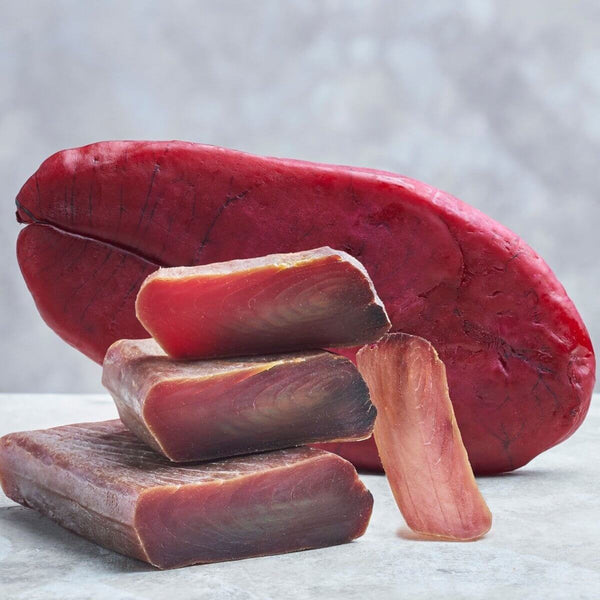
- BayMar 1 kg light tuna belly (25-32 €/kg) → you use 270g (a quarter of the jar). Potent flavor, honest price, fibrous piece. The best value for money for everyday croquettes.
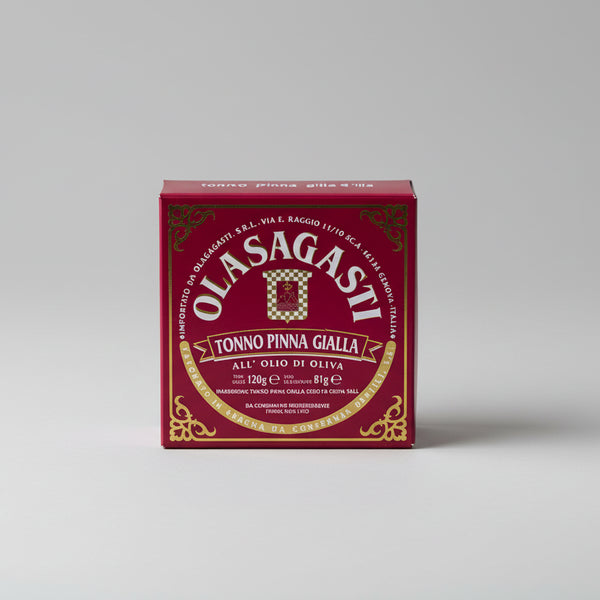
- Olasagasti 270g Cantabrian tuna loin (whole jar, 45-60 €/kg). Fine piece, balanced flavor. The refined option — Sunday croquette or special dinner.
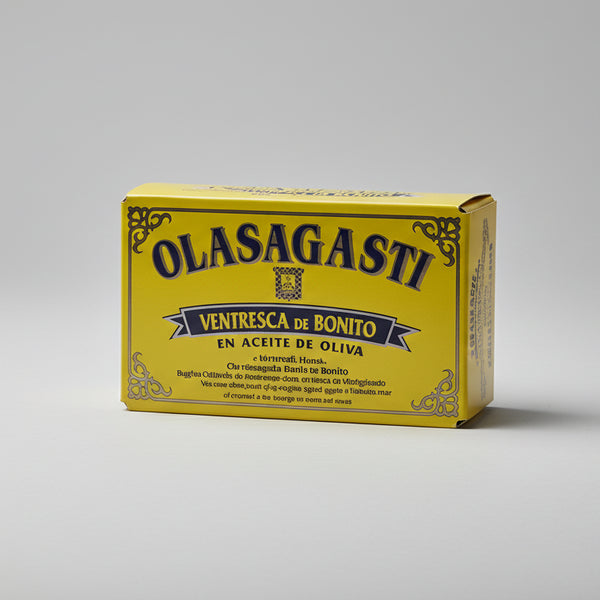
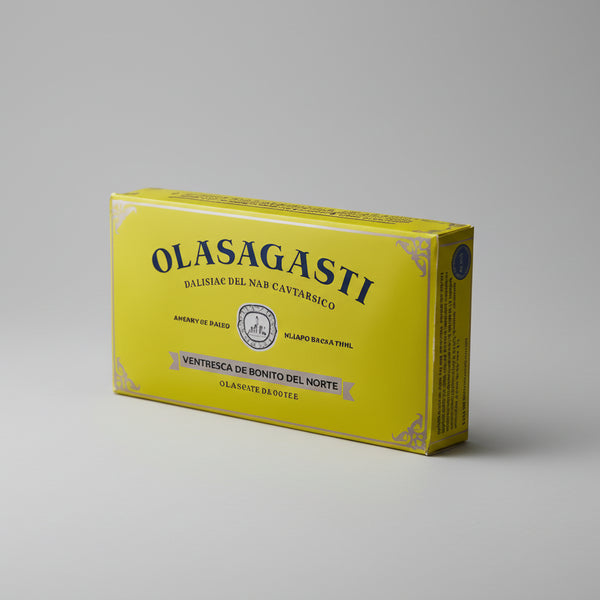
- Olasagasti 190g bonito belly (75-110 €/kg). Use 1 jar (190g) and slightly reduce the amount — add 80g extra of mashed cooked potato to compensate. Premium hotel croquette, party tapa.
BayMar 1 kg Light Tuna Belly
The rational choice for croquettes. Potent flavor, fibrous ventral cut, yields 4 batches (140 croquettes) in 1 kg format.
Always tuna in olive oil, NOT natural. The oil adds flavor and emulsifies with the béchamel. Natural tuna (in water) leaves the mixture flat and slightly watery.
Bacalalo tuna vs supermarket tuna: an 80g can of battle light tuna drains 56g — you need 5 cans for 1 batch. For that cost, you get BayMar 1 kg light tuna belly, with more flavor and for 4 batches. The difference is not in the total price — it's in what you eat.
Ingredients for 35-40 croquettes
Base béchamel (1 liter)
- 100 g butter (not margarine)
- 100 g all-purpose wheat flour
- 1 liter whole milk
- 1 medium onion, very finely chopped (optional but recommended)
- 1 teaspoon sweet paprika (the secret note)
- Salt, white pepper, and nutmeg to taste
Filling
- 270-300 g tuna in olive oil, drained and shredded
- 2 chopped hard-boiled eggs (optional but classic)
- Fresh parsley chopped, to taste
Breading and frying
- 3 beaten eggs
- 300 g fine breadcrumbs (not panko)
- 200 g flour (for dusting before egg, optional but recommended)
- 1 liter sunflower oil or mild olive oil for frying
Detailed steps with exact timings
- 1Poach the onion (10 min). In a wide, thick-bottomed pot, melt the butter over medium-low heat. Add the chopped onion and poach until soft and translucent, without browning (10-12 minutes). If you are not using onion, skip directly to step 2.
- 2Make the roux (5 min). Add the flour all at once to the hot butter with the onion. Mix with a wooden spoon for 3-5 minutes until the flour is cooked (light toasted color and biscuit smell). This step is critical — if you don't cook the flour, the croquettes will taste like raw flour.
- 3Add the milk (15 min). WITH COLD or lukewarm milk, not hot — add one ladleful and whisk vigorously until integrated. Repeat ladle by ladle until you've added the whole liter. The mixture should be smooth, without lumps. Cook over medium heat, stirring constantly (whisk or spoon) for 10-15 minutes.
- 4Season. Add sweet paprika, salt, white pepper, and nutmeg (a small pinch — nutmeg is tricky, less is more). Taste: it should be slightly oversalted, as the flavor will mellow when cooled.
- 5Incorporate the tuna and hard-boiled eggs. Turn off the heat. Add the drained tuna, shredded into small but visible pieces (not paste), the chopped hard-boiled eggs, and parsley. Mix with a spoon, do not beat. Check texture: the mixture should fall from the ladle in a dense ribbon.
- 6Chill for 6-24 hours. Pour the mixture into a wide dish (the thinner the layer, the faster it cools). Cover with plastic wrap, touching the surface of the mixture to prevent a skin from forming. Refrigerate for a minimum of 6 hours, ideally 24 hours. Without resting: they cannot be shaped.
- 7Shape (15 min). With a spoon or small ice cream scoop, take portions of 25-30g (large walnut size). Form balls or cylinders with hands lightly oiled (not floured — it sticks). Place on a tray.
- 8Bread (20 min). Flour each croquette (optional, improves adherence). Pass through beaten egg. Cover with fine breadcrumbs, pressing gently. For extra crunch: double breading (egg + bread again). Return to tray.
- 9Fry at 175-180°C (5 min per batch). Heat 1 liter of oil in a deep pan or fryer. Check temperature with a thermometer (175-180°C) or with a piece of bread: it should brown in 25 seconds. Fry 5-6 croquettes at a time, without crowding — 1.5-2 minutes per batch. Remove when uniformly golden.
- 10Drain and serve. Transfer them to a wire rack (NOT paper — paper returns moisture). Serve immediately, they won't stay crispy for more than 10 minutes.
The béchamel: 3 rules that don't fail
- 1:1:10 ratio. 100g butter : 100g flour : 1 liter milk. This is the base. If you want it thicker (for denser croquettes), use 120-130g of flour. More than 130g and it will be clumpy.
- Cook the flour for 3-5 minutes before adding the milk. This is the secret to lump-free béchamel without a raw taste. The flour should smell like biscuits, not powder.
- Cold milk over hot roux, not the other way around. The golden rule: opposite temperatures. If you add hot milk to hot roux, it will clump. Lukewarm-cold milk over hot roux integrates perfectly.
If it turns out lumpy despite everything: pass it through a hand blender (not a sieve — you lose texture). No chef admits doing it, but we all do.
Breading and frying: critical temperature
Frying is where 80% of homemade croquettes fail. Three facts:
- Temperature: 175-180°C. Lower: the croquette absorbs oil and becomes greasy. Higher: the breading burns and the inside remains raw.
- Clean oil: use new or filtered oil, NOT oil used for frying other things. The breading crumbs burn and leave an old oil taste.
- Few at a time: maximum 5-6 croquettes per batch in a 28cm deep frying pan. More, and the oil temperature drops — goodbye crispiness.
If you don't have a thermometer: throw in a small piece of bread. If it browns in 25-30 seconds, the oil is at 175-180°C. If it takes longer than 1 minute, turn up the heat.
Olasagasti 270g Cantabrian Tuna Loin
Fine piece of albacore tuna. For refined croquettes or premium toasts. 1 jar = 1 batch of 35 croquettes.
7 common mistakes and how to avoid them
- Béchamel too thick: if the mixture doesn't fall from the ladle but rather stays stuck in a block, the croquette will be dry. Solution: add 50-100ml more milk while hot and whisk.
- Not resting long enough: 2 hours is not enough. Minimum 6h, ideally 24h. Without resting, they cannot be shaped and will burst when fried.
- Natural tuna instead of oil-packed: results in a flat taste. The tuna oil is part of the flavor.
- Mashing tuna into a paste: loses the "chunky bits". Shred coarsely with a fork.
- Coarse breadcrumbs or panko: for Spanish croquettes, use fine breadcrumbs. Panko is Japanese and results in a crispier texture but loses the classic feel.
- Oil not hot enough: croquettes absorb oil and become greasy. Always use a thermometer.
- Too many croquettes at once: lowers the temperature. Maximum 5-6 per batch in a normal frying pan.
Table: 3 versions according to chosen tuna
| Version | Tuna | Cost for 35 croquettes | Result | When to choose |
|---|---|---|---|---|
| Family | BayMar 1kg Light Tuna Belly (270g) | ~7€ (tuna) + 4€ (rest) | Potent flavor, rustic croquette | Weekday appetizer, kids |
| Refined | Olasagasti Loin 270g | ~€13 (tuna) + €4 | Balanced flavor, delicate | Sunday, dinner with friends |
| Premium | Olasagasti Bonito belly 190g + 80g potato | ~€22 (tuna) + €4 | Buttery, creamy | Party appetizer, gourmet gift |
Variations Tested
Tuna and Leek Croquettes
Replace the onion with the white part of 1 finely chopped leek. Sauté in the same way. Sweeter and milder flavor. Recommended with Olasagasti loin.
Tuna and Cheese Croquettes (Bilbao style)
Add 80g of grated cured cheese (Idiazábal or Manchego) to the béchamel before the tuna. Whisk until integrated. Slightly reduce the salt — the cheese already adds flavor.
Spicy Tuna Croquettes
Substitute sweet paprika with hot paprika from La Vera + 1 crumbled cayenne pepper. For the brave.
Lactose-Free Tuna Croquettes
Replace butter with mild olive oil (90g) and whole milk with unsweetened oat milk (1 liter). The result is slightly less creamy but perfectly functional.
Gluten-Free Tuna Croquettes
Replace wheat flour with rice flour (same quantities, 100g). Use gluten-free breadcrumbs. The béchamel will be a bit denser — add an extra 100ml of milk.
Pairings
- White wine: Basque txakoli, young Albariño, Godello from Bierzo. Fresh and acidic to cut through the fat.
- Beer: cold lager (Estrella Galicia 1906, Mahou 5 estrellas), or a German pilsner.
- Vermouth: the classic Catalan — red vermouth with ice, olive, and an orange slice. Croquettes and vermouth are a historic marriage.
- Pre-appetizer: Cantabrian anchovies 00 on toast with rubbed ripe tomato.
- Dipping sauce: mild homemade aioli, cocktail sauce, or saffron aioli. NO ketchup with croquettes, please.
Storage: refrigerator, freezing, raw breading
- Raw dough in the refrigerator: maximum 48 hours in an airtight container with cling film touching the surface.
- Raw breaded croquettes, frozen: 2 months in freezer bags. DO NOT thaw before frying — directly from the freezer to oil at 165°C (lower, so they cook through). 4-5 minutes.
- Fried croquettes in the refrigerator: 24 hours. They lose crispiness — reheat in the oven at 200°C for 5-6 minutes, not in the microwave.
- Tip: form ALL croquettes in one batch, bread them, freeze those you won't fry that night. You'll have 60 croquettes for the next 2 months without extra work.
Bacalalo Products for this Recipe
Olasagasti White Tuna Belly 190g
The premium option for party croquettes. 190g + 80g mashed cooked potato = one batch with the highest creaminess.
All Canned Tuna and Bonito Collection
Bellies, loins, trunks, small and catering formats. Olasagasti, BayMar, Dardo.
Discover our premium selection
Carefully selected seafood products since 1990 at Mercat del Ninot, Barcelona. Refrigerated shipping in 24-48h.
Conclusion
Creamy tuna croquettes are not difficult — they are methodical. Béchamel with a 1:1:10 ratio, flour cooked for 5 minutes before the milk, a minimum rest of 6 hours, thin breading, and oil at 175-180°C. If you follow these five rules, they will turn out perfect. The elevating factor is the tuna: with BayMar 1kg light tuna belly, you get family appetizer croquettes at an honest cost; with Olasagasti loin, delicate Sunday croquettes; with Olasagasti bonito belly, premium hotel-quality croquettes. All three are valid — the bad one is tuna in water croquettes with lumpy béchamel. At Bacalalo, we sell all three types of tuna because each moment calls for its own.
Frequently Asked Questions
How much tuna do I need for 1 liter of béchamel?
Why do my croquettes explode when frying?
Can tuna croquettes be made without egg?
What kind of breadcrumbs should I use?
How long do raw frozen croquettes last?
Can regular canned tuna be used?
Why do croquettes get oily?
How many croquettes per person as an appetizer?
Can I make béchamel with lactose-free milk?
How to reheat croquettes without them becoming chewy?
Related Articles
- Cod Croquettes: The Ultimate Creamy Recipe
- Tuna Belly: What It Is and How to Cook It
- Difference Between Bonito del Norte and Light Tuna
- Tuna Belly vs. Bonito Belly
- Bonito del Norte vs. Light Tuna: Price and Differences
- Tuna Empanadillas: Homemade Crispy Recipe
- Galician Tuna Empanada: Homemade Dough
- Collection: Canned Tuna and Bonito
About the author — Maria José Sáez Pastor
Cook and mother of Marc. Since 1990, she has been cooking cod and Cantabrian preserves at Mercat del Ninot in Barcelona. She learned to desalinate from her mother-in-law, perfected béchamel through trial and error, and signs all of Bacalalo's recipes.