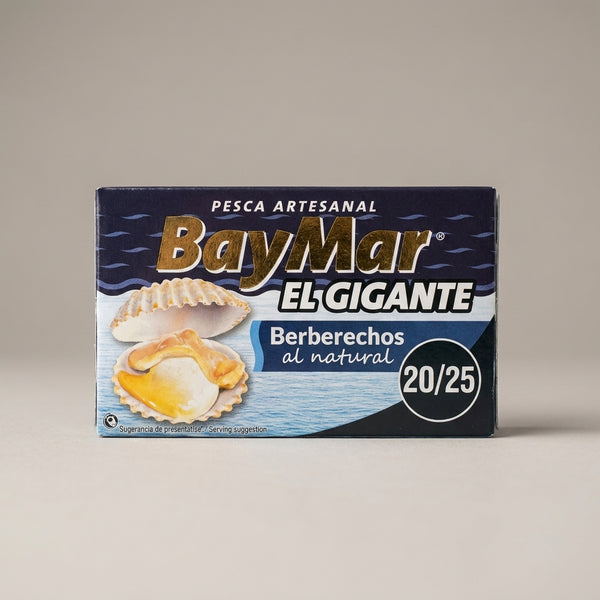


Cockles are one of the most popular shellfish in cans, but the difference between some tins and others is enormous. From the famous Álua cockles to artisanal Galician canned goods, I'll explain what types exist, how to read labels to avoid surprises, and what are the best canned cockles you can buy in Spain.
What are cockles
Updated March 2026. Based on our 30+ years of experience at Mercat del Ninot, this is what we recommend.
The cockle (Cerastoderma edule) is a bivalve mollusc that lives buried in the sand in intertidal zones. It is found on the coasts of the European Atlantic, from Norway to Morocco, with the most prized populations found in the Galician Rías Baixas, the Cantabrian coast, and the Dutch coasts.
Unlike clams or mussels, the cockle has a round, ribbed shell that is heart-shaped when viewed from the side. Its meat is small but intensely flavorful, with a sweet, iodized taste that makes it one of the most appreciated appetizers in Spain.
Most cockle consumption is in canned form. In fact, it is one of the few shellfish where artisanal canning can be as good as, or even better than, poorly handled fresh product, as the canning process perfectly preserves its texture and flavor if done correctly.
Types of cockles: origin and quality
Not all canned cockles are the same. The origin of the cockle largely determines its size, flavor, and price:
Galician cockles (Rías Baixas)
The most highly valued. Hand-picked by shellfishing women in the Rías Baixas, they are medium-large in size, with firm flesh and intense flavor. Production is limited (strict daily quotas) and prices are the highest on the market. The best Galician canneries work with this product.
Dutch cockles
The Netherlands is the largest European producer of cockles. They are large in size, with a good texture and a milder flavor than Galician ones. Many Spanish canneries use them due to their availability and competitive price. They are not bad, but they lack the intensity of the Galician product.
Álua cockles (Netherlands / various origins)
Álua is a very popular commercial brand, not a geographical origin. Its cockles can come from different areas. They are the best-selling in Spanish supermarkets due to their good value for money.
Cantabrian cockles
From the coasts of Asturias, Cantabria, and the Basque Country. Medium size, intense flavor, and limited production. Less known than Galician ones but of comparable quality.
Galician Rías Cockles and popular brands
When people search for "Álua cockles," they usually refer to the cockles found in supermarkets with good value for money. Álua offers natural cockles in different formats (30/40 pieces, 40/50 pieces per tin), which are an accessible entry into the world of canned cockles.
What you should know about supermarket cockles:
- They are usually of Dutch origin or a mix of origins.
- The caliber (number of pieces per tin) indicates the size: fewer pieces = larger cockles.
- The liquid is water with salt (natural), which perfectly preserves the original flavor.
- They are good for appetizers and salads, but the difference with a premium Galician preserve is noticeable.
Galician cockles: the Rías as a benchmark
Cockles from the Rías Baixas are the gold standard. These are the characteristics that distinguish them:
- Hand-harvested: collected one by one by licensed shellfishing women, respecting daily quotas and closed seasons.
- Purification: they go through certified purification plants that remove impurities without altering the flavor.
- Artisanal canning: many Galician canneries package on the same day of capture, preserving maximum freshness.
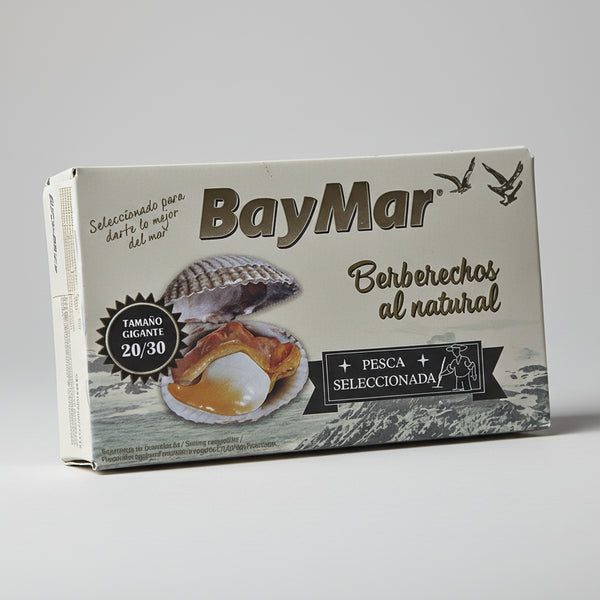
- Caliber: premium Galician cockles have calibers of 20/25 or 25/30 pieces per tin (large cockles).
How to choose good canned cockles
Five keys to getting it right:
1. Caliber matters
The caliber indicates how many pieces are in the tin. Fewer pieces = larger cockles = better quality (generally). Reference:
- 15/20 pieces: large, premium cockles.
- 25/30 pieces: medium-large size, excellent value for money.
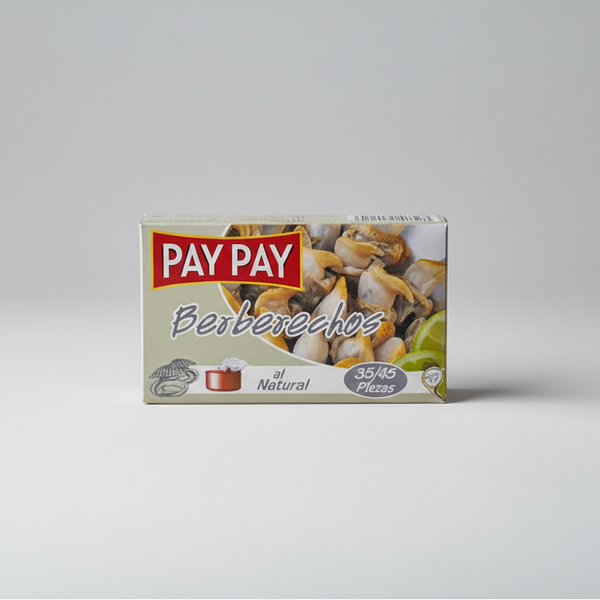
- 35/45 pieces: medium size, standard range.
- 50+ pieces: small, economic range.
2. Origin makes a difference
Look on the label for: "Berberechos de las Rías Gallegas" (Cockles from the Galician Rías) or "Producto de Galicia" (Product of Galicia) are indicators of maximum quality. If it only says "berberechos al natural" (natural cockles) without specifying origin, they are probably imported.
3. Artisanal vs. industrial cannery
Artisanal Galician canneries (Dardo, Rías Gallegas, Real Conservera, Los Peperetes) work with small batches and fresh product. Industrial canneries may use imported frozen product.
4. Canning liquid
"Al natural" (natural) means only water and salt. This format best preserves the original flavor of the cockle. Avoid those with unnecessary acidulants or preservatives.
5. Canning date
Unlike other products, canned cockles improve with age (to a certain extent). A tin aged 1-2 years can have more flavor than a freshly canned one. The limit is usually 4-5 years.
Brand comparison table
| Brand | Cockle origin | Typical caliber | Approx. price (120g tin) | Rating |
|---|---|---|---|---|
| Dardo (Rías Gallegas) | Galicia | 25/30 | 6-9 € | Excellent |
| Real Conservera Española | Galicia | 20/25 | 8-12 € | Premium |
| Los Peperetes | Galicia | 25/30 | 7-10 € | Excellent |
| Rías Gallegas | Galicia | 30/35 | 5-7 € | Very good |
| Álua | Netherlands / various | 35/45 | 2.50-4 € | Correct |
| Hacendado (Mercadona) | Netherlands / various | 40/50 | 2-3 € | Basic |
| Ortiz | Cantabria / various | 30/40 | 4-6 € | Good |
Prices of canned cockles
The price of canned cockles varies enormously depending on their origin, caliber, and cannery:
| Range | Price per tin (120g net) | Price per kg (drained) | What to expect |
|---|---|---|---|
| Economy | 2-3 € | 15-25 €/kg | Small cockles, imported origin, correct flavor |
| Medium | 4-6 € | 30-50 €/kg | Medium caliber, possible Galician origin, good texture |
| Premium | 7-12 € | 55-100 €/kg | Artisanal Galician, large caliber, exceptional flavor |
| Grand Reserve | 12-20 € | 100-160 €/kg | Caliber 15/20, prestigious cannery, aged |
To put it in perspective: a premium tin of Galician cockles (8-10 €) is an appetizer for 2-3 people. It's an accessible luxury compared to other seafood.
Fresh vs. canned cockles
A legitimate question: is it worth buying fresh cockles if you're going to cook them?
The answer depends on your proximity to the sea and the quality of the fresh product available:
- Fresh cockles from the Rías: if you live in Galicia or have access to daily product, steamed fresh cockles are unbeatable. The flavor and texture are superior.
- Fresh cockles inland: if you are far from the coast, fresh cockles can be 2-3 days old since capture. In that case, a good conserve canned on the same day of capture may be a better option.
- For canned appetizers: this is the king format. Open, serve, enjoy. No cooking, no sand, no risk.