Summary
At Bacalalo, from Barcelona's Mercat del Ninot, natural cockles are one of our best-selling canned products and also one of those about which we receive the most questions. In this guide: What natural cockles are, The numbering system: what 50/60, 30/40, 20/30 means, Galician cockles vs. Dutch cockles: the real difference.
Natural Cockles: Brand and Size Guide
At Bacalalo, from Barcelona's Mercat del Ninot, natural cockles are one of our best-selling canned products and also one of those about which we receive the most questions. What does "30/40" mean? Why does one can cost 4 euros and another 14? Is there a real difference between Galician and Dutch cockles? This guide answers all these questions with concrete data and practical criteria so that the next time you are in front of the supermarket shelf or our online store, you know exactly what you are buying.
What are natural cockles
Natural cockles are cockles (Cerastoderma edule) steamed and packed in their own juice, without added oil or sauces. Preservation is done only with salt and the liquid released by the mollusk during cooking. The result is a product that maintains the pure marine flavor of the cockle without interference.
The term "natural" is opposed to other presentations such as cockles in olive oil or pickled. Natural cockles have a cleaner, more iodized flavor, and are the best-selling format in Spain in terms of both volume and value.
From a nutritional point of view, natural cockles are one of the most complete seafoods: they provide high-quality protein (16-18g per 100g), iron (11.9mg/100g, more than meat), zinc, iodine, and vitamin B12. The fat content is minimal (less than 2g/100g), making them a high-nutritional-value snack with few calories.
The numbering system: what 50/60, 30/40, 20/30 means
The number on cans of natural cockles indicates how many pieces are in each can (usually referring to the drained content, although sometimes it refers to the total content). It is the most important size indicator to choose by:
- 50/60 pieces: Small cockles. These are the most common in supermarkets. The size of each piece is approximately 1-1.5 cm. Decent flavor but softer texture. Price: €2-€6/can of 60-80g net.
- 30/40 pieces: Medium-large cockles. The balanced size between flavor and texture. Pieces measure approximately 2-2.5 cm. This is the preferred format for enthusiasts. Price: €6-€10/can.
- 20/30 pieces: Very large cockles. Pieces can measure 3 cm or more. Firmer and fleshier texture, more pronounced flavor. These are the most highly valued and also the most expensive. Price: €10-€18/can.
- 10/20 pieces: Premium format of exceptionally large cockles. Very difficult to find and reserved for the best Galician brands. Price: €15-€25/can.
The general rule is: the smaller the number, the larger the size of each piece and the higher the perceived quality. A large cockle takes longer to grow, has had more time to develop its flavor, and is more difficult to catch under optimal conditions.
Galician cockles vs. Dutch cockles: the real difference
The Spanish market consumes cockles from two main origins: the Galician Rías (Rías Baixas, mainly) and the Netherlands (North Sea coasts). The difference between the two is significant:
Galician Cockles
Raised in the Galician Rías, in Atlantic water rich in phytoplankton and minerals. Water temperature ranges between 12°C and 20°C depending on the season, which favors slower growth and a more developed flavor. Brands with the "Rías Gallegas" designation are regulated and must prove their origin. Flavor: intensely marine, with iodized and sweet notes. Texture: firm and meaty. Premium price: up to 50-100% more expensive than Dutch ones.
Dutch Cockles
They come from the Wadden Sea in the Netherlands, a protected area with strong tidal movements. Dutch cockles are generally smaller and have a more neutral and less pronounced flavor than Galician ones. Many economical brands in the Spanish market use Dutch cockles because they are more abundant and cheaper. They are not bad, they are simply different and have a less intense flavor.
To identify the origin on the can, look at the label: "fishing area: FAO 27" (Northeast Atlantic, including Galicia and the Netherlands) or the specific mention "Rías Gallegas." Some brands directly indicate "product of Spain" or "product of the Netherlands."
Bacalalo Products

Fresh Coastal Sardines - 4 Pieces Pack | ...
2,95 €

Whole Gourmet Extra Tuna Mojama Loin Artisanal...
95,00 €

Natural Cockles 30/40 Pieces - 111g | Ba...
7,95 €

Bonito del Norte Loins in Olive Oil Glass Jar...
13,95 €
Refrigerated delivery 24-48h throughout the Peninsula
Guide to Natural Cockle Brands
The canned cockle market ranges from large industrial brands to artisanal producers. These are the benchmarks by category:
Premium category: large Galician cockles
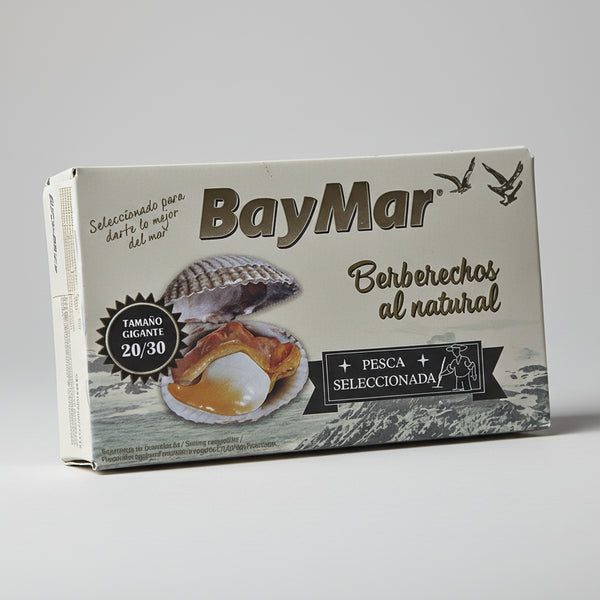
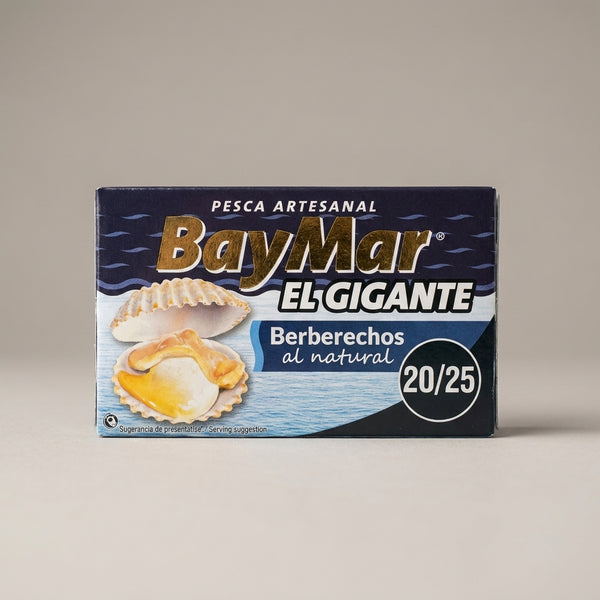
- BayMar El Gigante: One of the most recognized brands in the 30/40 format from Rías Gallegas. The pieces are large and uniform, the cooking liquid is clean, and the flavor is intensely marine. We sell them at Bacalalo because they are consistent in quality. Price: €7-€9/can.
- Paco Lafuente: Family business from O Grove specializing in high-quality preserves. Their cockles in 20/30 format are extraordinary. Price: €12-€18/can.
- Real Conservera Española: From Cambados. They work exclusively with cockles from the Rías Baixas, steamed without additives. The finish is artisanal, and the flavor is a benchmark. Price: €10-€15/can.
Mid-high category: good quality, better price
- Ortiz: The best-known Basque brand makes consistently good quality cockles, although they are not Galician. Good price-quality balance for everyday consumption. Price: €4-€7/can.
- Dani: Galician brand with wide distribution. Their cockles in 30/40 and 50/60 sizes are of decent quality at a competitive price. Available in most supermarkets. Price: €3-€6/can.
Basic category: supermarket
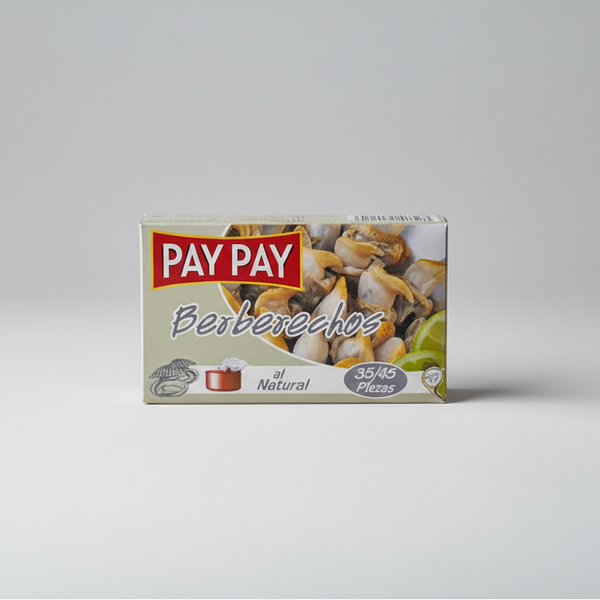
- Private labels (Mercadona, Lidl, Carrefour): Mostly use Dutch cockles or mixed origin in 50/60 or 60/80 formats. They are perfectly safe and decent for cooking or for those not seeking the ultimate flavor. Price: €1.50-€3/can.
How to Serve Natural Cockles Correctly
Natural cockles do not need to be cooked: they are eaten directly from the can, cold or at room temperature. These tips make all the difference:
- Serving temperature: Between 10°C and 16°C. A cockle that is too cold (fresh out of the refrigerator) loses aromas. Take them out 10 minutes before serving.
- The liquid from the can: Don't throw it away. The cooking juice of natural cockles is salty and flavorful. It can be used to dress the tapa or to add to pasta sauces.
- Classic accompaniments: Lemon squeezed at the moment, freshly ground black pepper, a drizzle of extra virgin olive oil. Bread with butter also works very well.
- Presentation: If serving at the table, transfer them to a small bowl with some of the liquid. Avoid serving them in the can itself in formal settings.
- Pairing: Albariño, Txakoli, or any dry, crisp white wine. The bubbles of an Asturian cider also work very well with the iodine of the cockle.
How to read the label of a can of cockles
To avoid surprises when buying natural cockles, these are the details you should check on the label:
- Net content vs. drained content: Net content includes the liquid. Drained content is what you actually eat. A 115g net can may only have 60-70g drained content. Always compare by drained weight.
- Number of pieces: Already explained above. Lower number = larger pieces.
- Fishing area or country of origin: Look for "Spain" or "Rías Gallegas" for Galician cockles.
- Ingredients: Should only be cockles, water, and salt. If there are preservatives or additives, the quality is lower.
- Best-before date: Canned goods have a shelf life of 3-5 years, but the best cockles are consumed within the first 2 years for optimal flavor.
Bacalalo Products
Fresh Coastal Sardines - 4 Pieces Pack | ...
2,95 €
Whole Gourmet Extra Tuna Mojama Loin Artisanal...
95,00 €
Natural Cockles 30/40 Pieces - 111g | Ba...
7,95 €
Bonito del Norte Loins in Olive Oil Glass Jar...
13,95 €
Refrigerated delivery 24-48h throughout the Peninsula
🛒 Products mentioned in this article
⭐ 4.9/5 · Cold shipping 24-48h · Since 1990 at Mercat del Ninot
Frequently Asked Questions
What is the difference between 30/40 and 50/60 in natural cockles?
The number indicates how many pieces there are per can. A 30/40 format has between 30 and 40 cockles, which means each piece is larger. The 50/60 format has between 50 and 60 smaller pieces. For consumption as an appetizer or tapa, 30/40 are the right choice: larger size, better texture, and more intense flavor. 50/60 are more economical and work well for mixing into rice dishes or fideuás.
Are Galician cockles better than Dutch ones?
In terms of flavor intensity and tradition, Galician cockles from the Rías Baixas have an advantage: richer water in phytoplankton, slower growth, and a more pronounced flavor. Dutch cockles from the Wadden Sea are of good quality but more neutral. The price difference reflects this quality difference. For a special tapa, choose Galician. For cooking in a rice dish or fideuá, Dutch cockles may suffice.
Can natural cockles be heated?
Yes, although it's not typical. If you're adding them to pasta or rice, incorporate them at the last moment (30 seconds before serving) so they don't overcook. Excessive heat makes them rubbery and dry. In the microwave, 20-30 seconds at 50% power is enough to warm them without ruining them.
How long do natural cockles last once the can is opened?
Once opened, natural cockles last 24-48 hours in the refrigerator, covered in their own liquid. Do not leave them in the open can: transfer them to a glass container with their juice and cover. Beyond 48 hours, the flavor changes and the texture deteriorates. Unopened cans last until the date indicated on the packaging (3-5 years normally).
What to do if natural cockles taste too metallic?
A metallic taste can appear if the cockles have been in the open can for a long time, if the inner coating is deteriorated, or if the product is of low quality. To minimize this: immediately transfer them to a glass bowl when opening the can, add a splash of fresh lemon and olive oil, and serve without delay. With premium quality cockles and a can in good condition, this problem should not occur.
Are natural cockles good for anemia?
Yes, significantly. Natural cockles have one of the highest heme iron contents of all foods: 11.9 mg per 100g of drained product, which represents almost 100% of the recommended daily intake. In addition, heme iron (of animal origin) is absorbed much better than plant iron. Nutritional doctors frequently recommend the consumption of cockles and other bivalve mollusks to patients with iron-deficiency anemia.
Discover more
Discover our premium selection
Seafood products carefully selected since 1990 in Mercat del Ninot, Barcelona. Refrigerated shipping in 24-48h.