Cod with Onions: A Comforting Homemade Recipe Step by Step
Cod with onions (bacalao encebollado) is one of those recipes that prove that the simplest cooking can be the most extraordinary. A good cod loin, thinly sliced onions, and patience: that's all you need to create a dish that has comforted entire generations in homes throughout Spain.
But beware: simple doesn't mean easy. The secret to a memorable cod with onions lies in the details no one tells you. In the speed at which you caramelize the onion. In the thickness of the cod cut. In the exact moment you remove the pan from the heat. Details that make the difference between a decent dish and one that makes you close your eyes in pleasure.
Since 1990, we have been selecting cod from its origin for homes and restaurants at the Mercat del Ninot in Barcelona. In this article, I share the recipe as we make it at home, with all the tricks we've learned over three generations working with this product. No shortcuts, no artifice.
History and tradition of cod with onions
Cod with onions (bacalao encebollado) has deep roots in Spanish cuisine, especially in the northern regions—Basque Country, Navarre, Cantabria—where salted cod was a fundamental protein for centuries. It wasn't a restaurant dish; it was survival food, pantry food, for days of fast when the Church prohibited meat.
The combination of cod and onion is not accidental. The onion, cooked slowly until sweet and silky, balances the salty power of the cod and provides a richness that transforms an austere ingredient into a delicacy. Basque fishermen already prepared rudimentary versions of this dish on their boats, using onions as one of the few vegetables that would last weeks without spoiling.
Over time, each region developed its own version. In the Basque Country, green pepper is added; in Navarre, choricero pepper; in Catalonia, sometimes sautéed tomato is incorporated. But the essence remains: cod + onion + time + olive oil. Four ingredients. An immortal recipe.
Today, cod with onions continues to be one of the most sought-after dishes in Spanish cuisine. And rightly so: it is economical, comforting, easy to prepare in quantity, and, when well made, absolutely delicious. The kind of recipe you are asked to repeat every week.
Which cod cut to choose (and why it matters)
This is where most online recipes fail: they tell you "400g of cod" and that's it. But not all cod cuts work the same for this dish. The difference between a mediocre and a spectacular result begins with the choice of the piece.
The loin: the ideal choice
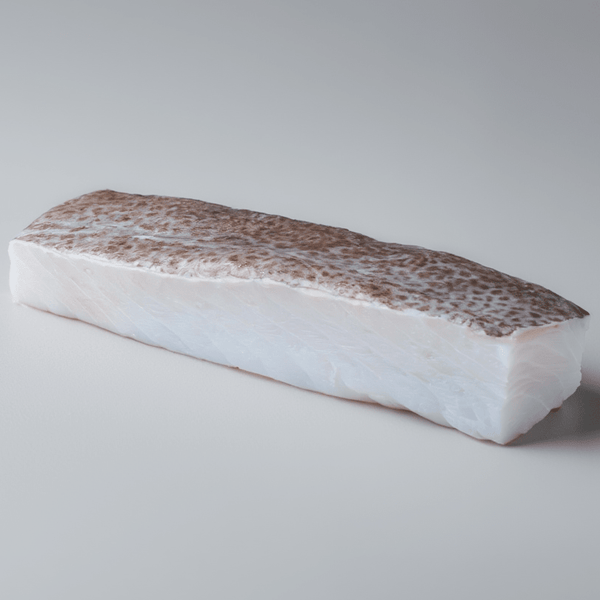
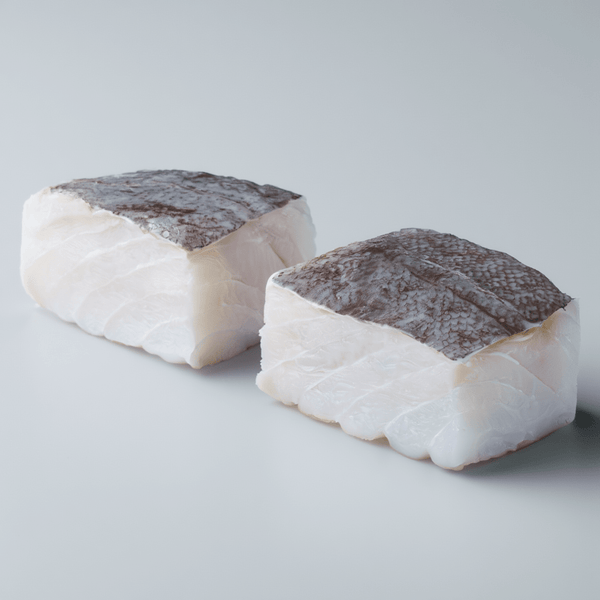
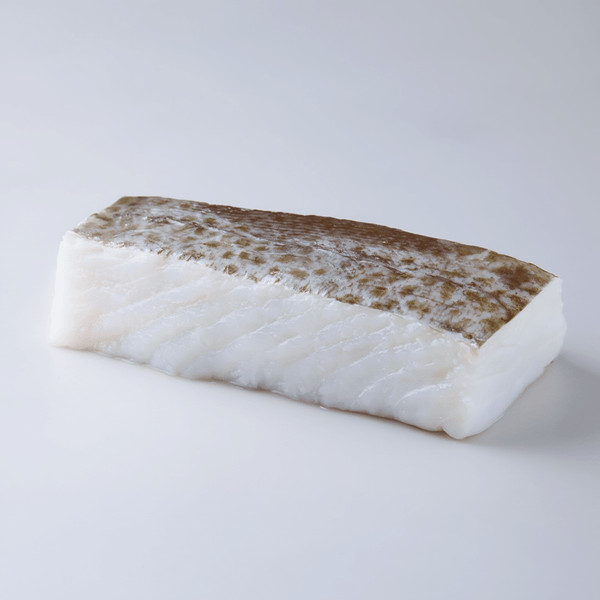
For cod with onions, the loin is the star cut. It is the thickest and meatiest part of the cod, with a minimum of 3-4 cm in thickness. Why does it matter? Because a thick loin allows you to cook the outside until it forms a slight golden crust while the inside remains juicy, flaking into soft layers that melt upon contact with the caramelized onion.
Thin cod—like tail or scraps—overcooks in seconds and becomes dry, fibrous, without that buttery texture we are looking for. For this dish, invest in a good loin. It's the difference between a 6 and a 10.
Our desalted cod, ready to cook
If you want to skip the desalting (24-48 hours) and start directly with the recipe, our desalted cod loin arrives at your home with the perfect salt point. Pieces +4 cm thick, hand-selected. No preservatives, no additives.
Other cuts and when to use them
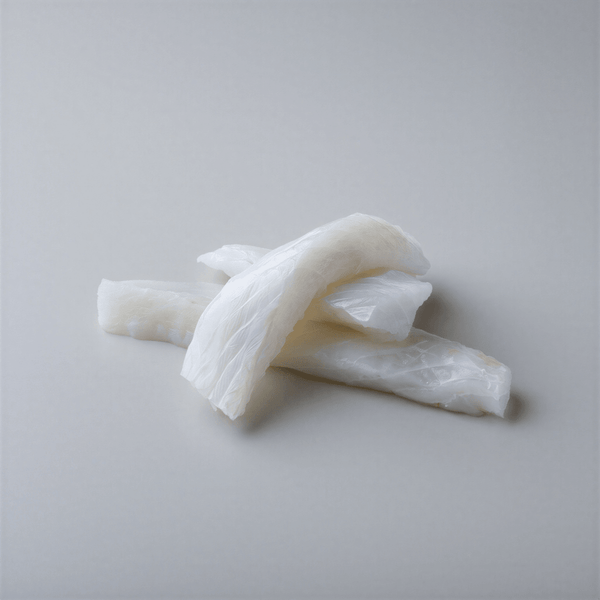
If you don't have loin, flake cod (center of the cod, without skin or bones) is a worthy alternative, though somewhat drier. The tail, thinner, can work if you drastically reduce cooking time. Scraps or shredded flakes are another story: better save them for fritters or salads.
To learn more about the differences between cuts and how to choose according to your recipe, I recommend reading our guide on dry cod vs. desalted cod: which to buy for each recipe.
The secret to perfect caramelized onions
Let's get to the point: the onion is the co-star of this dish, not a garnish. If you treat it as a mere accompaniment, the result will be mediocre. Here are the principles that make the difference.
Quantity: more than you think
The golden rule is to use twice the weight of onion as cod. Yes, double. The onion reduces by half or more during cooking, so if you start with 800g of onion for 400g of cod, you'll end up with a balanced proportion. If you fall short, the dish will be "cod with a little onion" instead of "cod with onions."
Cut: thinly julienned, always
Cut the onion into thin julienne strips (2-3 mm thick), following the natural grain of the bulb from pole to pole. Never in rings or brunoise. Thin julienne caramelizes evenly and creates those silky strands that wrap around the cod like a blanket.
Heat and patience: the ultimate key
Here's the secret no one wants to hear: the onion needs 30 to 45 minutes over low heat. No rush. No turning up the heat "to make it go faster." If you turn up the heat, the onion burns on the outside and remains raw on the inside. What you're looking for is a slow transformation: from translucent white to amber gold, passing through every intermediate shade.
Some tricks for perfect caramelization:
- Generous extra virgin olive oil: don't skimp. Oil conducts heat and adds flavor. A minimum of 4-5 tablespoons for 800g of onion.
- Pinch of salt at the beginning: salt extracts moisture from the onion and slightly speeds up the process without burning.
- Stir every 5-7 minutes: not every 30 seconds (you cool it down) or every 15 minutes (it sticks). Every 5-7 minutes, a gentle stir with a wooden spoon.
- Slightly ajar lid for the first 15 minutes: to let the onion "sweat" and then uncover for evaporation and concentration.
- Zero sugar: if you need to add sugar for the onion to taste sweet, you've gone too fast. The onion has more than enough natural sugars.
When the onion is golden, shiny, and has an aroma that perfumes the whole kitchen, you'll know it's ready. That unmistakable smell—sweet, deep, almost smoky—is the signal.
Complete recipe: cod with onions step by step
Traditional Cod with Onions
Prep time: 15 minutes | Cook time: 50 minutes | Servings: 4 | Difficulty: Easy
Ingredients
- 4 desalted cod loins, about 150-180g each (minimum 3 cm thick)
- 800g onions (about 4-5 medium onions)
- 5-6 tablespoons extra virgin olive oil
- 2 cloves garlic (optional)
- 1 bay leaf
- 100 ml dry white wine
- Salt (in moderation, cod already has residual salt)
- Freshly ground black pepper
- Fresh chopped parsley for serving
- Flour for dusting (optional)
Step-by-step preparation
- Prepare the cod. If using salted cod, desalt it at least 24-48 hours in advance, changing the water every 8 hours (here's our complete guide to desalting cod). If using ready-to-use desalted cod, simply pat it dry thoroughly with paper towels. This step is crucial: wet cod doesn't sear well.
- Caramelize the onion. Peel and thinly julienne the onions. In a large skillet or shallow pot, heat 4 tablespoons of olive oil over medium-low heat. Add the onion, a pinch of salt, and the bay leaf. Cook for 30-45 minutes, stirring every 5-7 minutes, until the onion is golden and silky. In the last 5 minutes, add the sliced garlic if using.
- Deglaze with wine. Increase the heat to medium, pour in the white wine, and let it reduce for 2-3 minutes, scraping the bottom of the pan with a wooden spoon to incorporate the caramelized juices. Remove the onion and set aside.
- Sear the cod. In the same pan (or another if you prefer), add 1-2 tablespoons of fresh oil over medium-high heat. If you want a crispier crust, lightly dust the loins with flour, shaking off any excess. Place the loins skin-side up and cook for 3-4 minutes until a golden crust forms. Carefully flip and cook for another 2-3 minutes on the skin side.
- Combine and finish. Reduce the heat to low. Distribute the caramelized onion over and around the cod loins. Cover the pan and let them integrate for 3-5 minutes. The gentle steam will finish cooking the inside of the cod without drying it out.
- Serve. Place each loin on a plate with a generous portion of onion on top and around. Drizzle with the pan juices, sprinkle with fresh chopped parsley, and add a thread of raw extra virgin olive oil. Serve immediately.
Professional tip: Cod continues to cook off the heat from residual heat. If you cut into it and see that the center is slightly translucent, don't worry: it will be perfect by the time it reaches the plate. Opaque cod from side to side is overcooked cod. For more details on how to cook cod without overdoing it, check out our article on common mistakes when cooking cod.
Variations: baked, with peppers, and other versions
The classic pan-fried recipe is the base, but cod with onions allows for variations that are worth knowing. Each has its moment and its raison d'être.
| Variation | Method | Total Time | Difficulty | Best for... |
|---|---|---|---|---|
| Classic Pan-Fried | Skillet, low + medium heat | 50 min | Easy | Everyday, 2-4 people |
| Baked | Onion in skillet + oven 180 °C | 60 min | Easy | Group meals, 6+ people |
| With Peppers | Skillet, green and/or red pepper | 55 min | Easy | More color and flavor, Basque style |
| With Tomato | Sautéed tomato + onion | 55 min | Easy | Catalan version, juicier |
| Confit | Cod at low temperature in oil | 70 min | Medium | Special occasions, maximum juiciness |
Baked Cod with Onions
The baked version is ideal when cooking for more than four people. The process is similar: caramelize the onion in a pan (you can't skip this), place it as a base in a baking dish, put the cod loins on top, and bake at 180 °C for 15-18 minutes. The advantage of baking is that it cooks evenly and you can prepare 6-8 servings at once without complications.
With peppers: Basque version
Add 2 green peppers cut into thin strips along with the onion from the beginning. The pepper needs the same slow cooking time. Some also add rehydrated choricero pepper, whose scraped pulp adds a smoky and sweet flavor that perfectly complements the cod. This version has more complex flavor and a more striking visual appearance.
Confit version: for gourmets
If you want to take the dish to the next level, confit the cod. Submerge the loins in olive oil at 65-70 °C for 20-25 minutes. The result is cod with an absolutely silky texture, which flakes apart at the slightest touch. Combine it with caramelized onions and prepare for something memorable. If you are interested in mastering the gentle cooking technique for cod, don't miss our article on how to pan-fry cod without it drying out.
Common mistakes that ruin cod with onions
After decades selling cod and listening to our customers' experiences, these are the mistakes we see again and again:
- Not enough onion. We've said it, but we insist: twice the weight of onion as cod. Onion reduces drastically. If you start with too little, you end up with cod with onion decoration.
- Onion on high heat. This is the number one mistake. Burnt onion tastes bitter, not sweet. If you don't have 30 minutes, better make another recipe. There's no shortcut to caramelization.
- Poorly desalted cod. Too salty cod ruins any recipe, but in cod with onions it's especially serious because the sweet onion amplifies the perception of saltiness. Ensure proper desalting or use pre-desalted cod.
- Wet cod in the pan. If you don't pat the cod dry with paper towels before searing it, the water produces steam instead of a crust. The result: boiled cod instead of browned.
- Overcooking. Cod goes from juicy to dry in a matter of a minute. A 4 cm loin needs 3-4 minutes per side in a pan, no more. If it becomes completely opaque and starts to release white liquid (albumin), you've overcooked it.
- Forgetting to rest. Those final 3-5 minutes with the onion on top and the lid on are not optional. This is when the flavors meld and the inside of the cod reaches its perfect point from residual heat.
To delve deeper into these and other common mistakes, I recommend our complete guide on typical mistakes when cooking cod and how to prevent it from becoming dry or falling apart.
Pairing: what wine and accompaniments to choose
Cod with onions is a dish with rich, well-rounded flavors — the sweetness of the onion, the saltiness of the cod, the richness of the oil — and needs an accompaniment that complements without competing.
Wine
The natural choice is a full-bodied white wine. Some options that work very well:
- Godello (Valdeorras, Bierzo): mineral, with white fruit, enough structure to support the dish.
- Verdejo (Rueda): if you prefer something fresher and more aromatic. Choose a Verdejo aged on lees for more complexity.
- Garnacha Blanca (Terra Alta, Catalonia): round, glyceric, full-bodied. A spectacular pairing with caramelized onions.
- Albariño (Rías Baixas): the classic for fish, although for this dish we prefer something with more body than a young Albariño.
If you prefer red, a light young red — such as a Mencía from Bierzo or a Garnacha without barrel aging — can work surprisingly well, especially with the version that includes peppers.
Accompaniments
Cod with onions doesn't need much else, but these accompaniments elevate it:
- Patatas panaderas (sliced baked potatoes): the classic accompaniment. Slice them thinly and cook them in the same pan before the cod, or bake them.
- Crusty bread: essential for soaking up the onion sauce. Not optional.
- Simple green salad: a few lettuce leaves, arugula, or lamb's lettuce with a lemon dressing to add freshness and contrast.
- Roasted Piquillo peppers: if you haven't already incorporated them into the recipe, they go wonderfully on the side.
Frequently asked questions about cod with onions
How long should you caramelize the onion for cod with onions?
Between 30 and 45 minutes over low heat. There are no shortcuts. The onion should progressively turn from translucent white to amber golden. If the onion still crunches when you bite it or has white tones, it's not ready. Be patient: the difference between a well-caramelized onion and a half-done one is the difference between a good dish and an exceptional one.
What cut of cod is best for cod with onions?
The loin, without a doubt. It's the thickest, meatiest part of the cod, at least 3-4 cm thick. This allows you to sear it on the outside without drying out the inside. Flakes are an acceptable alternative, but the tail and trimmings are too thin for this dish. In our store, you can find desalted cod loin with the ideal thickness.
Can you make cod with onions using frozen cod?
Yes, but with nuances. Frozen cod releases more water when cooked, making it difficult to achieve a good golden crust. If using frozen, thaw it slowly in the refrigerator (never at room temperature or in the microwave) and pat it very dry with paper towels before cooking. That said, the result will never be the same as with fresh desalted cod: the texture is different, softer and less flaky.
What wine pairs best with cod with onions?
A full-bodied white like Godello, Garnacha Blanca, or aged Verdejo. The sweetness of caramelized onion calls for a wine with structure and some richness, not a white that is too acidic or light. If you prefer red, opt for a young and light one like a Mencía from Bierzo.
Can I prepare cod with onions in advance?
Yes, the caramelized onion can be prepared up to 2 days in advance and stored in the refrigerator in an airtight container. In fact, it improves with resting. The cod, however, should be cooked just before serving. What you can do is have the onion ready, and when you're about to eat, sear the cod (5-7 minutes) and combine. This reduces the work on the day to less than 15 minutes.
How many calories does cod with onions have?
A generous serving of cod with onions (180g cod + caramelized onion) provides approximately 350-400 kcal. It is a dish rich in high-quality protein, healthy fats from olive oil, and low in carbohydrates. A nutritious and satisfying option for any balanced diet.
Can I make cod with onions without flour?
Absolutely. Flour is completely optional. Its sole purpose is to help form a crispier crust when searing the cod. Without flour, the cod is equally delicious, with a softer, more natural sear. It's the perfect option if you're looking for a gluten-free recipe or simply prefer a cleaner result.
How much onion do I need per person?
Estimate about 200g of raw onion per person (approximately one medium-large onion). It seems like a lot, but remember that onion loses more than half its volume during slow cooking. If you have leftover caramelized onion, it keeps perfectly for 3-4 days in the refrigerator and is pure gold for sandwiches, pizzas, or fried eggs.
🛒 Products mentioned in this article
⭐ 4.9/5 · 24-48h refrigerated shipping · Since 1990 at Mercat del Ninot
Conclusion: honest cooking needs no artifice
Cod with onions is proof that great dishes don't need long lists of ingredients or avant-garde techniques. They need quality produce and respect for timing. A good cod loin, onions lovingly sliced, and the patience to let low heat work its magic for 30-45 minutes.
If there's one thing we've learned in over 30 years of working with cod, it's that the raw material is everything. You can follow the recipe to the letter, but if you start with poor quality cod — thin, dry, poorly desalted — the result will be mediocre. Start with a good loin, treat it with respect, and the dish will practically make itself.
And if you want to explore more recipes with the same spirit — simple, honest, product-based — don't miss our collection of grandmother's traditional cod recipes. Because the best recipes aren't invented: they're inherited.
Marc Gonzalez Saez
Third generation in the cod business. From Mercat del Ninot in Barcelona, he selects the best origin pieces for clients and restaurants.