Article Contents
- What is Cod with Mousseline Sauce?
- Origin and History of Mousseline Sauce
- How to Make Mousseline Sauce Step by Step
- How to Choose the Perfect Cod for This Recipe
- Complete Recipe: Gratinéed Cod with Mousseline Sauce
- Restaurant-Style Presentation at Home
- Classic vs. Modern Version: Comparative Table
- Recipe Card
- Premium Cod for Your Mousseline
- Frequently Asked Questions
- Conclusion
What is Cod with Mousseline Sauce?
Cod with mousseline sauce is one of the most refined preparations in classic European cuisine applied to fish. It consists of a cod loin —typically desalted and poached or confited— covered with a generous layer of mousseline sauce, a variation of hollandaise enriched with whipped cream, which is briefly gratinéed under the oven grill until the surface acquires a golden and slightly crispy tone.
The result is a dish that masterfully combines textures: the white, flaky, and juicy cod meat contrasts with the airy creaminess of the sauce and that gratinéed touch that provides a subtle crunch. It is, without exaggeration, one of the most elegant cod dishes that can be prepared in a home kitchen with accessible ingredients.
Unlike other recipes where cod is cooked with tomato, pepper, or olive oil-based sauces —all valid and delicious— mousseline opts for subtlety. The goal is not to enhance the cod's flavor with strong ingredients, but to envelop it with a sauce that elevates it without competing. It is French cuisine applied to a deeply Mediterranean ingredient.
This recipe appears on the menus of Michelin-starred restaurants as well as classic bistros in the French Basque Country, and there's a reason for it: it's technically accessible yet visually stunning. The kind of dish that, when brought to the table, creates a silence of respect before the first bite.
Origin and History of Mousseline Sauce
Mousseline sauce —also spelled mousseline in its original French— belongs to the family of mother sauces in classic cuisine, specifically as a derivative of hollandaise sauce. Its name comes from the French mousseline, which means muslin, referring to the lightness and delicacy of the fabric. The analogy is precise: this sauce has such an ethereal texture that it recalls the feel of that fine cloth.
Auguste Escoffier, the father of modern French cuisine, codified it in his Guide Culinaire (1903) as a variation of hollandaise to which whipped cream is incorporated just before serving. The addition of whipped cream transforms the dense, unctuous texture of hollandaise into something lighter, airier, and, paradoxically, more luxurious.
In the French Basque and northern Spanish culinary tradition, mousseline found a natural partner in cod. The Basque Country, with its dual gastronomic heritage —French technique and Spanish passion for cod— was probably where this pairing became established. Historic restaurants in San Sebastián and Biarritz have been serving morue à la mousseline as a staple menu item for decades.
The interesting thing is that, despite its haute cuisine origins, mousseline sauce does not require special equipment or hard-to-find ingredients. Butter, egg yolks, lemon juice, and whipping cream. Nothing more. The difficulty lies in the technique, in controlling temperature and timing —aspects that, once mastered, make this recipe an infallible resource for special occasions.
How to Make Mousseline Sauce: Step-by-Step Technique
Mousseline sauce is, in essence, a hollandaise to which whipped cream is incorporated. It seems simple, and it is, but each step has its nuances. Mastering this sauce means mastering heat control and emulsification. Here is the complete process, with no shortcuts that compromise the result.
Mousseline Sauce Ingredients (for 4 servings)
- 3 large egg yolks, at room temperature
- 200 g unsalted butter, clarified (melted and without milk solids)
- 1 tablespoon freshly squeezed lemon juice
- 1 tablespoon cold water
- 100 ml heavy cream (minimum 35% fat), very cold
- Fine salt and freshly ground white pepper
- A pinch of cayenne pepper (optional, for those seeking a subtle hint of heat)
Preparation Process
- Clarify the butter: Melt the butter over very low heat. Skim off the white foam from the surface with a spoon and carefully pour the golden fat into a container, leaving the whitish milk solids at the bottom of the saucepan. This clarified butter is the base of the emulsion and the reason the sauce will be stable.
- Prepare a double boiler: Pour water into a wide saucepan until it's one-third full. Heat it until it begins to steam but without letting it boil (about 70-80 °C). If it boils, the yolks will curdle, and you'll have scrambled eggs with butter. That's not mousseline.
- Whip the yolks: In a glass or stainless steel bowl that fits snugly over the saucepan without touching the water, whisk the yolks with the cold water and lemon juice. Whisk vigorously with a hand whisk for 3-4 minutes until the yolks double in volume and turn a pale yellow color with a foamy texture. You should be able to see the whisk's trail in the mixture.
- Emulsify with butter: Remove the bowl from the double boiler. Add the clarified butter in a very thin stream, whisking constantly. At first, go extremely slowly —drop by drop for the first 30 seconds— until you see the emulsion "catch." Then you can slightly increase the flow, but never stop whisking. If the sauce looks too thick, add a few drops of warm water.
- Season: Season with fine salt, white pepper (black would leave dark specks), and a pinch of cayenne if using. Taste and adjust the lemon if necessary. The sauce should have a perfect balance of butter, acidity, and salt.
- Whip cream and incorporate: Just before using the sauce, whip the cold cream until it forms soft but firm peaks. Fold it into the hollandaise with gentle, upward motions, without beating —you don't want to lose the air you've incorporated. The resulting sauce should be notably lighter than the base hollandaise.
Professional Tip: If the sauce separates (the fat separates), don't throw it away. Put a tablespoon of cold water in a clean bowl and add the separated sauce little by little, whisking. The emulsion will recover. It's a trick professional kitchens use daily.
How to Choose the Perfect Cod for This Recipe
Not all cod works equally well for mousseline. This is a recipe where the quality of the raw material is completely exposed —there's no tomato or pepper to mask a mediocre product. You need cod that provides texture, clean flavor, and visual presence on the plate.
The Ideal Cut: Thick Loin
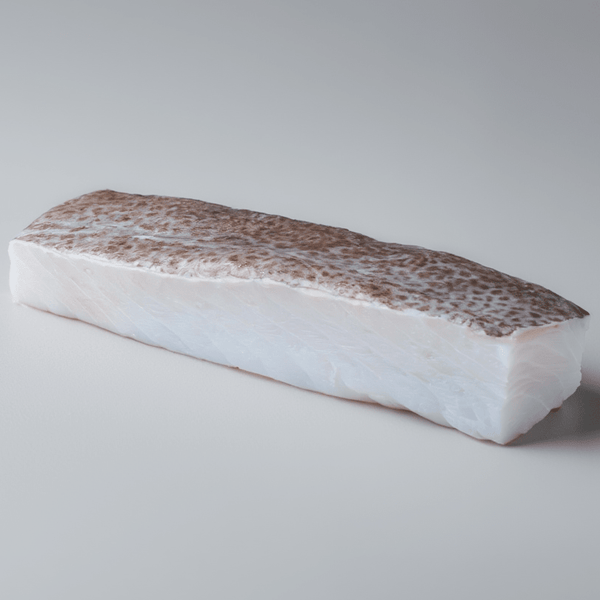
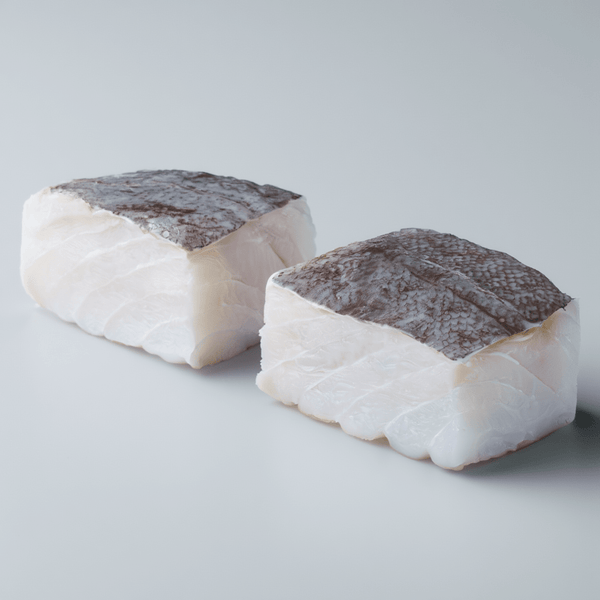
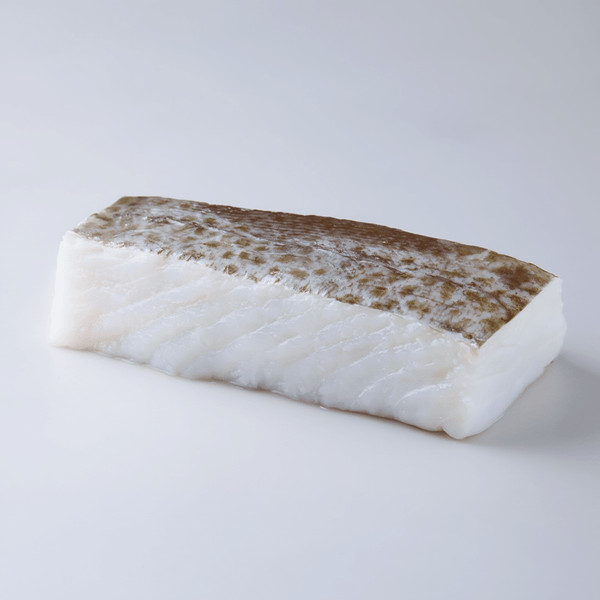
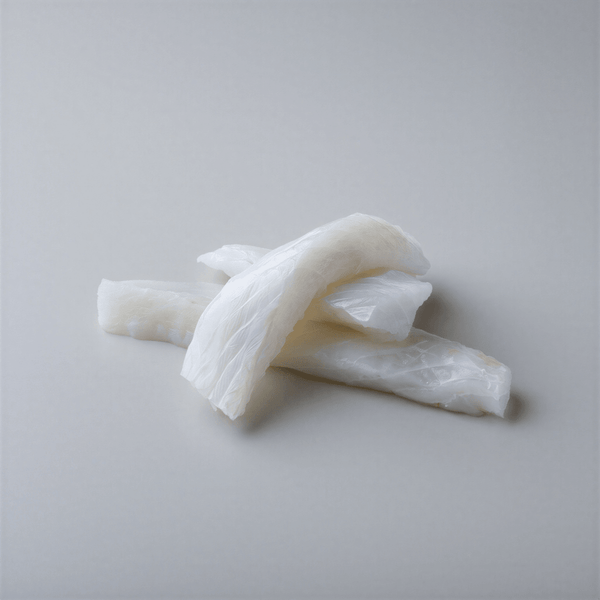
For cod with mousseline sauce, the cut par excellence is the loin (also called center or llom in Catalan). It is the thickest part of the cod, with wide flakes and a firm texture that remains juicy during cooking. Avoid tails or thin scraps: they will dry out before the mousseline is gratinéed.
A loin about 3-4 cm thick is perfect. It allows for a gentle confit that leaves the inside tender while the surface withstands the heat shock of the grill without falling apart. If using thinner pieces, reduce the confit time proportionally.
Consult our complete guide to cod cuts to understand the differences between loin, cheek, belly, and tail, and when to use each.
Salted or desalted?
You can start with salted cod that you desalinate yourself —a process that takes between 24 and 48 hours depending on thickness— or use already desalted cod, ready to cook. The second option is the most practical, and if the supplier is reliable, the result is identical.
If you choose to desalinate it at home, follow our proven method for properly desalinating cod. Incomplete desalting will ruin the balance with the mousseline; excessive desalting will leave the fish bland. The right point is when the meat has a subtle marine flavor, without being aggressively salty.
To know which cod to buy depending on its intended use, we recommend our cod buying guide 2026.
Complete Recipe: Oven-Gratinéed Cod with Mousseline Sauce
This is the complete recipe, using our preferred method. It's not the quick or simplified version: it's the one that yields restaurant-quality results. If you've already made the mousseline sauce from the previous section, the hardest part is done.
Ingredients (4 servings)
- 4 desalted cod loins, about 180-200 g each (minimum 3 cm thick)
- Mild extra virgin olive oil (Arbequina or similar)
- 1 whole garlic clove, lightly crushed
- 1 sprig fresh thyme
- 1 bay leaf
- Mousseline sauce (see recipe above)
- Finely chopped fresh chives (for garnish)
Step-by-Step Preparation
- Bring cod to room temperature: Remove the loins from the refrigerator 30 minutes before cooking. Cold cod directly on the heat cooks unevenly: the surface overcooks while the center remains raw.
- Confit the cod: In a wide pan or shallow pot, pour enough olive oil to cover the loins halfway. Add the crushed garlic, thyme, and bay leaf. Heat over very low heat until the oil reaches 60-65 °C (you can measure it with a kitchen thermometer; if you don't have one, the oil should be hot but not smoking or bubbling). Place the loins skin-side down and confit them for 12-15 minutes, basting them with the aromatic oil every 2-3 minutes using a spoon. The cod will be ready when the flesh turns opaque and flakes easily when gently pressed. For more details on the confit technique, consult our confit cod recipe.
- Preheat the grill: While the cod is confiting, turn on your oven's grill to maximum power. If your oven doesn't have a separate grill function, set it to 250 °C with heat only from above. The rack should be about 10-12 cm from the heating element.
- Assemble the dish for gratinating: Remove the loins from the oil and place them in an oven-safe dish (individual or large). Gently pat the top dry with paper towels so the mousseline adheres well. Cover each loin with a generous layer of mousseline sauce —about 3-4 cm thick— spreading it with a spatula or the back of a spoon to create a uniform surface.
- Gratinate: Place the dish under the grill for 2-3 minutes, watching constantly. The mousseline should brown unevenly, with some areas more toasted and others creamy. Do not stray from the oven: the step from "perfectly golden" to "burned" is 30 seconds. When you see golden bubbles and some slightly darker spots, remove the dish.
- Serve immediately: Sprinkle chopped chives on top and serve without delay. Mousseline loses volume and texture if it waits. This is a dish that goes from oven to plate, no contemplation.
If you prefer an alternative cooking method without oil, our pan-seared cod guide explains how to achieve a perfect finish in a skillet before adding the mousseline.
Restaurant-Style Presentation at Home
Gratinéed mousseline is already visually spectacular on its own, but a few plating details can turn this homemade dish into something worthy of a gourmet menu. You don't need surgical tweezers or siphon foams —just judgment and a couple of well-placed elements.
Dish Base
Place the gratinéed loin slightly off-center on a wide, white deep plate. If you want to add a base, a smooth mashed potato (lump-free, passed through a chinois) or some sautéed spinach with garlic works well in both taste and aesthetics. The green of the spinach against the golden mousseline is a very effective visual contrast.
Side Garnish
Turned potatoes confited in the same cod oil, or some roasted seasonal vegetables (green asparagus, baby leeks) add verticality to the dish. Place them leaning against the loin, not scattered around the plate.
Finishing Touches
- Fresh chives: cut into 2-3 cm sticks, not finely chopped. Place 4-5 sticks over the mousseline, in the same direction.
- Extra virgin olive oil: a thin drizzle around the plate, not over the mousseline.
- Maldon sea salt flakes: 3-4 flakes over the mousseline, just before serving. They add texture and a bright visual point.
- Lemon zest: a few very fine shavings of lemon zest (only the yellow part, no white pith) provide a citrus aroma without adding liquid.
What not to do: don't garnish with senseless sprigs of parsley, don't use colored sauces that compete with the mousseline, don't overload the plate with garnishes. In this recipe, the star is the cod with its golden crown. Everything else is support.
Classic vs. Modern Version: Comparative Table
Over the years, the cod with mousseline sauce recipe has evolved. Escoffier's classic version remains the reference, but contemporary chefs have introduced variations that respect the essence while updating techniques and presentations. Here are the main differences:
| Aspect | Classic Version | Modern Version |
|---|---|---|
| Cod Cooking | Poached in court bouillon (water, white wine, aromatics) | Confit at low temperature in EVOO (60-65 °C) |
| Base Sauce | Classic hollandaise with white wine vinegar | Hollandaise with fresh lemon juice or yuzu |
| Cream | Whipped cream incorporated at the end | Whipped cream or siphon foam for greater lightness |
| Gratinating | Professional salamander (intense heat from above) | Home oven grill or kitchen torch |
| Garnish | Steamed potatoes and parsley | Fine purée, roasted vegetables, crispy cod skin |
| Presentation | Shared platter, table service | Individual plating with sauces at the base |
| Flavor Variants | Only butter, yolk, and cream | Saffron infusions, grated truffle, white miso |
| Total Time | 45-60 minutes | 35-50 minutes |
Both versions are valid. The classic is more direct and pure; the modern allows for playing with nuances. What never changes is the fundamental principle: quality cod + airy sauce + precise gratinating = exceptional dish.
Recipe Card: Cod with Mousseline Sauce
- Dish: Gratinéed Cod with Mousseline Sauce
- Cuisine: French / Basque
- Category: Fish Main Course
- Servings: 4 people
- Preparation Time: 20 minutes
- Cook time: 18 minutes (15 min confit + 3 min grill)
- Total time: 38 minutes
- Difficulty: Medium (the sauce requires attention)
- Approx. calories: 520 kcal per serving
Full Ingredients
- 4 desalted cod loins (180-200g each)
- 200 ml mild extra virgin olive oil
- 1 clove garlic
- 1 sprig fresh thyme
- 1 bay leaf
- 3 egg yolks
- 200 g unsalted butter
- 1 tablespoon lemon juice
- 100 ml whipping cream (35% fat)
- Salt, white pepper, cayenne optional
- Fresh chives for garnish
Summary Instructions
- Clarify the butter and prepare the hollandaise sauce in a double boiler with yolks, lemon, and a slow stream of butter.
- Whip the cold cream until stiff peaks form and gently fold it into the hollandaise. Set aside.
- Confit the cod loins in olive oil at 60-65 °C (140-149 °F) for 12-15 minutes.
- Place the loins in an oven-safe dish, cover generously with the mousseline.
- Broil under the grill for 2-3 minutes until the surface is golden brown.
- Garnish with chives and serve immediately.
Chef's Notes
- The desalted cod should be at room temperature before confiting. Never directly from the fridge.
- If the hollandaise splits, recover it with a tablespoon of cold water and vigorous whisking.
- The cream for the mousseline must be very cold to whip properly.
- Do not preheat the oven dish: the cod would continue to cook by contact and dry out.
Premium cod for your mousseline
A recipe like this deserves cod of the highest quality. At Bacalalo, we have been selecting the best cod pieces at Mercat del Ninot in Barcelona for over 35 years, and we know that the difference between an acceptable dish and an extraordinary one always starts with the raw ingredients.
For the mousseline, we recommend our desalted cod loin: thick pieces, with a perfect salt point, ready to cook. No surprises, no intermediate steps that could go wrong. You just need to take it out of the fridge, bring it to room temperature, and start confiting.
Explore our entire selection of premium desalted cod and choose the cut that best suits your recipe. Chilled delivery throughout the Peninsula, with the same quality we serve every day at our stall in Ninot.
Frequently Asked Questions about Cod Mousseline
Can I make the mousseline sauce in advance?
The base hollandaise can be prepared up to 2 hours in advance and kept warm in a thermos or a very low-temperature double boiler (40-45 °C / 104-113 °F). However, the whipped cream should be incorporated just before covering the cod and broiling. If added too far in advance, it will lose volume and the airy texture that defines mousseline.
What is the difference between hollandaise sauce and mousseline sauce?
Hollandaise is the mother sauce: yolks, clarified butter, and acid (lemon or vinegar). Mousseline is a hollandaise to which whipped cream is incorporated, making it lighter, airier, and better for broiling. Think of mousseline as an "improved" hollandaise for oven preparations where a golden, puffed-up surface is desired.
Can I use fresh cod instead of desalted cod?
Yes, you can use fresh cod (skrei in season, from December to April, or Atlantic cod out of season). You will need to adjust the salt in the recipe, as desalted cod retains a residual saltiness that complements the mousseline. With fresh cod, lightly salt the pieces 30 minutes before cooking and pat them dry thoroughly.
Can I substitute olive oil for butter in the sauce?
Technically yes—olive oil hollandaise exists—but the result is a different sauce. Olive oil provides a more intense flavor, and the texture is not as silky as with clarified butter. If you make it with mild extra virgin olive oil (arbequina), the result is interesting but not a classic mousseline. For a first attempt, we recommend following the recipe with butter.
How long can the mousseline be under the grill without burning?
Between 2 and 3 minutes with the grill at maximum power and the dish 10-12 cm (4-5 inches) from the heating element. The margin for error is narrow: watch constantly and rotate the dish if your oven heats unevenly. The sign that it's ready is golden bubbles on the surface, with some areas slightly darker. If you see smoke, you've gone too far.
What wine pairs best with cod mousseline?
A full-bodied white with some unctuousness is the best choice. A white Burgundy (aged Chardonnay), a Godello from Valdeorras with barrel aging, or a Viognier from the Rhône will complement the creaminess of the mousseline without competing with it. Avoid overly acidic or aromatic whites (Sauvignon Blanc, young Albariño) which could clash with the butter in the sauce. If you prefer something local, an aged Xarel·lo from DO Penedès is a safe bet.
🛒 Products mentioned in this article
⭐ 4.9/5 · Chilled delivery 24-48h · Since 1990 at Mercat del Ninot
Conclusion: haute cuisine with honest ingredients
Cod mousseline proves that elegance in cooking doesn't depend on exotic ingredients or impossible techniques, but on doing a few things very well. A good cod loin, a patiently emulsified sauce, a precise two-minute broil. Nothing more. Nothing less.
It's a recipe that rewards attention to detail. It doesn't forgive mediocre cod, it doesn't tolerate rushing the emulsion or distractions under the grill. But when everything goes well—and it will if you follow the steps—the result is one of those dishes you remember. One that sparks conversation at the table and makes someone ask, "Did you make this yourself?"
Start with good cod. That's not marketing—there are verifiable factors: origin, loin thickness, salt level. Everything that comes after, the technique and the sauce, is a craft learned by doing. Give this recipe a try and discover why mousseline is the perfect companion for cod.
María José Sáez Pastor — Over 35 years selecting and preparing cod at Mercat del Ninot in Barcelona.