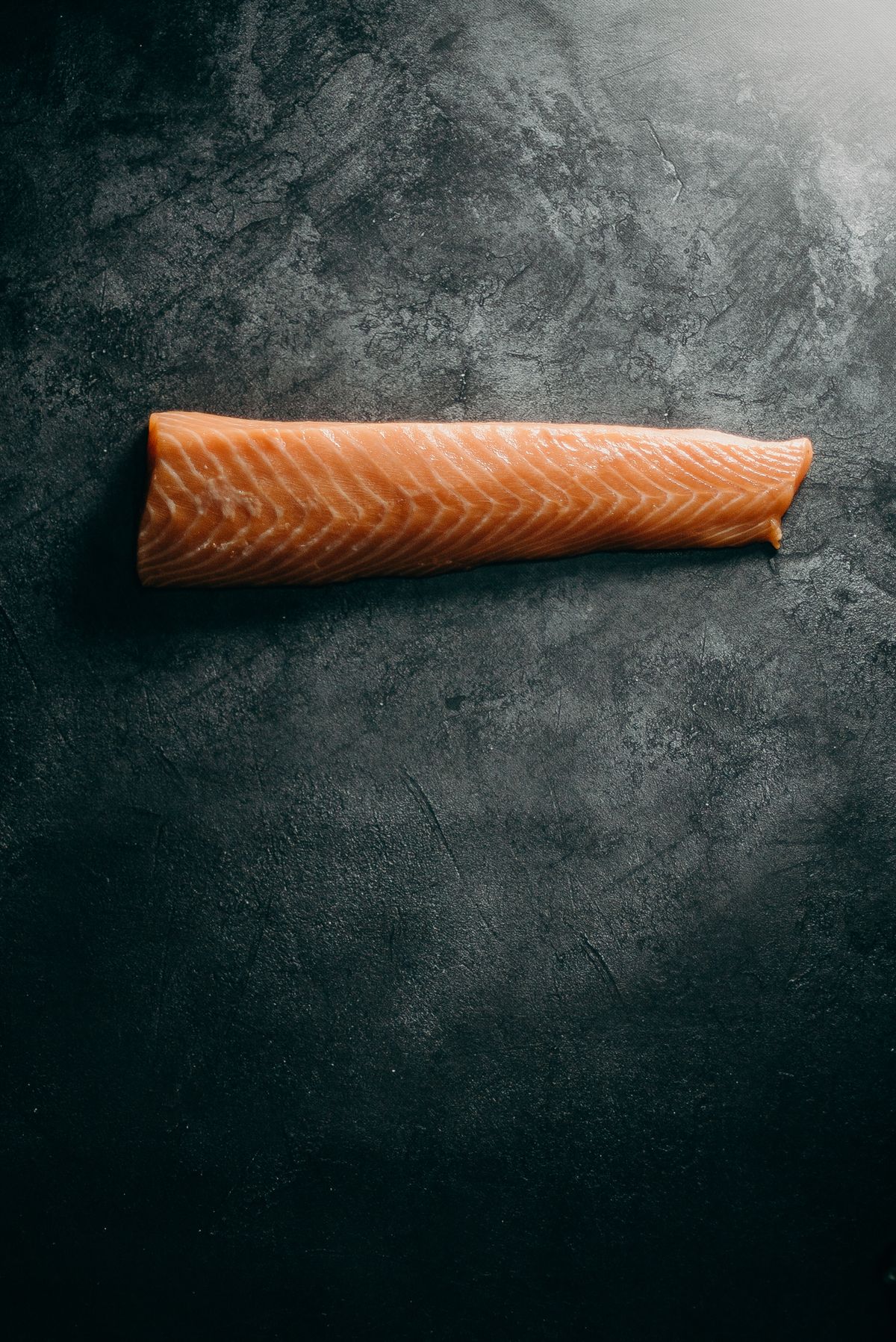
No, tuna itself does not cause weight gain. It provides between 110–130 kcal/100 g when fresh and 180–220 kcal/100 g when canned in oil (drained, it drops to ~150 kcal). It is a lean protein of high biological value (~22-25 g/100 g) and rich in omega-3s. The problem is never the tuna itself: it's the amounts of oil, mayonnaise, or bread that accompany it.
What does science say about tuna and calories?
Tuna (genus Thunnus) is a lean oily fish. According to the BEDCA (Spanish Food Composition Database) and USDA FoodData Central databases, 100 g of fresh tuna provides between 108 and 144 kcal depending on the species (bluefin, skipjack, albacore). When canned in natural brine, it increases slightly due to concentration; in oil, the value depends on how much oil is absorbed — and whether you drain it before consumption.
Scientific consensus (PREDIMED studies, SENC and AESAN recommendations) places tuna among the most recommended protein sources within a Mediterranean diet: low in saturated fat, high in omega-3 fatty acids (EPA and DHA), and provides selenium, vitamin D, B12, and iodine.
The myth that "tuna causes weight gain because of the oil" is partly true and partly an exaggeration. We explain it with data in the following tables.
Calories and macros — nutritional table
These are the average nutritional values per 100 g of tuna according to the BEDCA (Spain) and USDA FoodData Central (USA) databases:
| Macronutrient | Per 100 g | % NRV* |
|---|---|---|
| Energy | 110–144 kcal (fresh) | 6–7% |
| Protein | 22–25 g | 44–50% |
| Total Fat | 1–6 g | 1–9% |
| Saturated Fat | 0.3–1.5 g | 2–8% |
| Omega-3 (EPA+DHA) | 0.3–1.4 g | — |
| Carbohydrates | 0 g | 0% |
| Sodium (fresh) | 40–50 mg | 2% |
| Sodium (canned) | 300–400 mg | 13–17% |
*NRV: Nutrient Reference Values for average adult (EU Regulation 1169/2011).
Sodium is the aspect to watch in canned foods: a standard can (80 g drained) can provide 240–320 mg, around 10–13% of the daily intake recommended by WHO (< 2 g/day). There are "low-salt" versions and the natural brine option if you are managing hypertension.

Calorie comparison by preparation method
The way tuna is cooked radically changes its caloric contribution. This table compares the most common preparations per 100 g:
| Preparation | Calories | Recommendation |
|---|---|---|
| Grilled tuna (no oil) | 120–140 kcal | ✅ Ideal for hypocaloric diet |
| Baked tuna with vegetables | 140–170 kcal | ✅ Balanced |
| Canned tuna in water | 110–130 kcal | ✅ Lower in calories |
| Canned tuna in oil, drained | 140–170 kcal | ✅ Good option if well drained |
| Canned tuna in oil, undrained | 200–220 kcal | ⚠️ Increases due to absorbed oil |
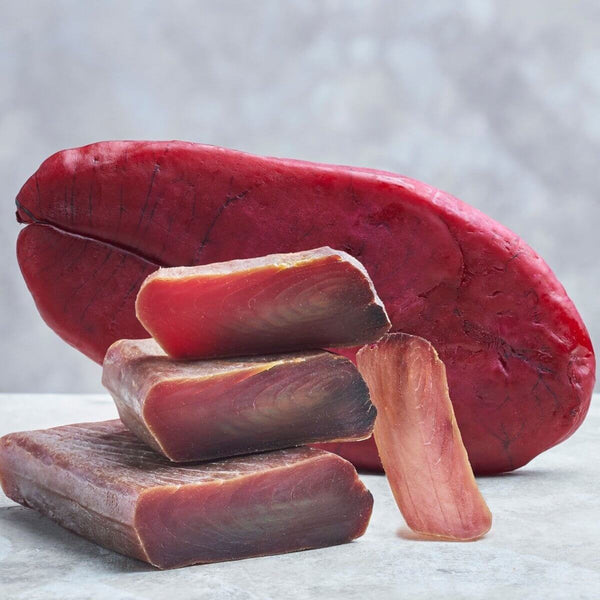
| Tuna belly (Ventresca) | 210–250 kcal | ⚠️ Higher in calories (intramuscular fat), but satisfying |
| Tuna with mayonnaise (typical sandwich) | 320–400 kcal | ❌ Mayonnaise, not tuna, significantly increases calories |
| Tuna Tataki | 140–160 kcal | ✅ Minimal cooking in sesame, very healthy |
Does tuna cause weight gain? The honest answer
The direct answer: no, tuna does not cause weight gain. What causes weight gain are the accompaniments.
If you eat 100 g of fresh grilled tuna, you get about 130 kcal — less than a large hard-boiled egg with two slices of bread. A can of tuna in natural brine (52 g drained) is only about 58 kcal. That won't make anyone gain weight.
The real problem arises when:
- You don't drain the oil: 10 g of oil (1 tablespoon) adds 90 "invisible" kcal.
- You combine it with mayonnaise: 1 tablespoon of mayonnaise adds 90–100 kcal and almost no extra protein.
- You use it as an "extra" in large sandwiches: 2 slices of bread + cheese + tuna + mayonnaise easily exceeds 500 kcal.
- You choose American-style tuna salad versions: with mayonnaise, pickles, and sweet corn, multiplying calories without increasing satiety.
Ventresca (tuna belly) does have more calories (210–250 kcal/100 g) because it is the fattiest part of the tuna — but that fat is predominantly cardioprotective omega-3, not saturated fat. In quantities of 40–60 g, it is still perfectly compatible with any diet.
How to include tuna in a healthy diet
Here are verifiable guidelines for including tuna without gaining weight:
- 2-3 servings per week is what the SENC (Spanish Society of Community Nutrition) and the Ministry of Health recommend for oily fish.
- Standard serving: 100–125 g fresh | 80 g drained canned.
- Always drain canned tuna in oil: you save 60–90 kcal per can without losing flavor.
- Combine it with vegetables: salads, roasted peppers, spinach, green beans. Increases satiety without calories.
- Avoid industrial sauces: mayonnaise, cocktail sauce, creams. Use extra virgin olive oil (measured: 1 tablespoon = 90 kcal).
- Grill or bake, don't fry: grilling without added oil keeps calories to a minimum.
Tuna fits into hypocaloric diets (1,500–1,800 kcal), volumetric diets (high satiety per gram), keto (complete protein + quality fat), and standard Mediterranean diets.

Common mistakes and myths
Myth 1: Canned tuna "has chemicals"
False. The canning process is physical (heat sterilization in a sealed container). The ingredients are tuna + oil/water + salt. European traceability is strict, and additives are regulated by EU Regulation 1333/2008.
Myth 2: Tuna belly causes a lot of weight gain
It has more calories due to fat, but that fat is omega-3 (EPA+DHA), cardioprotective. In 40-60g servings, it provides satiety and nutritional benefits that largely compensate.
Myth 3: Tuna in natural brine tastes bland
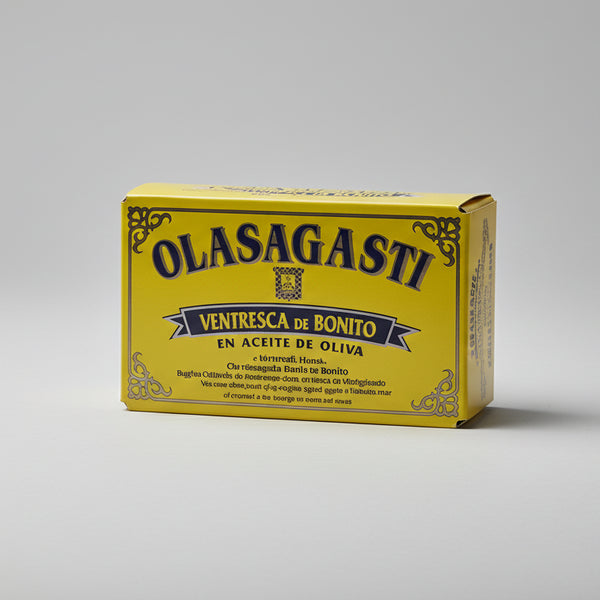
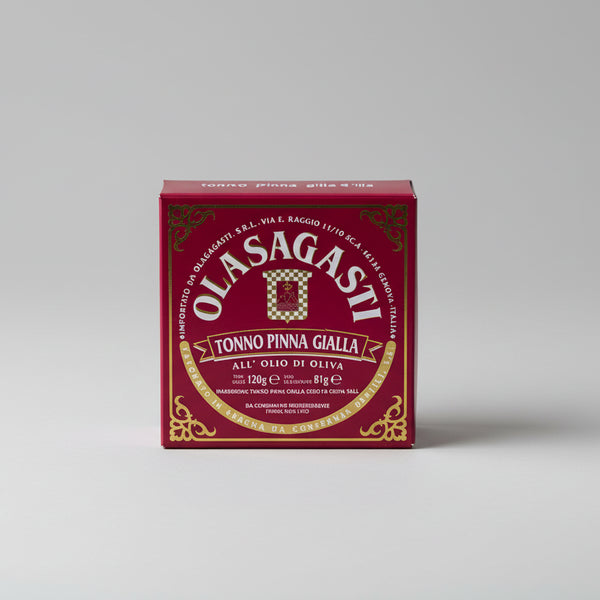
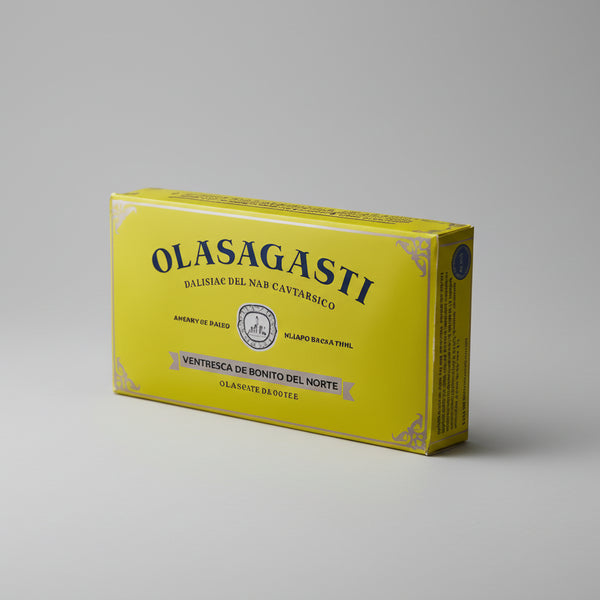
A matter of quality: premium brand tuna in natural brine (Olasagasti, Ortiz) retains an intense flavor. The difference lies in the raw material, not the preserving medium.
Myth 4: You can't eat tuna on a keto diet
Quite the opposite: 0 g of carbohydrates, complete protein, and good fats. It is one of the preferred foods in a ketogenic diet.
Myth 5: Tuna causes more weight gain at night
There is no scientific basis for this. The total caloric balance for the day is what matters, not the time.
Healthy tuna recipes

- Tuna, pepper, and green bean salad: 350 complete kcal. 80 g drained tuna in natural brine + vegetables + 1 tablespoon extra virgin olive oil. Satisfying and complete.
- Tuna tataki with sesame and soy sauce: 180 kcal per serving. Minimal cooking, incredible flavor, ideal for a light dinner.
- Grilled tuna with lemon and oregano: 160 kcal. The cleanest formula: no oil, juicy inside.
- Tuna tartare with avocado: 280 kcal. Very satisfying due to the good fat from the avocado, without sugars.
- Baked tuna empanada (not fried): 180 kcal per unit. Healthy version of a classic.
Belly, light, and bluefin tuna: which one has more calories?
Not all tuna has the same calories. The cut and species significantly change the numbers:
- Skipjack or light tuna (Katsuwonus pelamis): 110-130 kcal/100 g. Most common in canned products. Low in mercury.
- Albacore tuna (Thunnus alalunga): 140-160 kcal. Finer, white meat, higher price.
- Bluefin tuna (Thunnus thynnus): 140-180 kcal. Fattier, more flavorful, more expensive, and higher in mercury (limit consumption).
- Albacore tuna belly: 210-250 kcal. The ventral part, the most flavorful and fatty.
- Bluefin tuna belly: 250-280 kcal. The star of premium nigiri (otoro/chutoro).
If your goal is weight loss, prioritize skipjack or albacore tuna loins. If you're looking for satiety and omega-3s, tuna belly (ventresca) compensates for its extra calories.

Conclusion
Tuna does not cause weight gain. It is one of the most complete foods: lean protein of high biological value, omega-3, vitamin D, B12, and selenium, all with very few calories when prepared well. If you drain it, combine it with vegetables, and avoid industrial sauces, it fits into any diet — from hypocaloric to ketogenic or Mediterranean.
The golden rule: tuna is your ally, mayonnaise is the problem. And if you buy canned goods, prioritize quality raw material: the difference between industrial tuna and one from Olasagasti or the Cantabrian Sea is noticeable in flavor, texture, and traceability. At Bacalalo, we have been selecting directly from the producer since 1990.
Related articles
- Tuna properties: benefits, calories, and how much to eat
- Mercury in tuna: how much you can safely eat
- Canned light tuna: brands and how to choose
- Difference between bonito del norte and tuna
- Tuna belly: what it is and how to cook it
- View all canned tuna and bonito collection
Frequently asked questions
How many calories are in a can of tuna?
A standard 80g drained can provides between 90-100 kcal if in water, 110-140 kcal if in oil and well-drained, and up to 180 kcal if undrained.
Is tuna in oil or in water better for not gaining weight?
Tuna in water saves about 30-50 kcal per can. But if you drain the oil well, the difference is reduced to 20-30 kcal. The important thing is to drain, whatever the option.
How much tuna can I eat per day without gaining weight?
There is no caloric limit for tuna itself. SENC recommends 2-3 servings of oily fish per week (100-125g servings). Due to mercury, light tuna allows for more frequent consumption than red tuna.
Does tuna belly make you gain more weight than tuna loin?
Yes, it has more calories (210-250 vs 130 kcal/100 g) because it is the fattiest part. But that fat is cardioprotective omega-3, not saturated. In 40-60g servings, it is still perfectly healthy.
Does tuna with mayonnaise make you gain a lot of weight?
Yes, mainly due to the mayonnaise: 1 tablespoon adds 90-100 kcal and almost no extra protein. A serving of tuna with mayonnaise can reach 350-400 kcal compared to 100 kcal for tuna alone.
Is it good to have tuna for dinner on a diet?
Yes, perfect. Low in calories, high in protein (satiating), no carbohydrates. Combine with salad or grilled vegetables.
How many calories are in 100g of fresh tuna?
Between 108 and 144 kcal depending on the species. Skipjack/light tuna is around 110-130 kcal, red tuna 140-180 kcal.
Does tuna make you gain more weight than chicken?
No. They provide similar calories in equivalent preparations (grilled tuna ~130 kcal/100g vs chicken breast ~120 kcal/100g) and comparable protein, but tuna adds omega-3 which chicken does not have.
Which tuna has fewer calories for dieting?
Canned light tuna in water (110 kcal/100g) or fresh grilled light tuna/bonito without oil (120-140 kcal/100g).
Can you eat tuna every day?
For light tuna, yes, in moderate amounts. For red tuna or swordfish, AESAN recommends limiting due to mercury. Varying fish is always the best strategy.