Summary: Canned anchovies are one of the most highly-regarded gourmet products in Spanish gastronomy. This guide explains the difference between anchovies in oil and in brine, how to read labels, which brands are the best, and how to use them in cooking. It includes everything you need to know to make good purchases and avoid mistakes.
What are canned anchovies?
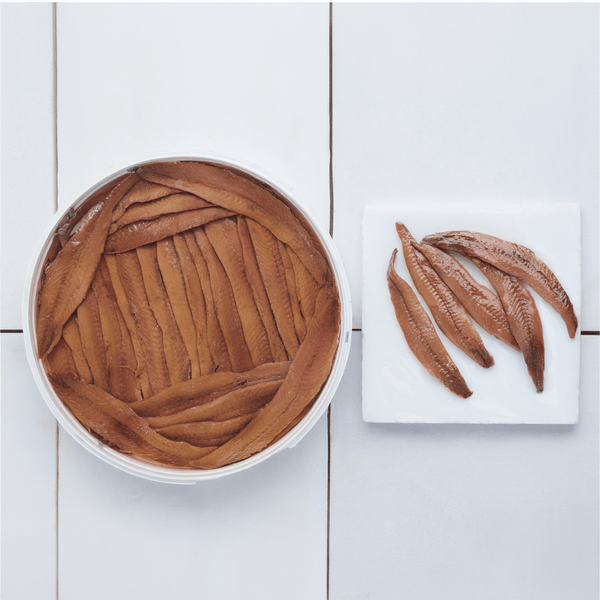
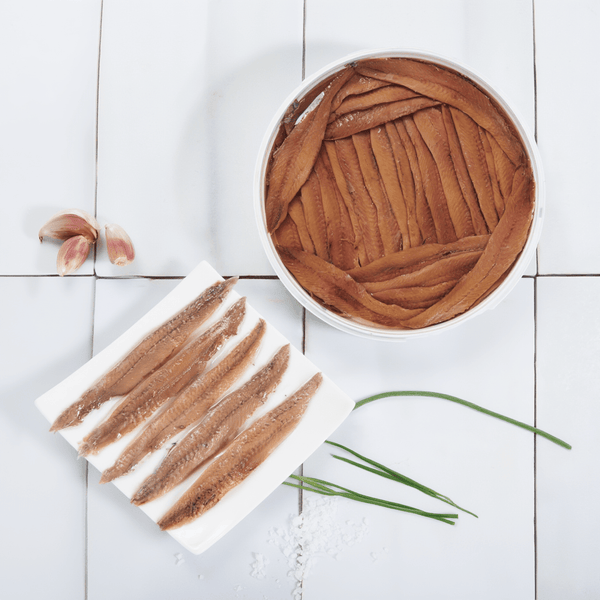
Canned anchovies are fillets of European anchovy (Engraulis encrasicolus) that have undergone a maturation or curing process in salt for several months. During this time, the fish proteins are transformed by autolysis (the fish's own enzymes), developing the characteristic reddish-brown color, silky texture, and deep umami flavor that makes them unique.
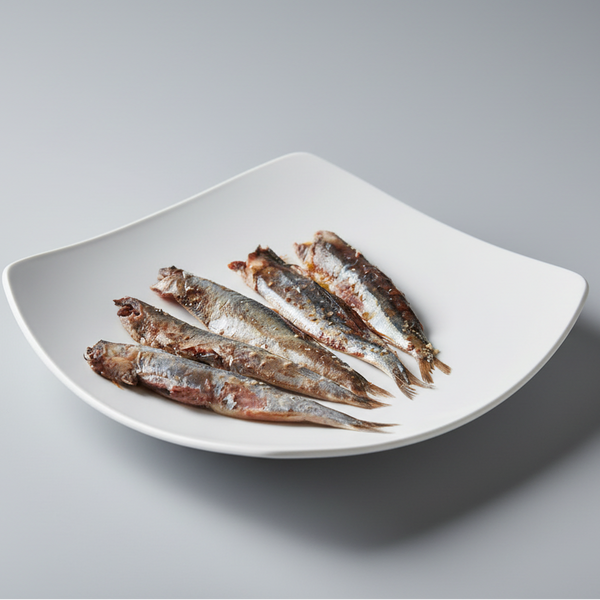
It's important to distinguish: canned anchovies are NOT the same as fresh anchovies (boquerones) or anchovies in vinegar (boquerones en vinagre). They are completely different products in terms of taste, texture, and processing.
Anchovies in oil vs. anchovies in brine: key differences
There are two main formats of canned anchovies:
Anchovies in olive oil:
- They are already cleaned, filleted, and ready to eat directly
- More convenient: open the can and serve them
- The oil covering them influences the flavor: better oil = better anchovy
- They can be stored in cans or tubs for several years (at least 2-3)
- Most common format in the Spanish gourmet market
Anchovies in brine:
- They are sold whole, with the central bone, covered in salt
- Require preparation: they must be cleaned, filleted, and desalted before consumption
- Preferred format by professionals and purists: more control over the product
- They are preserved in salt for longer (up to 4-5 years) and the flavor intensifies
- More economical per kilo of resulting clean product
- The chef chooses which oil to preserve them in once cleaned
For home use without complications: anchovies in oil. For advanced gastronomy or when you want total control of the process: anchovies in brine.
How anchovies are made: the artisanal process
The production process of the best Cantabrian anchovies remains artisanal in the best canneries:
- Catch: Anchovies are mainly fished in the Cantabrian Sea between April and July, at their optimal fat content (15-25% fat).
- Heading and gutting: Head and entrails are removed manually or mechanically.
- Salting: They are placed in alternating layers of salt in barrels or containers. The salt extracts water and allows for maturation.
- Maturation: In temperature-controlled chambers for 6 to 18 months. This is where the magic happens: enzymes transform the fish, developing color, aroma, and flavor.
- Cleaning and filleting: They are washed, skin and bone are removed, and they are filleted manually (by the best brands).
- Packaging in oil: They are placed in cans or tubs with olive oil (extra virgin in premium ranges).
The curing time is the most important factor: more months mean more flavor and better texture, but also higher production cost.
How to choose good canned anchovies
These are the quality indicators to consider:
- Origin: "from the Cantabrian Sea". Anchovies from Cantabria, the Basque Country, or the Bay of Biscay have a superior texture and flavor to those from other origins.
- Curing time: a minimum of 12 months for medium-high quality. The best have 18-24 months.
- Preserving oil: extra virgin is the best option. Normal olive oil is acceptable. Sunflower oil is a sign of inferior quality.
- Color: intense and uniform reddish-brown. If they are very pale or yellowish, the curing was insufficient.
- Fillet texture: firm but not hard. It should break easily to the touch but without falling apart.
- Price: quality anchovies cannot be cheap. Below €5-6/100g (in oil), they are unlikely to be excellent. Premium ones are between €8-15/100g.
Selected Cantabrian Anchovies
Artisanal curing for 12-18 months. The best anchovies for your recipes and appetizers
View our selection →Cantabrian Anchovies: why they are the best
The term "Cantabrian anchovy" (also called "Santoña anchovy" as this town is the main canning center) refers to anchovies made from anchovy caught in the Bay of Biscay and cured on the Cantabrian and Basque coasts.
The combination of:
- The cold, nutrient-rich waters of the Cantabrian Sea that produce fatter anchovies
- The artisanal know-how of generations of family canneries
- The long maturation period
...produces a result that no imported anchovy can match. Mediterranean anchovies (Peru, Morocco) are good, but Cantabrian ones have a richness of flavor that makes them a premium export product.
How to use canned anchovies in cooking
Canned anchovies have multiple uses beyond canapés:
- As a seasoning in sauces: A couple of fillets dissolved in hot oil enhance any stew, pasta, or sauce without being noticed as "anchovies" but adding depth of flavor.
- On pizzas: Anchovies are one of the classic ingredients of Italian pizza. Their intensity balances creamy cheeses.
- Caesar dressing: The original recipe includes anchovies. They are the secret ingredient that gives it its umami character.
- With pasta: Puttanesca pasta, aglio e olio sauce with anchovy, or simply spaghetti with oil, garlic, and anchovy are quick and spectacular preparations.
- In salads: Niçoise salad or any Mediterranean salad is greatly enhanced with anchovies.
- Anchovy butter: Mix butter with mashed anchovy fillets. Perfect for grilled meats and toast.
Storage and shelf life of anchovies
Anchovies in oil in an unopened can: can be stored for 2-4 years at room temperature in a cool, dark place.
Once the can is opened: transfer to a glass jar, covered with oil. Store in the refrigerator for up to 2-3 weeks. It is important that they are always covered in oil.
Anchovies in brine: unopened, they last 4-5 years. Once opened, consume within 2-3 weeks.
If the anchovies smell rancid or the oil has an intensely cloudy color, do not consume them.
Nutritional values of canned anchovies
Anchovies are one of the most nutritious fish per serving:
- Protein: 28g per 100g — one of the most concentrated protein sources from the sea
- Omega-3: 2-3g per 100g — excellent for cardiovascular and brain health
- Calcium: 232mg/100g (more than milk) — beneficial for bones and teeth
- Iron: 4.6mg/100g — more than many red meats
- Vitamin D: important for immunity and calcium absorption
- Sodium: high (~3500mg/100g) — people with hypertension should moderate consumption
- Calories: 210 kcal/100g in oil (mostly from protein and healthy fat)
In a normal appetizer portion (2-3 fillets = 15-20g), the sodium intake is manageable for healthy people.
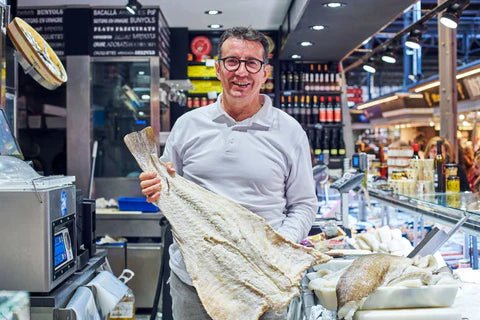
Premium Seafood Products — Bacalalo
Since 1990, selecting the best from the sea at Mercat del Ninot, Barcelona. Refrigerated shipping in 24-48h.
View Cantabrian anchovies →🛒 Products mentioned in this article
⭐ 4.9/5 · Cold delivery 24-48h · Since 1990 at Mercat del Ninot
Frequently asked questions about canned anchovies
What is the difference between boquerón and anchovy?
Boquerón is the fresh fish (Engraulis encrasicolus). Anchovies are that same fish cured in salt for months. Boquerón in vinegar is the same fish marinated in vinegar (a different process, white in color). They are the same fish but three completely different products.
Do canned anchovies contain gluten?
Pure anchovies in oil do not contain gluten. But some brands may process them in facilities that also handle gluten. Celiac individuals should check the labeling.
Do anchovies make you gain weight?
Anchovies have 210 kcal/100g, mostly from protein and healthy fat (omega-3). In normal appetizer portions (20-30g), they contribute 40-60 kcal. They don't make you gain more weight than any other food consumed in moderation, and their nutrients make them especially valuable.
Can you eat anchovies directly from the can?
Absolutely. Anchovies in oil are ready to eat as is. It's the most common way to enjoy them in Spain.
How many fillets are in a standard can of anchovies?
It depends on the size. A 50g can (the most common) usually contains 8-12 fillets. Gourmet tubs of 100-120g contain 15-25 fillets.
Is "00" anchovy better than normal?
The designation "0", "00" or "000" indicates the size of the fillet, not the quality. "000" is the largest and thickest. For appetizers, larger fillets are usually preferred. For seasoning in cooking, size is irrelevant.
Products you might be interested in
Discover more
Discover our premium selection
Seafood selected with care since 1990 at Mercat del Ninot, Barcelona. Refrigerated shipping in 24-48h.