

Summary: Steamed clams are the purest way to enjoy this mollusk. All you need is heat, a little white wine, and quality clams. In 5 minutes, you'll have the perfect appetizer.
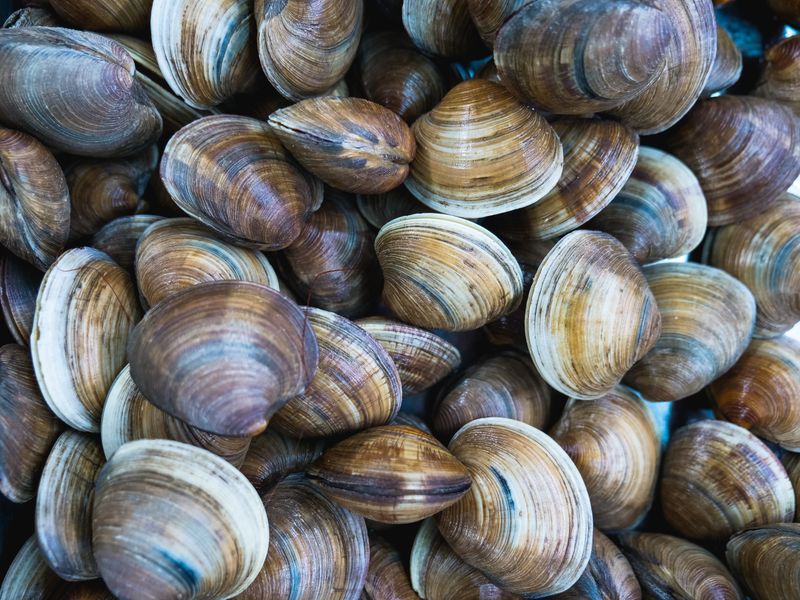
Preparation and purging
Clams live buried in sand. Although commercial ones are quite clean, it's advisable to purge them for 1-2 hours in cold salted water (30g per liter) to make them expel any remaining sand. Change the water once halfway through the process.
Discard any clam that is already open before cooking and doesn't close when pressed: it's dead.
| Variant | Liquid | Aromatics |
|---|---|---|
| Classic | Dry white wine | Garlic, parsley |
| Sailor-style | White wine + water | Garlic, onion, tomato, paprika |
| Asian | Sake + dashi broth | Ginger, chives, miso |
| With anchovy | White wine | Garlic, dissolved anchovy, parsley |
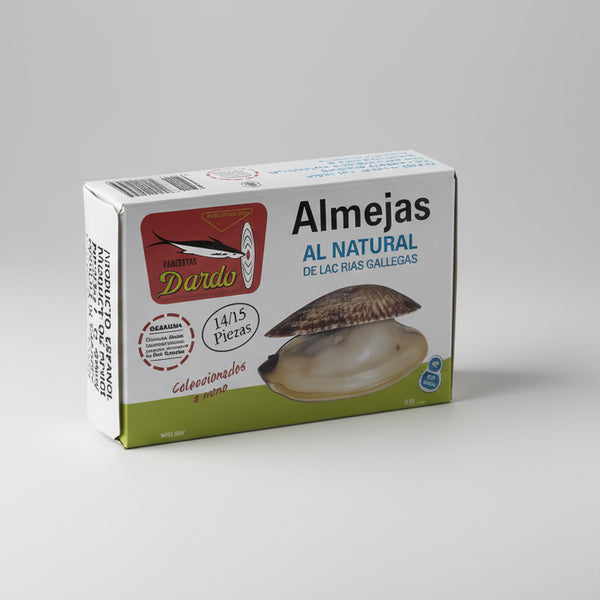
🛒 Gourmet Canned Clams
For when you can't find fresh clams: highest quality preserves, ready to add to any recipe. Sea broth included.
View product →Steaming technique
- Heat a wide frying pan or pot over high heat
- Add a splash of extra virgin olive oil and sliced garlic, sauté for 30 seconds
- Add the drained clams in a single layer
- Pour in 100ml of dry white wine
- Cover immediately and cook for 3-4 minutes
- Remove those that open (do not overcook)
- Discard any that don't open after 5 minutes
- Sprinkle with chopped parsley and serve immediately
Sauces and variations
The broth released by the steamed clams is liquid gold. Use it:
- To dip bread directly (the best)
- Reduced with butter for a creamy sauce
- As a broth base for risotto or paella
- With short pasta like linguine or spaghetti
Types of clams
- Fine clam (Almeja fina): the most prized in Spain, tender meat and delicate flavor
- Babosa clam (Almeja babosa): large, very meaty, from Galicia
- Japanese clam (Ruditapes philippinarum): the most common in markets, good value for money
- Chirla clam (Almeja chirla): small, economical, very flavorful for stews
Frequently asked questions
How long do you steam clams for?
3-5 minutes from when the liquid boils and is covered. Clams are ready as soon as they open. Cooking them longer makes them rubbery and tough. The goal is to remove them from the heat the moment all (or almost all) of them are open.
What wine should I use for steamed clams?
A dry white wine of medium-high quality: Albariño, Verdejo, Txakoli, or any Galician or Atlantic dry white wine. Don't use wine you wouldn't drink for cooking: its flavor concentrates in the broth, and if it's bad, the dish will suffer.
Why don't some clams open?
Clams that don't open after cooking time were dead before being cooked. Always discard them: they can contain bacteria. If you have cleaned the clams well before cooking and only 1-2 don't open, it's most likely they were dead or had a defective shell.
Discover our premium selection
Seafood products carefully selected since 1990 in Mercat del Ninot, Barcelona. Refrigerated shipping in 24-48h.