Summary: Smoked salmon tartare is a raw preparation where smoked salmon is diced into small pieces and dressed with an aromatic vinaigrette of capers, shallots, dill, lemon, and extra virgin olive oil. It's a dish that combines the elegance of fine dining with a simplicity that makes it accessible to any cook: it requires no cooking, is prepared in 15 minutes, and the result is spectacular both visually and gastronomically.

What is smoked salmon tartare?
Smoked salmon tartare is a raw preparation where smoked salmon is diced into small pieces and dressed with an aromatic vinaigrette of capers, shallots, dill, lemon, and extra virgin olive oil. It's a dish that combines the elegance of fine dining with a simplicity that makes it accessible to any cook: it requires no cooking, is prepared in 15 minutes, and the result is spectacular both visually and gastronomically.

The word "tartare" comes from the French culinary tradition, where tartare refers to a preparation of raw meat or fish cut with a knife and seasoned. Unlike ceviche (where acid "cooks" the fish) or carpaccio (thin slices), tartare maintains the original texture of the diced ingredient, creating a more substantial and satisfying bite experience.
Using smoked salmon instead of fresh salmon offers several advantages: the smoking process has already partially cured the fish (eliminating raw fish health concerns), adds a smoky flavor dimension that complements the vinaigrette, and the firm texture of the smoked fish allows for a cleaner, more uniform cut. It is, without a doubt, one of the best ways to enjoy good smoked salmon beyond the classic toast. If you want to know more preparations, our smoked salmon recipe guide will give you plenty of inspiration.
Smoked salmon tartare has established itself as one of the star appetizers in modern restaurants. Its presence on menus in restaurants of all levels—from informal bistros to Michelin-starred establishments—demonstrates its versatility and adaptability. What was once an exclusive dish of French haute cuisine is now a preparation that any amateur cook can master at home with accessible ingredients and minimal technique.
Ingredients for 4 people
For the tartare
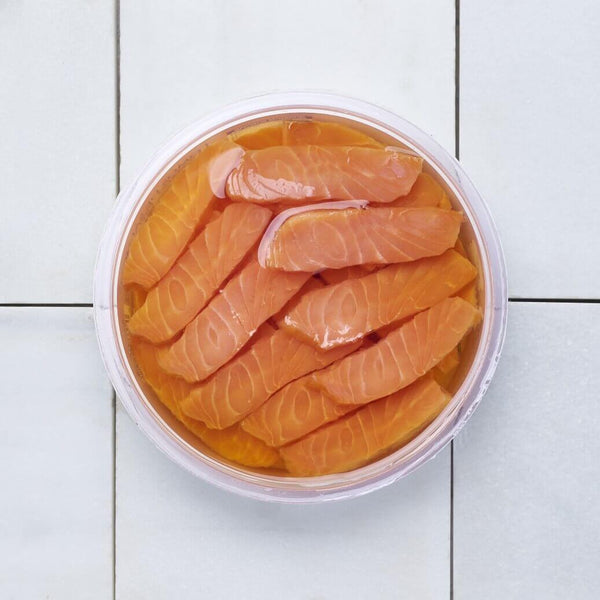
- 400 g quality smoked salmon (preferably in a block, not sliced)
- 2 small shallots, very finely chopped
- 2 tablespoons capers (drained and chopped)
- 2 tablespoons fresh dill, chopped
- 1 tablespoon fresh chives, chopped
- Zest of 1 lemon
- 2 tablespoons lemon juice
- 3 tablespoons extra virgin olive oil
- 1 teaspoon Dijon mustard
- Freshly ground black pepper
- Salt (in moderation: smoked salmon is already salty)
For serving
- Warm blinis, crackers, or rye bread toast
- Crème fraîche or cream cheese
- Salmon roe for garnish (optional but spectacular)
- Shoots or microgreens for garnish
Step-by-step preparation
- Prepare the vinaigrette (3 minutes): In a bowl, mix the lemon juice, zest, Dijon mustard, olive oil, and a pinch of pepper. Whisk with a fork until emulsified. Set aside.
- Chop the aromatics (3 minutes): Finely chop the shallots, capers, dill, and chives. The fineness of the cut is important: everything should be of a similar size to integrate homogeneously.
- Cut the salmon (5 minutes): With a sharp knife, cut the smoked salmon into cubes of approximately 5 mm per side. Work with cold salmon (it's easier to cut straight from the fridge). Place the cubes in a large bowl.
- Mix (2 minutes): Add the shallots, capers, dill, and chives to the salmon. Pour in the vinaigrette and mix gently using two spoons or a spatula, with folding motions. Do not press or crush: you want the cubes to maintain their shape.
- Assemble and serve (2 minutes): Place a plating ring (or a bottomless flan mold) in the center of the plate. Fill with the tartare, pressing lightly with the back of a spoon. Carefully remove the ring. Garnish with salmon roe, shoots, and a drizzle of olive oil.
Total time: 15 minutes. No cooking. No complications.


Related Bacalalo Products


The perfect cut: the key to tartare
The cut is what distinguishes a professional tartare from a homemade one. Here are the fundamental principles:

- Sharp knife: essential. A dull knife will crush the salmon instead of cutting it, creating a pasty mass instead of defined cubes.
- Cold salmon: take the salmon out of the fridge just before cutting. The cold firms up the texture and makes for a cleaner cut.
- Uniform size: 5 mm (half centimeter) cubes are the standard. Larger and the tartare loses elegance; smaller and it becomes minced.
- Technique: first cut the salmon into 5 mm wide strips, then turn the strips 90° and cut again into 5 mm strips, creating batons. Finally, cut the batons into 5 mm cubes. This method (brunoise) is what professionals use.
- Never use a food processor: a food processor or chopper destroys the texture. Tartare is always cut with a knife.
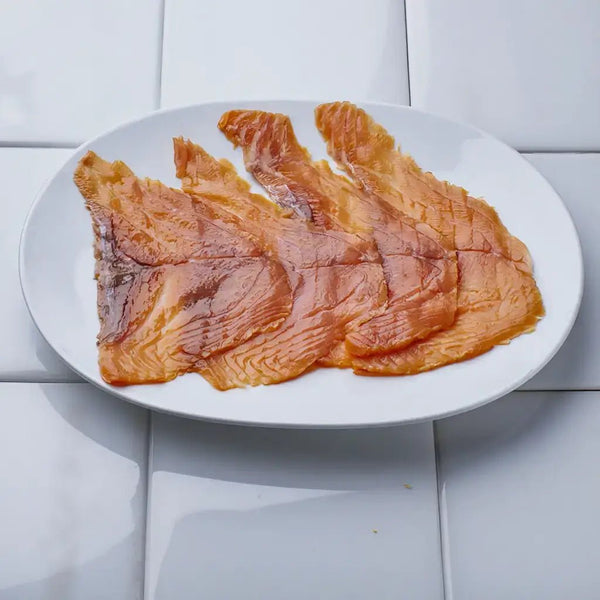
If you use sliced salmon instead of a whole block, stack 3-4 slices, roll them tightly, and cut the roll into thin slices. Then chop crosswise. It's not as precise as a whole block, but it works.
International tartare variations
Asian tartare (soy, sesame, and ginger)
Replace the classic vinaigrette with: 2 tablespoons soy sauce, 1 tablespoon toasted sesame oil, 1 teaspoon grated ginger, 1 teaspoon mirin, a few drops of sriracha. Garnish with toasted black sesame and thinly sliced spring onions. This version has an intense umami profile that completely transforms the dish. Serve on fried wonton chips.

Nordic tartare (beetroot and mustard)
Add to the basic tartare: 100 g cooked beetroot cut into 5 mm cubes, 1 extra tablespoon of mustard (whole grain), a touch of freshly grated horseradish. The contrast of the intense red color of the beetroot with the orange of the salmon is visually striking. Earthy and powerful flavor. Serve on dark rye bread with butter.
Mexican tartare (avocado, lime, and chili)
Replace the vinaigrette with: juice of 2 limes, 1 ripe avocado diced into 1 cm pieces, 1 seedless jalapeño chili finely chopped, fresh cilantro instead of dill, a pinch of flaky salt. The avocado adds creaminess and the lime tropical freshness. Serve with corn tortilla chips. This version is the freshest and most summery.
Mediterranean tartare (sun-dried tomato and olives)
Add to the basic tartare: 50 g chopped sun-dried tomatoes in oil, 30 g chopped Kalamata black olives, extra capers, fresh basil instead of dill. Replace lemon with sherry vinegar. This is the most intensely flavored tartare, ideal for those seeking depth. Serve on garlic-rubbed crostini.
Presentation and plating
Plating tartare is part of its charm. Here are professional techniques you can replicate at home:
- Plating ring: the simplest and most effective method. If you don't have a ring, use a bottomless flan mold, or cut out the top and bottom of a clean tuna can. Place the ring on the plate, fill, press gently, and remove.
- In Asian spoons: for appetizers, serve a spoonful of tartare in Chinese ceramic spoons. Elegant and individually portioned.
- In a glass shot glass: alternating layers of tartare and crème fraîche in clear glasses. Visually beautiful for buffets.
- On blini: place a blini as a base, a spoonful of crème fraîche, a spoonful of tartare, and top with salmon roe and dill. This is the most classic appetizer format.
The final garnish makes all the difference: some salmon roe provide a burst of bright orange color and an explosion of oceanic flavor. A drizzle of green olive oil, mustard sprouts, or edible flowers complete the picture. To learn more about different types of roe and their uses, consult our complete guide to fish roe.
Accompaniments and wine pairing
To serve with the tartare
- Blinis: the classic French option. Warm, fluffy, slightly sweet. You can buy them ready-made or prepare the batter (buckwheat flour, egg, milk, yeast).
- Rye bread: toasted, in thin triangles. The earthy flavor of rye perfectly complements smoked salmon.
- Crackers: any good quality cracker works. Seeded or charcoal crackers are especially elegant.
- Wonton chips: for the Asian version. Fry them in oil at 180 °C until crispy and golden.
- Endives: endive leaves are perfect natural boats for filling with tartare. Crunchy, slightly bitter, gluten-free.
Wine pairing
Smoked salmon tartare calls for a white wine with freshness and some complexity:
- Champagne or brut cava: the classic combination. The bubbles cleanse the palate between bites, and the acidic character contrasts with the fattiness of the salmon.
- Albariño: perfect for the classic version. Fresh, citrusy, with a salinity that enhances the salmon.
- Sancerre (Sauvignon Blanc): herbaceous and mineral, ideal for the version with capers and dill.
- Dry Riesling (Alsace): for the Nordic version with beetroot. The acidity of the Riesling cuts through the earthy sweetness of the beetroot.
Tips and common mistakes
After years of preparing tartare at Bacalalo for events and demonstrations, these are the most common mistakes we see and how to avoid them:
- Dressing too early: the acid from the lemon "cooks" the salmon if left for too long. Dress no more than 30 minutes before serving. Ideally: dress and serve immediately.
- Excessive salt: smoked salmon is already salty, capers are salty. Don't add salt until you taste it. Often, it doesn't need any extra salt.
- Uneven cut: different sized cubes create an irregular texture. Take time with the cutting: it's what distinguishes a good tartare from an excellent one.
- Poor quality salmon: since it's not cooked, the quality of the smoked salmon matters more than ever. Choose well-smoked salmon, with a uniform color, without excess surface fat. For more information on how to choose, consult our complete guide to smoked salmon.
- Serving warm: tartare should be served cold. If the kitchen is hot, keep the tartare in the fridge until the last moment and plate quickly.
- Forgetting the crunchy texture: tartare without a crunchy accompaniment (toast, blini, cracker) loses half its charm. The contrast of textures is fundamental.
To learn about the nutritional properties of smoked salmon and understand why it is such a complete food, we recommend our dedicated guide.
Discover our premium selection
Seafood products selected with care since 1990 in Mercat del Ninot, Barcelona. Refrigerated shipping in 24-48h.
Conclusions
- What is smoked salmon tartare?: Smoked salmon tartare is a raw preparation where smoked salmon is diced into small pieces and dressed with an aromatic vinaigrette of capers, shallots, dill, lemon, and extra virgin olive oil.
- Ingredients for 4 people: Total time: 15 minutes.
- The perfect cut: key to tartar: The cut is what distinguishes a professional tartar from a homemade one.
- International tartar variations: Replace the classic vinaigrette with: 2 tablespoons soy sauce, 1 tablespoon toasted sesame oil, 1 teaspoon grated ginger, 1 teaspoon mirin, a few drops of sriracha.
- Presentation and plating: The plating of tartar is part of its charm.
Frequently Asked Questions
Can tartar be prepared in advance?
You can dice the salmon and chop the aromatics separately and keep them in the fridge for up to 4 hours. The vinaigrette can also be prepared in advance. However, the final mixture (dressing the salmon) should be done no more than 30 minutes before serving, as the acidity of the lemon changes the texture of the fish over time.
Can I use fresh salmon instead of smoked salmon?
Yes, but with precautions: fresh salmon for raw consumption must have been previously frozen at -20 °C for at least 24 hours (mandatory by health regulations in Spain to eliminate Anisakis). The result will be smoother and more delicate, without the smoky note. Adjust the salt upwards because fresh salmon does not contain salt.
What amount of tartar per person as a starter?
As a starter: 80-100 g of salmon per person (before dressing). As an appetizer in canapé format: 50-60 g per person. For a light dinner where tartar is the main dish, 150 g per person accompanied by a green salad.
Is it safe to eat raw smoked salmon?
Yes. The smoking process (cold or hot) along with the prior salting already "cures" the salmon, reducing bacterial load. Commercial smoked salmon is safe for direct consumption. However, immunocompromised individuals or pregnant women should consult their doctor, as some professionals advise against cold-smoked fish during pregnancy.
Can I substitute capers?
Yes. Capers provide acidity and a salty flavor. You can substitute them with finely chopped pickled gherkins (cornichons), chopped green olives, or even an extra touch of lemon zest. But capers are the classic ingredient and the one that works best with smoked salmon.
How to make the tartar firm when plating?
Three keys: 1) do not overdo it with the liquid dressing (the vinaigrette should cover but not drench), 2) use a plating ring and press gently to compact, 3) let it rest for 2 minutes in the fridge with the ring on before unmolding. If the tartar is too loose, it probably has excess liquid.
What is the difference between salmon tartar and ceviche?
Tartar is dressed with a light vinaigrette and served immediately, preserving the fish's original texture. Ceviche is marinated in plenty of citrus (lemon or lime) for 15-30 minutes, which partially "cooks" the fish, changing its texture and color (it becomes opaque). They are different preparations, both delicious.
Can I make tartar with smoked trout?
Absolutely. Smoked trout is an excellent alternative: a milder and more delicate flavor than salmon, a slightly firmer texture, and generally more economical. It works especially well with the Nordic variation (beetroot and mustard). Adjust the aromatics by slightly reducing the capers to avoid masking the trout's more subtle flavor.
What does smoked salmon pair best with?
What is good to put with smoked salmon?
Alternatively, for a smoked salmon platter, arrange the salmon pieces with other brunch items (such as cucumbers, hard-boiled eggs, capers, tomatoes, red onions, dill, cream cheese, and bagels or toast) for people to serve themselves.
How to marinate salmon for tartar?
Marinate the salmon Place the chopped salmon in a bowl. Add the juice of half a lemon, salt, pepper, dill, and ground bay leaf. Mix well so that all the flavors are integrated. Then, cover the bowl with plastic wrap and leave it in the fridge for 4 to 6 hours.
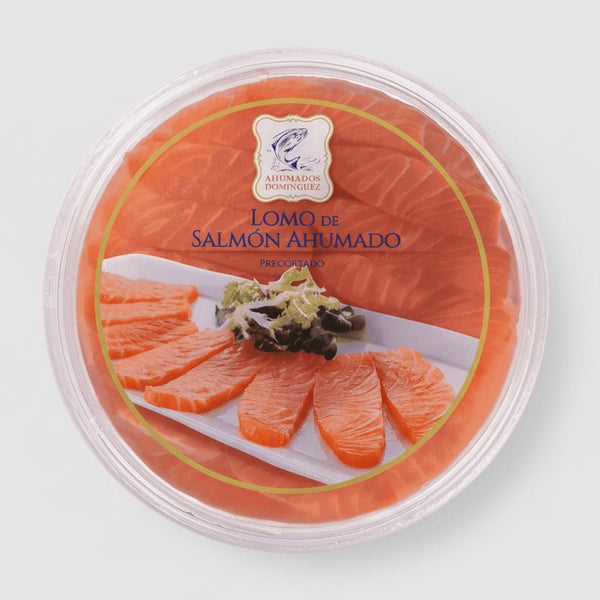
Buy premium smoked salmon for your tartar at Bacalalo.
Products you might be interested in
Discover more