How to Assemble a Spectacular Seafood Appetizer Board
A good seafood appetizer board is one of the most impressive yet easiest things to get right in the kitchen. It doesn't require advanced culinary techniques, no cooking times to monitor, nor critical temperature points. It only requires good judgment in selecting products, an eye for visual composition, and knowing the order in which elements complement each other. The result is a table that impresses before anyone has tasted anything, and that delivers on its promise of flavor.
In this guide, you will find out how to select products, how to arrange them on the board, how many items to include based on the number of guests, and what accompaniments (breads, sauces, drinks) make the whole experience work as a complete unit and not just a collection of loose ingredients.
The logic of a seafood appetizer board
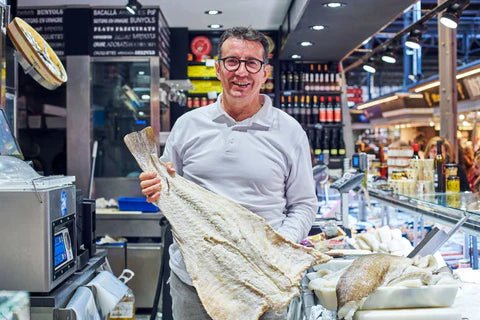
Updated March 2026. Every day at Mercat del Ninot we see what works and what doesn't. This is our real experience.
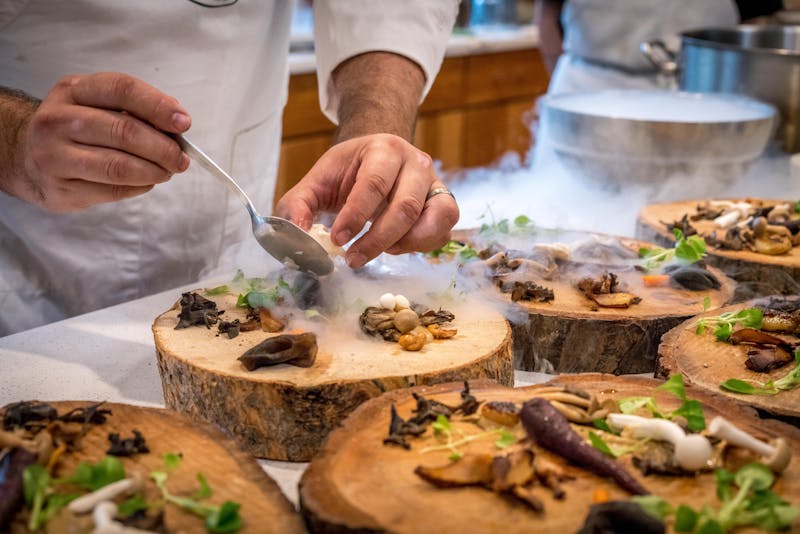
A well-constructed seafood board is not a random assortment of seafood products. It has an internal logic that defines which elements to include and in what proportion. This logic is structured into four categories:
- The protagonist: the central element, the most visually striking and the highest quality. On a seafood board, this is usually smoked salmon fillet, sliced octopus, or salmon roe.
- Supporting characters with personality: elements with their own character that complement the protagonist without overpowering it. Quality preserves, mojama, asparagus.
- Contrast elements: acidic, crunchy, fresh. Capers, gherkins, citrus, fresh-cut vegetables.
- Unifying bases: breads, crackers, spreads. What allows the diner to build each bite by combining the other elements.
A board that has elements from all four categories is a complete experience. A board that only has seafood products without unifying bases or contrasts will be bland and incomplete, no matter how good the individual products are.
The star products for the board: the selection
Smoked salmon: the natural protagonist
Smoked salmon fillet is visually the most striking element of any seafood board. Its orange-pink color, elegant cut, and size allow it to occupy the center of the composition and invite slicing on the plate itself. For a board serving 6-8 people, a 200-250g fillet is sufficient. For a smaller board for 4 people, the pre-sliced 100g smoked salmon slices simplify service without sacrificing quality.
Place the salmon in the center of the board or in a prominent corner. If you use a whole fillet, provide a sharp filleting knife so guests can cut their own slices: that act of cutting the salmon on the board has a ceremonial quality that everyone enjoys.
Galician octopus: texture and elegance
Large cooked Galician octopus leg, sliced, is another visually impactful element on the board. Its circular slices with visible suction cups have an unmistakable aesthetic, and its mild marine flavor is accessible to all palates. Slice it into 1 cm rounds before assembling the board and arrange them in a corner, slightly overlapping. Dress with a drizzle of extra virgin olive oil, sweet or "de la Vera" paprika, and salt. Or serve with ponzu sauce on the side if you want a Japanese touch.
Salmon roe: the touch of luxury
Tanit Keta Premium salmon roe is the luxury element that transforms a good board into an exceptional one. Its intense, brilliant orange color is the most striking color point you can include. Serve it in its own jar or in a small glass bowl with a mother-of-pearl or wooden spoon (never metal: metal oxidizes the roe and alters the flavor). Place the roe bowl in a visible spot on the board.
Salmon roe works as a topping for other elements on the board: a cucumber slice with cream cheese and roe on top, a spoonful of roe on a slice of smoked salmon, or roe directly on a blini with butter. This use as a "crown" for other elements is what makes them so versatile on the board.
Mojama: intensity and Iberian elegance
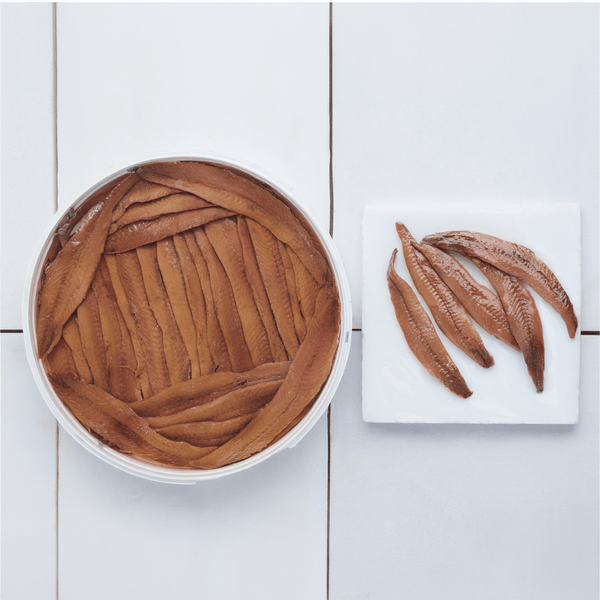
200g gourmet tuna mojama, sliced very thinly (2-3 mm), is the element of intensity on the board. Its dark, almost reddish-brown color contrasts with the orange of the salmon and roe. Its concentrated, salty flavor means it is consumed in small quantities, making it the longest-lasting element on the board. Arrange it on one side of the board in a single layer, with a drizzle of extra virgin olive oil on top. For guests unfamiliar with mojama, explain that it is the "ham of the sea": this description always sparks curiosity and usually turns indecisive guests into fans.
Asparagus: the gourmet vegetable element
Galluz "Cojonudos" asparagus are the quality vegetable element that breaks the monotony of seafood and provides a contrast in texture and flavor. White asparagus from Navarre, with its earthy sweetness and firm texture, is a perfect complement to seafood products. Arrange them on one side of the board parallel to each other, with the tips facing the same direction. Serve a citrus vinaigrette or simply olive oil and salt on the side for each diner to dress to their liking.
The contrast elements: what makes the board work
The contrast elements are what turn the board into a dynamic experience rather than a monotonous tasting. They are small in volume but essential in function:
- Capers in brine: acidity and crunchy texture. Place them in a small bowl.
- Pickled gherkins: acidity and a different crunch than capers. A couple of whole gherkins and some chopped.
- Julienned red onion: rinsed in cold water to soften it. Provides freshness and a mild spicy note.
- Lemon and orange slices: for dressing to taste and for the visual color they provide.
- Fresh dill: the classic companion to salmon. A few sprigs on the salmon or in a corner of the board.
- Dijon mustard: in a small bowl. Works especially well with salmon and mojama.
The unifying bases: breads and spreads
The unifying bases are what allow the diner to build each bite and make the appetizer satisfying and not just a tasting exercise:
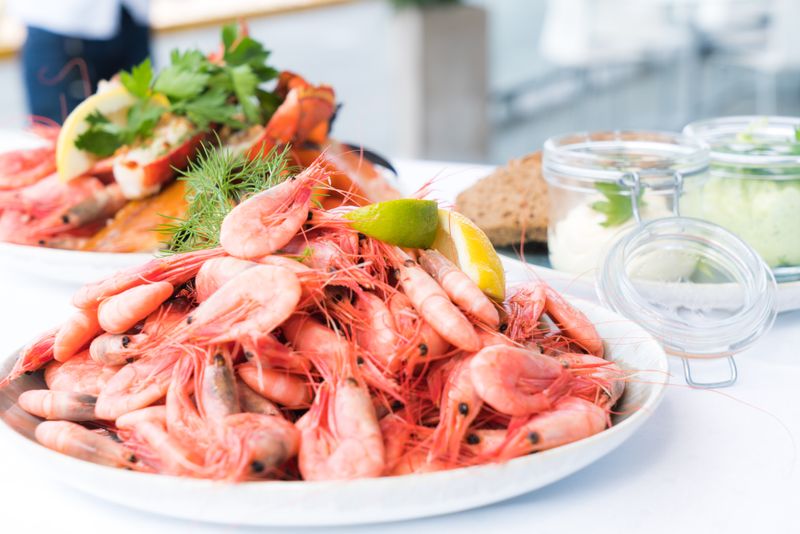
- Thinly sliced rye bread: the classic companion to Scandinavian salmon. Its bitterness balances the fattiness of the salmon.
- Buckwheat blinis: fluffy, warm if possible, perfect for salmon and roe.
- Crispy thin toasts: for mojama and preserves. A neutral base that doesn't compete with the intensity of the product.
- Toasted sandwich bread: cut into triangles, the most accessible and always welcome option.
- Cream cheese or spreadable fresh cheese: in a central bowl. The base that unites almost all elements of the board.
- Quality unsalted butter: for blinis and rye bread. Butter amplifies the flavor of the salmon.
Visual composition: how to arrange the elements
The presentation of the board is as important as the quality of the products. A well-composed board with mediocre ingredients is less satisfying than a board of exceptional products arranged without criteria.
The odd number rule
Groups of elements in odd numbers (3, 5, 7) are visually more appealing than even numbers. Place three types of bread, five types of seafood, seven contrast elements. The eye perceives odd groups as more dynamic and less rigid.
Color distribution
Alternate colors instead of grouping them by category. The orange salmon next to the dark mojama next to the white asparagus next to the red roe creates a varied palette that is visually stimulating. If you put all the orange together and all the dark together, the board loses dynamism.
Bowls and containers of different heights
Use small bowls for capers, roe, and mustard. Place some elements on small wooden boards or slates within the main board. This variation in heights and materials turns the board into a three-dimensional landscape that invites exploration.
Empty spaces are necessary
A perfectly full board to the edges looks like a hotel buffet. Leave empty spaces between groups of ingredients: these spaces provide visual breathing room and allow each element to shine on its own. The generosity of the board is conveyed by the quality of the products, not by the absolute quantity of elements.
Approximate quantities based on the number of guests
To calculate the correct quantities without running short or wasting:
- 4 people, light appetizer: 150g smoked salmon, 1 small octopus leg, 50g roe, 50g mojama, 6-8 asparagus spears, breads and accompaniments proportionally.
- 6-8 people, main appetizer: 250-300g smoked salmon (whole fillet), 1 large octopus leg, 100g roe, 100g mojama, 12-15 asparagus spears.
- 10-12 people, special event: 400-500g smoked salmon (2 fillets or a mix of formats), 2 octopus legs, 150g roe, 150g mojama, 20 asparagus spears, several types of additional gourmet preserves.
Drinks that make the board work
A seafood appetizer board calls for drinks with freshness and acidity. These are the best options:
- Cava brut: the most classic and consistent pairing for a seafood board. The bubbles cleanse the palate between products of different intensities. An affordably priced Cava Verema Canals Munne perfectly fulfills this function.
- Dry white wine: Albariño, Verdejo, or Txakoli. All have high acidity and a mineral profile that works well with seafood.
- Very cold craft lager or pilsner beer: for a more informal setting. The clean bitterness of a good lager is excellent with salmon and mojama.
- Dry white vermouth with water and orange: for traditional aperitif hour. Vermouth and seafood are a classic combination at Spanish seafood bars.
The seafood board for special occasions
For Christmas, birthdays, or any occasion that calls for an extra level, the seafood board can include additional elements that elevate it:
- Fresh oysters (if you have access to them and are comfortable opening oysters)
- Cold cooked prawns with cocktail sauce or aioli
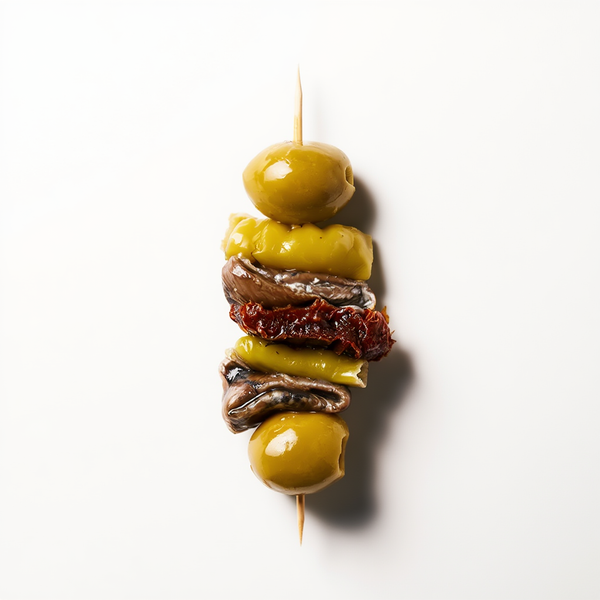
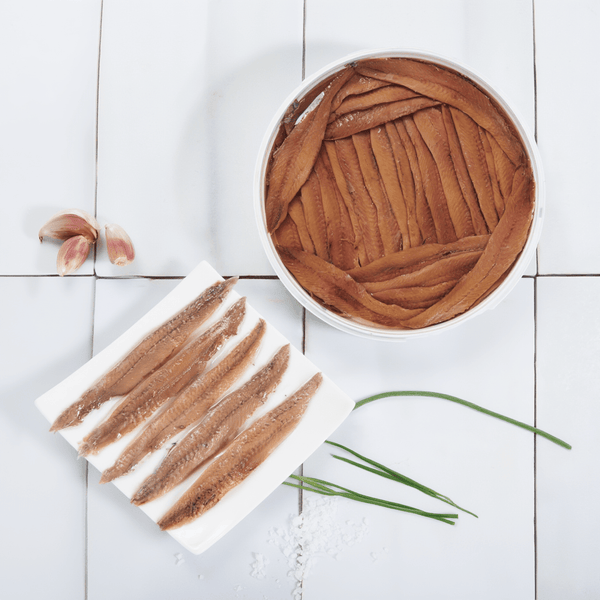
- Additional premium preserves from the gourmet preserve collection: natural cockles, marinated mussels, scallops
- Caviar (a gesture that transforms the board into something truly outstanding)
- Beurre noisette (brown butter) for blinis instead of plain butter
🛒 Related Products from Bacalalo
⭐ 4.9/5 · Cold shipping 24-48h · Since 1990 at Mercat del Ninot
Frequently Asked Questions about the Seafood Appetizer Board
When can the board be prepared in advance?
Non-perishable elements (cans, jars, capers, gherkins, mustard) can be arranged hours before. Seafood elements (salmon, octopus, roe) are taken out of the fridge 15-20 minutes before serving to let them come to room temperature. The board is assembled at that moment. Never assemble the complete board too far in advance: salmon on the table for more than 1-2 hours begins to lose freshness.
How do I store leftovers from the board?
Each product should be stored in its original packaging or an airtight container in the refrigerator. Opened smoked salmon lasts 2-3 days. Sliced octopus lasts up to 2 days. Salmon roe, once opened, should be consumed within 2-3 days. Mojama lasts considerably longer: up to a week if well wrapped.
Does a seafood board make sense for only 2 people?
Perfectly. For a romantic dinner or an appetizer for a couple, a reduced board with 3-4 quality elements (salmon, roe, a couple of preserves, and bread) is more elegant and coherent than a conventional dish. Reduce quantities to half of the recommendations for 4 people.
What to do if someone at the table doesn't eat fish?
A mixed seafood board can include cheeses (cured Manchego, brie, goat cheese log), Iberian cured meats (ham, loin), and vegetable elements (cherry tomatoes, nuts) on the same board. The contrast elements (capers, gherkins, bread, mustard) serve everyone. The space on the board allows for the coexistence of seafood and land products without any problem.
Assemble your board with the best seafood products
A seafood appetizer board is only as good as the products that make it up. At Bacalalo, you will find all the star elements you need: smoked salmon fillets, cooked Galician octopus, premium salmon roe, gourmet tuna mojama, and "Cojonudos" asparagus, in addition to our entire selection of gourmet preserves to complete the board.
From Mercat del Ninot in Barcelona, we have been selecting the best seafood products for our customers since 1990. What we put on the table for our own special occasions is the same thing we offer online: products with discernment, not just slogans.