What is Pil Pil Sauce and Why is It Unique?
Pil pil sauce is one of the most fascinating preparations in Spanish cuisine. It contains no flour, no egg, no butter. It is a 100% natural emulsion formed exclusively by extra virgin olive oil and the gelatin released by cod when cooked slowly.
Originating in the Basque Country—specifically Bilbao, where the arrantzales (fishermen) prepared it in the 19th century—pil pil sauce gets its name from the sound the oil makes as it gently bubbles in contact with the fish's moisture: pil-pil, pil-pil.
What makes this sauce unique is that it uses no artificial thickeners. The creamy texture and whitish color are achieved solely through technique: circular motion, controlled temperature, and time. It is proof that the most sophisticated cuisine can arise from absolute simplicity.

But be careful: this article is not about cod pil pil as a complete dish. Here we focus exclusively on the sauce—the emulsion technique, the science behind it, why it sometimes fails, and how to master it definitively.
The Science Behind Pil Pil Emulsion
Understanding the science of pil pil will help you never fail again. The emulsion occurs thanks to an elegantly simple process of physics and biochemistry:
The Role of Collagen
Cod—especially quality salted and desalted cod—contains large amounts of collagen in its skin and the gelatinous layer surrounding it. The salting and subsequent desalting process modifies the protein structure, making the collagen more soluble and easier to release when heated.
When the cod is cooked slowly in oil between 50-65°C, this collagen dissolves and passes into the oil as gelatin. The gelatin acts as a natural emulsifier—exactly like the lecithin in egg in mayonnaise, but without the egg.
The Emulsion: Oil + Water + Gelatin
An emulsion is the stable mixture of two liquids that normally do not mix (oil and water). In pil pil:
- Fat phase: extra virgin olive oil
- Aqueous phase: the moisture released by the cod
- Emulsifier: the gelatin/collagen from the fish
- Mechanical energy: the circular movement of the pot
The circular motion breaks down the oil droplets into smaller and smaller microdroplets, while the gelatin coats them and prevents them from re-grouping. The result is that characteristic creamy, silky, whitish texture.
Why Does It Turn White?
The white color of the sauce is due to an optical phenomenon: when the oil microdroplets are small enough, they scatter light in all directions (Tyndall effect). It's the same principle that makes milk white—it's fat droplets dispersed in water.
Essential Ingredients
The beauty of pil pil lies in its minimalism. You only need four ingredients—but each one is crucial:
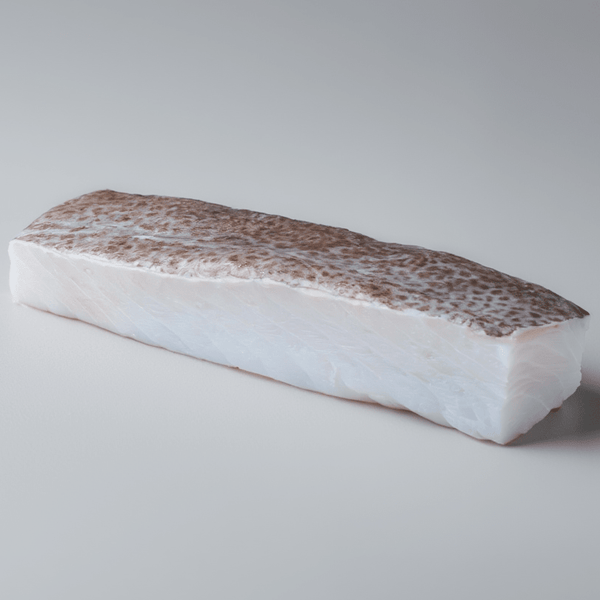
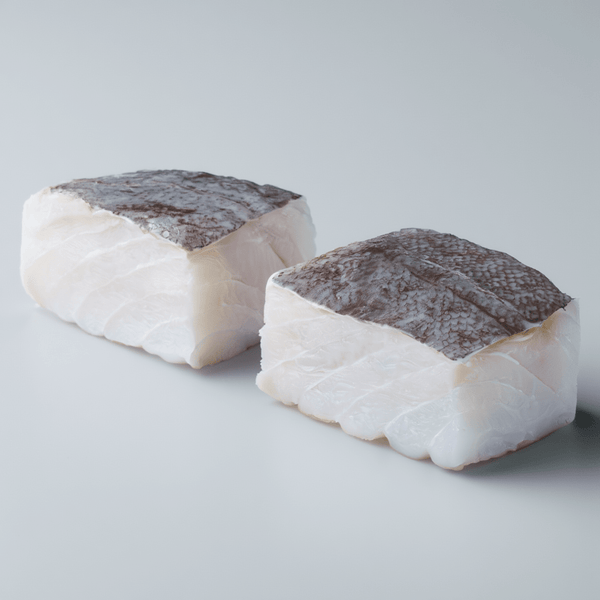
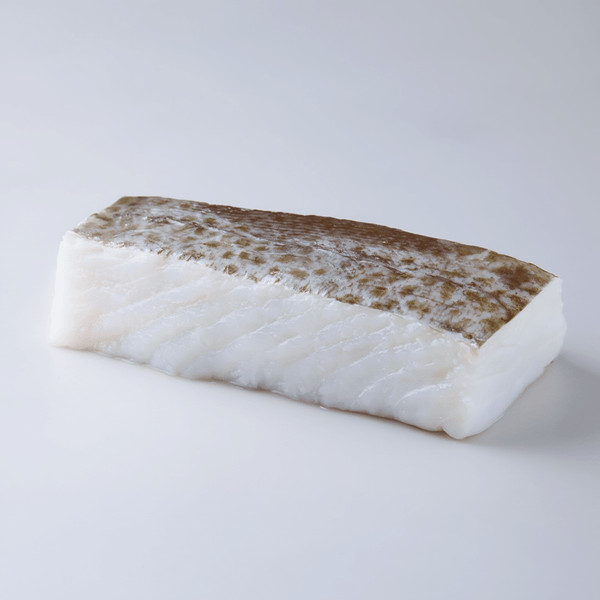
- 4 thick desalted cod loins with skin (~800g): the skin is MANDATORY—that's where the collagen is. The thicker the loin, the more gelatin. Thin cuts won't work.
- 250ml of mild extra virgin olive oil (arbequina is ideal): a strong EVOO masks the flavor of the cod.
- 6 sliced garlic cloves: brown them separately and add them at the end.
- 1-2 dried chilies (optional): a subtle spicy touch.
The choice of cod is everything
For a good pil pil, you need cod with an abundant gelatinous layer. This means thick loins of Gadus morhua (Icelandic or Norwegian cod), never low-quality dried cod or substitutes like ling or pollock. The difference between a mediocre pil pil and a spectacular one lies in the raw material.
Desalted cod with skin for perfect pil pil
Thick loins of Gadus morhua with their gelatinous layer intact. Desalted and ready to cook.
View desalted codStep-by-Step Recipe: Perfect Pil Pil Sauce
Follow these steps precisely. Pil pil is pure technique—there's no room for improvisation at critical points.
Step 1: Prepare the Cod
Pat the desalted cod loins dry with paper towels. This is essential—excess surface moisture causes the oil to splatter and hinders the controlled release of collagen. The loins should be at room temperature, not straight from the refrigerator.
Step 2: Slow Cooking in Oil
Place the loins, skin-side up, in a wide clay pot (or heavy-bottomed pan). Cover them with olive oil from cold—yes, start cold.
Turn the heat to the absolute minimum. The oil should heat up very slowly. Cook for 10-12 minutes, making sure it never bubbles vigorously. You'll see small, gentle bubbles—that's the pil pil.
Step 3: The Garlic (Separately)
While the cod is cooking, thinly slice the garlic and brown it in a small pan with a tablespoon of oil. Remove when golden (not burnt). Set aside with the chili.
Step 4: Remove the Cod
Carefully remove the loins with a slotted spoon. Reserve them on a plate covered with aluminum foil to keep them warm. The oil remains in the pot—and this is where the magic happens.
Step 5: The Emulsion (The Key Moment)
Let the oil cool down to 50-55°C. This is the optimal point: hot enough for the gelatin to be fluid, but not so hot as to destroy it.
Start moving the pot with a constant, slow, rhythmic circular motion. As if you were making small circles with the base of the pot over the heat. The heat should be at minimum or even off.
For the first 5-8 minutes, you won't see anything. The oil will remain transparent. Don't give up. Don't speed up. It's normal.
After about 8-10 minutes, you'll start to notice the oil losing transparency and taking on a whitish hue. Continue with the circular motion.
Between 15-20 minutes, the sauce will have a creamy, dense, off-white consistency. It's done. You have emulsified the pil pil.
Step 6: Final Assembly
Return the cod loins to the pot with the sauce. Add the browned garlic and chili. Heat for 2 more minutes over minimum heat, moving the pot so the sauce coats the fish.
Serve immediately in the same clay pot.
Temperature Control: The Key to Success
If there is one single factor that determines the success or failure of pil pil, it is temperature. Memorize these ranges:
| Temperature Range | What Happens | Result |
|---|---|---|
| 30-45°C | Collagen is barely released | Emulsion does not form |
| 50-65°C | Collagen dissolves and emulsifies | Ideal zone |
| 65-70°C | Collagen begins to denature | Unstable emulsion |
| +70°C | Collagen destroyed | Emulsion impossible |
Thermometer-free trick: the oil is in the ideal zone when you can immerse your fingertip for 2 seconds without burning yourself. If it hurts instantly, it's too hot. If you don't feel heat, it's too cold.
Troubleshooting: Why It Separates and How to Fix It
Pil pil is a delicate emulsion. Even expert cooks separate it occasionally. Here's a complete troubleshooting guide:
| Problem | Cause | Solution |
|---|---|---|
| Sauce does not thicken after 20 min | Temperature too low or cod without enough gelatin | Slightly increase heat. If cod is poor quality, add a hydrated gelatin leaf |
| Sauce separates (oil separates) | Excessive temperature (+70°C) | Remove from heat. Transfer to a cold bowl. Add an ice cube and whisk with a fork |
| Sauce is too liquid | Little collagen released or insufficient movement | Continue moving for 10 more min. If it doesn't thicken, add cooked and puréed cod skin |
| Sauce has lumps | Skin remnants or coagulated protein | Strain with a fine-mesh sieve and resume emulsion in a clean pot |
| Sauce tastes bitter | Burnt garlic or overly strong EVOO | Use golden (not dark) garlic and mild arbequina EVOO |
| Cod falls apart | Heat too high or abrupt movement | Always use minimum heat. Move the pot, never the cod with a spoon |
| Sauce separates when reheated | Excessive reheating temperature | Reheat in a double boiler at maximum 55°C, stirring in circles |
| Sauce is green/dark | Reused or low-quality oil | Always use fresh, first-press EVOO |
The Ultimate Emergency Trick
If your pil pil has irrevocably separated and there's no way to rescue it, there's a last-resort trick: put a tablespoon of the separated sauce into a small, clean, completely cold pot. Add a tablespoon of ice water. Emulsify by stirring in circles. Gradually incorporate the rest of the separated sauce, spoonful by spoonful, as if making mayonnaise. It works in 90% of cases.
Pil Pil Variations
Traditional Basque Pil Pil
The absolute classic: cod, oil, garlic, and chili. Nothing more. The emulsion is made exclusively by rocking the clay pot over low heat. It's the version that requires the most skill and produces the most authentic result.
Pil Pil with Thermomix
The modern version that has democratized this sauce. Set to 8-10 minutes, 60°C, speed 2-3. The constant movement of the blades (at low speed) replicates the manual rocking. Advantages: perfectly controlled temperature and constant movement. Disadvantage: purists argue that the final texture is slightly different—more homogeneous, less rustic.
Squid Ink Pil Pil
A spectacular modern variant: squid ink is added to the oil before emulsifying. The result is an intense black pil pil sauce with a deep seafood flavor. Popular in new Basque cuisine restaurants.
Reverse Pil Pil
A high-cuisine technique created by Martín Berasategui: instead of emulsifying the oil with the cod gelatin, the oil is first infused with flavors (peppers, herbs) and then emulsified with gelatin extracted separately. This allows for the creation of pil pils with impossible flavors.
Pil Pil with Other Fish
Although cod is the undisputed king of pil pil, other gelatinous fish also work:
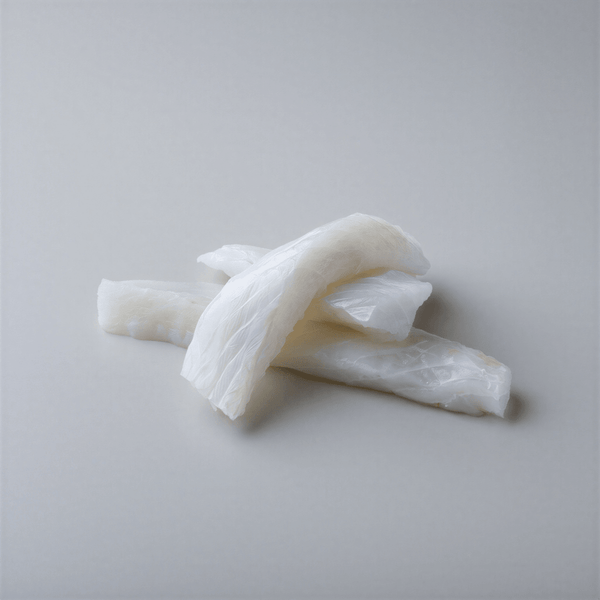
- Hake Kokotxas: Excellent results. Kokotxas are pure gelatin and produce a very stable emulsion. Perhaps the second best option after cod.
- Monkfish: Works well if you use pieces with skin and gelatin. The flavor is milder than cod.
- Conger eel: Very gelatinous, produces a good emulsion but with a more intense flavor.
- Hake: Works but needs more time and the emulsion is less stable.
Do not work well: lean fish without a gelatinous layer, such as sea bream, sea bass, sole, or salmon. They simply don't have the necessary collagen to emulsify.
🛒 Products used in this recipe
⭐ 4.9/5 · 24-48h chilled delivery · Since 1990 at Mercat del Ninot
Conclusion
Pil pil sauce is pure technique. It doesn't depend on exotic ingredients or expensive equipment — it depends on understanding what's happening inside the saucepan: collagen dissolving, oil fragmenting into micro-droplets, gelatin enveloping them.
The three pillars you should never forget:
- Temperature 50-65°C — the margin is narrow but generous if you pay attention
- Slow and constant circular movement — 15-20 minutes without giving up
- Quality cod with gelatinous skin — this cannot be substituted with technique
Master these three points and you'll never again have a broken pil pil. And if it breaks, you know what to do: cold bowl, ice, and start again spoon by spoon.
The perfect pil pil starts with the perfect cod
Thick loins of desalted Gadus morhua, with skin and gelatinous layer intact. The raw material that makes all the difference.
Buy cod for pil pilYou might also be interested in: Complete cod pil pil · Guide to cod cheeks · Cod a la Bilbaina
Frequently Asked Questions about Pil Pil Sauce
About the author: Marc González Sáez is the founder of Bacalalo.com, an online store specializing in cod and seafood products since 1990 at the Mercat del Ninot in Barcelona. His over 30 years of experience selecting quality cod allows him to offer a unique perspective on traditional preparation techniques.