Anchovy is not just an appetizer. It is one of the most transformative ingredients in Mediterranean cuisine: dissolved in hot fat or emulsified cold, it ceases to be a recognizable fillet and becomes a pure flavor base. This guide brings together the four mother sauces that originate from anchovy, with real quantities, and—most importantly—when to use each one.
It's not a single recipe. It's a map to help you understand what anchovy does in a sauce and choose the right version depending on what you have on your plate.
Anchovy as a sauce base: why it works
Salted anchovy is a natural glutamate bomb, the compound responsible for umami, that fifth flavor that adds depth and a "well-made dish" sensation. When anchovy is cooked or pureed, that glutamate is released and spread throughout the preparation. It doesn't taste like fish: it tastes like richness, savory salt, roundness.
There are two basic mechanisms to understand before starting:
- Dissolving in hot fat: the anchovy "melts" in oil or butter over low heat. This is the technique for bagna càuda and sofritos. The fillet disappears and leaves flavor.
- Cold emulsion: the anchovy is pureed with egg, oil, or soft butter. This is the base for Caesar dressing and anchovy butter. Here, the anchovy both structures and seasons.
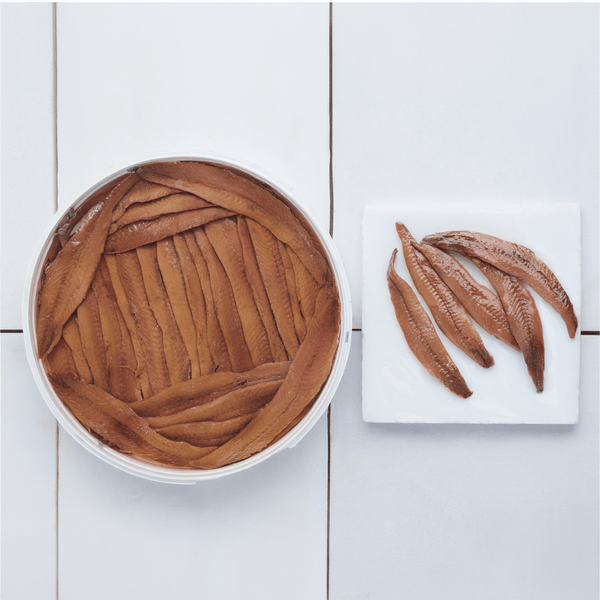
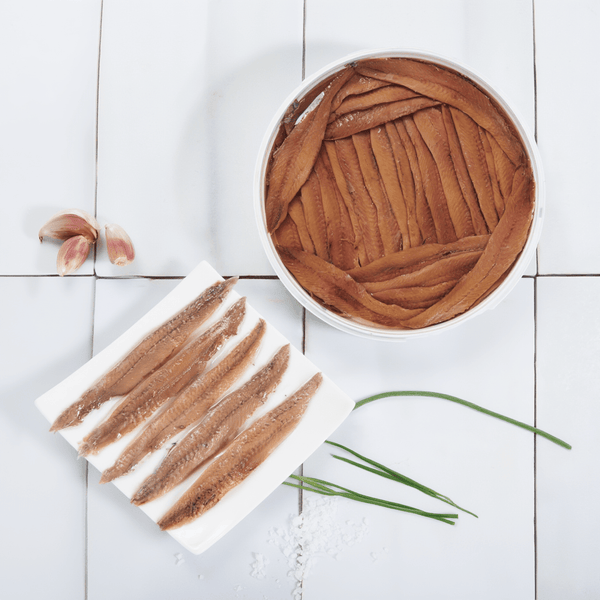
A note of honesty: the quality of the anchovy changes everything. A well-cured Cantabrian anchovy provides clean saltiness and unctuous flesh; a cheap anchovy provides aggressive saltiness and a metallic aftertaste that no sauce can hide. If the sauce has few ingredients, the raw material is paramount. You can see the starting product in our collection of Cantabrian anchovies.
Version 1: Bagna Càuda (the hot sauce from Piedmont)
Bagna càuda ("hot bath" in Piedmontese) is the most iconic anchovy sauce: anchovies, garlic, and oil cooked very slowly until they form a cream for dipping vegetables. It's unctuous, intense, and deeply comforting.
Quantities (for 4 people as an appetizer):
- 8-10 salted anchovy fillets
- 6 cloves of garlic
- 200 ml extra virgin olive oil
- 50 g butter (optional, to soften)
- 100 ml milk (for scalding the garlic, optional)
How to make it, in short: scald the garlic in milk to mellow it, drain it, and cook it in the oil over very low heat until tender. Add the anchovies and mash them with a wooden spoon; it should never boil. When everything is a homogeneous cream, incorporate the butter off the heat.
When to use it: as a savory fondue for dipping cardoon, celery, bell pepper, endive, carrot, or bread. Serve hot, in a small pot with a food warmer.
If you want the complete step-by-step for this sauce, with exact timings, mistakes to avoid, and regional variations, you can find it developed in our step-by-step anchovy sauce (bagna càuda) recipe.
Version 2: Caesar Dressing (with real anchovy)
Original Caesar dressing contains anchovy. It's not optional or an "extra for connoisseurs": the salty-umami touch that distinguishes a true Caesar from watery aioli comes precisely from there. Industrial versions substitute it with flavorings, and it shows.
Quantities (for a 4-serving salad):
- 4 salted anchovy fillets
- 1 egg yolk (or 1 pasteurized whole egg)
- 1 clove of garlic
- 40 g grated Parmesan cheese
- 1 teaspoon Dijon mustard
- Juice of half a lemon
- 150 ml mild olive oil
- Freshly ground black pepper
How to make it, in short: blend anchovies, garlic, yolk, mustard, and lemon. Emulsify by adding the oil in a thin stream, like mayonnaise. Finish with Parmesan and pepper. It should be creamy but fluid.
When to use it: classic Caesar salad with gem lettuce or romaine and croutons, but also as a dip for crudités or a dressing for grilled chicken and fish.
Version 3: Anchovy Butter
This is the simplest version and the one that impresses the most for the effort invested: soft butter whipped with anchovy. It's stored in the fridge and solves any improvisation with an irresistible savory creaminess.
Quantities (for a roll of about 130 g):
- 100 g butter at room temperature
- 5-6 salted anchovy fillets
- 1 teaspoon lemon juice
- Black pepper and a little chopped parsley (optional)
How to make it, in short: mash the anchovies into a paste, mix them with the pomade butter, lemon, and pepper. Form a roll with cling film, chill, and slice into discs.
When to use it: on hot toast, melted over a steak or freshly cooked fish, melted over steamed vegetables, or as a base for canapés. It's the "fridge staple" sauce that never fails.
Version 4: Anchovy Sauce for Pasta and Vegetables
A quick skillet sauce, one of those made while the pasta cooks. The anchovy melts in oil with garlic and chili, and you already have a savory base that dresses any dish without the need for tomato or cream.
Quantities (for 2 servings of pasta):
- 4-5 salted anchovy fillets
- 2 sliced garlic cloves
- 4 tablespoons extra virgin olive oil
- 1 dried chili (optional)
- 2 tablespoons toasted breadcrumbs (to enhance flavor)
- Parsley and lemon zest to taste
How to make it, in short: brown the garlic and chili in oil over medium-low heat, add the anchovies and mash them. Thicken with a ladle of pasta cooking water to emulsify. Sauté the pasta in it and finish with toasted breadcrumbs, parsley, and lemon.
When to use it: spaghetti or linguine, sautéed broccoli, roasted cauliflower, green asparagus, or any vegetable that needs a kick of character. It's the most versatile everyday version.
How to preserve them and what to use each one with
Practical summary for quick selection:
| Version | Texture | Best use | Storage |
|---|---|---|---|
| Bagna Càuda | Hot cream | Dipping vegetables and bread | 3-4 days in fridge; reheat gently |
| Caesar Dressing | Creamy emulsion | Salads, dips, poultry | 2-3 days (contains egg); covered |
| Anchovy Butter | Spreadable solid | Toast, meats, vegetables | 1 week in fridge / 2 months frozen |
| Pasta Sauce | Thickened oil | Pasta and sautéed vegetables | Best fresh; 2 days in fridge |
Two overarching rules: none of these sauces need added salt until the end (anchovy is already salty), and all are improved with good quality ingredients. The starting point for all four is the same fillet: start with a quality Cantabrian anchovy and the rest is technique.
Frequently Asked Questions
Does anchovy sauce taste fishy?
No, if the anchovy is of good quality and cooked or pureed properly. Anchovy provides savory saltiness and umami, not a fishy aroma. The recognizable "anchovy" flavor only appears when used raw and whole; dissolved in a sauce, it becomes a background flavor.
Which anchovy sauce is best for pasta?
Version 4 (anchovy dissolved in oil with garlic and chili, thickened with cooking water) is suitable for pasta and sautéed vegetables. Bagna càuda is too dense, and Caesar is for cold dishes; neither of those two works as well with hot pasta.
Can I prepare these sauces in advance?
Anchovy butter keeps best: up to a week in the fridge and two months frozen. Bagna càuda and Caesar dressing last 2-4 days refrigerated. Pasta sauce is best made fresh because it depends on the emulsion with the cooking water.
Ready to cook them? All four versions start with the same ingredient. Choose your base from Bacalalo's collection of Cantabrian anchovies and build from there.