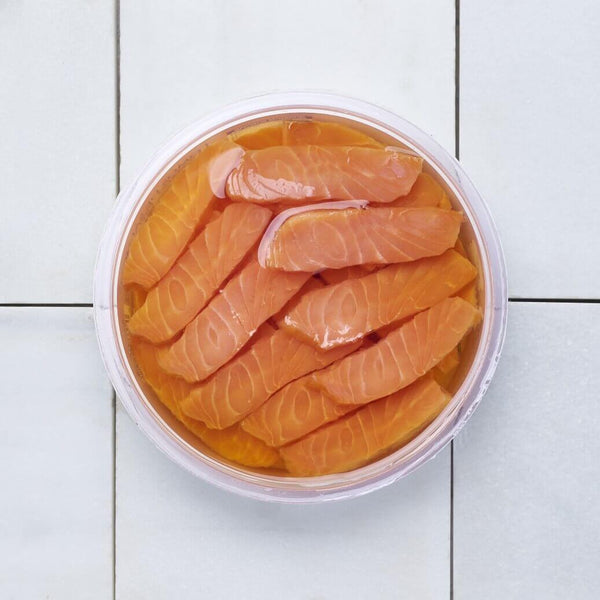
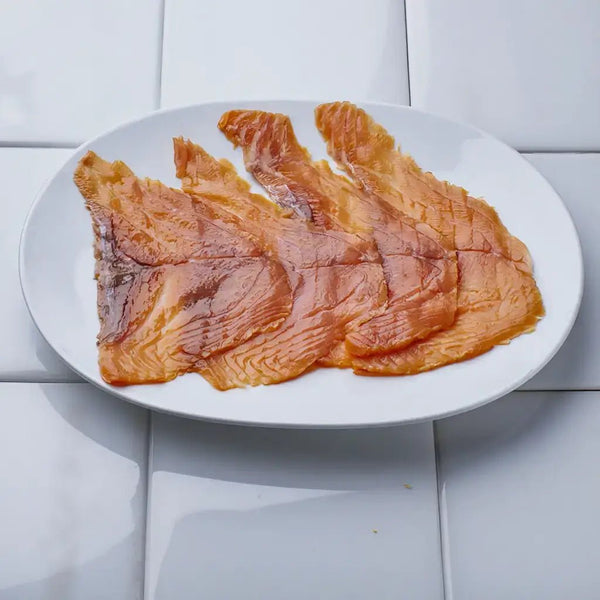
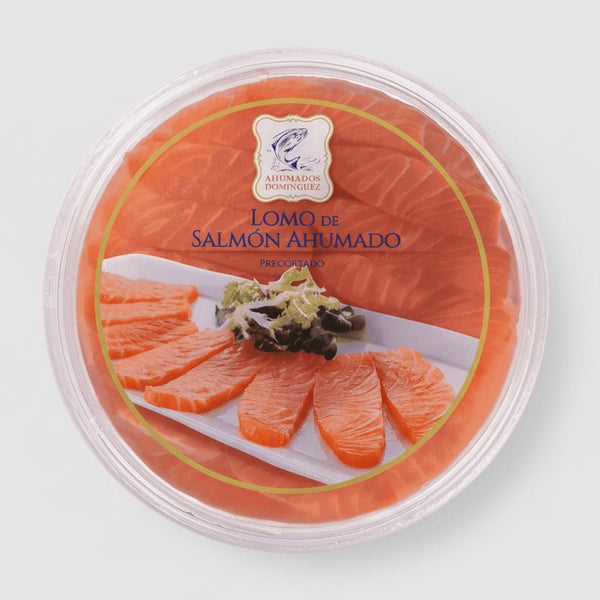
Not all smoked salmon is created equal. The label says 'Smoked Salmon' but the origin makes huge differences in texture, flavor, and price. In this 2026 ranking, we compare the big 3 — Norway, Scotland, and Ireland — so you know which one to buy depending on your occasion.
The 2026 Ranking — Quick Verdict
- 🥇 Scottish Salmon: the global premium — firm texture, traditional smoking
- 🥈 Irish Salmon: great middle-ground — balanced flavor, good price
- 🥉 Norwegian Salmon: the volume — fatty, mild, more accessible
This is a quality ranking. For everyday value, Norwegian wins. For presentation or a gift, Scottish.
🥇 Scottish Salmon — The Premium Benchmark
How it's produced
- Origin: farms in lochs (fjords) of the Hebrides, Shetland, and Scotland's west coast
- Smoking: cold (25-28°C), 12-24h over Scottish oak wood
- Salting: dry-cured with Scottish sea salt, 6-12h
- Certifications: many producers with Label Rouge and Organic Scottish Salmon
Characteristics of Scottish
- Firm and silky texture — clean thin slices
- Complex flavor with intense smoky and mineral notes
- Natural red-orange color (no dyes)
- Less visible fat than Norwegian — more 'elegant' on the palate
2026 Price in Spain
- Premium brand (Loch Duart, Benoit Widow): 75-95 €/kg
- High-end standard brand: 60-80 €/kg
- Supermarket labeled "Scottish" (beware — often re-labeled Norwegian): 25-40 €/kg
When to buy Scottish
Special presentation: cheese board, toast for guests, gourmet gift, Christmas. The difference from a supermarket Norwegian salmon is evident when served on a plate: slices that don't break, effortlessly thin cuts, natural sheen.
🥈 Irish Salmon — The Perfect Balance
How it's produced
- Origin: farms on the west coast (Connemara, Galway, Donegal)
- Smoking: cold, mostly over beech wood (sometimes oak or alder)
- Mixed technique: some smokehouses use the Scottish method, others are more subtle
Characteristics
- Intermediate texture — silkier than Norwegian, less firm than Scottish
- Balanced flavor — smoky presence but not aggressive
- Very good international price-quality ratio
- Lower volume = greater artisanal care by smokehouse
2026 Price
- Burren Smokehouse / Connemara Smokehouse: 55-75 €/kg
- Mid-range Irish: 45-60 €/kg
- Rarely in Spanish supermarkets (niche market)
When to buy Irish
Serious gastronomic use: gourmet brunch toast, canapés, avocado salads. If you want to move beyond Scottish without spending too much, this is your sweet spot.
🥉 Norwegian Salmon — The Volume Choice
How it's produced
- Origin: Norwegian fjords, giant farms in cold water
- Smoking: varies by producer — alder, cherry, oak, or blend
- Volume: 55% of global production. 70% of smoked salmon in Spain is Norwegian.
Characteristics
- Fatter and softer texture
- Mild, clean flavor, sweet finish
- Less aromatic complexity than Scottish
- Intense orange color (sometimes with added astaxanthin)
2026 Price
- Premium artisanal Norwegian: 55-75 €/kg
- Mid-range supermarket premium: 35-50 €/kg
- Standard supermarket: 22-35 €/kg
When to buy Norwegian
Everyday use: sandwiches, salads, pasta with salmon, sushi (its fattiness makes it king of nigiri). If you eat it daily or in quantities, Norwegian is the economical option without losing quality.
The Smoking Technique: What Really Makes the Difference
Cold Smoking
25-28°C for 12-24h. It doesn't cook the fish, only dries and flavors it. Gives the classic "sliceable" salmon. All premium products use cold smoking.
Hot Smoking
70-80°C for 3-6h. Cooks the fish. Has a "cooked salmon" texture that flakes apart. Used for hot dishes, not for toast. More economical.
The Wood Used
- Oak (traditional Scottish): intense, tannic, full-bodied
- Beech (Irish): subtle, clean, balanced
- Alder or cherry (some Norwegian and American): fruity, light
- Whisky barrel (special Scottish): whisky notes, exclusive
Beware of Supermarket Labeling
In Spain, many products labeled "Scottish Salmon" in supermarkets are Norwegian salmon raised with Scottish techniques, or smoked in a Scottish smokehouse (which legally allows the label). The difference with a true Scottish salmon (raised and smoked in Scotland) is significant.
To ensure the real origin:
- Look for "Scottish Origin" or "Origin: Scotland" on the label
- Label Rouge = Scottish guarantee
- Products with a loch name (Loch Duart, Loch Fyne, Lochmuir) are true Scottish
- If it only says "smoked in the Scottish style," it refers to technique, not origin
Detail: Artisanal vs. Industrial Smoked Salmon.
Which Origin to Buy Depending on Your Use
- Gourmet toast / important canapé: Scottish
- Christmas platter: Scottish or Irish
- Daily sandwiches: Norwegian
- Salads with avocado: Irish or Norwegian
- Sushi / nigiri: Norwegian (fatty ideal)
- Pasta with salmon: Norwegian (economical)
- Gourmet gift: Certified Scottish
Related Guides
- Artisanal vs. Industrial Smoked Salmon
- Properties of Smoked Salmon
- Mercadona Smoked Salmon vs. Artisanal Alternatives
- Smoked Salmon: Complete Guide
Conclusion: Choose Origin According to Occasion
All 3 origins are high quality. The difference lies in the nuance:
- If salmon is the star (platter, canapé, gift) → Scottish
- If you want quality without overspending → Irish
- If it's for daily use or cooking → Norwegian
See our selection of artisanal smoked salmon with traced origin and refrigerated 24-48h delivery.