Smoked salt is everywhere: Mercadona sells it for under 2 euros, gourmet stores for 8-15 euros. The difference between the two is not just the price, but how it's smoked (or if it's actually smoked). Here we explain what smoked salt is, how to use it judiciously, and why the artisanal version is worth it for certain dishes.
What is smoked salt
Updated March 2026. What we tell you here comes from serving thousands of customers in Barcelona.
Smoked salt is, in its purest form, salt exposed to wood smoke for hours or days. The result is a salt crystal that has absorbed the aromatic compounds of the smoke: phenols, guaiacols, and syringols that give it that characteristic smoky flavor and a color ranging from light amber to dark brown.
The concept has existed for centuries. Vikings produced smoked salt as a byproduct of food preservation: when smoking fish and meats over fire, the salt nearby absorbed the smoke. Today, smoked salt is a gourmet condiment with designations of origin and controlled processes.
But there's a problem: the market is full of "smoked" salts that have never seen smoke. Many are made by adding liquid smoke flavor (condensed smoke dissolved in water) to common salt. Technically, they taste smoky, but the aromatic complexity is not the same.
How salt is smoked: artisanal vs. industrial process
Artisanal smoking
In the artisanal process, salt is spread on trays or meshes over a cold smoke source generated by the slow combustion of specific wood. The process lasts between 24 hours and 14 days, depending on the desired intensity and the type of salt (thicker crystals need more time).
The wood used defines the aromatic profile: oak brings warm, earthy notes, cherry a sweet touch, apple a soft fruity aroma, and olive an intense Mediterranean character. The best artisanal smoked salts specify the wood used on the label.
Industrial process
In industrial production, there are two methods:
- Mechanical smoking: salt exposed to smoke in industrial chambers for hours. This is real smoking, but faster and less complex.
- Addition of liquid smoke: liquid smoke flavor is sprayed onto salt and dried. This is the cheapest method and the one used by most large distribution brands. The label may say "salt with smoky flavor" or "smoke flavor" in the ingredient list.
The difference to the palate: an artisanally smoked salt has nuances (sweet, earthy, fruity) that evolve in the mouth. A salt with liquid smoke has a flat, one-dimensional smoky flavor, sometimes with a chemical aftertaste.
Types of smoked salt by origin and wood
| Type | Origin | Wood | Flavor profile | Best use |
|---|---|---|---|---|
| Viking Smoked Salt | Denmark | Oak, juniper, birch | Intense, earthy, mineral aftertaste | Red meats, barbecue |
| Smoked Maldon | England | English oak | Smooth, elegant, crunchy flakes | Finishing dishes, salads, fish |
| Halen Mon Smoked Salt | Wales | Oak | Medium, balanced | General uses, eggs, potatoes |
| Olive wood smoked salt | Spain | Olive | Mediterranean, intense, slightly bitter | Cod, roasted vegetables, gazpacho |
| Salish Smoked Salt | USA (Pacific NW) | Red alder | Sweet, soft, slightly fruity | Salmon, seafood, sauces |
| Black smoked salt | Various | Wood + charcoal | Very intense, spicy | Decoration, bold dishes |

Smoked Salmon Crepes (2 pcs) - 400g
Available at Bacalalo.com with refrigerated shipping in 24-48h
Mercadona smoked salt: what exactly is it
Mercadona sells smoked salt under its Hacendado brand. As of 2026, the most common product is a jar of salt with smoke flavor, priced around 1.50-2.00 euros for 200g.
What the label says
If you read the ingredients, you will generally find: "salt, smoke flavor." This means that it is not salt smoked with real smoke, but salt to which liquid smoke flavor has been added. It is a perfectly legal and safe product, but it is not the same as an artisanally smoked salt.
When it's worth it
Mercadona's smoked salt fulfills its function in certain contexts:
- Barbecue marinades: when the salt is mixed with many other ingredients, the difference with an artisanal one is diluted.
- Popcorn: a popular use where the basic smoky flavor works well.
- Budget-friendly daily cooking: if you want a smoky touch without spending 10 euros on salt.
When it's NOT worth it
- As a finishing salt: if you're sprinkling salt over a finished dish (a good cod, a tartare, eggs), the flat taste of liquid smoke is noticeable.
- In dishes where salt is the star: a carpaccio, sashimi, a caprese salad.
Comparative table: Mercadona vs. artisanal
| Characteristic | Mercadona smoked salt | Artisanal smoked salt |
|---|---|---|
| Method | Added liquid smoke | Real wood smoking |
| Process time | Minutes | 1-14 days |
| Flavor profile | Flat, one-dimensional smoke | Complex, with nuances depending on wood |
| Color | Uniform brown | Variable, amber to dark brown |
| Texture | Standard fine salt | Variable: flakes, coarse, fine |
| Price per 100g | 0.75-1.00 EUR | 3-8 EUR |
| Ingredients | Salt + smoke flavor | Salt (salt only) |
| Best use | Marinades, daily cooking | Finishing, gourmet dishes |
How to use smoked salt in cooking
Smoked salt does not replace regular salt in all cooking. It is a strong-flavored condiment that must be used judiciously. The general rule: less is more.
Uses where it shines
- Cod and white fish: a touch of flaked smoked salt on grilled cod adds a spectacular dimension of flavor. It's like adding a layer of smoke without needing a smoker.
- Eggs: scrambled, fried, or poached. The egg + smoke combination is addictive.
- Roasted potatoes: sprinkle smoked salt right after taking them out of the oven.
- Grilled vegetables: zucchini, eggplant, bell pepper. The salt's smokiness complements the grill's.
- Chocolate: yes, chocolate. A pinch of smoked salt on brownies or truffles is a revelation.
- Cocktails: rim of glass for a Bloody Mary or smoked Michelada.
Uses where it doesn't work
- Delicate green leaf salads (it dominates and crushes subtle flavors)
- Rice dishes (it gets lost in long cooking)
- Soups and broths (better to add a real smoked ingredient, like pimentón de la Vera)
Recommended amount
Start with half the salt you would normally use and complete with regular salt. Smoked salt is more aggressive to the palate: if you overdo it, the dish will taste like a chimney.

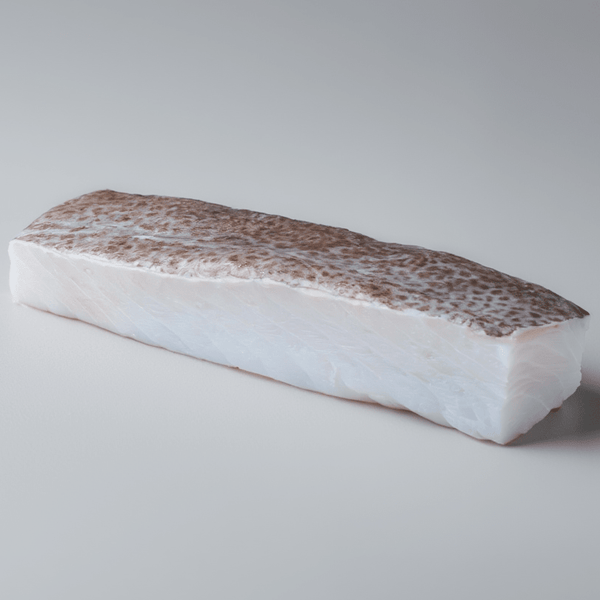
Smoked Cod Carpaccio Artisanal Cut | 1 Tray Pack
Available at Bacalalo.com with refrigerated shipping in 24-48h
Pairings: which foods it enhances
| Food | Ideal type of smoked salt | Quantity |
|---|---|---|
| Grilled cod | Smoked Maldon flakes | 1 pinch when serving |
| Smoked salmon | Alderwood smoked salt (double smoked) | Minimal, as an accent |
| BBQ ribs | Viking or coarse oak smoked salt | Generous in the rub |
| Ripe tomato | Any mild smoked salt | 1 pinch on each slice |
| Avocado toast | Smoked flakes | 1 pinch when serving |
| Goat cheese | Olive wood smoked salt | Very little, the cheese already has character |
| Dark chocolate | Mild smoked salt (applewood) | Microcrystals, 2-3 per portion |

Where to buy quality smoked salt
In supermarkets
- Mercadona: salt with smoke flavor, 1.50-2.00 EUR. For daily use.
- El Corte Inglés (Club del Gourmet): various artisanal brands, 4-12 EUR.
- Lidl: occasionally in themed weeks, intermediate quality.
Online and specialized stores
- Maldon Smoked Sea Salt Flakes: the accessible quality standard, ~5 EUR/125 g
- Halen Mon Oak Smoked: mid-to-high range, ~7 EUR/100 g
- Spanish artisanal salts: Anana salt smoked with oak, Ibiza smoked salt, 6-10 EUR/100 g
- Amazon and online gourmet stores: the widest variety, but be careful with those that say "smoked" and only contain flavor.
Updated prices (2026)
| Product | Weight | Price | EUR/100 g | Real smoking |
|---|---|---|---|---|
| Hacendado (Mercadona) | 200 g | 1.50-2.00 EUR | 0.75-1.00 EUR | No (liquid smoke) |
| Maldon Smoked Flakes | 125 g | 4.50-5.50 EUR | 3.60-4.40 EUR | Yes (English oak) |
| Anana smoked salt | 200 g | 6.00-7.00 EUR | 3.00-3.50 EUR | Yes (oak) |
| Halen Mon Smoked | 100 g | 6.50-8.00 EUR | 6.50-8.00 EUR | Yes (Welsh oak) |
| Viking Smoked Salt | 150 g | 8.00-12.00 EUR | 5.30-8.00 EUR | Yes (multiple woods) |
The most interesting quality-price ratio is found in Maldon smoked salt and in Spanish artisanal salts. For daily use in generous quantities (barbecue, marinades), Mercadona's works. For finishing and dishes where it makes a difference, invest in an artisanal one.
Frequently asked questions
Is Mercadona's smoked salt really smoked?
No. The ingredients list "salt, smoke flavor," meaning that liquid smoke flavor has been added instead of exposing it to real wood smoke. The flavor is smoky, but it lacks the complexity of an artisanally smoked salt.
Is smoked salt healthier than regular salt?
It has no additional health benefits. It is salt with a smoky aroma. It provides the same amount of sodium as regular salt. The practical advantage is that since it has a more intense flavor, you can use less to achieve the same taste impact.
Can you make smoked salt at home?
Yes. Spread flaked salt on a tray and place it in a lidded barbecue with damp wood chips (without direct flame). Smoke for 2-6 hours at a low temperature (less than 100 degrees C). Stir every hour. The result is excellent.
How long does smoked salt last?
Salt does not expire. The smoky aroma loses intensity over time, especially if exposed to air. Store it in an airtight container, away from light and humidity, and it will retain its flavor for 1-2 years without problems.
Is smoked salt the same as smoked paprika?
No. Pimentón de la Vera is smoked by drying peppers over holm oak smoke, imparting a red color and intense flavor. Smoked salt has no pepper color or flavor. They are complementary: you can use both in the same dish for different layers of smokiness.
Which smoked salt goes best with cod?
For grilled or baked cod, smoked Maldon flakes are the most elegant option: they dissolve slowly in the mouth and provide a crunchy texture. For cod marinades before grilling, a coarse smoked salt with olive provides a very interesting Mediterranean character.
🛒 Related Cod Products
⭐ 4.9/5 · 24-48h chilled delivery · Since 1990 in Mercat del Ninot
Conclusions
Smoked salt is a condiment with more nuances than it seems. The difference between a salt with added aroma and an artisan smoked one is real and can be perceived on the palate, especially when salt is the star of the dish (finishing, raw, toasts).
It's not about demonizing Mercadona: their smoked salt works for uses where smoking is just another ingredient, not the main focus. But if you like to cook with discernment and notice the difference, a good artisanal smoked salt at 4-6 euros per 100 g is an investment that lasts for months and transforms dishes.
As with everything in seafood cooking: the ingredient matters. It's not marketing, there are verifiable factors.
Related articles: