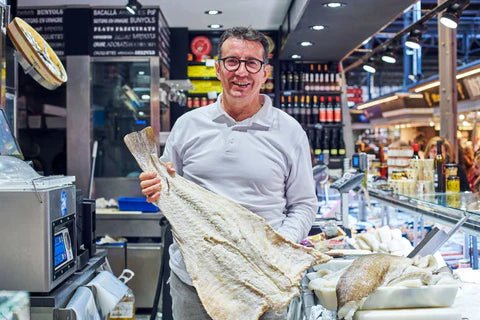
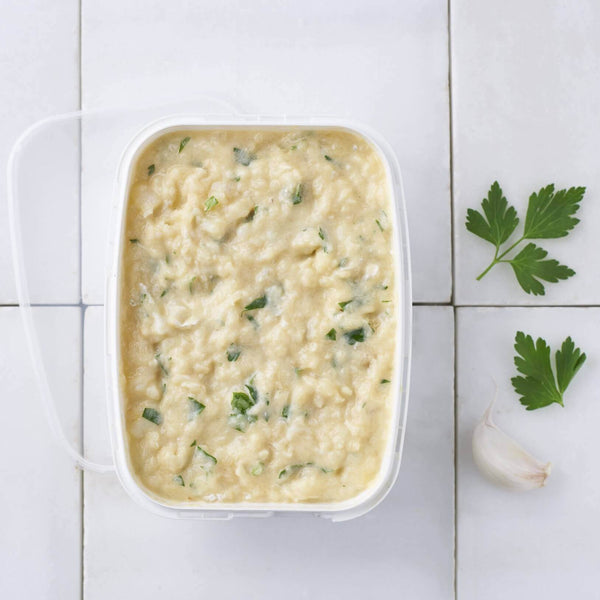
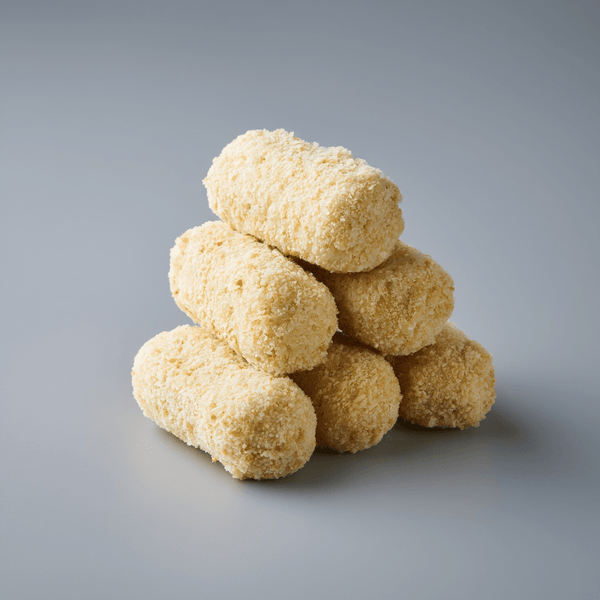
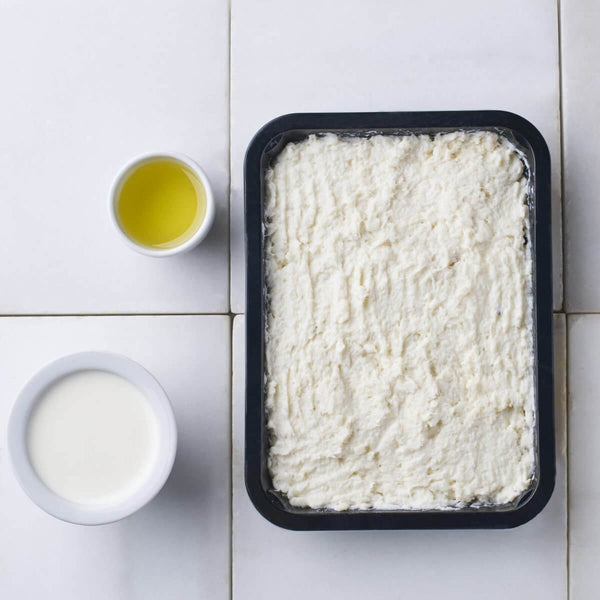
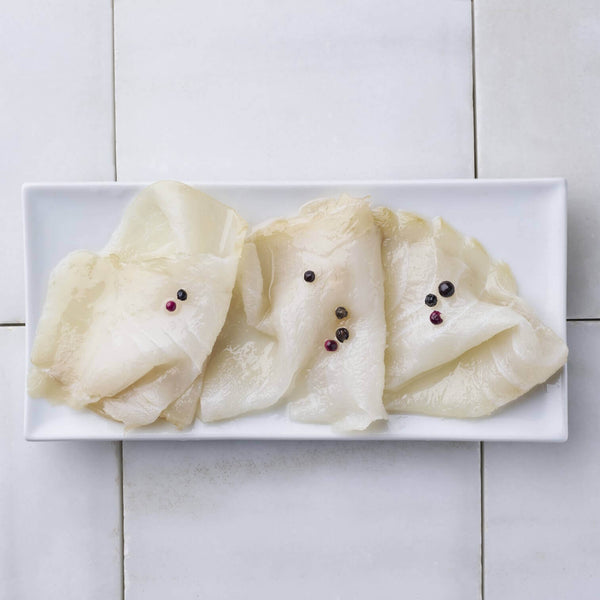
If you've ever seen the word kokotxas on a Basque restaurant menu and wondered what hides behind that name, or if you've been hearing about cod kokotxas for years but have never been quite sure what part of the fish they are, you've come to the right place. At Mercat del Ninot, we've been selecting top-quality cod for 35 years, and kokotxas are, without a doubt, the most common question we get at the counter.
Cocochas and kokotxas are exactly the same thing. The first is the Spanish adaptation of the term; the second, the original Basque word. We will use both interchangeably throughout this article, as is done in any reputable fish market or restaurant.
What exactly are kokotxas?
Kokotxas are the mandibular muscle of the cod, that is, the small pad of flesh found on the underside of the fish's head, just below the mouth. Anatomically, they correspond to the muscles of the hyoid apparatus, which the fish uses to open and close its jaw and suck in water when breathing.
Their appearance is unmistakable: a triangular or fan-shaped piece, pearly white when fresh and a slightly yellowish cream-white when salted or cured. The size varies depending on the specimen, but in a good-sized adult cod—between 3 and 6 kilos—kokotxas usually measure between 6 and 10 centimeters in length and weigh between 30 and 60 grams each.
What makes kokotxas absolutely unique in the world of gastronomy is their very high natural collagen content. When gentle heat is applied to kokotxas, that collagen dissolves in the cooking oil, forming a dense, creamy, and unctuous emulsion without the need for any thickener. This is the principle behind the legendary pil pil, one of the most elegant and technically demanding sauces in Basque cuisine.
Only two kokotxas are obtained from each cod, one on each side of the jaw. This inherent scarcity is the first factor explaining their high price and their status as a luxury product within the cod world.
Cod kokotxas vs hake kokotxas
There is some market confusion between cod kokotxas and hake kokotxas, and it's not surprising: both come from the same anatomical area, have a similar appearance, and share the same name. However, the differences between them are notable and should be understood before purchasing.
Hake kokotxas are smaller, more delicate in texture, and have a milder, less intense flavor. Their collagen content is considerably lower than that of cod, meaning they form a lighter, less dense emulsion, and require greater skill or the use of an auxiliary ingredient to achieve a consistent pil pil. They are excellent cooked in green sauce or grilled, where their delicacy becomes a virtue.
Cod kokotxas, on the other hand, are larger, meatier, and possess that exceptional gelatinizing power that makes them the ideal ingredient for pil pil. Their flavor is more pronounced, with that deep marine character typical of quality cod, and their texture in the mouth, once cooked, is incomparable: firm on the outside, melting in the center, surrounded by a self-created sauce.
As for price, hake kokotxas range from 8 to 15 euros per kilo, while cod kokotxas usually fetch between 18 and 35 euros per kilo depending on the format (fresh, desalted, or frozen). The difference is fully justified by the scarcity of the product and its superior culinary performance in emulsion preparations.
If the recipe you are going to prepare is a pil pil or any dish where the unctuousness of the sauce is key, cod kokotxas are irreplaceable. If you are looking for something more delicate, in a light green sauce or simply grilled, hake kokotxas work perfectly and at a more accessible price.
Why kokotxas are so prized in Basque cuisine
To understand the devotion to kokotxas in the Basque Country, one must go back centuries, to the time when Basque sailors dominated the fishing grounds of the North Atlantic and brought back huge quantities of salted cod. Cod was the people's protein, cheap and accessible, but kokotxas were the prize that sailors and salting workers reserved for themselves. It was the part that wasn't sold, that wasn't salted, that was cooked on the spot with oil and garlic.
Over time, what was humble food became a delicacy. The reason is always the same in the history of gastronomy: when something scarce and technically challenging to prepare yields an exceptional result, its value inexorably rises.
In San Sebastián, Bilbao, and along the entire Basque coast, kokotxas al pil pil are today an iconic dish found in popular taverns and Michelin-starred restaurants alike. Chefs like Juan Mari Arzak, Pedro Subijana, and Martín Berasategui have dedicated years to perfecting and reinterpreting this dish, elevating it to the category of gastronomic heritage.
The key to this cultural elevation lies in technical difficulty. Pil pil is unforgiving: it requires patience, precise temperature, and constant circular motion that can only be learned with practice. This technical demand generates respect and makes the dish a demonstration of culinary mastery. Anyone who makes a good pil pil knows how to cook, no doubt about it.
In Catalonia, where we've been at Mercat del Ninot for three and a half decades, kokotxas have also gained significant ground. Barcelona has a historical relationship with cod that few know about—bacallà a la llauna, esqueixada, bunyols de bacallà—and kokotxas have found an enthusiastic audience here who appreciates the excellence of the product and isn't afraid to pay for it.
Related Cod Products


Recommended Products

Natural Cod Foie Gras - 120g | Smoked Cod Liver f...
€3.90

CHATKA Wild King Crab 60% Legs 40% Shredded | L...
€95.00

Artisanal Smoked Cod Carpaccio | 1 Tub Pack
€15.90

Dried Cod Kokotxas (1 tub) - 500g
€19.95
Refrigerated shipping 24-48h to all of mainland Spain
Season and availability of kokotxas
The availability of fresh cod kokotxas is directly linked to the cod fishing seasons in the North Atlantic. The main fishing grounds are in Norway (Nordic Gadus morhua), Iceland, the Faroe Islands, and the coasts of Newfoundland. Each region has its peak fishing activity periods.
Generally, fresh kokotxas are most abundant between January and April, coinciding with the large catches of Nordic cod. During these months, processed volumes are higher, and with them, the availability of this by-product. The season sometimes extends until June, though with lower volumes.
Outside these months, what you'll find on the market will mainly be frozen kokotxas or desalted kokotxas from specimens processed during the high season. Freezing, when done correctly at very low temperatures right after extraction, preserves most of the gelatinous properties of kokotxas and allows this product to be enjoyed year-round.
At Bacalalo, we maintain availability of desalted cod kokotxas throughout the year, personally selected at Mercat del Ninot to guarantee the size and quality required for good cooking. We also offer dried cod kokotxas for those who prefer to manage the desalting process at home according to the recipe they are preparing.
The existence of salted and frozen formats democratizes access to this product, allowing for advance planning, which is especially valuable for those who want to prepare kokotxas al pil pil for a special occasion without depending on the availability of fresh product on that particular day.
How to identify quality kokotxas when buying
Not all kokotxas are created equal, and learning to distinguish quality at the time of purchase will save you disappointment in the kitchen. In 35 years of selecting products at Mercat del Ninot, we have developed a very clear criterion for what to look for.
For fresh kokotxas:
- The color should be pearly white, uniform, without yellowish or brownish areas.
- The smell should be clean, marine, and fresh. Any ammoniacal or excessively strong odor is a sign of deterioration.
- The texture to the touch should be firm and slightly elastic, never abnormally soft or viscous.
- Size matters: large kokotxas (from adult cod of 4 kilos or more) have more collagen and perform better in emulsion.
For desalted kokotxas:
- The color changes to white-cream or slightly beige, which is completely normal.
- When gently pressed with a finger, they should regain their shape: this indicates that the connective tissue is intact.
- They should have a low and uniform residual salinity; if there are visible salt crystals on the surface, they need more soaking.
- The aroma should be that of quality cured cod: intense but clean, without rancid notes.
For frozen kokotxas:
- Make sure the product indicates a freezing temperature (ideally -18°C or lower).
- Avoid packages with large visible ice crystals inside: they indicate that the product thawed and refroze.
- A recent freezing date is a good indicator of residual quality.
One last practical tip: calibre is fundamental. Small kokotxas, from young cod or minimum catch sizes, have very little collagen and practically do not form pil pil. To obtain a real emulsion, you need good-sized kokotxas from mature specimens. In our shop, we only work with medium-large kokotxas because we know the difference it makes in the final result.
How are kokotxas cooked?
Kokotxas lend themselves to various preparations, but there are two recipes that define them and that any gastronomy enthusiast should know.
The first and most emblematic is the pil pil. In this technique, the kokotxas are cooked in extra virgin olive oil with garlic and, optionally, a chili pepper, at a very low and constant temperature—between 65 and 80 degrees—while the pan is moved with a smooth and continuous circular motion. The collagen released by the kokotxas emulsifies with the oil, creating a thick, shiny, and absolutely silky sauce. There are no tricks, no cornstarch, no cream: just the fish's collagen and the cook's patience. The result is one of the most elegant dishes in Spanish cuisine.
The second great preparation is green sauce. Here, the kokotxas are cooked in a sauce made with olive oil, garlic, parsley, and fish broth, with a slight movement of the pan that also uses the collagen to bind the sauce. It is a technically simpler, more versatile preparation that allows for the incorporation of other ingredients such as clams or asparagus.
They can also be grilled, although in this case, much of the gelatinous charm of the product is lost. Frying is another option, especially for smaller or lower-quality kokotxas, where the crispy outer crust compensates for the lack of emulsion.
Regardless of the chosen preparation, one principle remains unchanged: kokotxas should never be overcooked. Excessive temperature destroys the collagen before it can emulsify, turns the kokotxas into a dry and rubbery product, and ruins the dish. Delicacy and controlled temperature are the two pillars of any cod kokotxas recipe.
🛒 Products mentioned in this article
⭐ 4.9/5 · Cold shipping 24-48h · Since 1990 at Mercat del Ninot
Frequently asked questions
Are cocochas and kokotxas the same?
Yes, exactly the same. Kokotxa is the original Basque term and cococha is its Castilianization. In the Basque Country, kokotxa is mainly used; in the rest of Spain and on the menus of most restaurants outside Euskadi, cococha. Both terms refer to the mandibular muscle of the fish, whether cod or hake.
What part of the cod do cocochas come from?
Cocochas are extracted from the head of the cod, specifically from the lower part of the jaw. They are the muscles that the fish uses to open and close its mouth and suck in water. Each cod yields exactly two cocochas, one on each side.
Why are cocochas so gelatinous?
Because they have an extraordinarily high concentration of collagen, the structural protein of connective tissue. When heated slowly, this collagen dissolves and acts as a natural emulsifying agent that binds the oil and water from the cooking itself, forming the characteristic pil-pil sauce without the need to add any external thickener.
Are cod cocochas better than hake cocochas?
They are different, not necessarily better in all contexts. Cod cocochas have more collagen, more flavor, and are irreplaceable for pil-pil. Hake cocochas are more delicate, milder in flavor, and excellent in green sauce or grilled. For a powerful emulsion, cod cocochas; for lighter and more refined preparations, hake cocochas are a great option.
How many cocochas come from one cod?
Exactly two, one on each side of the lower jaw. This intrinsic scarcity —only 0.5-1% of the total weight of the fish— is one of the main factors explaining the high price of this product.
Can cocochas be frozen?
Yes, with good results, provided that freezing is rapid and at a sufficiently low temperature (-18°C or lower). Thawing should always be done in the refrigerator for 12-24 hours, never at room temperature or under hot water, to preserve the collagen structure which is essential for emulsification.
How long do fresh cocochas last in the refrigerator?
Fresh cocochas should be consumed within a maximum of 48 hours of purchase, well covered and in the coldest part of the refrigerator. Desalted ones last up to 72 hours under the same conditions. If you are not going to use them within that time, it is best to freeze them immediately.
What is the difference between desalted cocochas and dried cocochas?
Desalted cocochas have already undergone the soaking process and are ready to cook directly, which is very convenient. Dried cocochas (salted) require a desalting process at home that lasts between 24 and 48 hours, changing the water every 8 hours. Dried cocochas allow for better control of the final salt level, and some cooks consider them to have more flavor after the process.
Are cocochas a healthy food?
Yes. Cod cocochas are rich in high biological value proteins, omega-3 fatty acids, B vitamins (especially B12), and minerals such as phosphorus, potassium, and iodine. Their caloric content is moderate, especially in versions cooked pil-pil style, where oil provides most of the calories. The collagen they contain also has beneficial properties for joints and skin.
How does pil-pil differ from other cod sauces?
Pil-pil is a natural emulsion formed solely with the collagen of the fish, olive oil, and the cooking liquid. It does not contain flour, cornstarch, cream, or any other thickener. It is, technically, a self-emulsifying sauce, unique in world gastronomy. Other cod sauces such as vizcaína, llauna, or americana use different vegetable or liquid bases and are technically very different.
Discover our premium selection
Selected seafood since 1990 at Mercat del Ninot, Barcelona. Refrigerated shipping in 24-48h.