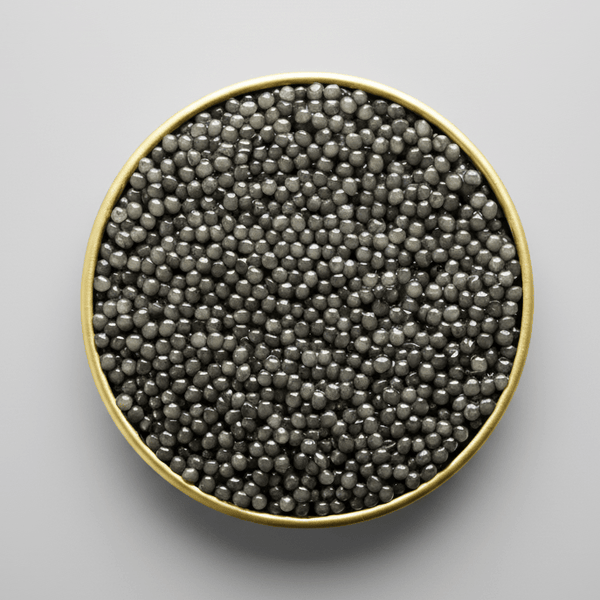
Summary: Caviar is, strictly speaking, the roe of sturgeon (family Acipenseridae) cured with salt. Only sturgeon roe can legally be called "caviar" in most countries. The roe of other fish (salmon, trout, lumpfish, cod) are called "caviar substitutes" or simply "roe of [species]".

Contents
- What exactly is caviar?
- Origin and history of caviar
- How caviar is produced
- Main types of caviar
- Why is caviar so expensive?
- What fish does caviar come from?
- What does caviar taste like?
- How much does 100g of caviar cost?
- How to taste and savor caviar
- How to serve caviar correctly
- Storing caviar
- Nutritional properties of caviar
- Caviar vs. substitutes: differences
- Where to buy quality caviar in Spain
- Frequently asked questions
- Conclusions
What exactly is caviar?
Caviar is, strictly speaking, the roe of sturgeon (family Acipenseridae) cured with salt. Only sturgeon roe can legally be called "caviar" in most countries. The roe of other fish (salmon, trout, lumpfish, cod) are called "caviar substitutes" or simply "roe of [species]".

Caviar is considered one of the world's most luxurious foods, alongside truffles, saffron, and Iberian acorn-fed ham. Its price can range from €50 to over €10,000 per kilo, depending on the sturgeon species, production area, and preparation process. At Bacalalo, we work with selected caviars that offer the best value for money within the premium segment.
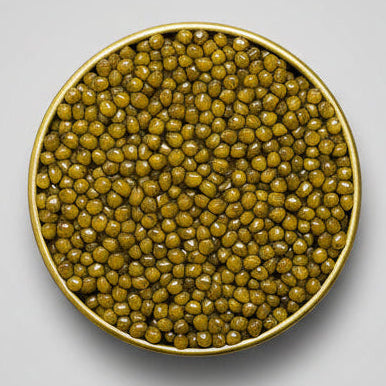
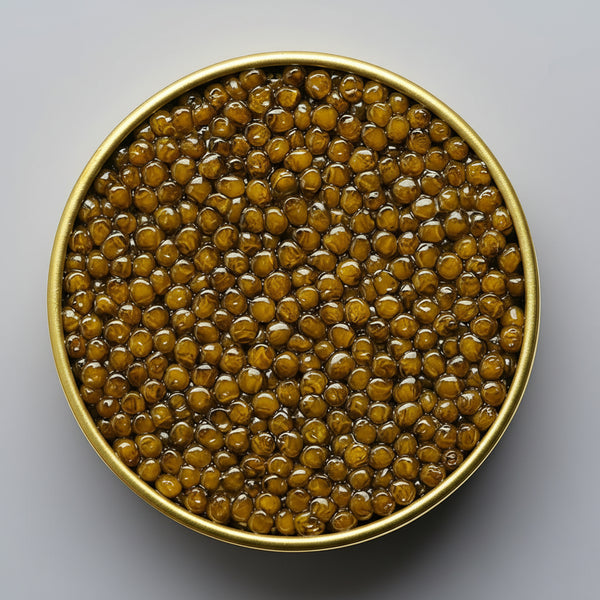
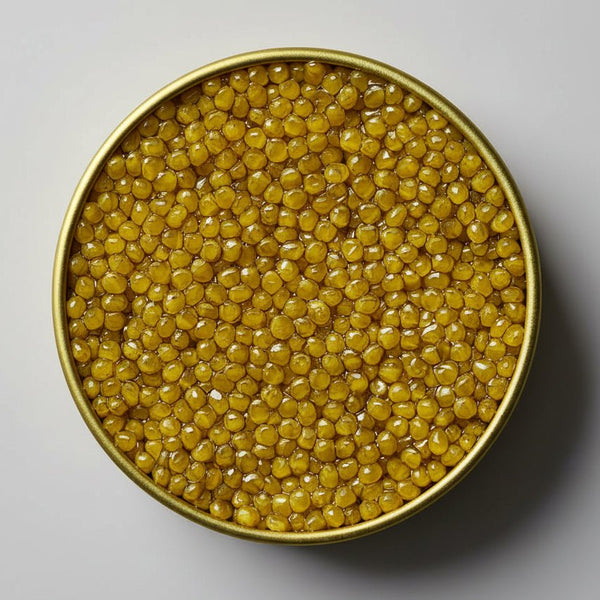
Caviar roe are small spheres (2.5 to 3.5 mm in diameter) of variable color: from light grey to intense black, passing through amber, golden, and olive green tones. The texture should be firm but "pop" gently when pressed against the palate, releasing a complex flavor: saline, buttery, with hints of nuts and sea.
Origin and history of caviar
The consumption of sturgeon roe dates back to ancient Persia, where the word khav-yar (خاویار) meant "cake of strength" or "power-bearer." Persians believed that caviar was an energizing and medicinal food. From Persia, caviar spread to the Russian Empire, where it became a symbol of Tsarist aristocracy during the 18th and 19th centuries.
The Caspian Sea, shared by Iran, Russia, Kazakhstan, Turkmenistan, and Azerbaijan, was historically the primary source of the world's caviar. The three Caspian sturgeon species (Beluga, Osetra, and Sevruga) produced 90% of the world's caviar until the 2000s. Overfishing and pollution of the Caspian brought sturgeon to the brink of extinction, leading to a ban on wild caviar trade in 2006 (CITES).
Since then, production has shifted to aquaculture: sturgeon farms in China (the world's largest producer), Italy, France, Spain, Germany, and Israel. Farmed caviar now accounts for over 95% of the global market.
How caviar is produced
The sturgeon: a prehistoric fish
Sturgeon are primitive fish that have been on Earth for over 200 million years (they existed before dinosaurs). They are slow-growing and late-maturing fish: a female Beluga sturgeon can take 18-25 years to reach sexual maturity and produce her first roe. This slowness is one of the reasons for caviar's price.

Extraction and selection of roe
The caviar production process includes:
- Sturgeon farming: in fish farms with controlled water (temperature, oxygenation, feeding) for 7-25 years, depending on the species.
- Maturity determination: using ultrasounds and biopsies, it is determined when the roe are at their optimal point.
- Extraction: traditionally, the female was sacrificed. Today, there are extraction methods such as cesarean section or "milking" that allow the animal to remain alive.
- Cleaning and sieving: the roe are separated from the ovarian membranes by gentle sieving.
- Salting: 3-5% fine salt is added. "Malossol" (from Russian for "little salt") indicates a mild salting (less than 3%), considered the most premium.
- Packaging: in hermetically sealed metal cans (traditionally tin or lacquered) stored at 0-4 °C.
Related Bacalalo products


Main types of caviar
Beluga Caviar (Huso huso)
The king of caviar. Large roe (3-3.5 mm), light grey to dark grey in color. Smooth, creamy, and buttery flavor. The most expensive in the world: €3,000-10,000/kg. Limited production because Beluga sturgeon take 18-25 years to mature.
Osetra Caviar (Acipenser gueldenstaedtii)
The connoisseur's favorite. Medium-large roe (2.5-3 mm), variable in color: golden, amber, brown, or greenish-grey. Complex flavor with nutty, hazelnut, and sea notes. Price: €1,500-4,000/kg. Osetra sturgeon mature in 10-15 years.
Sevruga Caviar (Acipenser stellatus)
Small roe (2-2.5 mm), dark grey to black in color. More intense and pronounced flavor than Beluga or Osetra, with more iodine and sea. The most accessible of the three classics: €800-2,000/kg. Matures in 7-10 years.
Siberian Sturgeon Caviar (Acipenser baerii)
The most cultivated in Europe (including Spain). Medium roe (2.5 mm), dark. Balanced flavor between mild and marine. Excellent value for money: €500-1,500/kg. Matures in 7-9 years.
White Sturgeon Caviar (Acipenser transmontanus)
Originally from North America, also cultivated in Europe. Medium-large roe with a mild, creamy flavor. Price: €600-2,000/kg.
Why is caviar so expensive?
The price of caviar is explained by a combination of several factors:

- Production time: a Beluga sturgeon needs 18-25 years to produce its first roe. That's an investment of more than two decades in feed, water, electricity, and space before obtaining the first gram of caviar.
- Low yield: roe represents 10-15% of the female's body weight. A 100 kg sturgeon produces about 10-15 kg of caviar.
- Production costs: a sturgeon fish farm requires water recirculation systems, temperature control, specialized feed, and skilled personnel.
- Perishable product: caviar has a short shelf life (3-6 months unopened, 48-72 hours once opened), which complicates logistics and increases spoilage.
- Artisanal process: the selection, cleaning, and salting of the roe are mostly done by hand.
- Growing demand: the rise of premium gastronomy in Asia (especially China) has boosted global demand.
How to taste and savor caviar
To appreciate caviar in all its splendor:
- Temperature: take the caviar out of the fridge 5-10 minutes before serving. The ideal temperature is 4-8 °C. If it's too cold, the aromas won't be released; too warm, the texture becomes soft.
- Spoon: use a mother-of-pearl, bone, wood, or glass spoon. Never metal (silver, steel): metal oxidizes the roe and alters the flavor. If you don't have a special spoon, use a plastic one rather than a metal one.
- Quantity: a standard tasting is 10-30g per person. For a generous serving, allow 30-50g.
- Technique: place a small amount on the back of your hand (between your thumb and index finger) and bring it to your mouth. The warmth of the skin releases the aromas. Gently press the roe against your palate and let them burst. Do not chew: let them dissolve on their own.
- Notes to look for: salinity, butteriness, nutty or hazelnut notes, marine freshness, persistence on the palate.
How to serve caviar correctly
- Alone: the purest way. Caviar on crushed ice, with a mother-of-pearl spoon, and nothing else. For purists.
- With blinis: blinis (small Russian buckwheat pancakes) are the classic accompaniment. A spoonful of crème fraîche, a spoonful of caviar.
- With toast: toasted brioche bread or crustless, lightly toasted bread. Unsalted butter + caviar.
- Champagne or vodka: the classic pairing. A Blanc de Blancs champagne or an iced vodka (-18 °C) cleanse the palate between bites.
- Hard-boiled egg: a half hard-boiled egg with a teaspoon of caviar on top is a classic and elegant appetizer.
What you should never do: mix caviar with onion, lemon, capers, or strong garnishes. This used to be done to mask the taste of low-quality caviars. Good caviar needs nothing.

Storing caviar
- Unopened: in the refrigerator (0-4 °C), caviar lasts 3-6 months depending on the type and manufacturer. Always check the expiration date.
- Once opened: consume within 48-72 hours maximum. Cover the surface with plastic wrap in direct contact with the roe and close the can. Store in the coldest part of the refrigerator.
- Never freeze: freezing breaks the membranes of the roe and destroys the texture. Thawed caviar turns into a bland paste.
- Transport: always keep cold. If you buy caviar online, make sure the shipment is refrigerated.
Nutritional properties of caviar
Caviar is nutritionally exceptional, beyond being a gastronomic luxury:
- Proteins: 25-27 g/100 g — high-quality complete protein
- Omega-3 (EPA+DHA): 5-7 g/100 g — one of the most concentrated sources of omega-3 available
- Vitamin B12: 20 µg/100 g (800% RDA) — exceptional amount
- Vitamin D: 5.9 µg/100 g
- Selenium: 65 µg/100 g — powerful antioxidant
- Iron: 11.8 mg/100 g — very high for a marine product
- Calories: 264 kcal/100 g
Caviar is a true superfood: it concentrates omega-3, B vitamins, selenium, and iron in quantities that exceed most foods. The limitation is the quantity: usual portions (10-30 g) proportionally reduce the nutritional contribution.
Caviar vs. substitutes: differences
Not everything that looks like caviar is caviar. These are the most common alternatives:
- Salmon roe (ikura): large roe (5-7 mm), orange, very popular in Japanese cuisine. Intense sea flavor. Not caviar, but an excellent product in its own right. Price: €30-80/kg.
- Trout roe: similar to salmon but smaller (3-4 mm). Reddish-orange color. Good affordable substitute.
- Lumpfish roe: small roe, dyed black or red. Flat taste and soft texture. The cheapest substitute and also the furthest from real caviar. Price: €5-15/kg.
- Cod roe: very small, pinkish or beige roe. Granular texture. Traditionally used in Nordic cuisine (Greek taramasalata).
- Vegan caviar (algae): made with algae and additives to imitate the shape and taste of caviar. Reasonable texture, taste very different from the real thing.
The general rule: if the price seems too good to be caviar, it probably isn't. Authentic sturgeon caviar never costs less than €300-400/kg. Anything below that is a substitute or of dubious origin.
Where to buy quality caviar in Spain
To buy authentic caviar in Spain, look for establishments specializing in premium seafood products. At Bacalalo, we work with selected producers and offer sturgeon caviar with full traceability. Each can comes with information on the species, country of production, and date of manufacture.
Tips for buying caviar:
- Verify the species: the label should indicate the sturgeon species (Baerii, Gueldenstaedtii, Huso huso, etc.) and the CITES code.
- Check the origin: the main quality producing countries are Iran, Italy, France, Spain, Germany, and China (certified farms).
- Check the date: the fresher, the better. Caviar does not improve with age.
- Buy refrigerated: make sure the shipment maintains the cold chain.
🛒 Products mentioned in this article
⭐ 4.9/5 · Chilled delivery 24-48h · Since 1990 at Mercat del Ninot
Discover our premium selection
Seafood products carefully selected since 1990 at Mercat del Ninot, Barcelona. Refrigerated delivery in 24-48h.
What fish does caviar come from? What part is it?
Caviar comes from female sturgeon, a freshwater and brackish fish of the Acipenseridae family. The part used are the roe (unfertilized eggs) that the female accumulates inside before spawning. These eggs are extracted, cleaned of ovarian membranes and cured with salt: that is all the caviar that exists. If the fish is not a sturgeon, it is technically not caviar, but a substitute or roe from another species.
The most common sturgeon species used for caviar are Beluga (Huso huso), Osetra (Acipenser gueldenstaedtii), Sevruga (Acipenser stellatus) and Siberian sturgeon (Acipenser baerii), the most cultivated in Europe. Each species yields roe of different size, color and flavor, as detailed in the caviar types guide. If you want to delve deeper into its origin, also read sturgeon roe: qualities, types and labeling.
What does caviar taste like?
Quality caviar has a saline, buttery and clean taste, with a fresh sea undertone and nutty nuances (walnut, hazelnut). It is not a "strong fish" taste: if caviar tastes too fishy, metallic or rancid, it is a sign of low quality or poor preservation. The charm lies as much in the taste as in the texture: the roe gently bursts when pressed against the palate and gradually releases its aroma.
The profile changes depending on the species: Beluga is the smoothest and creamiest, Osetra the most complex (nutty notes), and Sevruga the most intense and marine. The first time, it is surprising how delicate and mildly salty good caviar is compared to the exaggerated idea many people have. To appreciate it properly, serve it at 4-8 °C and with a mother-of-pearl spoon (never metal), as explained above.
How much does 100g of caviar cost?
The price depends on the species and quality. As an indicative reference for 100g: Siberian sturgeon (Baerii) from about €50-150; Sevruga from €80-200; Osetra from €150-400; and Beluga, the most expensive, from €300 up to over €1,000 per 100g in its top qualities. This is why caviar is almost always sold in small tins of 10, 20, 30 or 50g: a reasonable tasting portion is 10-30g per person. You can find a complete breakdown in our caviar price guide.
Conclusions
- What exactly is caviar?: Caviar is, strictly speaking, the roe of sturgeon (family Acipenseridae) cured in salt.
- Origin and history of caviar: The consumption of sturgeon roe dates back to ancient Persia, where the word khav-yar (خاویار) meant "cake of strength" or "power bearer."
- How caviar is produced: Sturgeon are primitive fish that have been on Earth for over 200 million years (they existed before dinosaurs).
- How to serve caviar correctly: What you should never do: mix caviar with onion, lemon, capers or strong garnishes.
- Caviar vs. substitutes: differences: Not everything that looks like caviar is caviar.
Frequently Asked Questions
What does caviar taste like?
Caviar has a complex flavor: saline, buttery, with nutty and oceanic nuances. The texture is creamy: the roe gently bursts when pressed against the palate. Each sturgeon species has a different profile.
How much does caviar cost?
It depends on the species: Sevruga from €800/kg, Osetra from €1,500/kg, Beluga from €3,000/kg. Siberian sturgeon (Baerii) is the most accessible: from €500/kg. In 30g portions, the price per person ranges from €15 to €100.
How is caviar eaten?
Alone, with a mother-of-pearl spoon (never metal), at a temperature of 4-8 °C. Also on blinis with crème fraîche, on brioche toast with butter, or simply on the back of the hand. Pair with champagne or vodka.
Is salmon roe caviar?
No. Only sturgeon roe is caviar. Salmon roe (ikura), trout, lumpfish, or cod roe are substitutes. Good products in their own right, but they are not caviar. The roe of other fish (salmon, trout, lumpfish, cod) are called "caviar substitutes" or simply "roe of [species]".
Can caviar be frozen?
It is not recommended. Freezing breaks the roe membranes and destroys the texture. Once opened, consume within 48-72 hours.
Does caviar expire?
Yes. Unopened, it lasts 3-6 months in the refrigerator (0-4 °C). Opened, a maximum of 48-72 hours. Always check the manufacturer's expiration date.
Discover our selection of premium caviar at Bacalalo.
Products you might be interested in