Two Methods, Same Goal: Tender Octopus
Octopus is one of those products that cuisine has tried to "tame" for centuries. Poorly cooked, it becomes rubbery and tough. Well-cooked, it is one of the most pleasurable experiences of the North Atlantic. There are two modern approaches:
- Traditional cooking ("scaring" + boiling): The classic Galician method with 3 prior dips in boiling water and cooking for 30-50 min. The result of 200 years of fishing expertise.
- Sous vide (low-temperature vacuum cooking): Cooking at 77°C for 4-5 hours in a vacuum bag. The result of molecular cuisine and low temperatures.
Both methods aim for the same thing: to soften the muscle fibers and collagen of the octopus without overcooking it. They arrive there by different paths.
Comparison Table: Yield and Texture
| Aspect | Traditional | Sous Vide |
|---|---|---|
| Total Time | 45-60 min (active) | 4-5 h (passive) |
| Attention Required | High (fire control, scaring) | Low (set & forget) |
| Predictability | Medium (depends on experience) | Very High |
| Resulting Texture | Variable, with character | Uniform, silky |
| Juice Retention | Good (30-35% loss) | Excellent (15-20% loss) |
| Energy Cost | Low | Medium (5h water bath) |
| Equipment Needed | Large pot | Sous vide machine + bag |
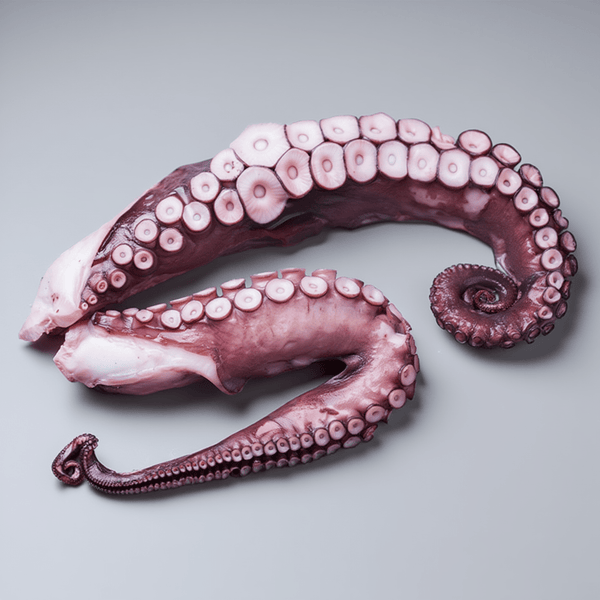
Large Cooked Galician Octopus Leg - 500g
Direct selection from Bacalalo, verified quality.
Traditional Method: The Art of "Scaring"
The traditional Galician method consists of:
- Previously frozen octopus (at least 48h at -20°C) and defrosted.
- Boiling water in a large pot (no salt, nothing else).
- "Scaring": grasp the octopus by the head and dip-remove 3 times, 5 seconds per dip. This sets the skin.
- Finally submerge. Cook for 25-40 minutes depending on size (1 kg = 25 min; 2 kg = 35 min; 3 kg = 45 min).
- Check with a fork: it should go in easily but not fall apart.
- Rest for 10 min in the water after turning off the heat.
- Slice and serve.
The method is laborious and requires experience to get the timing right, but it produces an octopus with "soul": the skin slightly tanned, the flesh firm but tender, concentrated flavor.
Sous Vide Method: Patience and Precision
The sous vide method consists of:
- Previously frozen and defrosted octopus.
- Vacuum seal with a touch of olive oil, garlic, and bay leaf.
- Cook in a water bath at 77°C for 4-5 hours (1 kg = 4h; 2 kg = 5h).
- Remove, open bag, recover juices.
- If you want to finish on the griddle: sear in a pan or on a griddle for 1 min per side.
The method requires very little active attention (you can leave it for 4 hours), is totally predictable (no way to overcook it) and produces a silky, almost creamy texture, very different from the traditional method.
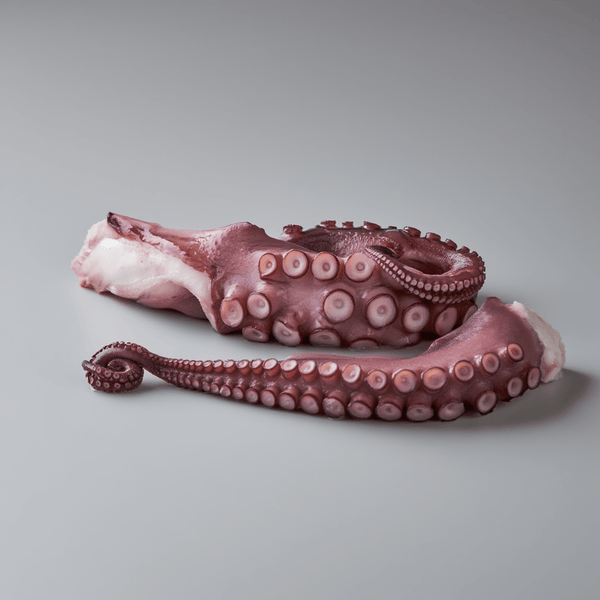
Cooked Galician Octopus Leg - 250g | 1 Premium Tentacle
Direct selection from Bacalalo, verified quality.
Which to Choose According to Your Situation?
Each method has its ideal context:
Traditional wins if:
- You want authentic Galician octopus, with its character
- You are going to serve traditional "pulpo a feira"
- You don't have a sous vide machine
- You have 1 active hour of cooking
- You are a purist of traditional cuisine
Sous vide wins if:
- You want perfectly uniform octopus, without risk
- You are going to grill or pan-sear the octopus afterward
- You have the machine and can "forget" about it for 4-5 hours
- You are going to serve several consistent portions
- You are a modernist or cook professionally
Home Sous Vide: Is It Worth the Investment?
A basic sous vide machine (Anova Nano, Inkbird ISV-200W) costs €90-150. Is it worth it just for octopus? Probably not. But if you're also going to use it for:
- Cod cheeks and other fish (always perfect)
- Meats (sirloin, duck breast, pork shoulder) to exact doneness
- Low-temperature eggs (the famous "63°C eggs")
- Vegetables retaining texture
- Fruits for desserts
The return on investment comes quickly. For homes with advanced kitchens, it is one of the best kitchen investments of the last 10 years.
The Most Practical Option: Pre-Cooked Vacuum-Sealed Octopus
There is a third way that combines the best of both methods: buying quality pre-cooked vacuum-sealed Galician octopus. These products have already undergone professional cooking (sometimes industrial sous vide, sometimes traditional in a boiler), are vacuum-sealed with their juices, and only need:
- Heating for 2 minutes in hot water or microwave
- Slicing and seasoning
In 5 minutes you have "pulpo a feira" almost indistinguishable from a specialized restaurant. This is the option we recommend for 90% of situations, leaving the traditional method for purists and sous vide for home chefs with the machine.
Conclusion: The Galician vs. Molecular Debate
The debate between traditional cooking and sous vide has no single winner. Each method has its logic, its market, and its result. Galician cuisine has been perfecting "scaring and boiling" for 200 years. Molecular cuisine has brought absolute precision with sous vide. Both are valid.
For occasional home use, the industrial vacuum-sealed cooked octopus option (like Bacalalo's) is the most practical and maintains gourmet quality. For more demanding gastronomic experiences, try both methods: you'll discover which type of octopus you truly prefer.
Large Cooked Galician Octopus Leg - 500g
Direct selection from Bacalalo, verified quality.
Related articles
Frequently Asked Questions
What is the exact temperature for cooking sous vide octopus?
77°C (170°F) is the standard temperature. Some chefs use 75°C for an even silkier texture, others 80°C for something firmer. The operational range is 74-82°C.
How long in sous vide for 1 kg of octopus?
4 hours. For 2 kg: 5 hours. For 3 kg: 6 hours. Approximate times with a 30 min margin.
Should the octopus be frozen beforehand in both methods?
It is recommended in both: freezing breaks down fibers and tenderizes. Without prior freezing, the octopus will be tougher regardless of the method.
Is traditional cooking always done in a copper pot?
Traditionally yes, at Galician fairs (copper cauldrons), but today it's done in any large pot. Copper conducts heat uniformly and reacts with the octopus skin, but its actual sensory impact is debatable.
Does sous vide make the octopus lose flavor?
On the contrary: being sealed, it retains all the juices and concentrated flavor. The difference is textural (silkier, less "rustic"), not in flavor intensity.
How do I ensure my sous vide is exactly 77°C?
Use a digital probe thermometer to verify. Cheap machines can deviate by 2-3°C. Any €15-30 thermometer will give you sufficient precision.
Can traditional and sous vide methods be combined?
Yes, an advanced technique: cook traditionally for 25 min in water, then vacuum seal and maintain at 65°C for 1-2 hours to "set" the texture. Excellent hybrid result.
How much does a basic sous vide machine cost?
Known brands (Anova, Joule, Inkbird) between €90-200. Premium brands (PolyScience, Sansaire) between €350-800. For home use, one for €100-150 is more than sufficient.