Same octopus, two traditions: Galicia vs Andalusia
Common octopus (Octopus vulgaris) is one of the most prized mollusks in Spanish gastronomy. Although it is caught all along the Atlantic and Mediterranean coasts, two regions have developed diametrically opposed culinary traditions: Galicia and Andalusia.
The difference is not in the product, but in the culinary philosophy. Galicia respects the octopus almost without touching it: it boils it, chops it, and serves it. Andalusia subjects it to multiple preparations: frying, grilling, stews, salads. Two sides of the same mollusk.
"Pulpo a feira": the Galician tradition
"Pulpo a feira" (also written "á feira", literally "fair-style octopus") is the quintessential Galician preparation. Its origin lies in the cattle fairs of the inland Galician provinces (Lugo, Ourense), where "pulpeiras" (octopus cooks) cooked boiled octopus for attendees since the 18th century.
The preparation is minimalist:
- Octopus boiled in a copper pot (traditionally) with boiling water, no added salt.
- "Frightened" (introducing and removing the octopus 3 times in boiling water before the final cooking), so that the skin does not detach.
- Cooking for 30-40 minutes depending on size.
- Chopped with scissors on a round wooden plate.
- Sprinkled with coarse salt, sweet paprika and paprika from La Vera (or spicy), and drizzled with virgin olive oil.
It is served with cachelos (boiled potatoes with skin) and accompanied by red wine from Ribeiro or Albariño.
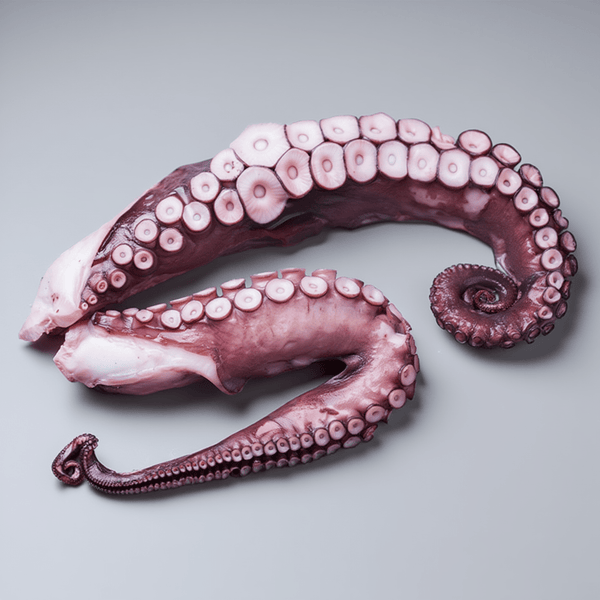
Large Cooked Galician Octopus Leg - 500g
Direct selection from Bacalalo, verified quality.
Andalusian octopus: grilled, fried or in salad
Andalusia approaches octopus from the opposite side: cooking + transformation. The most common preparations are:
- Grilled octopus: Cooked octopus then seared on the grill with a touch of garlic and parsley. Crispy on the outside, tender on the inside.
- Fried octopus: Pieces of cooked octopus coated in flour and fried in very hot oil. Served with lemon.
- Sevillian-style octopus: Boiled and served with mojo sauce (garlic, vinegar, oil, paprika) or seasoned Cadiz-style.
- Octopus in salad: Small pieces in a salad with potato, mayonnaise, pepper, and sometimes peas.
- Char-grilled octopus: Grilled directly over coals, after pre-cooking. A specialty of coastal beach bars.
Comparison table: key differences
| Aspect | Galician octopus (a feira) | Andalusian octopus (feria, grilled, etc.) |
|---|---|---|
| Species | Octopus vulgaris (same) | Octopus vulgaris (same) |
| Catch origin | Galician Rías | Mediterranean / South Atlantic |
| Main preparation | Boiling and serving | Boiling + grilling/frying |
| Seasoning | Salt, paprika, oil | Garlic, parsley, lemon, vinegar |
| Accompaniment | Cachelos (potato) | Lemon, mojo, salad |
| Plate/serving dish | Round wooden plate | Ceramic, casserole or deep plate |
| Wine pairing | Ribeiro red, Albariño | Manzanilla, Fino, young white wine |
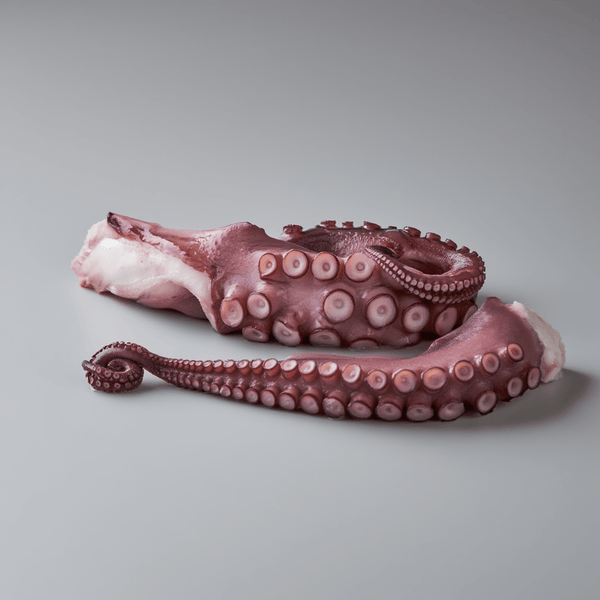
Cooked Galician Octopus Leg - 250g | 1 Premium Tentacle
Direct selection from Bacalalo, verified quality.
Which is better? It depends on the occasion
The honest answer: neither is objectively better. Each preparation shines in a different context:
Pulpo a feira wins in:
- Purity of product flavor
- Traditional gatherings, holidays, pilgrimages
- Those who want to fully respect the natural flavor of octopus
- Pairing with robust wines
Andalusian octopus wins in:
If you've never tried both versions, we recommend visiting them in this order: first "a feira" (pure), then Andalusian (elaborate). The first gives you the base, the second shows you the possibilities.
Cooking Galician octopus at home
To make pulpo a feira at home, the key is product quality and cooking technique. Nowadays, vacuum-packed cooked octopuses (like Bacalalo's) save the 50 minutes of cooking and the "frightening" technique. You only need:
- Cut the cooked octopus into slices 0.5-1 cm thick
- Heat for 2 minutes in hot water (not boiling)
- Place on a round wooden or ceramic plate
- Sprinkle with coarse salt
- Sprinkle with sweet paprika (and spicy paprika from La Vera if desired)
- Drizzle generously with extra virgin olive oil
In 5 minutes you have an authentic Galician dish. For the Andalusian version, follow the steps but finish by searing for 1-2 minutes on a hot griddle before seasoning.
Conclusion: two ways, one respect
Galician and Andalusian octopus do not compete: they are expressions of the same raw material in different cultures. The Galician is vertical (one act: boil and serve); the Andalusian is horizontal (multiple preparations).
At Bacalalo, we work with vacuum-packed cooked Galician octopus, caught in the Rías of Pontevedra and A Coruña, with uniform caliber and silky texture. It comes already cooked and ready: in 5 minutes you have a quality Galician pulpo a feira, without the time investment of traditional cooking.
Large Cooked Galician Octopus Leg - 500g
Direct selection from Bacalalo, verified quality.
Related articles
Frequently Asked Questions
Is the same octopus used in Galicia and Andalusia?
Yes: both use Octopus vulgaris (common octopus). The differences are in the geographical origin of the catch and culinary tradition, not the species.
Why is octopus "frightened" in Galicia?
So that the skin does not detach during cooking. Short immersions in boiling water "fix" the outer membrane. It is a traditional octopus cooking technique that many modern vacuum-packed cooked octopuses no longer require.
Why is Galician octopus served on a wooden plate?
Due to historical tradition (oak or chestnut wood) and for thermal reasons: wood does not cool the cooked octopus quickly, which cold ceramics would do.
Is the paprika always sweet in pulpo a feira?
No. Tradition allows both versions: sweet (more common) or spicy (from La Vera). It is usual to sprinkle sweet first, and then a pinch of spicy for those who wish.
Can octopus be frozen?
Yes, in fact prior freezing (at least 48h at -20°C) replaces the traditional "frightening" and breaks the muscle fibers, softening the octopus. Almost all commercial octopuses in Spain are already pre-frozen.
What is the current price of Galician octopus?
In 2026, fresh Galician octopus is between €22-40/kg, depending on the season (more expensive in autumn-winter). Quality vacuum-packed cooked octopus: €30-50/kg. Frozen: €15-25/kg.
Is consuming octopus sustainable?
North Atlantic octopus populations are well managed. The Galician fishery has strict quotas and closed seasons. Pacific octopus (massive Chinese imports) carries more risks. Buy European whenever you can.
How much octopus per person?
As a tapa: 100g of cooked octopus. As a portion: 200-250g. As a main dish: 300g. Remember that octopus shrinks 30-40% when cooked.