Summary
Easter is the second-highest seafood consumption period in Spain, only surpassed by Christmas. In this guide: Seafood at Easter: tradition and fine dining, What seafood is in season at Easter, How to recognize fresh seafood.
Seafood at Easter: tradition and fine dining
Easter is the second-highest seafood consumption period in Spain, only surpassed by Christmas. The tradition of abstaining from meat during Lent encouraged the consumption of fish and seafood, a practice that has continued to this day, even in non-practicing households.
The problem is that demand skyrockets, and with it, prices and the risk of buying produce that is not at its best. This guide helps you choose the right seafood, recognize its freshness, and prepare it to be worthy of a celebratory table.
What seafood is in season at Easter
Easter falls between March and April. During this period, the seafood that is at its best includes:
- Palamós Red Prawns: Season from January to May. This is the optimal time. Red prawns are full of roe and have an intense, iodine flavor.
- Prawns (Langostinos): Available all year (mostly farmed), but wild prawns from Huelva or Sanlúcar are in season from March to June.
- Goose Barnacles (Percebes): Season from October to April. At Easter, they are in their last weeks of the season. If you find fresh ones from Galicia, buy them.
- Velvet Crabs (Nécoras): From November to April. They are still in good condition. Look for Galician ones, which are the tastiest.
- Norway Lobsters (Cigalas): All year round, but those from the Cantabrian coast are especially good in spring.
- Mussels: From September to April. They are at the end of their peak season. Galician raft mussels are the benchmark.
- Clams (Almejas): Carril fine clams (Galicia) are in season all year, but in spring they have a firm texture and a very clean flavor.
What is NOT at its best: lobster (better in summer), spider crab (season from November to March, just ending), and oysters (optimal from September to February).
How to recognize fresh seafood
During Easter, fishmongers sell a higher volume than usual. This increases the risk that the product may not be from the same day. These signs help you distinguish fresh seafood from spoiled seafood:
Prawns and Shrimps:
- Bright, black, and bulging eyes. If they are sunken or grayish, they are not fresh.
- Firm body to the touch. If the flesh yields when pressed and does not return to its shape, it's past its prime.
- Clean, oceanic smell. If it smells of ammonia, reject it.
- Vivid color. Red prawns should be truly red, not pinkish or orange.
Goose Barnacles:
- Closed nail. If the nail is open and doesn't close when touched, the barnacle is dead.
- Dark and firm peduncle, not soft or wrinkled.
- Intense sea smell, never old fish smell.
Mussels and Clams:
- Closed shells or shells that close when tapped. Those that are open and don't react are dead: discard them.
- Weight: a fresh, full mussel weighs more than it seems. If they are very light, they are empty.
- Clean surface, without excessive dirt or strong odor.
General rule: buy seafood on the same day you plan to cook it. If you buy in advance, store it in the coldest part of the refrigerator (0-4 °C) covered with a damp cloth. Never in water or a sealed bag.
Basic preparations for Easter seafood
Grilled Prawns and Shrimps
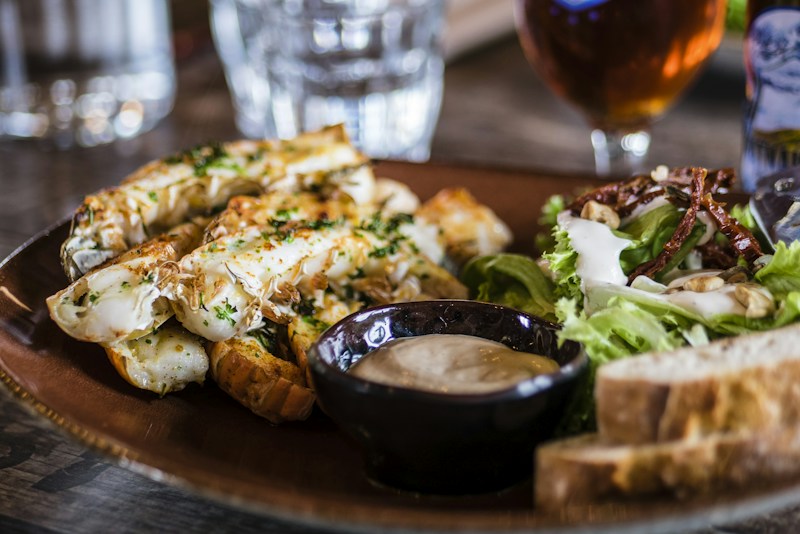
The simplest preparation and the one that best respects the product. Heat an iron griddle over high heat. Place the whole prawns or shrimps with a little coarse salt. Cook for 2-3 minutes per side. They are ready when the shell changes color and the inside is opaque white. Do not overcook them: an extra 30 seconds can turn a juicy prawn into a rubbery one.
Boiled Goose Barnacles
Bring water to a boil with salt (70 g of salt per liter of water, like the sea). When it boils vigorously, add the goose barnacles. Wait for it to boil again. Cook for 30-40 seconds from the moment it re-boils. Not a second more. Drain and serve hot on a cloth. They are eaten by twisting the nail and pulling the peduncle.
Steamed Mussels
Clean the mussels under the tap, removing beards and dirt. In a large pot, put 1 finger of white wine, 2 sliced garlic cloves, and a bay leaf. When the wine boils, add the mussels and cover. Cook for 3-4 minutes, shaking the pot. They are ready when they open. Discard any that remain closed.
Clams "a la marinera" (mariner style)
Sauté 3 chopped garlic cloves in olive oil. When they begin to brown, add a tablespoon of flour and stir. Pour in 150 ml of white wine and reduce for 1 minute. Add the clams, cover, and cook for 3-4 minutes until they open. Sprinkle with fresh parsley.
Seafood and cod: the perfect Easter combination
The Easter table doesn't have to choose between seafood and cod. Both complement each other and allow for a complete menu:
- Starter: Grilled prawns or boiled goose barnacles, served with lemon and bread. Quick and spectacular.
- First course: Clams "a la marinera" or steamed mussels. They can be prepared in advance and reheated.
- Main course: Icelandic cod "al pil pil," in green sauce, or baked with potatoes. The main and most substantial dish.
- Dessert: Torrijas (French toast), "leche frita" (fried milk), or "pestiños" (honey-glazed pastries). The Easter classics.
Cantabrian anchovies and Bacalalo's gourmet preserves also work as an appetizer before sitting down at the table. A can of anchovies with crystal bread and grated tomato is a simple and high-quality start.
Seafood prices at Easter 2026
Prices rise between 15% and 40% compared to normal weeks. These are the usual ranges for Easter (may vary by region):
- Red Prawn: 45-80 €/kg (depending on size and origin)
- Prawn (Langostino): 18-35 €/kg (aquaculture) / 40-60 €/kg (wild)
- Goose Barnacle: 60-120 €/kg (Galician) / 20-40 €/kg (Moroccan)
- Norway Lobster: 30-50 €/kg (depending on size)
- Velvet Crab: 15-25 €/kg
- Mussel: 3-5 €/kg
- Fine Clam: 25-40 €/kg
Saving tip: Buy seafood on Holy Wednesday. On Holy Thursday and Good Friday, prices are at their peak. If you can, order in advance from your trusted fishmonger to ensure availability and a better price.
Premium Seafood Products — Bacalalo
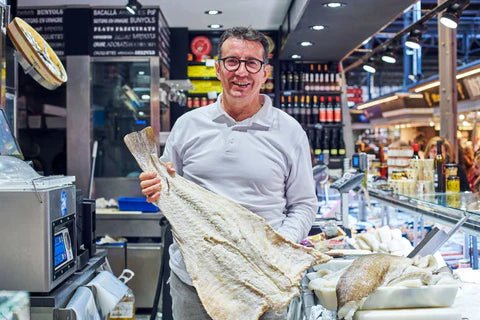
Since 1990, selecting the best from the sea at Mercat del Ninot, Barcelona. Refrigerated shipping 24-48h.
View Icelandic cod →Frequently asked questions about seafood at Easter
How much seafood should I calculate per person?
For a starter: 200-250 g of shelled seafood per person (4-5 large prawns or 6-8 langostinos). For a seafood main course: 400-500 g per person. For goose barnacles: 150-200 g per person (they are expensive and eaten as an appetizer).
Is fresh or frozen seafood better?
Daily fresh seafood always wins in terms of flavor and texture. But seafood frozen at sea (like Huelva prawns frozen on board) can be better than "fresh" seafood that has been at the fish market for 3 days. If you buy frozen, always thaw in the refrigerator, never under the tap.
Can I cook seafood in advance?
Steamed mussels and clams "a la marinera" can be prepared hours in advance and gently reheated. Prawns and shrimps, no: they lose texture. Goose barnacles should be eaten freshly cooked, within 5 minutes of coming out of the water.
Why do seafood prices rise so much at Easter?
Supply and demand. The fishing fleet does not increase its production for Easter. Demand, however, multiplies. Added to this are the holidays when fish markets do not operate, which reduces the supply of fresh produce. Buying in advance and freezing is the smartest strategy if the budget is tight.
What wine pairs best with seafood?
Albariño (Rías Baixas) for boiled and steamed seafood. Manzanilla from Sanlúcar for grilled prawns and langostinos. Godello (Valdeorras) for clams and mussels with sauce. Brut nature Cava as a joker that works with everything.
Discover more
Discover our premium selection
Seafood products carefully selected since 1990 at Mercat del Ninot, Barcelona. Refrigerated shipping 24-48h.