There's an ingredient we've been using for two millennia to make food taste more like food. It's not a molecular gastronomy trick or a branded invention: it's liquid from anchovies matured in salt. The Romans called it garum. Today, in a village on the Amalfi coast, they still make it almost the same way and call it colatura di alici. And the raw material remains the same humble and powerful one: the anchovy.
There's no mysticism here. There's chemistry, documented history, and a preservation technique that works. We're going to separate what's true from what's merely said, and explain how to use this essence in your kitchen without spending a fortune or needing a master's degree in gastronomy.
What is Garum: The Sauce That Moved Empires
Garum was a liquid sauce made from fish fermented in salt, the star condiment of the Roman world and, before that, the Greek. It wasn't a rich man's whim: it appeared on the tables of senators and soldiers, in refined recipes and in troop rations. The recipe book attributed to Apicius cites it again and again as the base for sauces and stews. Pliny the Elder, in his Natural History, describes it as one of the most expensive and prized products of his time.
The preparation was brutally simple in concept: fatty fish—anchovies, sardines, mackerel, offal from larger fish—were mixed with large quantities of salt and left to mature in the sun for weeks or months. The fish's own enzymes broke down the proteins (autolysis), and the result was an amber liquid, profoundly flavorful and rich in free glutamate: the compound responsible for umami, that fifth taste we can name today, and which the Romans were already pursuing without having the word for it.
From Baetica to the Rest of the Empire: The Salting Factories
Much of the Empire's best garum came from Hispania, specifically from Baetica and the coast of present-day southern Spain. The cetariae—salting factories—were built by the sea, with their stone-excavated vats where the fish matured. Even today, spectacular archaeological remains can be visited in places like Baelo Claudia (Cádiz), and salting facilities have been documented along much of the peninsular Mediterranean and Atlantic coast.
This wasn't marginal craftsmanship: it was industry on an imperial scale. Abundant and cheap oily fish from the Atlantic and Mediterranean were transformed into a high-value product that traveled in amphorae throughout the Mediterranean. Hispanic garum amphorae have been found in archaeological sites in Rome, Gaul, and North Africa, which gives an idea of the market's size. The commercial logic is exactly the same as that which sustains today's great anchovy salting traditions: taking a humble fish and, with salt and time, turning it into something extraordinary that people are willing to pay for.
A note of historical honesty is appropriate: different qualities existed. The finest garum, carefully prepared and sometimes blended with wine or herbs, had nothing to do with allec, the cheap, residual paste left at the bottom. Just as with canned goods today, the generic name concealed an abyss of quality between the excellent and the industrial.
Colatura di Alici: The Modern Heir
When the Empire fell, garum didn't completely disappear. The technique survived in various corners of the Mediterranean, and where it is best preserved today is in Cetara, a small fishing village on the Amalfi Coast, in the Campania region. There, they produce colatura di alici, recognized as a traditional product and a direct heir to that Roman technique.
Colatura is, literally, the liquid that "strains" from anchovies matured in salt. It contains no additives, no flavorings, no shortcuts. It is anchovy, salt, and time. A dark amber liquid, transparent, with an intense aroma and concentrated flavor, used in drops, not spoonfuls.
How it's Made: Anchovy, Salt, and Patience
The traditional process follows steps that anyone familiar with anchovy salting will instantly recognize:
- Fishing and heading. Anchovies are caught in spring-summer, when they are at their best fat content. They are headed and gutted by hand.
- Layered salting. They are placed in containers—traditionally wooden, the terzigni—alternating layers of anchovy and sea salt.
- Pressing and maturation. A weight is placed on top, and they are left to mature for months. Pressure and salt extract the fish liquids while enzymes do their work.
- Liquid collection. The juice released during maturation is collected, sometimes recirculated through the layers to concentrate the flavor, and finally filtered.
The result is a pure condiment: the liquid quintessence of anchovy. Nothing like a canned "flavoring." It's the same principle as Roman garum, refined by centuries of practice and reduced to its minimal expression: if the initial anchovy is good, the colatura is exceptional; if it's mediocre, no maturation can save it. That's why, just as in the Empire, everything starts with the quality of the fish.
Garum, Colatura, and Asian Fish Sauce: Are They the Same?
Many people lump together Italian colatura, Roman garum, and Southeast Asian fish sauces like Thai nam pla or Vietnamese nuoc mam. They share a common principle—fish + salt + maturation + umami—but they are not simply interchangeable. Here's an honest comparison:
| Aspect | Garum (Roman) | Colatura di Alici | Asian Fish Sauce (Nam Pla / Nuoc Mam) |
|---|---|---|---|
| Origin | Ancient Rome / Greece; large production in Baetica | Cetara, Amalfi Coast (Italy) | Thailand, Vietnam and Southeast Asia |
| Base Fish | Various oily fish and offal (anchovy, mackerel, sardine...) | Anchovy, almost exclusively | Anchovy or other small fish |
| Maturation | Weeks or months in the sun | Several months, in cool/shade and pressed | Months to over a year |
| Flavor Profile | Intense, salty, umami (reconstructed today) | Clean, deep, pure anchovy flavor | More fermented, funky, sometimes sweetish |
| Culinary Use | Base for sauces and stews in ancient cuisine | In drops, raw, at the end of the dish | In cooking, marinades, and dipping sauces |
The most useful practical difference: colatura has a much cleaner and more "anchovy" flavor because it is made only with anchovy and used raw. Asian sauces, due to their longer fermentation and the inclusion of other fish, have that more fermented and robust quality that works wonderfully in a wok but can overpower a delicate pasta dish. They are not worse or better: they are different tools.
How to Cook with Colatura: Umami by the Drop
Colatura is not cooked for long: it's added almost at the end to preserve its aroma. And, above all, it replaces salt, it doesn't add to it. If you use it, reduce the salt in the dish or it will be inedible. That's the golden rule.
Here are the uses where it shines most:
- Pasta without cheese. The Cetara classic: spaghetti alla colatura. Hot pasta, garlic, olive oil, parsley, chili pepper, and a drizzle of colatura off the heat. No Parmesan, no added salt. Ten minutes, restaurant-quality flavor.
- Steamed or roasted vegetables. A few drops on broccoli, green beans, asparagus, or boiled potatoes transform the most boring side dish into something with depth.
- Meats and poultry. A touch in the juices of a roast or on a rested steak adds depth without a fishy taste.
- Dressings and vinaigrettes. Replace the salt in a vinaigrette with colatura and you multiply the flavor of a salad or carpaccio.
- Soups and broths. A few drops at the end elevate a vegetable broth or cream without needing bouillon cubes.
Dosage and Tips to Avoid Overdoing It
- Start with a little. Half a teaspoon for two servings of pasta is a good starting point. You can always add more; you can't take it away.
- Never on high heat. Add it off the heat or at the end. Prolonged heat dissipates its aroma.
- Taste before salting. Cook the dish without salt, add the colatura, and then decide if anything else is needed. It's almost never needed.
- Pair it with fat. Extra virgin olive oil is its best ally: it rounds out and distributes the flavor.
- Store it tightly closed. In a cool, dark place. It lasts a long time, but its aroma is volatile.
Don't have colatura on hand? No problem. The trick used in many kitchens is to take advantage of the liquid from a good jar of salted anchovies: that oil and that juice at the bottom are, in miniature, the same thing colatura aims for. If you want concrete ideas for making anchovy a star ingredient, in our guide to anchovy recipes with a gourmet twist, you'll see how the same ingredient can be used in everyday dishes.
From Cantabrian Anchovy to Your Kitchen
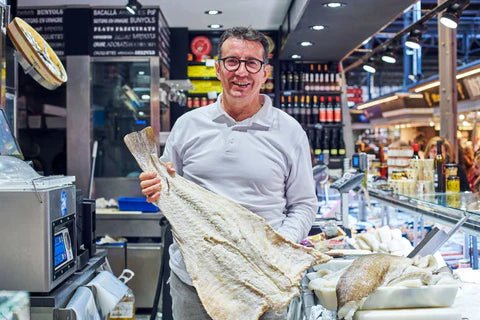
This entire history—from the vats of Baetica to the barrels of Cetara—is based on a simple idea: a good anchovy, salted and cured with discernment, is one of the most powerful ingredients that exist. That is precisely the tradition we uphold at Mercat del Ninot: anchovy salting done well, without shortcuts.
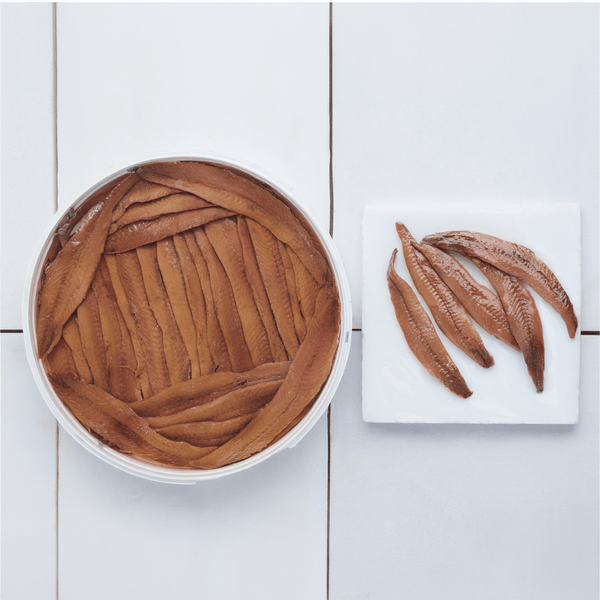
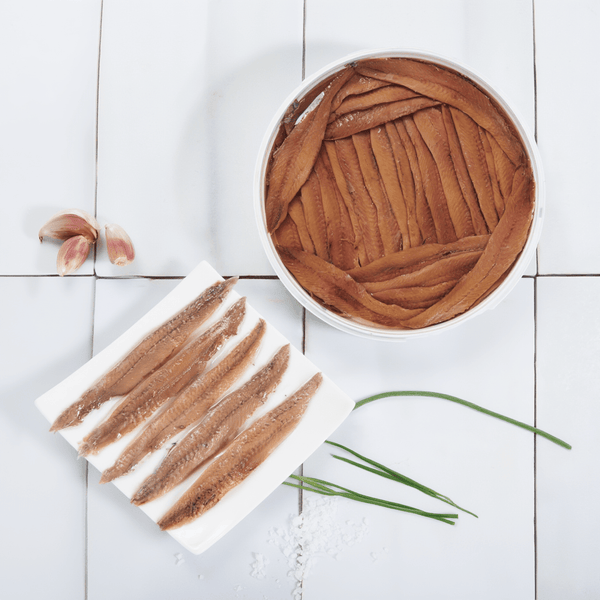
The Cantabrian anchovy is the pinnacle of this tradition: caught in spring, cured in salt for months, and hand-cleaned fillet by fillet. It's the same principle as garum and colatura, brought to its most noble form: an anchovy fillet that needs nothing more than a little bread and oil. And if you feel adventurous one day, it's also the best raw material for experimenting with that drizzle of liquid that concentrates all the umami of the sea.
It's not marketing: it's chemistry, history, and craftsmanship. A well-cured anchovy proves it in the first bite.
Discover our Cantabrian anchovies and start with the foundation of this millennia-old tradition.
Frequently Asked Questions
Are garum and colatura the same thing?
Colatura is the current Italian version of Roman garum: liquid from the maturation of anchovies in salt, intensely umami.
What does colatura taste like?
Concentrated and salty anchovy; a few drops enhance pasta, vegetables, or meats without a "fishy" taste.
What can I substitute for colatura?
The liquid from a good jar of salted anchovies or fish sauce, adjusting for salt.