The secret to this recipe: spaghetti with anchovies is one of the most simple and underrated dishes in Mediterranean cuisine. With 5 ingredients, you get a restaurant-quality dish. The key is not in the technique—it's simple—but in the quality of the anchovy and mastering two specific tricks: pasta water and the garlic's doneness. Here are the full details.
| Type of Anchovy | Quantity per serving | Result in pasta | Estimated price/serving |
|---|---|---|---|
| Cantabrian Anchovy 0 | 4-5 fillets | Deep umami, no bitterness | 1.50-2.50€ |
| Cantabrian Anchovy 00 | 3-4 fillets | More intense flavor, less salt | 2.00-3.50€ |
| Basic canned anchovy | 6-8 fillets | Salty, can be bitter | 0.30-0.60€ |
| Anchovy paste (tube) | 1 teaspoon | Convenient, uniform flavor | 0.20-0.40€ |
Origin: Italy's most honest dish
Spaghetti with anchovies is a direct variation of Neapolitan spaghetti aglio, olio e peperoncino — probably the oldest and most primitive pasta dish, documented since the 17th century. In its anchovy version (which predominates in Sicily and the southern Adriatic), anchovy fillets in oil dissolve in hot garlic oil, forming a naturally salty and umami-rich emulsion.
In Spain, the dish arrived with Italian immigration and quickly adapted: Cantabrian anchovies, larger and less salty than Italian ones, produce a different but equally excellent result.
Ingredients for spaghetti with anchovies (2 servings)
- 200g spaghetti (No. 5 or No. 7, medium thickness)
- 8-10 Cantabrian anchovy fillets in olive oil
- 4 cloves garlic
- 60ml extra virgin olive oil
- 1 dried chili or half a teaspoon of cayenne pepper
- 2 tablespoons fresh chopped parsley
- Pasta cooking water (reserve 150ml)
- Salt for cooking pasta (14g/liter)
Step-by-step preparation
- Cook the pasta al dente: Boil plenty of water with 14g of salt per liter. Add the spaghetti and cook 2 minutes less than indicated on the package (they will be perfectly al dente when finished with the sauté). Reserve 150ml of the cooking water before draining.
- Prepare the flavored oil: In a wide pan over medium-low heat, warm the oil with the sliced garlic and chili. Gently brown the garlic for 3-4 minutes until golden without burning.
- Dissolve the anchovies: Add the drained anchovy fillets and stir with a wooden spoon. In 1-2 minutes, they will completely dissolve in the oil, forming a golden-brown sauce. This step is the heart of the recipe.
- Add the pasta water: Incorporate 100ml of the reserved cooking water. The starch in the water emulsifies with the oil, creating a creamy sauce (without cream or butter).
- Finish the pasta: Add the drained spaghetti and sauté over high heat for 1-2 minutes, adding more pasta water if the sauce thickens too much. The pasta absorbs the sauce and finishes cooking.
- Parsley and serve: Turn off the heat, add the chopped parsley, and mix. Serve immediately on warm plates.
The pasta water trick (and other secrets)
The most common mistake in this recipe is draining the pasta and wasting the cooking water. This liquid, rich in starch, is what transforms the garlic oil into an emulsified sauce that adheres to each spaghetti strand.
- The emulsion: Adding the cooking water to hot oil and stirring creates an emulsion similar to a vinaigrette, without the need for cream or cheese. Result: light pasta with concentrated flavor.
- Garlic without burning: As in classic ajillo, start the garlic cold with the oil and gradually raise the heat. Golden garlic (not brown) gives a sweet flavor; burnt garlic gives bitterness.
- Anchovies don't taste like anchovies: When dissolved in hot oil, anchovies lose their preserved flavor and provide a salty, umami base almost invisible to those who don't know they're there. Ideal for those who claim not to like anchovies.
- Thicker pasta, better integrated sauce: Spaghetti No. 7 (thicker) withstands the final sauté better and retains more sauce than No. 3.
- Do not add cheese: In Italy, cheese is never added to pasta with fish. In this recipe either: cheese would mask the nuances of the anchovy.
Classic variations
- Alla puttanesca: Add black Kalamata olives (50g), capers (1 tablespoon), and peeled tomatoes (150g) after dissolving the anchovies. The most complex and robust version.
- With fried breadcrumbs: The Sicilian version pasta con la mollica. Sauté coarse breadcrumbs in garlic oil until golden and sprinkle over the pasta like "poor man's cheese." Incredible texture.
- With capers and lemon: Add 1 tablespoon of rinsed capers and lemon zest at the end. The freshest and most summery version.
- With broccoli: Cook broccoli in the same water as the pasta (for the last 3 minutes) and lightly mash it in the pan. The broccoli becomes part of the sauce.
How to choose the best anchovy for pasta
Not all canned anchovies are the same. For pasta, the key factors are:
- Fillet size: Large fillets (caliber 0 or 00) have more flesh and less salt proportion. They dissolve better and yield more flavor per fillet.
- Preserving oil: Anchovies in extra virgin olive oil provide a better flavor base than those preserved in sunflower oil. The oil from the jar can also be used for cooking.
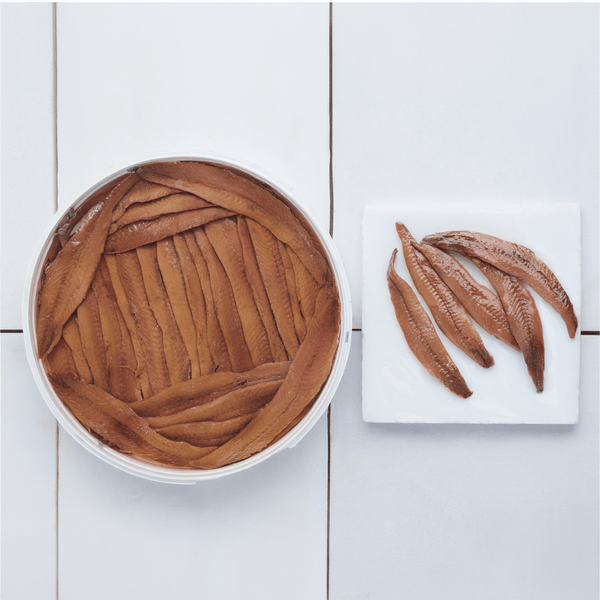
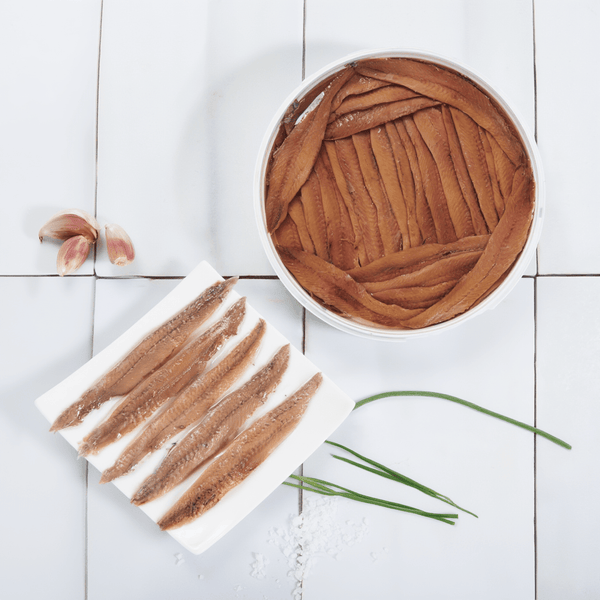
- Origin: Cantabrian anchovies (Santoña, Laredo, Castro Urdiales) are the most prestigious in Spain. Their characteristics are: large size, firm texture, and superior salt/umami balance.
- Curing: Anchovies cured for 18-24 months have a more complex and less salty profile than those cured for 6-8 months. For cooking, 12-18 month cured anchovies are ideal.
At Bacalalo, we select Cantabrian anchovies of caliber 0 and 00, in extra virgin olive oil, cured for 18-24 months. Available for refrigerated shipping throughout Spain.
Premium Seafood Products — Bacalalo
Since 1990, selecting the best from the sea at Mercat del Ninot, Barcelona. Refrigerated shipping 24-48h.
View Cantabrian Anchovies →🛒 Products mentioned in this article
⭐ 4.9/5 · Cold shipping 24-48h · Since 1990 at Mercat del Ninot
Frequently asked questions
How many anchovies per person for pasta?
With caliber 0 Cantabrian anchovies, 4-5 fillets per serving are sufficient. With lower quality anchovies (more salty), reduce to 3 fillets. The rule is that the total salt in the pasta does not exceed palate tolerance.
Can I use dry or fresh pasta?
Dry pasta (industrial spaghetti) works perfectly. Fresh pasta is not suitable: it's too delicate for the final sauté and its starch doesn't emulsify the same way. For this recipe, always use dry durum wheat pasta.
Can it be made without spice?
Yes. The chili is optional. Without it, the dish loses some complexity but remains excellent. An alternative is to add freshly ground black pepper at the end.
Is this recipe suitable for celiacs?
By substituting spaghetti with gluten-free pasta (rice or corn), the rest of the ingredients are naturally gluten-free. Always check the label of canned anchovies to confirm there is no cross-contamination.
Products you might be interested in
Discover more