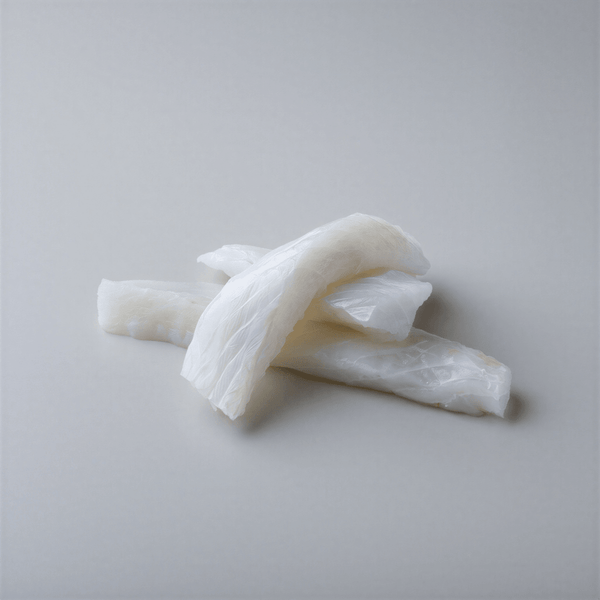
Cod is much more than just a fish: it's a fascinating animal that has shaped the history, economy, and gastronomy of half the world. Did you know it can live for over 20 years? Or that a single female lays up to 7 million eggs? Or that the Vikings built their commercial empire thanks to it? In this article, we've compiled 15 fascinating facts about cod that you probably didn't know, from surprising biological data to historical facts that changed the geopolitical map of the world. Get ready to see this fish in a new light.
Cod: A Fish That Changed the World
Atlantic cod (Gadus morhua) is no ordinary fish. Along with herring, it is the fish that has most influenced human history. Wars, discoveries, trade empires, and the gastronomic traditions of dozens of countries revolve around this cold-water animal.
Mark Kurlansky, in his celebrated book "Cod: A Biography of the Fish That Changed the World," argues that without cod, there would have been no Viking trade routes, no industrial revolution in New England, and no Basque democracy. It may sound exaggerated, but historical data supports him.
Let's dive into 15 facts that will make you see this fish in a new light.

1. It can live for over 25 years
Atlantic cod is a surprisingly long-lived fish. While most commercial fish live between 5 and 10 years, cod can exceed 25 years of life under natural conditions. Specimens up to 27 years old have been documented in Norwegian waters.
Its age is determined by counting the growth rings on its otoliths (small inner ear bones), similar to how tree rings are counted. Each ring represents one year of life. Older specimens are also larger and produce more eggs, making the protection of large adults crucial for the species' sustainability.
2. A female lays up to 9 million eggs
The reproductive capacity of cod is simply astonishing. A large adult female can release between 3 and 9 million eggs in a single spawning season. This figure makes it one of the most prolific fish in the ocean.
However, the survival rate is minuscule: it's estimated that out of every million eggs, fewer than one will reach adulthood. The eggs, larvae, and juveniles are preyed upon by countless predators, from jellyfish to other fish. This reproductive strategy (many eggs, low survival) is typical of marine fish and explains why overfishing has such devastating effects: when the adult population is drastically reduced, the recovery capacity is very slow.

3. It's a voracious predator
Far from being a passive fish, cod is an active and opportunistic predator. It feeds on almost everything it finds: herring, capelin, shrimp, crabs, marine worms, squid, and even other smaller cod (documented cannibalism).
An adult cod can consume up to 3% of its body weight daily. It has a large mouth with a prominent lower jaw and hundreds of small, sharp teeth. Its chin barbel (the "beard" under the jaw) contains chemoreceptors that allow it to detect prey in murky, dark waters.
4. The Vikings used it as currency
Norwegian Vikings discovered that cod, air-dried in the cold fjords (stockfish), could be preserved for years without refrigeration. This dried cod became the basis of their trade empire starting in the 9th century.
Viking stockfish traveled from Norway to the Mediterranean, exchanged for spices, wine, olive oil, and precious metals. Dried cod literally functioned as currency: it had a stable value, was durable, transportable, and universally in demand. The Hanseatic League, the largest trade network in medieval Europe, was largely built on the trade of Norwegian cod.
Premium Quality Cod
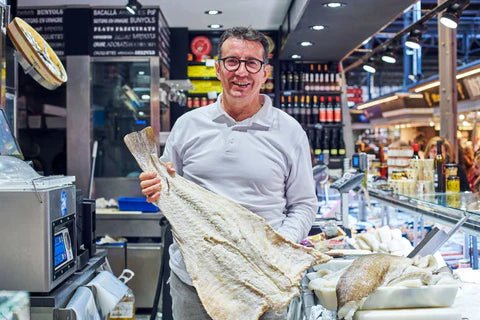
At Bacalalo.com, we continue the ancient tradition of cod, selecting the best pieces of Atlantic cod. Since 1990 in Mercat del Ninot, we work with suppliers who guarantee sustainability and maximum quality in every loin, cheek, and kokotxa.
5. Portugal has 365 cod recipes (one for each day)
Portugal is, along with Spain, the country that consumes the most cod in the world — even though it doesn't have its own cod fishing grounds. Portuguese tradition says there are 365 ways to prepare bacalhau, one for each day of the year.
In reality, Portuguese recipe books document over 1,000 cod recipes. From the universally known bacalhau à Brás (shredded with potato sticks and egg) to bacalhau com natas (baked with cream) or bacalhau à Gomes de Sá (with potato, onion, and olives), cod is the soul of Portuguese gastronomy. The Portuguese call it "fiel amigo" (faithful friend) and it is the absolute star of Christmas Eve dinner.
6. The largest specimen weighed 96 kg
Atlantic cod can reach impressive sizes. The largest specimen ever scientifically documented weighed 96 kg and measured 180 cm in length, caught in Norwegian waters in May 1895.
Today, due to fishing pressure, it is very rare to find cod exceeding 20-25 kg. The average commercial catch size is between 2 and 10 kg. Large cod are becoming increasingly scarce, which has raised concerns among marine biologists: without large individuals producing millions of eggs, the recovery of populations slows down enormously.
7. It can live at depths of 600 meters
Atlantic cod inhabits a surprising range of depths. Although it prefers waters between 30 and 200 meters, specimens have been found at depths of up to 600 meters. This adaptability allows it to occupy different habitats depending on the season, water temperature, and food availability.
In winter, cod migrate to deeper, colder waters to spawn. In summer, they move to shallower waters to feed. These seasonal migrations can cover distances of hundreds of kilometers and have been documented through electronic tagging.
8. Its swim bladder was used to make glue
The cod's swim bladder (the organ that regulates its buoyancy) has a high collagen content. Historically, it was processed to obtain isinglass, a gelatinous substance used as high-quality glue and as a clarifier for wines and beers.
Cod isinglass was the preferred adhesive of European luthiers for centuries. Stradivarius, Guarneri, and Amati violins were assembled with cod swim bladder glue. Today, some artisan luthiers still use this traditional material for its flexibility and durability, superior to synthetic adhesives.
9. It caused a war between Iceland and the United Kingdom
The so-called "Cod Wars" were three conflicts between Iceland and the United Kingdom (1958-1976) over fishing rights in Icelandic waters. Iceland, whose economy depended almost entirely on cod, unilaterally extended its exclusive economic zone from 4 to 200 nautical miles.
Although they were called "wars," there were no deaths, but there were collisions between warships, cutting of trawl nets, and a diplomatic crisis that threatened to break up NATO. Iceland won all three disputes, and its 200-mile model became the international standard enshrined in the United Nations Convention on the Law of the Sea (1982).
10. It's one of the few fish with a "beard"
Cod possesses a unique distinctive feature: a chin barbel, a kind of "beard" hanging from its lower jaw. This sensory appendage, present in the entire Gadidae family, is packed with chemoreceptors and mechanoreceptors.
The barbel allows cod to detect hidden prey on the seabed, "tasting" the water and sediments. It functions as an external tongue that complements its limited vision in the cold, murky waters where it lives. It is one of the easiest identifiers to distinguish cod from other white fish.
11. Its liver is more valuable than its meat
Cod liver oil was, for centuries, one of humanity's most important nutritional supplements. Rich in vitamins A and D and omega-3 fatty acids, it was used to prevent rickets (vitamin D deficiency) and strengthen the immune system.
In the pre-industrial era, cod liver was worth more by weight than the fish's meat itself. Norwegian and Scottish fishermen carefully separated the livers to sell them at a higher price. Today, cod liver oil remains a popular supplement in Nordic countries, where vitamin D deficiency due to lack of sunlight is endemic.
12. It was the first globalized fish
Long before the concept of "globalization" existed, cod was already traveling from one continent to another. From the 15th century onwards, salted cod became the first food traded on a global scale.
Basque fishermen were pioneers in cod fishing in Newfoundland (Canada) — some historians argue they arrived there before Columbus reached America. Basque salted cod fed Spanish, Portuguese, and English armies, was currency in the Atlantic triangular trade (along with slaves and sugar), and allowed European colonies in America, Africa, and Asia to be fed.
13. It can change color depending on the seabed
Cod has a limited but real ability to alter its coloration to blend in with its surroundings. Its natural color varies enormously depending on the habitat: cod living on rocky bottoms tend to be mottled brown, while those inhabiting sandy bottoms are lighter and greener.
This color change is not instantaneous like in an octopus or cuttlefish, but it occurs gradually over weeks when the fish moves to a new habitat. The chromatophores (pigment cells) in its skin expand or contract in response to environmental stimuli.
14. Spain consumes more cod than any other non-Nordic country
After Portugal, Norway, and Iceland, Spain is the largest per capita consumer of cod in the world. It is particularly popular in the Basque Country, Catalonia, and Galicia, where it is part of the regional gastronomic identity.
The Spanish tradition of cod has religious roots: for centuries, the Catholic Church prohibited the consumption of meat for up to 166 days a year (Lent, Fridays, vigils). Salted cod, which could be preserved without refrigeration, became the perfect substitute. Today, although the religious reasons have disappeared, cod remains one of the most consumed fish in Spain, with emblematic recipes such as pil-pil, brandada, bacalao al ajoarriero, or cod fritters.
Discover real cod
At Bacalalo.com, we have been selecting the best North Atlantic cod since 1990. Loins, cheeks, kokotxas, shredded... Each cut has its ideal recipe. If you want to understand why cod has fascinated the world for centuries, start by trying the real thing.
15. Its population collapsed in 1992 and has not fully recovered
In July 1992, the Canadian government declared a total moratorium on cod fishing in the Grand Banks of Newfoundland. What had been the world's most productive fishing ground for 500 years had been depleted.
Industrial overfishing, with trawlers capable of catching more cod in an hour than a traditional boat in an entire season, reduced the population to less than 1% of its historical level. The 1992 moratorium resulted in the largest job loss in Canadian history: 40,000 people were out of work overnight.
More than 30 years later, the Northwest Atlantic cod population has still not fully recovered. This collapse is now the most cited example in marine biology of the dangers of overfishing and the importance of sustainable management of marine resources.
Frequently Asked Questions
Why is cod salted and not other fish?
Cod has exceptionally lean (less than 1% fat) and firm flesh, making it ideal for salting. Fatty fish like salmon or sardines are better preserved by smoking. Cod's low fat content allows salt to penetrate evenly without the fat becoming rancid, resulting in a product that can be stored for months or even years without refrigeration.
Are salted cod and fresh cod the same fish?
Yes, it is exactly the same animal (Gadus morhua). Salted cod is fresh cod that has undergone a process of salting and drying. Salt extracts moisture, reduces bacterial activity, and transforms the texture and flavor. Fresh cod is milder and more delicate; salted cod (after desalting) has a firmer texture, a more concentrated flavor, and a unique ability to gel its proteins (as in pil-pil).
How many species of cod are there?
There are three main species of true cod (genus Gadus): Atlantic cod (Gadus morhua), Pacific cod (Gadus macrocephalus), and Greenland cod (Gadus ogac). The most gastronomically valued is the Atlantic cod. Other fish are marketed as "cod" without actually being so, such as blue whiting or pollock.
Is it sustainable to eat cod today?
It depends on the origin. Cod populations in the Northeast Atlantic (Norway, Iceland, Barents Sea) have been successfully managed and maintain healthy levels, with MSC certification for sustainable fishing. Those in the Northwest Atlantic (Newfoundland) are still recovering. Always look for cod with sustainability certification or from well-managed sources like Norway and Iceland.
Which part of the cod is the most prized?
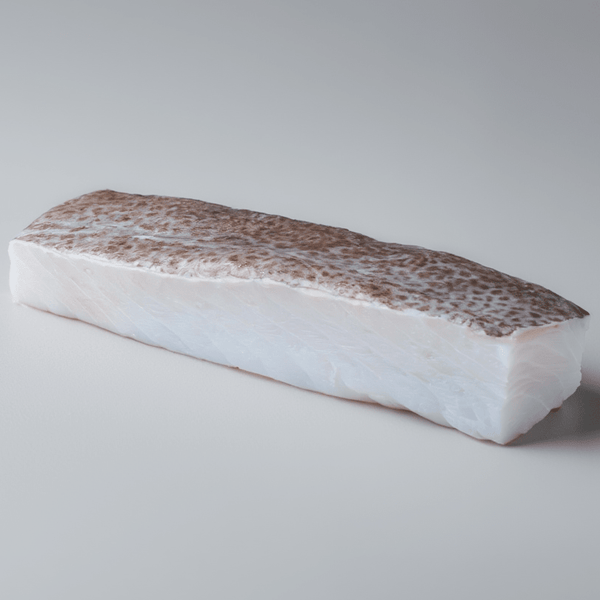
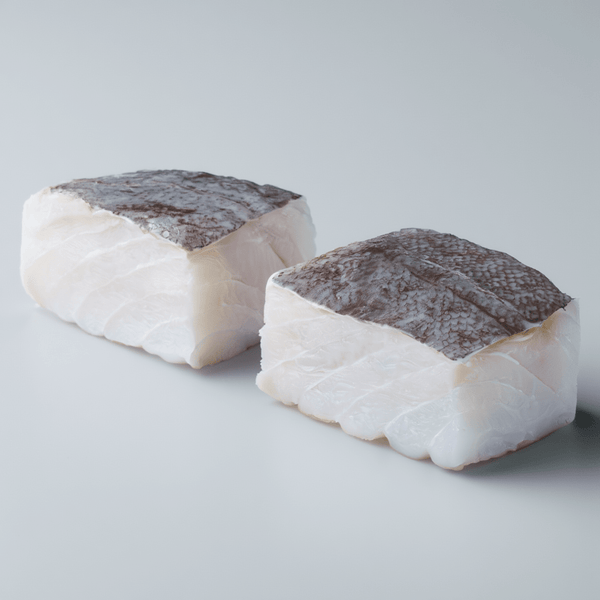
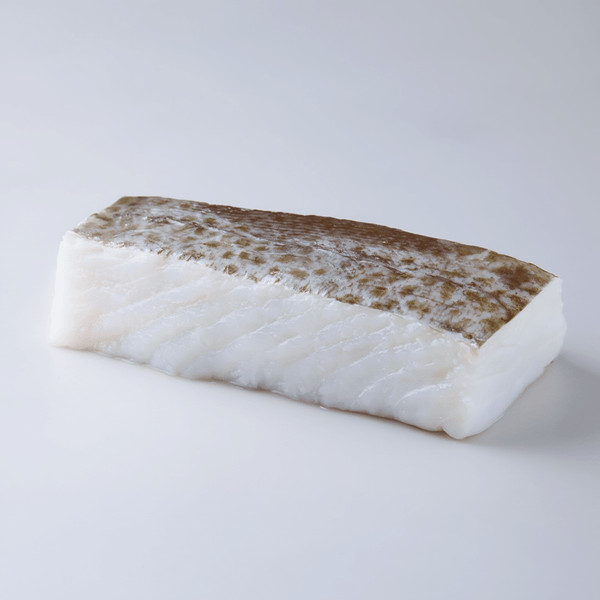
Kokotxas (cheeks or throat) are the most prized and expensive part of cod, especially appreciated in the Basque Country. They are followed by the loins (the most versatile piece), the snouts (gelatinous, ideal for stews), and the cocochas. The belly (abdominal part) is fattier and juicier, perfect for grilling. Each cut has its ideal recipe.
Why is cod so important during Holy Week?
Catholic tradition forbade the consumption of meat on Fridays and throughout Lent (40 days before Easter). Salted cod, which could be preserved without refrigeration, was the perfect food to comply with meat abstinence. This tradition became especially ingrained in Spain and Portugal, where recipes such as cod fritters or bacalao a la vizcaína are essential during Holy Week.
Discover our premium selection
Carefully selected seafood products since 1990 at Mercat del Ninot, Barcelona. Refrigerated shipping 24-48h.

Premium Seafood — Bacalalo
Since 1990, selecting the best from the sea at Mercat del Ninot, Barcelona. Refrigerated shipping 24-48h.
View Icelandic cod →🛒 Related Products from Bacalalo
⭐ 4.9/5 · Chilled shipping 24-48h · Since 1990 at Mercat del Ninot
Conclusions
Cod is not just a cooking ingredient: it is a protagonist in human history. From the Viking routes of the 9th century to the Cod Wars of the 20th century, passing through the collapse of Newfoundland in 1992, this fish has shaped economies, cultures, and geopolitics like no other marine animal.
Its biological characteristics—longevity, extraordinary fecundity, adaptability—made it the perfect marine resource. And its lean meat, ideal for salting, made it indispensable in an era without refrigeration.
Today, every time you enjoy good cod, you are participating in a gastronomic tradition that is over a thousand years old. Since 1990 at Mercat del Ninot, at Bacalalo we continue this tradition by selecting the best cod from the North Atlantic, because we believe that an ingredient with such a history deserves to be treated with the utmost respect.