

Osetra Caviar: Flavor, Price, and Why It's a Favorite
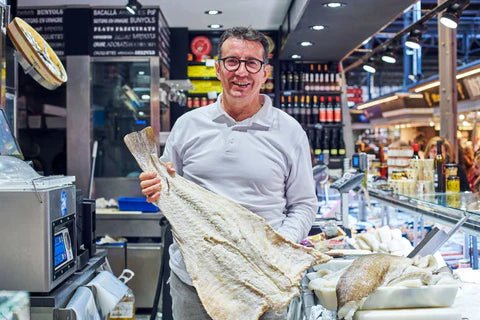
At Bacalalo, we've been selecting the best seafood products from Barcelona's Mercat del Ninot for over three decades, and Osetra caviar always generates the same reaction: once you try it, you want more. It doesn't have the media fame of beluga or the prohibitive price that deters many buyers, but among connoisseurs, it has earned a reputation as the most complete caviar of all. In this guide, we explain precisely why, how much it costs in Spain, and how to get the most out of it.
What is Osetra Caviar
Osetra caviar comes from the sturgeon Acipenser gueldenstaedtii, popularly known as Russian sturgeon or Osetra. It is the second-largest sturgeon in the Caspian Sea after the beluga, and its caviar has historically held the second position in the traditional hierarchy of the big three: beluga, osetra, and sevruga.
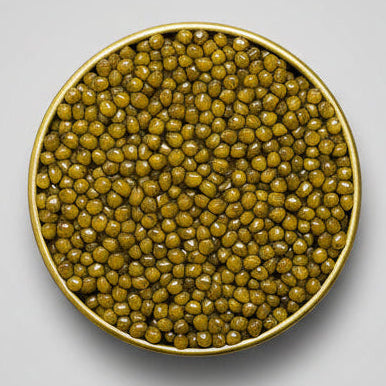
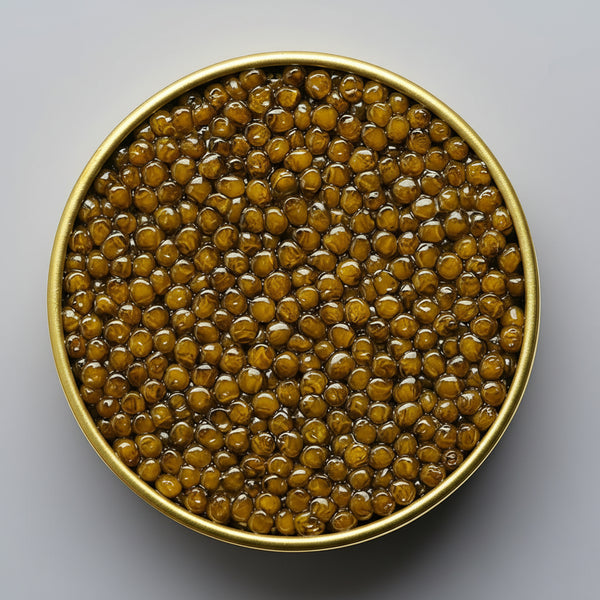
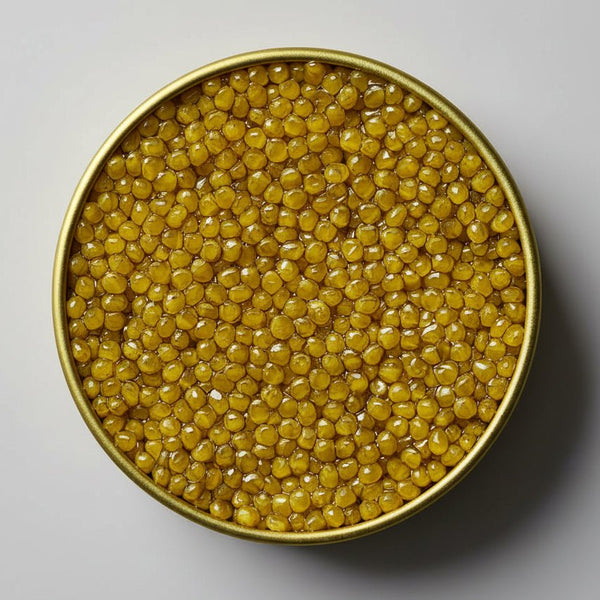
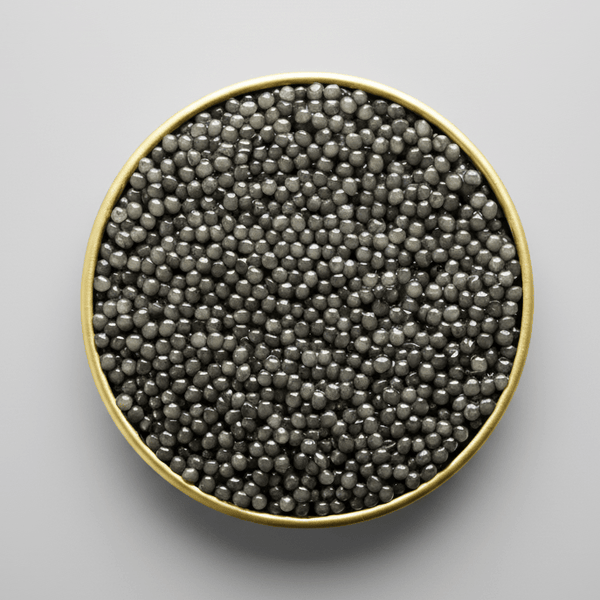
What distinguishes Osetra caviar from its competitors is the complexity of its flavor. The eggs measure between 2.5 and 3.5 mm in diameter, notably larger than those of sevruga (1.5-2 mm), with a firm texture that elegantly melts on the palate. The color varies from dark gray to intense gold: the paler and more golden, the more mature the sturgeon and the more prized the product.
The flavor profile is what makes it unique: notes of walnut, toasted hazelnut, butter, and sea. It does not have the strong salinity that some associate with lower-quality caviar, but rather a precise and balanced salinity. Tasters describe up to 12 different nuances in a single spoonful of premium Osetra caviar.
Osetra Varieties: Iranian, Russian, and Farmed
Forty years ago, practically all Osetra caviar on the market came from wild specimens in the Caspian Sea, caught by Iranian and Soviet fleets. Today, the situation has changed radically: wild sturgeon is critically endangered, and its international trade has been regulated by CITES since 1997. The current market is divided into three main sources:
- Farmed Iranian Osetra: Iran has developed high-quality aquaculture facilities that maintain Caspian conditions. Cold water (12-16 °C), low breeding density, and natural feeding produce a caviar that many experts consider the most faithful to the original wild variety. Indicative price in Spain: 80-120 euros for 30 g.
- Farmed Russian Osetra: Produced on European farms with breeding stock of Russian origin. Quality varies depending on the producer. The best Russian farmed brands offer excellent consistency at somewhat more accessible prices: 60-90 euros for 30 g.
- Osetra from other European fish farms: Germany, Italy, France, and Spain have their own production. Spanish Nacarii (fish farm in Riofrío, Granada) and French Caviar de Neuvic are two recognized examples with consistent quality and perfect traceability.
Aquaculture has democratized access to Osetra caviar without compromising quality when the producer works correctly. Sturgeons take 8 to 12 years to mature enough to produce quality roe, which explains the price even for farmed varieties.
Price of Osetra Caviar in Spain
The price of Osetra caviar in Spain in 2026 fluctuates within fairly predictable ranges depending on origin and weight:
- 30 g: between 55 and 130 euros, depending on quality and origin
- 50 g: between 90 and 200 euros
- 125 g: between 200 and 450 euros
- 500 g (gastronomic tin): between 700 and 1,800 euros
The price per gram drops substantially as the weight increases, making it cost-effective to buy in larger formats when used for events or when the product is well-known. Golden "Imperial" or "Golden Osetra" caviar, from albino or very mature sturgeon, can exceed 400 euros for 30 g, placing it in the territory of the most exclusive beluga.
A determining factor in the price is processing. Malossol caviar (from Russian for "little salt") uses between 3 and 5 g of salt per 100 g of roe. Preparations with more salt, such as pressed or pasteurized caviar, are cheaper but have a different flavor profile. For an authentic Osetra caviar experience, always look for the malossol label.
Bacalalo Products

Mújol Shikrán Selection - Premium Roe with Ex...
€6.95

Assortment "The Grand Beluga Gift"
€227.91

Black Mullet Shikrán 550g - Smoked Herring and...
€27.95

Sevruga Caviar
€100.00
Refrigerated delivery 24-48h throughout the Peninsula
Osetra vs. Beluga vs. Sevruga Caviar
The most frequently asked question: is it worth paying the premium for beluga over osetra? Here is an honest comparison:
- Beluga (Huso huso): Eggs of 3.5-4 mm, the largest. Smooth, creamy, almost milky flavor. The largest sturgeon in the world (up to 6 meters) takes 20-25 years to mature. Price: 250-600 euros for 30 g. Difficult to find authentic.
- Osetra (Acipenser gueldenstaedtii): Eggs of 2.5-3.5 mm. Complex flavor, with notes of nut and sea. Matures in 8-12 years. Price: 55-200 euros for 30 g. Perfect balance between quality and accessibility.
- Sevruga (Acipenser stellatus): Eggs of 1.5-2 mm, the smallest. More intense and iodized flavor. Matures in 5-7 years. Price: 40-100 euros for 30 g. The most accessible of the three classics.
For those new to the world of sturgeon caviar, Osetra caviar is the perfect entry point: it has enough complexity to understand why this product fascinates so many people, at a price that doesn't require mortgaging anything.
How to Properly Serve and Eat Osetra Caviar
Osetra caviar is a living product that reacts to heat, oxidation, and metals. These are the basic rules for enjoying it in optimal conditions:
- Temperature: Serve between 0 and 4 °C. Take out of the refrigerator 10 minutes before, never at room temperature. The ideal container is a small glass bowl over ice.
- Utensils: Use mother-of-pearl, bone, or plastic spoons. Metal (steel, silver) oxidizes the caviar in seconds and gives it an unpleasant metallic taste.
- Quantity: A standard serving is 10-15 g per person as an appetizer. If it's the main course of a tasting, 30-50 g per person.
- Accompaniments: Classics include blinis (small buckwheat pancakes), crème fraîche, and very finely chopped chives. For a more minimalist style, just a neutral wafer or unsalted toasted rye bread.
- Drinks: The traditional pairing is very cold vodka or brut champagne. Blanc de Blancs champagnes (100% chardonnay) work especially well with Osetra caviar due to their mineral acidity that complements the nutty notes.
How to Store Osetra Caviar
Proper storage makes the difference between exceptional caviar and ruined caviar. An unopened tin will last 4 to 6 weeks in the refrigerator at 0-4 °C, near the back wall where the temperature is most stable. Once opened, consume within 2-3 days maximum, always tightly covered. If you notice that the caviar has lost its shine, the eggs are broken, or the smell is excessively ammoniacal, do not consume it.
Osetra caviar should not be frozen: the eggs break and lose the texture that makes it special. If you receive a shipment and cannot consume it immediately, place it in the coldest part of your refrigerator, never in the vegetable drawer.
Why Osetra is Chefs' Favorite
Many Michelin-starred chefs choose Osetra caviar over beluga for their tasting menus, and it's not just an economic matter. Osetra has more personality than beluga: its hazelnut notes and the firmness of its eggs hold up better in contrast with other ingredients. It integrates well with acidic ingredients (yuzu, lemon), creamy textures (cod fritter, egg), and the iodine of seafood.
Beluga, with its softer, milkier flavor, works best in completely plain preparations where caviar is the sole protagonist. For elaborate dishes with more elements, Osetra almost always wins.
Bacalalo Products
Mújol Shikrán Selection - Premium Roe with Ex...
€6.95
Assortment "The Grand Beluga Gift"
€227.91
Black Mullet Shikrán 550g - Smoked Herring and...
€27.95
Sevruga Caviar
€100.00
Refrigerated delivery 24-48h throughout the Peninsula
🛒 Products mentioned in this article
⭐ 4.9/5 · Cold delivery 24-48h · Since 1990 at Mercat del Ninot
Frequently Asked Questions about Osetra Caviar
Is Osetra caviar sustainable?
Farmed Osetra is sustainable: sturgeon are raised in controlled conditions without pressure on wild populations. Wild Caspian Osetra is protected by CITES, and its trade is illegal without certification. Always demand traceability and a CITES certificate from your supplier.
How much Osetra caviar do I need for a dinner for 6 people?
For an elegant appetizer, calculate 10-15 g per person: between 60 and 90 g in total. If it's the main course of a tasting, increase to 30-50 g per person. A 125 g tin comfortably covers an appetizer for 8-10 people with some margin.
What is the difference between golden and black Osetra caviar?
Golden color indicates roe from older sturgeon and, generally, a richer diet. Golden or "Imperial" Osetra caviar has a milder flavor, with more buttery and nutty notes, and less iodine. This does not mean that black caviar is inferior: it simply has a more intense and marine profile. Both are excellent.
Can Osetra caviar be bought online with guarantees?
Yes, as long as the seller uses refrigerated transport for 24-48 hours with gel packs at 0-4 °C. The tin should arrive cold to the touch. Buy from specialized stores with a guaranteed continuous cold chain, not from general marketplaces where the cold chain is uncontrollable.
How long does Osetra caviar last once opened?
Once opened, consume Osetra caviar within a maximum of 2-3 days. Seal the tin tightly (or transfer it to an airtight glass container) and store it in the coldest part of the refrigerator. Broken roe or an ammoniacal smell are signs that it is no longer in optimal condition.
Does Osetra caviar contain cholesterol?
Caviar has a moderate cholesterol content (about 588 mg per 100 g), but typical servings are so small (10-30 g) that the actual impact is minimal. It is rich in omega-3 fatty acids, vitamins B12 and D, and selenium. In normal consumption quantities, its nutritional benefits far outweigh its cholesterol content.
Is Spanish Osetra caviar comparable to Iranian caviar?
Spanish farmed caviar, primarily produced in Riofrío (Granada) with mountain waters at 14-16 °C, is internationally recognized for its quality. Riofrío was the first organic certified sturgeon farm in Europe. The flavor profile is somewhat different from Iranian caviar, with cleaner and less intense notes, but the quality is indisputable for a product with perfect traceability.
Discover our premium selection
Carefully selected seafood products since 1990 in Mercat del Ninot, Barcelona. Refrigerated shipping in 24-48h.