Summary
It is one of the most frequently asked questions at the Bacalalo counter: "Is this real caviar or a substitute?" The question makes sense because very different products coexist in the market ba... In this guide: What is caviar substitute, The price difference: from 2 euros to 200 euros, Flavor differences: what really distinguishes caviar from its substitute.
Caviar Substitute: What It Is and How It Differs from Real Caviar
It's one of the most frequently asked questions at the Bacalalo counter: "Is this real caviar or a substitute?" The question makes sense because very different products coexist in the market under similar names, and the price difference between them can range from 2 euros to 200 euros for the same weight. At Mercat del Ninot, we advise many customers on this topic, and the answer is always the same: first, you need to understand what each thing is, and then decide what fits the intended use.
What is caviar substitute?
The term "caviar substitute" is technically correct to describe any product that imitates or replaces real caviar, which exclusively refers to sturgeon roe. A caviar substitute can be:
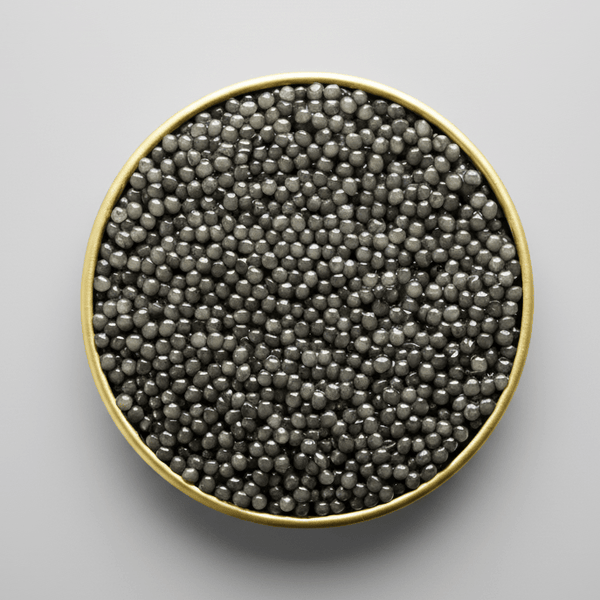
- Lumpfish roe (Cyclopterus lumpus): the most common in the mass market. These are small roe (1-2 mm), dyed with coloring (black or red), with a mild flavor and a texture that pops when bitten. This is the product sold as "caviar" in supermarkets for 1.50-3 euros per 50 grams.
- Dyed herring or salmon roe: similar to lumpfish roe in concept, although sometimes larger and with a different texture.
- Tobiko roe (flying fish): used in Japanese cuisine. Bright orange, very crunchy, with a mild marine flavor. They are not usually called "caviar substitute" but serve a similar function in presentations.
- Mullet roe: closer to caviar in quality and processing than lumpfish roe, although not sturgeon either. Quality mullet roe (bottarga, or "mullet" like Shikrán) is a gourmet product in its own right.
What does not fall into the caviar substitute category is sturgeon roe, regardless of the species: Beluga (Huso huso), Oscietra (Acipenser gueldenstaedtii), Sevruga (Acipenser stellatus), Nacarii (Acipenser naccarii), Baerii (Acipenser baerii). These are real caviar, with all the differences that implies.
The price difference: from 2 euros to 200 euros
The price difference between a caviar substitute and real caviar is not an inflated commercial margin: it reflects real differences in the production process, the scarcity of the animal, and the time required to obtain the product.
A sturgeon takes between 8 and 25 years to mature, depending on the species, before producing quality roe. The process of roe extraction, salting, maturation, and packaging is delicate and requires constant temperature control (between 2 and 4°C). A female Beluga sturgeon can take up to 25 years to produce roe, and her offspring must be in controlled tanks for all that time. This is called a long-term investment and explains why top-quality Beluga caviar can exceed 2,000 euros per kilo on the wholesale market.
Lumpfish caviar substitute, on the other hand, comes from an abundant fish in the North Atlantic that reaches sexual maturity in a few years. The roe is extracted, dyed, salted, and packaged. The entire process is done in days. The production cost is minimal in comparison.
There is an important intermediate scale: quality mullet roe and other products such as Siberian sturgeon roe (Acipenser baerii) farmed in Spanish fish farms, which offer real quality at prices of 80-150 euros/100g, well below Beluga sturgeon caviar but with a genuine flavor profile.
Bacalalo Products

Mújol Shikrán Selection - Premium Roe with Smo...
€6.95

"The Great Beluga Gift" Assortment
€227.91

Black Mullet Shikrán 550g - Smoked Herring and...
€27.95

Sevruga Caviar
€100.00
Refrigerated shipping 24-48h to the entire Peninsula
Flavor differences: what really distinguishes caviar from its substitute
The flavor difference between a caviar substitute and real caviar is substantial. It's not a matter of snobbery; these are products with very distinct organoleptic profiles.
Lumpfish caviar substitute has:
- A simple marine flavor, without complexity
- A texture that pops when chewed but without a lasting aftertaste
- Artificial color (black or bright red) that does not correspond to the product's natural color
- An aftertaste of salt and preservative (in lower quality versions)
Real sturgeon caviar has:
- An initial marine flavor that evolves into notes of nuts, butter, or iodine, depending on the species and degree of maturation.
- A texture of firm pearls that open with a soft "pop," releasing a burst of flavor that lingers on the palate for 30-60 seconds.
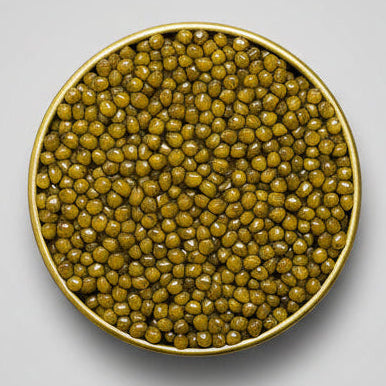
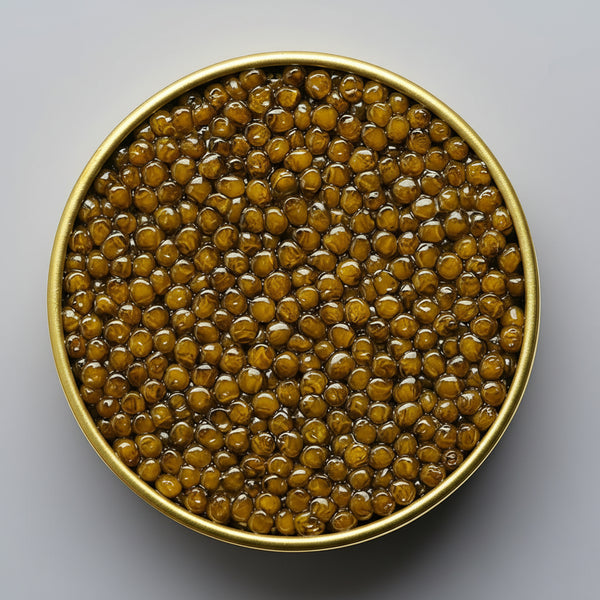
- Dark gray (Beluga, Oscietra) or black with greenish reflections (Sevruga) color, natural and without dyes.
- Practically no aftertaste; the flavor finishes clean.
The most immediate difference is the persistence: quality sturgeon caviar leaves a finish in the mouth that lasts much longer than that of its substitute. This persistence is what connoisseurs describe as the "retro" of caviar.
When to use a substitute and when real caviar is worth it
The honest answer is that it depends on the context and usage.
Caviar substitute makes sense when:
- It will be used as an ingredient in preparations where the flavor is integrated with other components (a vol-au-vent filling, a decorative salad, a sauce)
- The visual aspect of dark roe is needed at low cost for a mass presentation
- The budget is limited and you want to give the dish a touch of "apparent luxury"
- It will be served to a large number of people where real caviar would be economically unfeasible
Real caviar is worth it when:
- It will be tasted on its own, without being masked by other flavors, to appreciate its complexity
- It is for a special occasion where the gastronomic experience is the focus (a celebration dinner, a very personal gift)
- You seek the authentic flavor to pair with champagne, cold vodka, or blinis with butter
- The diner is a caviar enthusiast and will immediately notice the difference
At Bacalalo, we offer both categories: quality substitutes like Shikrán mullet roe (starting from 6.95 euros), and real Sevruga, Oscietra, and Beluga caviar for those seeking the full experience. Our position is that each product has its place if used in the appropriate context.
Regulations: when can it be legally called "caviar"
In the European Union, the term "caviar" is regulated and can only be applied to sturgeon roe. Any other product must indicate the species of roe. That's why correct labeling will read "lumpfish roe" or "salmon roe," never "lumpfish caviar" (although that term is used in popular parlance).
This regulation is not always complied with in the labeling of all countries, which causes confusion. When buying in Spain, a product labeled as "caviar" must legally be sturgeon roe. If the label specifies another species (lumpfish, salmon, capelin), it is a caviar substitute regardless of its commercial name.
Mullet roe: the intermediate step worth knowing about
Between the 2-euro lumpfish caviar substitute and the 200-euro Beluga caviar, there is an interesting space: quality mullet roe. Mullet (Mugil cephalus) is a Mediterranean fish whose roe, when well processed, yields a product with a genuine marine flavor, without artificial coloring, and at an accessible price.
Mullet roe of the "bottarga" type (dried, pressed) is a classic ingredient in Italian (Southern Italy, Sardinia) and Mediterranean cuisine. The fresh and preserved version, such as the Shikrán Mullet we offer at Bacalalo, is a different product: loose roe in oil, with a texture similar to lumpfish but with a more complex and natural flavor, without dyes. At 6.95 euros per unit, it offers excellent value for money for those who want to explore the world of premium roe without the investment of real caviar.
Bacalalo Products
Mújol Shikrán Selection - Premium Roe with Smo...
€6.95
"The Great Beluga Gift" Assortment
€227.91
Black Mullet Shikrán 550g - Smoked Herring and...
€27.95
Sevruga Caviar
€100.00
Refrigerated shipping 24-48h to the entire Peninsula
🛒 Products mentioned in this article
⭐ 4.9/5 · 24-48h refrigerated shipping · Since 1990 at Mercat del Ninot
Frequently asked questions about caviar substitute
Are the black roe in the supermarket caviar?
No. The low-priced black roe sold in supermarkets are lumpfish roe dyed with black coloring. They are a caviar substitute; they have no relation to sturgeon. Correct labeling should indicate "lumpfish roe." If it doesn't state the species, be wary.
Does caviar substitute have the same nutritional value as real caviar?
Not exactly. Both are rich in protein and omega-3s, but real sturgeon caviar has a more complex lipid profile and higher concentrations of fat-soluble vitamins (A, D, E) and minerals like selenium. Lumpfish roe has respectable nutritional values but not at the level of sturgeon. The difference does not justify choosing based purely on nutritional criteria, but real caviar also surpasses substitutes in this aspect.
Can caviar substitute be used for cooking?
Yes, and in many contexts, it is the most sensible choice. For decorating sushi, filling blinis, adding to a cold sauce, or garnishing canapés where the flavor blends with other ingredients, good quality caviar substitute works well and at a reasonable cost. Real caviar loses some of its gastronomic value when mixed with other strong flavors.
Ver selección